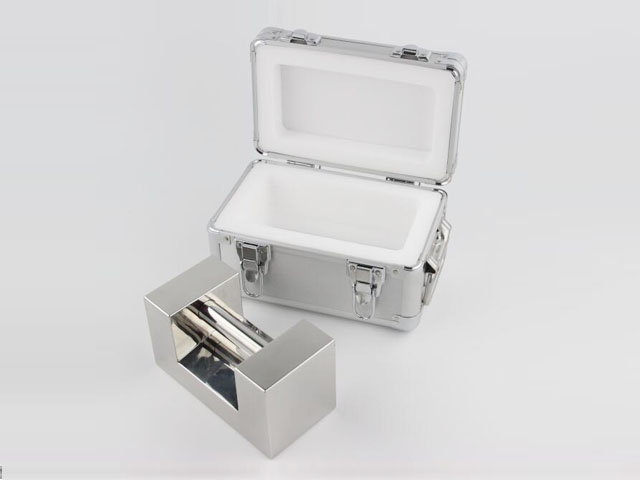
Stainless Steel Hook Weight For Balance Testing
Balance testing serves as a foundational part of precision measurement work across industrial production, laboratory research, commercial detection and multiple other fields. The accuracy and stability of balance testing results directly determine the reliability of product quality inspection, experimental data recording and metrological calibration work. Among various auxiliary tools used for standard balance testing, stainless steel hook weights occupy an indispensable position. These specially designed weighted tools integrate stable gravity performance, durable structural design and flexible hanging functionality, providing reliable auxiliary support for completing various static and dynamic balance testing procedures. Different from ordinary standard weights with flat or block structures, hook weights are equipped with integrated hook structures, which make them more adaptable to diversified testing environments and equipment structures, especially suitable for hanging load testing, tension balance verification and irregular object balance calibration scenarios that conventional weights cannot adapt to.
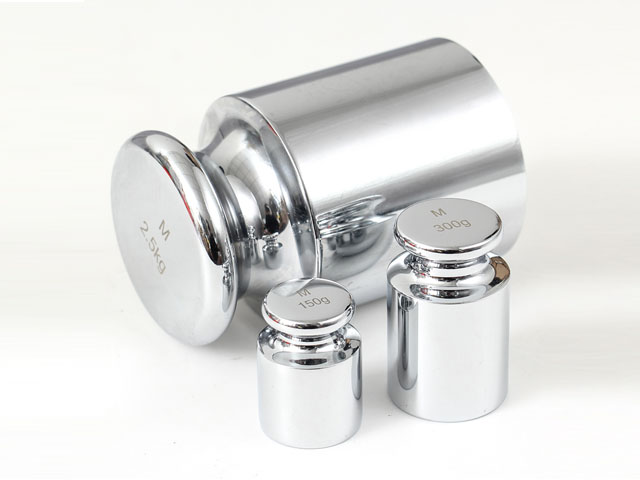
The selection of stainless steel as the core manufacturing material for hook weights is the result of comprehensive consideration of multiple practical application demands. In the process of long-term balance testing work, testing tools often need to adapt to different environmental conditions, including indoor constant-temperature laboratory environments, humid industrial workshop spaces, and open testing areas with floating dust and trace corrosive substances. Common metal materials such as ordinary carbon steel are prone to oxidation and rust after long-term exposure to air and humid environments. The rust and surface corrosion will change the overall mass of the weight, cause deviation in gravity parameters, and ultimately affect the accuracy of balance testing data. Stainless steel materials effectively avoid such problems by virtue of their excellent oxidation resistance and corrosion resistance. The stable metal structure of stainless steel can resist daily air oxidation, moisture erosion and mild chemical corrosion, keeping the surface state and internal mass of the hook weight unchanged for a long time.
In addition to environmental adaptability, the physical properties of stainless steel also meet the core requirements of balance testing for weight tools. Balance testing requires the load applied by weights to be uniform and stable, without mass loss or structural deformation during use. Stainless steel features high density uniformity and stable physical properties, with no internal porosity or loose structure that may cause mass deviation. During the stamping, forging and finishing process of hook weights, the integrated molding process ensures that the main weight body and the hanging hook form a unified whole. This integrated structure avoids loose connection, falling off or local deformation that may occur in assembled structures. When conducting balance testing, the hook weight can provide continuous and stable load tension, ensuring that the stress state of the tested balance equipment is consistent with the preset testing standard, which lays a foundation for accurate testing results.
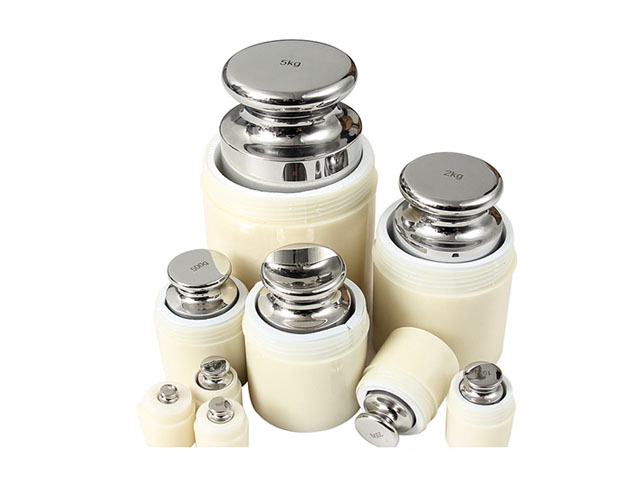
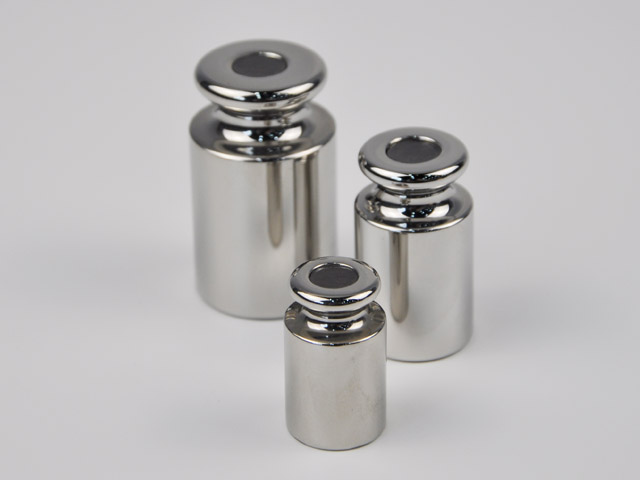
The structural design of stainless steel hook weights is highly targeted for balance testing scenarios. The overall structure is divided into two functional parts: the counterweight main body and the hanging hook. The counterweight main body adopts a regular and compact structural design, which ensures centralized gravity and avoids gravity deviation caused by irregular shape. The surface of the main body is polished and finely processed to remove burrs, sharp edges and surface uneven structures. This processing method not only optimizes the appearance flatness of the weight, but also prevents surface protrusions from causing abnormal friction or stress concentration during the hanging testing process. The hanging hook is designed with a smooth arc transition structure. The arc radian is optimized according to the common hanging interface size of balance testing equipment, which can fit tightly with the hanging ring, suspension wire and testing fixture of balance equipment. The smooth contact surface reduces friction loss during hanging and disassembling, and also avoids scratching and damage to the matching testing equipment.
The size and weight specification design of stainless steel hook weights covers the demands of conventional to fine balance testing. In daily metrological testing, different balance equipment has different load ranges and testing accuracy requirements. Small-specification hook weights are suitable for fine calibration of micro-precision balances, used for testing the sensitivity and zero-balance stability of high-precision balance instruments in laboratories. Medium and large-specification hook weights are applied to the balance detection of industrial weighing equipment and mechanical balance devices, completing load bearing balance tests and structural stress balance verification. All specifications of hook weights maintain a strict mass tolerance control standard in the production process. Through precise cutting, grinding and mass calibration processes, the mass error of each finished product is controlled within a tiny range, ensuring that each weight can provide accurate load reference for balance testing.
In practical application scenarios, stainless steel hook weights show strong versatility and practicability. In laboratory scientific research work, precision balances need regular balance performance testing and calibration to ensure the accuracy of experimental data. Researchers use stainless steel hook weights to carry out hanging load tests on balance instruments, detecting whether the balance has zero drift, pointer deviation and sensitivity attenuation under different load states. This kind of hanging testing method is more suitable for simulating the actual use state of the balance than flat placement testing, because many experimental weighing operations involve hanging and suspending samples, and hook weights can perfectly simulate such load conditions, making the testing results more close to the actual use effect.
In industrial manufacturing fields, balance testing is an important link in equipment debugging and product quality inspection. Mechanical equipment such as conveyor belts, tension testing machines and mechanical arms need to complete balance calibration before formal operation to avoid equipment vibration, operation deviation and component wear caused by unbalanced stress. Stainless steel hook weights can be stably hung on the stress points of mechanical equipment to apply standard load, detect the balance performance of the equipment under rated load, and help technicians adjust the equipment structure and stress distribution state. In addition, in the production and inspection of hardware accessories, textile materials and flexible products, hook weights are used to test the tension balance and hanging stability of products, verifying whether the product structure can maintain balanced stress under long-term hanging load.
Commercial metrological detection is another key application scenario for stainless steel hook weights. All kinds of weighing and balancing equipment used in market transactions, commodity detection and logistics measurement need regular performance testing to meet unified metrological standards. Testing personnel use stainless steel hook weights to conduct sampling testing and comprehensive calibration of various hanging balances and electronic suspension balances. The stable mass and reliable hanging performance of the weights ensure the objectivity and accuracy of the detection results, providing effective basis for the normal operation of commercial metrological work. Compared with traditional cast iron weights, stainless steel hook weights are lighter in surface texture, cleaner and more hygienic, and will not produce rust residue to pollute testing equipment and detection environment, which is more suitable for standardized commercial detection scenarios.
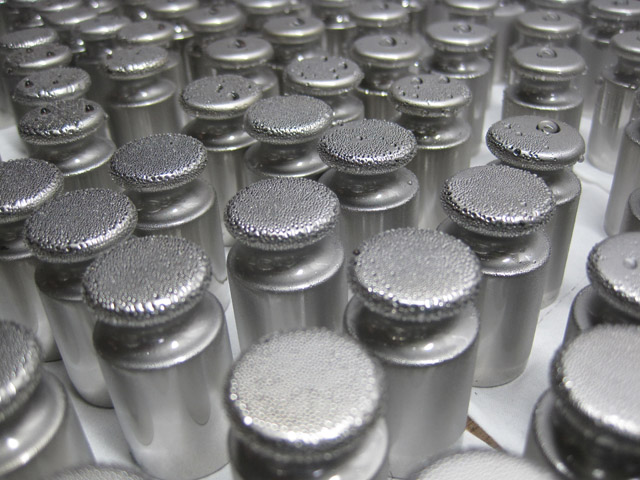
The processing technology of stainless steel hook weights determines their service life and use effect. High-quality hook weights go through multiple precise processing steps from raw material selection to finished product delivery. First, high-quality stainless steel raw materials with uniform density and stable components are selected to avoid material defects such as impurity inclusion and uneven density. Then, the integrated molding process is adopted for overall forging and cutting to ensure the tight connection between the hook and the weight main body without structural gaps. After preliminary molding, the weight is subjected to multiple fine grinding and surface polishing treatments to eliminate surface roughness and internal stress generated during processing. Finally, precise mass calibration and detection are carried out one by one to screen out products with unqualified mass tolerance, ensuring that every delivered hook weight can meet the standard requirements of balance testing.
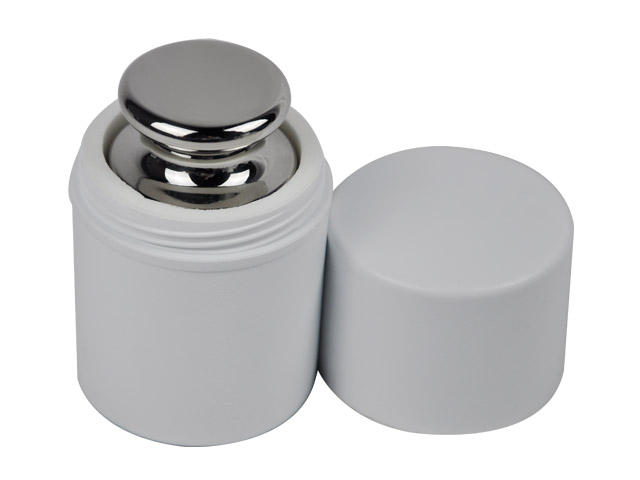
Daily maintenance and standardized use are crucial to maintain the long-term performance stability of stainless steel hook weights. Although stainless steel has good corrosion resistance, long-term exposure to harsh environments such as strong acid, strong alkali and high humidity will still affect its surface finish and structural stability. In the daily use process, it is necessary to avoid contact with corrosive chemical substances. After each use, the surface of the weight should be wiped clean with a dry soft cloth to remove surface dust, stains and residual moisture. When storing, it should be placed in a dry, ventilated and constant-temperature environment, avoiding stacking and extrusion with hard objects to prevent surface scratch and structural deformation. In addition, regular mass calibration and appearance inspection should be carried out. If surface wear, deformation or suspected mass deviation is found, the weight should be suspended from use in time for re-calibration and detection.
In terms of use specifications, stainless steel hook weights need to be selected and used according to the actual testing needs. When carrying out balance testing, it is necessary to match weights of appropriate specifications according to the rated load and testing accuracy of the balance equipment. Excessive load will cause pressure damage to the balance equipment, while too small load cannot reach the effective testing state, which will affect the authenticity of the testing results. During the hanging operation, ensure that the hook is completely and stably clamped with the testing fixture, avoid partial hanging and inclined stress, so as to prevent eccentric load from causing testing deviation. At the same time, avoid violent collision and throwing during handling and use, so as to prevent structural deformation and mass change of the weight caused by external impact.
With the continuous improvement of modern metrological testing standards and the continuous upgrading of precision testing equipment, the performance requirements for auxiliary testing tools such as stainless steel hook weights are also gradually improving. Traditional single-specification and single-structure weights can no longer fully adapt to the diversified and refined balance testing demands. At present, the production and design of stainless steel hook weights are developing towards diversification and refinement. More optimized hook structures, more precise mass control and more adaptable size specifications are continuously emerging, which can meet the testing needs of high-precision laboratory instruments, large industrial equipment and special environmental testing scenarios.
The practical value of stainless steel hook weights in balance testing work is irreplaceable. Its stable material performance, reasonable structural design and flexible use mode make it a reliable auxiliary tool in the field of precision measurement and balance detection. It not only improves the accuracy and efficiency of balance testing work, but also reduces the equipment debugging cost and testing error rate caused by tool problems. In the future, with the continuous development of industrial precision manufacturing and metrological detection technology, stainless steel hook weights will be further optimized in structural design and performance parameters, and will be more widely used in more professional testing scenarios, providing more solid basic support for the standardized development of precision measurement work.
Stainless Steel Hook Weight For Balance Testing
https://www.veidtweighing.com/ssweight/StainlessSteelWeight
Post Date: Jun 7, 2026

![Balance Calibration Weight]()
Balance Calibration Weight
In every field that relies on precise mass determination, from basic laboratory scientific research to industrial production processing, pharmaceutical ingredient preparat…![1kg Calibration Weight]()
1kg Calibration Weight
In the intricate and interconnected world of modern measurement science and industrial production, the pursuit of consistent and reliable mass measurement forms the invisi…![Rust Proof Standard Weight]()
Rust Proof Standard Weight
Rust proof standard weight represents a specialized material configuration that balances consistent structural weight distribution and reliable anti-corrosion performance,…![Stainless Steel Weight For Digital Scale Regular Calibration]()
Stainless Steel Weight For Digital Scale Regular Calibration
In the modern era of precision measurement, digital scales have become indispensable tools across countless industries and daily applications, ranging from laboratory scie…![Standard Weight For Industrial Scales]()
Standard Weight For Industrial Scales
In modern industrial production, commercial trade, and quality inspection systems, the accuracy and stability of weighing measurements serve as the fundamental guarantee f…