What is Laboratory Weight
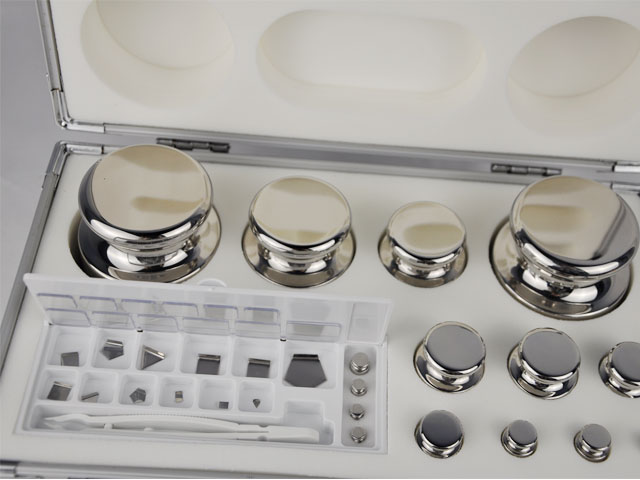
Laboratory weights are fundamental mass reference tools indispensable for all kinds of quantitative weighing work in scientific research, chemical analysis, biological experiments and daily laboratory testing processes. Crafted from sturdy, corrosion-resistant metal materials with smooth and polished surface finishes, these standard mass pieces are meticulously manufactured to maintain stable and consistent mass status for long-term laboratory use, avoiding mass deviation caused by external environmental factors such as air humidity, minor temperature changes and occasional surface contact. The core function of laboratory weights lies in providing reliable fixed mass benchmarks for various mechanical and electronic weighing instruments, helping laboratory staff verify the working status of balances, calibrate weighing accuracy, and complete precise mass comparison and sample measurement operations in every experiment. In daily laboratory operations, operators need to handle these standard weights gently with clean tweezers instead of direct hand contact, as skin grease, sweat and dust attached to fingertips will leave residues on the weight surface, gradually affecting mass accuracy and interfering with subsequent experimental data. Proper storage is also essential; these weights should be placed in dry, clean and stable storage spaces away from chemical corrosives and strong vibration environments to prevent surface wear, oxidation or accidental impact damage. Whether used for routine daily weighing checks or high-precision experimental data recording, standard laboratory weights lay a solid foundation for the authenticity, stability and repeatability of all laboratory measurement results, ensuring every experimental data obtained is credible and consistent for follow-up scientific research and experimental analysis work.
Grades and Specifications of Laboratory Weights
Laboratory weights are essential basic instruments for mass value traceability and precision weighing operations. The accuracy of various physical and chemical tests, precision weighing processes, and instrument calibration experiments relies heavily on the standardized application of weights with appropriate grades and specifications. The grade of a weight determines its precision threshold and applicable experimental scenarios, while its specifications define practical compatibility and scope of use. The two elements work in tandem to serve as a vital guarantee for standardized weighing operations and accurate data results in laboratories. Laboratory weights are classified into a complete gradient system based on precision differences, ranging from ultra-high-precision benchmark traceability to conventional experimental weighing. Each grade has distinct functions with clearly defined error control standards and application boundaries, perfectly adapting to testing and calibration work with varying precision requirements in different laboratories.
Laboratory weights are arranged in descending order of precision, with accuracy gradually decreasing and allowable weighing errors gradually increasing, corresponding to application scenarios from professional mass value transmission to routine sample weighing. The highest precision grade weights feature extremely strict error control and stringent technical requirements for magnetization intensity and surface flatness. They are mainly used for internal mass value traceability within the measurement system and the core calibration of ultra-high-precision analytical balances, and are rarely directly used for routine sample weighing in general laboratories, only providing accurate mass references for weights of lower grades. The next tier of high-precision weights balances accuracy and practicality, widely applied in precision analysis experiments in scientific research institutions and professional testing laboratories, as well as the regular calibration of conventional high-precision weighing instruments. They are suitable for the precise weighing of micro and trace samples, delivering excellent data stability and minimal numerical deviation during long-term use. Medium-precision weights are the most commonly used type in general scientific research laboratories, ideal for daily physical and chemical experiments, routine sample preparation, and regular verification of ordinary analytical balances. Their error range meets the precision requirements of conventional experimental data, striking a balance between accuracy and durability to fit most basic scientific research and testing tasks. Basic-grade weights with relatively lenient error control standards are mainly used for basic practical teaching demonstrations in teaching laboratories, rough calibration of ordinary weighing equipment, and approximate weighing of bulk samples, meeting the needs of basic experimental teaching and simple weighing operations with low data precision requirements.
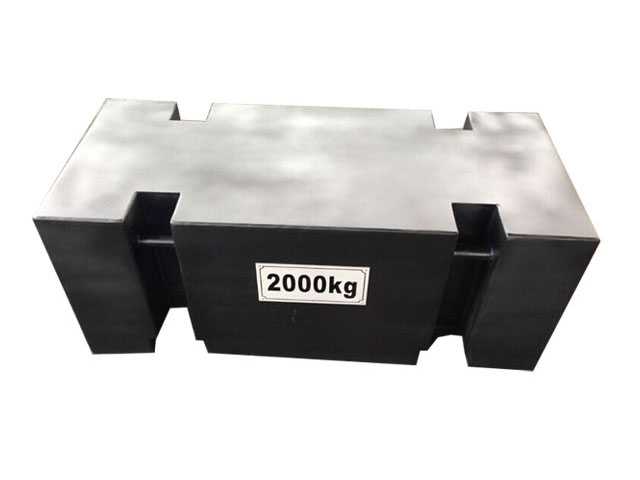
The specifications of laboratory weights form a standardized series based on nominal mass, covering the full range from micro weighing to bulk mass measurement. Miniature mass specifications are suitable for microanalysis experiments, regular integer specifications serve as the mainstay for daily laboratory use, and large mass specifications are applied to the weighing of heavy samples and the calibration of large-scale weighing equipment. The overall structure of laboratory weights is designed for practical operation, adopting a solid and regular shape with a matched adjustment cavity to facilitate fine calibration in later use and maintain numerical accuracy over time. The surface is processed with sophisticated techniques to achieve corrosion resistance and impact resistance, effectively resisting erosion from acid-base reagents and humid laboratory environments, reducing wear and oxidation, and preventing weighing accuracy loss caused by surface damage. The size and weight ratio of each specification are uniformly optimized for easy handling and stable placement without tipping, compatible with the bearing platforms of various balances and weighing devices.
The core principle for daily weight selection in laboratories is precision matching: the higher the experimental precision requirement, the higher the corresponding weight grade needed. It is prohibited to use low-grade weights as substitutes for high-grade ones in precision calibration and testing to avoid systematic data deviations. Meanwhile, weights with suitable nominal specifications should be selected according to the conventional mass range of experimental samples, and combined for accurate weighing collocation. This not only ensures that weighing data meets the allowable experimental error range but also extends the service life of weights and reduces frequent calibration frequency. Scientific selection and standardized management of weight grades and specifications fundamentally ensure the accuracy and comparability of laboratory weighing data, consolidate the metrological foundation for various testing experiments, and guarantee rigorous, reliable and scientific experimental results.
Materials and Structure of Laboratory Weights
Laboratory weights are core reference instruments for balance calibration and accurate sample weighing in laboratories. Their material selection and overall structural design directly determine metrological stability, weighing accuracy and long-term service durability, adapting to the core application requirements of laboratory experiments with different precision levels, various acid and alkali working conditions and routine calibration operations. The material selection of laboratory weights is always based on four key indicators: chemical stability, uniform density, wear resistance and low magnetic susceptibility, with different materials adapted to differentiated experimental scenarios, covering basic routine weighing to high-precision scientific research and testing. Stainless steel series are the most widely used mainstream materials for high-precision metrology in laboratories, divided into two common types to suit experimental environments and precision requirements of varying severity. Basic stainless steel is mostly adopted for conventional laboratory scenarios, featuring compact and uniform texture with excellent oxidation and rust resistance. It can withstand the erosion of ambient air, moisture and mild chemical reagents in the laboratory, and its surface is not prone to oxidation and discoloration. No mass deviation will occur due to slight environmental changes after long-term placement. With moderate hardness and good resistance to daily collision and wear, it fully meets the needs of basic analytical balance calibration and routine quantitative sample weighing. For high-precision scientific research, micro-analysis and clean laboratory scenarios, low-magnetization special stainless steel is selected. This material has an extremely low magnetic susceptibility, which can effectively avoid weighing deviations caused by magnetic field interference. It features stronger resistance to acid, alkali and chloride ion corrosion, extremely stable chemical properties and uniform and regular density distribution. It will not deform or suffer mass loss due to small fluctuations in temperature and humidity, and can maintain constant metrological benchmarks after long-term repeated use, suitable for daily calibration of ten-thousandth and hundred-thousandth high-precision analytical balances. In addition to metal materials, non-metallic polytetrafluoroethylene weights are used in some special laboratories for chemical industry, medicine and semiconductors. Such weights are non-magnetic and well-insulated, resistant to strong corrosion by strong acids and alkalis, and will not cause sample contamination due to metal precipitation. They are suitable for special working conditions with strong corrosiveness and strict control of metal impurities. The only drawback is their low density, resulting in a larger volume under the same mass and more obvious impact from air buoyancy, so they are only applied to special non-standard metrological scenarios.
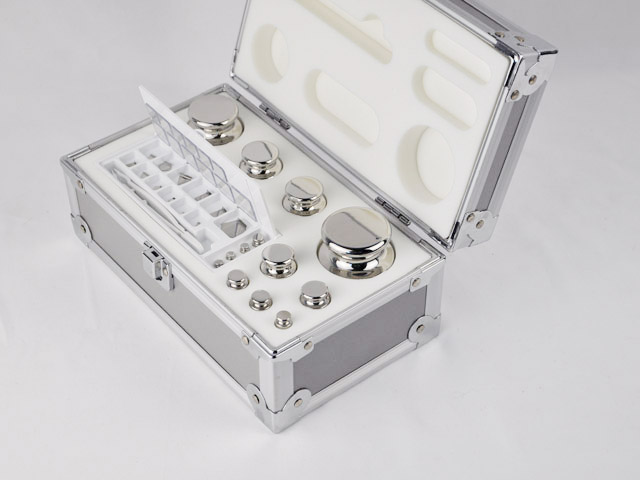
The overall structural design of laboratory weights follows the practical principles of stable center of gravity, accurate metrology, convenient access and moisture-proof protection with a regular and unified overall shape. Most weights adopt an integrated solid main structure, integrally cast and polished without internal hollows or impurity gaps, fundamentally avoiding internal deformation and material falling off during long-term use and ensuring constant individual mass. The exterior of each weight is finely polished with a smooth and delicate surface free of burrs and scratches, which not only reduces wear and tear during daily cleaning and wiping, but also prevents adhesion and erosion of dust and residual experimental reagents, minimizing subtle external impacts on weight quality. Standard specification weights have flat and regular sides with exquisite workmanship, and their mass gradient is scientifically proportioned for combined use, which can be flexibly matched to meet weighing and calibration needs of different mass ranges. For standardized handling and proper storage, each weight is equipped with special handling tools and sealed storage and protection structures. Weights are never touched by hands during use to avoid surface corrosion caused by sweat and grease, preventing accuracy errors from oxidation and impurity adhesion. The complete set of weights is placed in a closed protective storage structure to isolate humid air, dust and corrosive gases, keeping the weight surface dry and clean during idle storage. The well-matched materials and refined structural design complement each other, not only ensuring the accuracy and reliability of various laboratory weighing data, but also extending the service life of weights and reducing replacement frequency. They lay a solid metrological foundation for the accurate development of various chemical, biological and scientific research experiments and adapt to the long-term and stable daily metrological work needs of laboratories.
Purposes and Selection of Laboratory Weights
In various physical and chemical testing, precision research and development, and routine laboratory operations, laboratory weights are core basic instruments that maintain the accuracy and unification of mass values. Though seemingly simple metal counterweight components, they serve as the fundamental guarantee for the accurate operation of all weighing equipment, as well as the reliability of experimental data and the repeatability and comparability of experimental results. With fixed and stable standard mass as their core attribute, laboratory weights are applied throughout the whole process of laboratory weighing work. Without the support of properly used weights, the measured values of various balances and weighing equipment will deviate, which directly affects the progress of core experimental work such as sample testing, material proportioning, and data accounting. In severe cases, it will even make scientific research and development, sample inspection, quality control and other related work lose practical reference value. The primary core purpose of laboratory weights lies in the daily calibration and regular verification of weighing equipment. During long-term operation, various electronic balances and mechanical analytical balances will have slight deviations in their internal sensing structures and weighing accuracy due to factors such as changes in ambient temperature and humidity, frequent start and stop of equipment, and slight vibration of the instrument body. Regular calibration with matching weights can correct equipment errors in a timely manner and keep the weighing equipment in a stable and accurate working state. At the same time, weights can also be directly used in precise weighing and comparison work. In operations including micro sample proportioning, precision material weighing, and experimental sample quality rechecking, the actual mass of samples can be accurately determined by mass comparison between weights and tested samples, meeting the operational requirements of refined experiments. In addition, weights undertake the basic function of mass value transmission within the laboratory, unifying the mass measurement standards between different experimental equipment and different experimental batches, and enabling all experimental data to have the basic conditions for horizontal comparison and vertical traceability.
Scientific and reasonable selection is the key to giving full play to the role of weights. There is no need to blindly pursue overly high specifications in selection. The core is to follow the basic principles of accuracy adaptation, scenario matching and material durability, and balance the actual experimental needs and long-term use stability. Accuracy matching is the primary core of selection. The matching range shall be strictly determined according to the division value and measurement accuracy of the weighing equipment, following the basic rule that the error of weights is far smaller than that of the supporting weighing equipment. High-precision analytical balances need to be equipped with high-precision weights to meet the requirements of micro precision calibration and weighing, while conventional laboratory weighing equipment only needs weights with basic matching accuracy, avoiding resource waste caused by redundant accuracy and invalid calibration and weighing work caused by insufficient accuracy. Material selection is also crucial. The laboratory environment is complex and diverse, and some experimental areas are exposed to humidity, slightly corrosive gases or dust accumulation. It is necessary to select weight materials with oxidation resistance, corrosion resistance, low magnetic susceptibility and uniform density. Such materials are not easily interfered by the external environment, and will not suffer mass loss, surface rust or deformation during long-term use. They can maintain stable mass parameters for a long time and reduce the frequency of frequent replacement and repeated calibration. For daily high-frequency routine calibration and ordinary sample comparison, solid weights with simple structure, durability and easy cleaning can be selected, which are convenient to operate and simple for daily maintenance. For high-precision mass value traceability and micro precision calibration, weights with sophisticated structure and fine mass adjustment are suitable to meet the strict requirements of demanding experimental scenarios. The selection process should also match the corresponding specification combinations according to the commonly used weighing range. The total weighing range of weights needs to cover the conventional calibration points of equipment and the commonly used weighing interval of daily experiments, and reasonable specification matching can meet the needs of various calibration and weighing work. After completing the selection and matching of weights, cooperating with standardized storage, careful handling, regular cleaning and maintenance and other basic management work can make the weights play a stable role continuously, consolidate the accurate foundation of laboratory mass measurement work, and ensure the orderly and efficient development of various experimental work with accurate and valid experimental data.
What is Laboratory Weight
https://www.veidtweighing.com/laboratory-weights.html
Post Date: May 4, 2026
https://www.supplier-manufacturer.com/laboratory-weight/what-is-laboratory-weight.html

![Stainless Steel Test Weight For Metrology Institute Inspection]()
Stainless Steel Test Weight For Metrology Institute Inspection
Stainless steel test weights serve as core precision tools for daily inspection, calibration and verification work carried out by professional metrology institutes, laying…![Standard Weight For Crane Scales]()
Standard Weight For Crane Scales
In modern industrial production, logistics transportation, engineering construction and material detection fields, crane scales have become indispensable core weighing equ…![Standard Weight For Digital Scales]()
Standard Weight For Digital Scales
Digital scales have become indispensable precision measuring tools across civilian, commercial, industrial, and scientific research fields, valued for their high sensitivi…![Laboratory Calibration Weight Kit]()
Laboratory Calibration Weight Kit
Laboratory calibration weight kits serve as foundational metrological tools in all sectors that rely on precise mass measurement, forming an indispensable part of daily la…![Astm Standard Calibration Weight]()
Astm Standard Calibration Weight
Precision mass measurement serves as a foundational pillar across scientific research, industrial production, pharmaceutical manufacturing, and material testing industries…