1kg Astm Calibration Weight For Warehouse Scale
In modern warehouse operation systems, accurate weight measurement serves as a core foundation for orderly inventory management, smooth cargo circulation, and standardized logistics settlement. Warehouse scales, as the most widely used weighing equipment in storage and distribution scenarios, undertake the daily weighing work of incoming goods inspection, outgoing goods verification, inventory counting, and cargo load recording. Long-term continuous use, frequent mechanical vibration, subtle changes in ambient temperature and humidity, and accidental external impact will all cause gradual deviation in the weighing performance of warehouse scales. Such subtle measurement errors may not be obvious in short-term single weighing, but they will accumulate continuously with the increase of daily operation volume, bringing hidden troubles to inventory data statistics, cargo quantity accounting, and enterprise operation cost control. The 1kg ASTM calibration weight has become an essential auxiliary tool for daily maintenance and accuracy verification of warehouse scales in various storage and logistics environments, relying on its stable physical properties, standardized mass parameters and high adaptability to conventional warehouse weighing equipment.
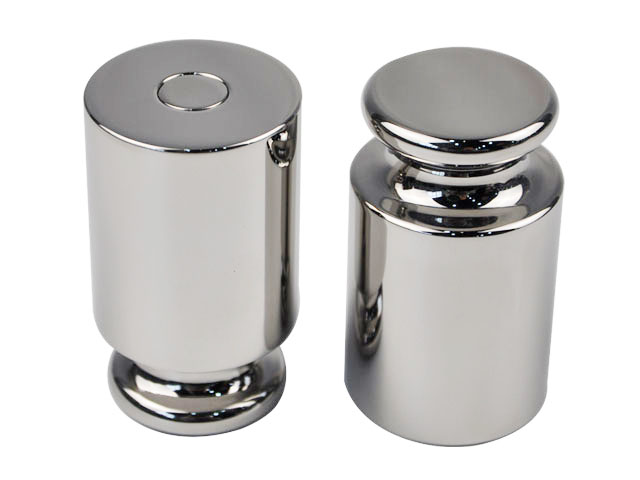
Different from professional precision measuring weights used in laboratory environments, the 1kg ASTM calibration weight is designed to adapt to the complex and frequent working conditions of warehouse sites. Warehouse spaces usually feature large flow of people and goods, frequent equipment start and stop, and unstable environmental conditions, which puts forward higher requirements on the durability and environmental adaptability of calibration tools. This type of calibration weight adopts rigorous manufacturing technology and high-quality metal materials, with a compact and regular overall structure, smooth and flat surface, and uniform density inside. The integrated forming process effectively avoids the mass deviation caused by internal gaps or structural deformation during long-term use. Its surface treatment process can resist daily dust adhesion, slight friction and conventional environmental erosion in the warehouse, maintaining stable mass status for a long time in dry, humid and other common warehouse environments, and providing reliable reference standards for the calibration and verification of various conventional warehouse scales.
The core value of the 1kg ASTM calibration weight in warehouse work lies in providing a unified and accurate mass reference for daily scale inspection and regular calibration. Most warehouse scales are medium and low precision weighing equipment suitable for bulk cargo weighing, including platform scales, floor scales, pallet scales and other common types. These devices are designed to meet the efficient weighing needs of warehouse daily operations, and their measurement accuracy range matches the calibration demand of 1kg standard mass. In daily operation, after the warehouse scale is started and zeroed, placing the 1kg calibration weight stably on the center of the scale weighing surface can intuitively check whether the equipment reading is within the normal deviation range. Through this simple and efficient verification method, warehouse staff can quickly judge the working state of the scale, discover abnormal measurement data in a timely manner, and avoid using faulty equipment for cargo weighing operation.
Regular calibration and verification with 1kg ASTM calibration weights plays an important role in standardizing warehouse data management. Warehouse operation involves a large number of weight-based data records, including the net weight of incoming raw materials, the gross weight of outgoing finished products, the weight difference of inventory goods, and the load data of cargo handling. All these data are important bases for enterprise inventory accounting, cost calculation, supply chain reconciliation and asset statistics. If the weighing equipment lacks regular calibration, the generated weight data will be inconsistent with the actual situation, leading to disordered inventory data, inconsistent accounting records and actual inventory, and even affecting the cooperative trust between upstream and downstream enterprises in the supply chain. Adopting 1kg standard calibration weights to conduct daily spot checks and regular comprehensive calibration of warehouse scales can effectively ensure the consistency and authenticity of weighing data, make warehouse inventory management more standardized and refined, and provide accurate data support for enterprise operational decision-making.
In terms of operation applicability, the 1kg specification is the most moderate and practical calibration standard for conventional warehouse scales. Too light calibration weights are easily affected by environmental wind power, surface dust and placement deviation, resulting in inaccurate verification results. Too heavy calibration weights are cumbersome to carry and operate, and are not suitable for frequent daily rapid detection. The 1kg mass is not only convenient for single-hand handling and stable placement by staff, but also can effectively trigger the accurate sensing response of medium-capacity warehouse scales, covering the conventional low-range weighing verification demand of warehouse equipment. Whether it is a small platform scale used for weighing small batch parts and packaging materials, or a medium floor scale used for weighing single pallet goods, the 1kg ASTM calibration weight can complete effective accuracy detection, covering most weighing scenarios in daily warehouse operation.
The correct use method directly affects the calibration effect and the service life of the calibration weight itself. Before using the 1kg ASTM calibration weight to verify the warehouse scale, staff need to complete basic pre-operation preparation. First, clean the weighing surface of the scale to remove accumulated dust, residual debris and other sundries, ensuring the weighing platform is flat and clean, so as to prevent foreign matters from affecting the contact state between the weight and the scale surface. Second, place the weighing equipment on a horizontal and stable ground, adjust the level state of the scale according to the equipment requirements, and avoid measurement deviation caused by inclined placement. After the equipment is powered on and preheated, confirm that the scale displays zero normally, and eliminate zero drift before calibration detection.
During the calibration operation, staff should hold the edge or non-working surface of the calibration weight gently, and place it slowly in the center of the scale weighing platform, avoiding throwing, sliding or colliding the weight with the equipment. Violent placement behavior will not only cause structural damage and mass deviation of the calibration weight, but also may damage the sensor and bearing structure of the warehouse scale, affecting the service life of the equipment. After the weight is placed stably, wait for the scale data to stabilize, observe and record the displayed value, and compare it with the standard mass to judge whether the equipment is normal. After the detection is completed, take the weight back gently, place the scale in the zero state again, and repeat the detection for 2 to 3 times appropriately to ensure the stability and accuracy of the verification result. For scales with slight data deviation, fine adjustment can be carried out according to the equipment operation specifications to restore the weighing accuracy.
Scientific daily maintenance is the key to maintain the long-term accuracy and service performance of the 1kg ASTM calibration weight. In the warehouse environment, factors such as dust, moisture, and residual chemical components of goods may affect the surface state and mass stability of the weight. Therefore, after each use, it is necessary to clean the surface of the calibration weight with a soft dry cloth to remove surface dust and tiny attachments. For slight stains that are not easy to remove, wipe with a soft cloth dipped in a small amount of neutral cleaning solution, and dry it in a ventilated and dry environment, avoiding the use of corrosive cleaning agents to prevent surface oxidation and corrosion. The calibration weight should be stored in a special dry and dust-proof storage area, avoiding long-term exposure to humid air, direct sunlight or high-temperature environment, so as to prevent material aging, surface oxidation and mass change.
In addition, the calibration weight should be stored separately from heavy goods and sharp tools to prevent extrusion, collision and scratching. Long-term arbitrary stacking and extrusion will cause subtle deformation of the weight structure, resulting in changes in standard mass and failure to meet calibration use requirements. In the daily management of the warehouse, special personnel can be arranged to take charge of the management of calibration weights, formulate regular inspection cycles, regularly check the surface integrity and mass stability of the weights, and eliminate unqualified calibration tools in a timely manner. Good maintenance habits can not only extend the service life of the 1kg ASTM calibration weight, but also ensure the long-term effectiveness of warehouse scale calibration work, and maintain the stability of warehouse weighing measurement standards.
The application of 1kg ASTM calibration weights also helps warehouses standardize operational processes and meet the standardized management requirements of modern logistics and warehousing industries. With the continuous improvement of industry management standards, more and more warehouse enterprises have put forward clear requirements for the accuracy and stability of weighing data. Regular use of standard calibration weights for equipment verification has become an indispensable part of warehouse daily operation management. It can effectively reduce measurement errors caused by equipment aging, environmental changes and human operation factors, ensure that each weighing data in the warehouse is true and effective, make the links of goods warehousing, outgoing delivery, inventory checking and handover settlement more standardized and transparent, and reduce operational risks caused by measurement deviations.
In practical warehouse application scenarios, the 1kg ASTM calibration weight also has good compatibility and flexibility. It can be used alone for daily rapid spot check of weighing equipment, and can also be used in combination with other specification calibration weights to complete full-range accuracy verification of large-capacity warehouse scales. For daily routine inspection work, single 1kg weight detection can quickly screen out faulty equipment and improve inspection efficiency; for regular monthly and quarterly comprehensive equipment calibration, matching use with multi-specification weights can verify the accuracy of the scale in different weighing ranges, ensuring that the equipment can maintain stable measurement performance in the full working range. This flexible application mode makes the 1kg ASTM calibration weight adapt to diversified calibration demands of warehouse equipment, and meets the daily and periodic maintenance needs of warehouse weighing systems.
To sum up, the 1kg ASTM calibration weight is a basic and indispensable measuring auxiliary tool in warehouse operation. Its stable performance, convenient operation and strong environmental adaptability make it highly suitable for the frequent and multi-scene weighing calibration work in warehouses. Through standardized use and scientific maintenance, it can continuously provide accurate mass reference for warehouse scales, effectively guarantee the accuracy and stability of warehouse weighing data, support the standardized and refined management of warehouse inventory and logistics, and lay a solid foundation for the efficient and orderly operation of the entire warehousing and supply chain system. In the long-term warehouse operation process, attaching importance to the daily calibration work with standard weights is not only a necessary measure to maintain equipment performance, but also an important part of improving the overall operational management level of warehouse enterprises.
1kg Astm Calibration Weight For Warehouse Scale
https://www.veidtweighing.com/calibration-weights.html
Post Date: Jun 7, 2026

![Pet Scales]()
Pet Scales
Caring for companion animals is a delicate and ongoing journey that blends daily routine, careful observation, and responsive adjustment to an animal’s physical and emoti…![Specifications of Cast Iron Weight]()
Specifications of Cast Iron Weight
Cast iron weights stand as essential foundational components widely applied in industrial weighing calibration, mechanical counterbalancing, physical load testing, and dai…![Jewelry Scales]()
Jewelry Scales
In the intricate world of precious metal and gemstone craftsmanship and trading, subtle numerical differences carry profound practical meaning, and accurate weight measure…![Cast Iron Weight With Fork Slot]()
Cast Iron Weight With Fork Slot
Cast iron weight with fork slot stands as a fundamental and reliable component widely utilized across diverse industrial, construction, logistics, and mechanical operation…![Density Balances]()
Density Balances
Density stands as one of the most fundamental and informative physical properties of all materials, serving as a critical reference for identifying material characteristic…