Cast Iron Weight With Fork Slot
Cast iron weight with fork slot stands as a fundamental and reliable component widely utilized across diverse industrial, construction, logistics, and mechanical operation scenarios, serving core functions in load balancing, equipment calibration, structural stabilization, and pressure testing for various mechanical systems and engineering facilities. Crafted from premium cast iron materials and engineered with a specialized fork slot structure integrated into the overall body design, this type of weight has gradually become an indispensable basic accessory in modern industrial production and daily operational maintenance work, thanks to its stable physical properties, solid structural integrity, and convenient handling characteristics. Unlike ordinary solid cast iron weights with simple shapes and single functions, the fork slot design embedded in the body of cast iron weight with fork slot perfectly combines the basic weight bearing function with flexible handling and moving performance, effectively solving the common pain points in traditional weight use processes, such as difficult stacking, inconvenient mechanical handling, and poor adaptability to different operating environments. Whether deployed in large-scale factory production workshops, outdoor construction engineering sites, port cargo handling areas, mechanical equipment debugging workshops, or elevator and crane load testing work scenarios, this cast iron weight can always maintain stable working performance, adapt to complex and harsh use environments, and provide consistent and reliable weight support for various operational tasks over long-term service cycles.
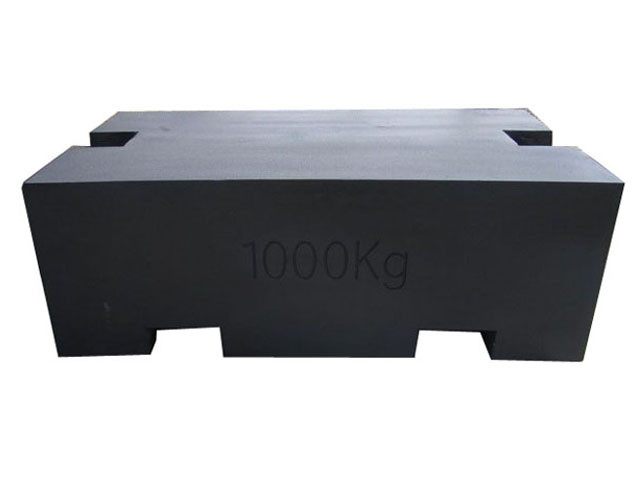
The inherent material advantages of cast iron lay a solid foundation for the excellent comprehensive performance of cast iron weight with fork slot. Cast iron as the core raw material for manufacturing such weights features high density, good compressive resistance, strong structural stability, and excellent anti-deformation ability under long-term static load and conventional dynamic load conditions. In the casting and forming process, the internal structure of the material is compact and uniform, with no obvious internal pores or structural defects, ensuring that each finished weight can maintain consistent mass distribution and stable overall stress bearing capacity. This material characteristic enables the cast iron weight to resist the impact of external temperature changes, humid air, and conventional mechanical friction in daily use, without easy deformation, mass deviation, or structural damage after long-term placement and repeated handling. Compared with weights made of other lightweight alloy materials, cast iron materials have better pressure resistance and wear resistance in heavy-load working scenarios, and can adapt to long-term outdoor open-air placement and frequent mechanical handling operations without frequent replacement or maintenance. Moreover, the casting process for producing cast iron weight with fork slot is mature and stable, allowing the overall shape, thickness, and fork slot structure of the weight to be precisely controlled during production, ensuring that each finished product has a smooth surface, regular overall dimensions, and accurate mass proportion, creating favorable preconditions for subsequent stacking placement, mechanical transportation, and stable load bearing use.
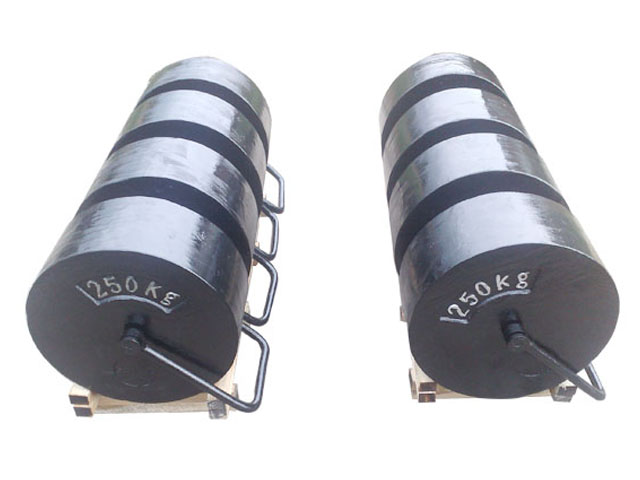
The core feature that distinguishes cast iron weight with fork slot from ordinary cast iron weights lies in the specially designed fork slot structure, which is scientifically arranged and reasonably sized according to the actual handling and use needs of industrial operations. The fork slot is reserved in a reasonable position on both sides or the bottom of the weight body, with a smooth inner wall and standardized groove body size, which can be perfectly matched with the fork arms of conventional forklifts and other handling equipment. This structural design completely changes the traditional handling mode of relying on manual carrying or simple hoisting for heavy cast iron weights. In actual operation, staff can directly insert the fork arms of forklifts into the reserved fork slots, realizing rapid lifting, stable moving, and accurate placement of the weight without additional auxiliary handling tools or complex fixing procedures. This not only greatly reduces the physical labor intensity of on-site operators and avoids safety risks such as collision and extrusion easily caused by manual handling of heavy weights, but also significantly improves the transfer and placement efficiency of weights in large-scale operational scenarios requiring frequent weight position adjustment and quantity deployment. The depth and width of the fork slot are designed based on mechanical stress principles, ensuring that the fork slot will not crack or deform due to excessive local stress during the lifting and moving process of the weight. Meanwhile, the edge of the fork slot is polished smoothly to prevent scratching the fork arm equipment during frequent contact and friction, extending the service life of both the weight itself and the matching handling mechanical equipment.
In addition to convenient mechanical handling brought by the fork slot structure, the overall structural design of cast iron weight with fork slot also takes into account the practical needs of stacking placement and stable use. The top and bottom surfaces of the weight body are designed to be flat and smooth, enabling multiple weights to be stacked closely and stably according to actual weight demand. The stacked weights can maintain a neat and unified overall structure without tilting, sliding, or collapsing during static load bearing, ensuring the safety and stability of the entire weight combination in structural balancing and load testing work. The outer edge of the weight is treated with rounded corner polishing, avoiding sharp corners from causing accidental scratches to operators or collision damage to surrounding mechanical equipment and building structures during use and handling. The surface of the cast iron weight is treated with anti-rust and anti-corrosion protection through reasonable process measures, which can effectively resist the erosion of humid air, rainwater, and conventional industrial dust in outdoor and harsh workshop environments. Even after long-term placement in open-air construction sites and port operation areas, the weight is not prone to surface rust, corrosion, or performance attenuation, maintaining stable mass and structural integrity for a long time. Some weights are also marked with clear nominal weight identification on the surface through embossing or painting, making it convenient for on-site staff to quickly distinguish and match different weight specifications during use, improving the accuracy and convenience of weight configuration work.
Cast iron weight with fork slot has a wide range of practical application scenarios, covering almost all industrial and engineering fields that require fixed load balancing and standardized weight debugging. In the field of industrial weighing equipment calibration, this type of weight is commonly used for regular verification and debugging of various floor scales, truck scales, and electronic weighing instruments. By placing cast iron weights with accurate mass on the weighing equipment, staff can check the weighing accuracy of the equipment, adjust the operating parameters of the weighing system, and ensure that the weighing data of industrial production and cargo measurement links is accurate and reliable, avoiding measurement deviations affecting production scheduling and cargo settlement work. In mechanical equipment manufacturing and assembly workshops, such weights are used for balance adjustment and load testing of large mechanical parts and complete equipment. Many large mechanical devices will generate unbalanced stress during operation due to uneven mass distribution, and it is necessary to place appropriate cast iron weights for counterweight correction to ensure the smooth and stable operation of the mechanical equipment and reduce vibration and wear during mechanical operation.
In construction engineering and infrastructure construction scenarios, cast iron weight with fork slot plays an important role in structural stabilization and engineering testing. During the construction of temporary construction facilities, scaffolding structures, and foundation engineering projects, a certain number of cast iron weights need to be placed for pressure stabilization, preventing temporary structures from tilting or shifting due to external wind force or construction vibration and ensuring the safety and stability of the construction process. At the same time, in the load bearing test of building components and engineering foundation acceptance links, these cast iron weights are used to apply stable static load to test the bearing capacity and structural stability of building structures, providing reliable data support for engineering quality inspection and acceptance work. In port and logistics transportation links, a large number of cast iron weight with fork slot are used for cargo container stabilization and handling equipment debugging. During cargo stacking and container transportation, placing reasonable counterweights can prevent containers from shaking and tilting during transportation and handling, ensuring the safety of cargo transportation; meanwhile, it can also be used for daily load testing and performance debugging of port handling machinery to ensure the normal and efficient operation of port handling work.
Elevator, crane, and lifting equipment testing is also one of the important application fields of cast iron weight with fork slot. All kinds of lifting and lifting mechanical equipment need regular load testing and safety performance inspection to ensure that they meet safe operation standards and avoid safety accidents caused by equipment load failure during use. Cast iron weights with stable mass and convenient handling can be quickly transported to the designated position of lifting equipment through forklifts, completing static load and dynamic load tests of lifting machinery. By applying different magnitudes of load through stacking multiple weights, staff can comprehensively detect the lifting performance, braking performance, and structural bearing capacity of lifting equipment, timely discover potential safety hazards of equipment, and carry out maintenance and adjustment work, ensuring the safety of personnel and equipment in the operation process of lifting machinery. In addition, in ship equipment balancing and mining mechanical stabilization work, this type of cast iron weight also plays an irreplaceable role, providing stable counterweight support for the normal operation of special mechanical equipment in different working environments.
The daily maintenance and management work of cast iron weight with fork slot is simple and convenient, without complex maintenance procedures and high maintenance costs, which is also an important reason why it is widely favored by various industrial enterprises and engineering construction units. In daily use, only regular surface cleaning is needed to remove surface dust, sediment, and sundries accumulated during use and placement, keeping the weight surface clean and the fork slot unobstructed, ensuring the smooth progress of subsequent mechanical handling work. For weights placed outdoors for a long time, regular inspection of the surface anti-rust protection state is sufficient; if individual local anti-rust layers are worn, simple supplementary anti-rust treatment can be carried out in time to avoid local rust corrosion affecting the overall service life. During the stacking and storage process, as long as the weights are placed in a flat and dry storage area and stacked neatly according to specifications, extrusion damage and moisture erosion can be effectively avoided. Due to the strong wear resistance and compression resistance of cast iron materials, the weight will not have obvious mass loss and structural damage even after long-term repeated use and multiple handling and stacking, with long service life and low replacement frequency, effectively reducing the daily operation and auxiliary material costs for enterprises and engineering projects.
In the actual selection and use process of cast iron weight with fork slot, users only need to select weights of corresponding specifications and quantities according to their actual operational needs and load bearing requirements. The diversified specification design of such weights can meet the weight matching needs of different scenarios from small mechanical debugging to large engineering load testing. The unified fork slot size design ensures that weights of different specifications can be matched with conventional forklift handling equipment, with strong universality and compatibility. Whether it is a small processing workshop that needs a small number of weights for daily equipment calibration or a large construction project and port operation unit that needs a large number of weights for long-term structural stabilization and equipment testing, cast iron weight with fork slot can well meet the actual use needs. With the continuous development of modern industrialization and the continuous improvement of engineering construction safety standards, the demand for stable-performance, easy-to-handle, and long-service-life basic counterweight components in various industries is constantly increasing, and cast iron weight with fork slot will continue to rely on its excellent material performance, reasonable structural design, and wide application adaptability to play an important role in more industrial and engineering fields.
Looking at the entire industrial auxiliary equipment and engineering supporting component market, cast iron weight with fork slot has always maintained a stable application position relying on its practicality, durability, and economy. It does not rely on complex production processes and high-end raw materials, nor does it require complicated operation and maintenance procedures in the use process, but it can provide stable and reliable basic counterweight and load bearing support for all walks of life. The perfect combination of cast iron material stability and fork slot handling convenience makes this weight break through the use limitations of traditional counterweight equipment, solve many practical pain points in on-site operation, and bring efficient and safe operation experience to industrial production and engineering construction. In the future, with the continuous upgrading of industrial production efficiency and the continuous improvement of engineering construction safety requirements, the structural design and production process of cast iron weight with fork slot will continue to be optimized, and its application scope will be further expanded, always providing solid and reliable basic guarantee for the stable development of various industrial and engineering construction undertakings.
Cast Iron Weight With Fork Slot
https://www.veidtweighing.com/cast-iron-weights.html
Post Date: May 4, 2026
https://www.supplier-manufacturer.com/cast-iron-weight/cast-iron-weight-with-fork-slot.html

![Stainless Steel Standard Weight For Weighing Instrument Verification]()
Stainless Steel Standard Weight For Weighing Instrument Verification
Stainless steel standard weights serve as fundamental precision tools for the verification and calibration of all types of weighing instruments, laying a solid foundation …![Standard Weight For Hanging Scales]()
Standard Weight For Hanging Scales
Standard weights for hanging scales are fundamental metrological reference tools that underpin the accuracy, consistency, and reliability of suspended weighing operations …![Standard Weight For Analytical Balances]()
Standard Weight For Analytical Balances
In precision laboratory measurement, analytical balances stand as foundational instruments that deliver highly accurate mass readings for chemical analysis, pharmaceutical…![Oiml F2 Calibration Standard Weight]()
Oiml F2 Calibration Standard Weight
Mass measurement forms the foundational backbone of all quantitative scientific research, industrial production, and commercial transaction activities. Every data result o…![Analytical Balance Calibration Weight]()
Analytical Balance Calibration Weight
Analytical balance calibration weights serve as fundamental reference tools in precision weighing operations, forming the core foundation for maintaining the accuracy and …