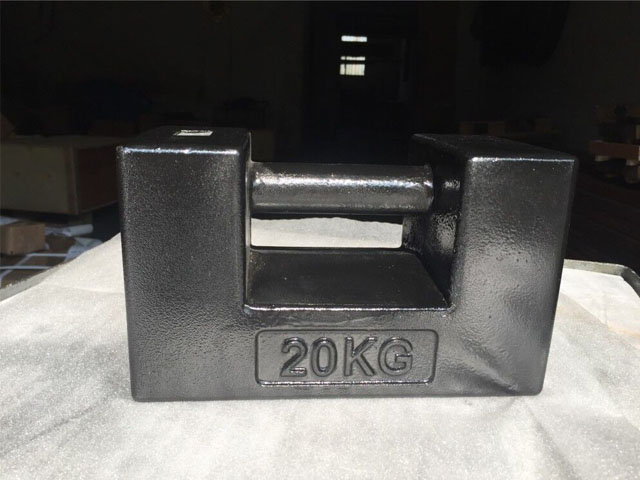
200kg Cast Iron Lock Calibration Weight Truck Scale Test
Truck scales serve as fundamental weighing equipment for industrial logistics, material settlement, and cargo measurement, providing core data support for daily operational metering work. The long-term continuous load bearing, frequent vehicle rolling, and changes in on-site environmental conditions will gradually cause subtle deviations in truck scale measurement performance, making regular calibration and testing an essential part of maintaining stable and reliable weighing data. The 200kg cast iron lock calibration weight is a commonly used standard mass tool for truck scale routine testing and fine calibration, featuring stable physical properties, standardized structural design, and good adaptability to on-site industrial environments. Scientific and standardized testing operations with this weight can effectively check the metering accuracy, load response performance, and structural stability of truck scales, ensuring that the equipment maintains consistent working conditions in long-term use.
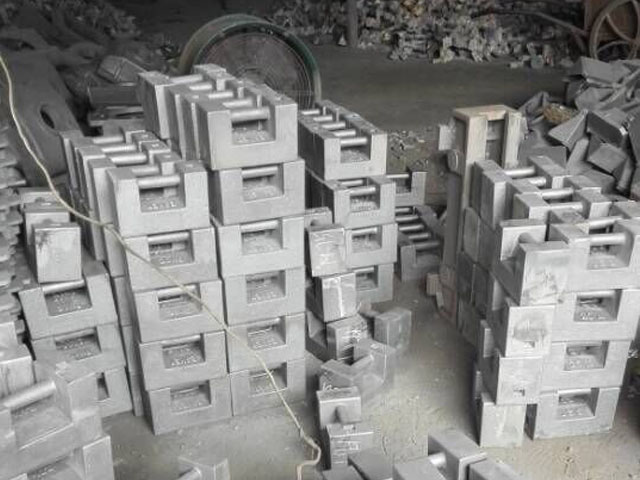
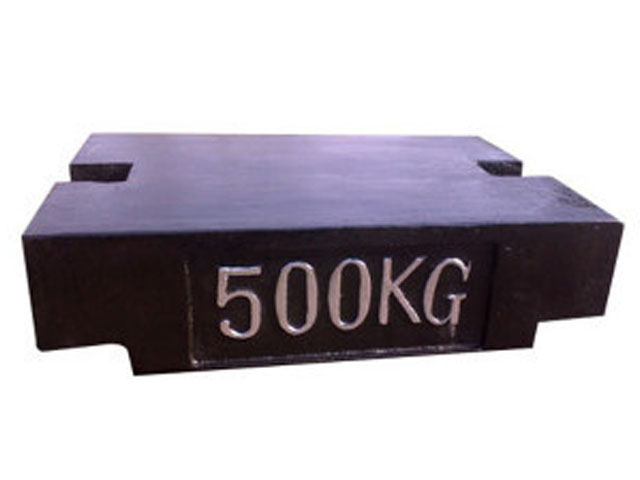
Cast iron materials are widely adopted for manufacturing calibration weights for large-scale weighing equipment due to their excellent density uniformity, low thermal expansion coefficient, and strong anti-deformation ability. The 200kg lock-type calibration weight adopts an integral cast molding process, with a compact and solid internal structure that avoids internal pores and loose structures that may affect mass stability. The lock structure design enables multiple weights to be stably combined and positioned during superposition use, preventing displacement and sliding caused by external vibration or uneven force during the testing process. This structural advantage ensures that the actual load applied on the truck scale platform is consistent with the standard mass value, eliminating measurement interference caused by weight position deviation. In addition, the surface treatment of cast iron weights can effectively resist oxidation, corrosion, and wear in open-air industrial environments, maintaining long-term mass stability and reducing the frequency of mass value correction, which is highly suitable for frequent on-site testing of truck scales in ports, freight yards, factories, and other scenarios.
Before conducting the truck scale test with 200kg cast iron lock calibration weights, comprehensive pre-test preparation and equipment status inspection must be completed to eliminate external interference factors and lay a foundation for accurate test results. First, it is necessary to inspect the basic state of the truck scale. The weighing platform should be kept flat and clean, with no sundries, dust, or residual cargo on the surface, and no foreign objects stuck in the gaps between the platform and the foundation to ensure the platform can flexibly bear and respond to loads. The foundation of the truck scale needs to be checked for settlement, deformation, or cracking, as uneven foundation stress will directly lead to inconsistent load bearing of the platform and deviation of weighing data. Meanwhile, the scale’s supporting parts, connecting components, and sensor assembly should be in normal working condition, with no loose connections or abnormal friction.
The power supply and display system of the truck scale also need pre-test debugging. The equipment should be powered on for a sufficient preheating period to ensure the internal circuit system and sensor signal acquisition system reach a stable working state, avoiding data drift caused by unstable circuit operation. After preheating, perform zero-point reset operation on the empty scale platform to confirm that the display data returns to the zero state stably, with no floating values or continuous data jumping. For the 200kg cast iron lock calibration weights to be used, visual inspection and surface cleaning are required first to remove surface dust, oil stains, and attachments that may affect the actual mass. Check the integrity of the lock structure to ensure the locking function is flexible and effective, and the weight body has no obvious deformation, damage, or wear that may cause mass change. At the same time, prepare auxiliary handling and placement tools to ensure the weights can be lifted and placed stably and accurately, avoiding collision and impact during handling that may damage the weight structure or affect mass stability.
Environmental condition inspection is also a key link in pre-test preparation. The test site should avoid strong wind, heavy rain, severe temperature fluctuation, and strong mechanical vibration interference. Extreme temperature changes will cause slight thermal expansion and contraction of the truck scale platform and calibration weights, affecting the consistency of load transmission and mass reference. Strong vibration will lead to unstable data output during scale weighing, making it impossible to capture accurate stable readings. It is necessary to keep the test environment relatively stable and dry, with good ground flatness, to ensure the entire test process is carried out under consistent environmental conditions and reduce systematic errors caused by environmental changes.
The formal test process of truck scales based on 200kg cast iron lock calibration weights follows standardized operational steps, mainly including zero-point verification, partial load test, full-platform uniform load test, repeatability test, and position deviation test, which comprehensively verify the comprehensive metering performance of the truck scale. The zero-point stability test is carried out first after pre-test preparation. Keep the truck scale in an empty state, continuously observe the display data for a certain period, and record the zero-point floating range. A stable zero point is the basic guarantee for accurate subsequent load test data. If the zero point drifts obviously, it is necessary to recheck the platform stress state and circuit stability, and perform zero calibration again until the data remains stable.
The partial load test is the core link of the truck scale performance test. According to the effective load range of the truck scale, place a single or multiple combined 200kg cast iron lock calibration weights on the weighing platform in stages to conduct graded load testing. During the test, the weights must be placed gently and stably to avoid impact load on the platform, which may cause instantaneous signal distortion of the sensor. After each placement, wait for the scale’s display data to stabilize completely before recording the weighing reading. Compare the displayed data with the standard total mass of the calibration weights to calculate the deviation value of the truck scale under different load states. Graded loading can effectively verify the linear response performance of the truck scale, check whether the equipment maintains consistent measurement accuracy under light load, medium load, and heavy load conditions, and identify linear deviation problems that may occur in the sensor signal conversion and transmission process.
The platform position deviation test, also known as the corner test, is designed to check the uniform stress performance of the truck scale platform and the consistent response of each sensor. In this test, a fixed number of 200kg cast iron lock calibration weights are placed at multiple key positions such as the four corners and the middle of the truck scale platform respectively, and the weighing data of each position is recorded separately. In normal working condition, the weighing data of each position should be close to the standard mass value with a tiny and reasonable deviation range. If the data deviation of individual positions is too large, it indicates uneven platform stress, inconsistent sensor sensitivity, or local structural deformation of the scale body. This test can accurately locate local performance anomalies of the truck scale, providing a targeted basis for subsequent maintenance and adjustment.
The repeatability test is used to verify the stability and consistency of truck scale measurement data. Select a fixed load value within the common working range of the equipment, use 200kg cast iron lock calibration weights to complete multiple repeated loading and unloading operations at the same position of the platform, and record the stable weighing data of each test. The data difference obtained from multiple tests should be controlled within a reasonable error range. Excessive repeatability deviation means that the truck scale has unstable signal acquisition or poor structural stability, which will cause inconsistent measurement results in repeated weighing of the same cargo in actual use, affecting the fairness and accuracy of metering settlement.
After completing all test items, systematic data sorting and error analysis are required. Sort out all recorded test data, calculate the average deviation, maximum deviation, and repeatability error of each test link, and evaluate the overall metering performance of the truck scale according to the error range. For minor deviations within the allowable range, regular follow-up observation and periodic re-testing can be adopted to track performance changes. For deviations exceeding the reasonable range, targeted debugging and adjustment are needed, including sensor parameter fine-tuning, platform level correction, structural stress adjustment, and zero-point and span calibration of the scale system. After adjustment, the above test items need to be repeated again until all measurement indicators meet the normal working requirements.
In actual industrial application scenarios, the application of 200kg cast iron lock calibration weights in truck scale testing has unique practical value. Compared with small-specification calibration weights, the 200kg single weight can quickly complete medium-load testing, improving the efficiency of large-scale truck scale calibration work. The lock-type superposition structure allows flexible combination of multiple weights to adapt to different load test requirements of truck scales with different ranges, realizing multi-stage full-range performance detection. The stable cast iron material can adapt to harsh on-site working environments such as outdoor wind and sun, dust pollution, and frequent handling, maintaining stable mass reference performance for a long time.
Daily maintenance and standardized management of 200kg cast iron lock calibration weights are crucial to ensure the accuracy of truck scale test results. After each use, the weights need to be cleaned thoroughly to remove surface dust and sundries, and placed in a dry and ventilated storage environment to avoid long-term damp and corrosion leading to mass change. Regular manual inspection of the weight body integrity, surface wear degree, and locking structure flexibility is required, and abnormal weights should be stopped from use in time. At the same time, the use frequency and test records of the weights should be sorted regularly, and regular mass verification should be carried out to ensure that the reference mass value is always accurate and reliable, avoiding test errors caused by the deviation of the calibration weight itself.
Standardized truck scale testing with 200kg cast iron lock calibration weights is an important means to ensure the accuracy and stability of industrial weighing metering. With the continuous improvement of industrial logistics efficiency and the increasingly strict requirements for metering data standardization, the regular testing and calibration of truck scales have become indispensable basic work in industrial operation. Scientific use of standard cast iron calibration weights, strict implementation of test processes, and standardized data analysis and maintenance management can effectively eliminate equipment measurement errors, avoid economic losses and metering disputes caused by inaccurate weighing data, and provide stable and reliable technical support for the safe and standardized operation of industrial weighing links. In the long-term equipment operation management cycle, adhering to regular testing and maintenance can also effectively extend the service life of truck scales, reduce equipment failure rates, and improve the overall operational efficiency of industrial weighing systems.
200kg Cast Iron Lock Calibration Weight Truck Scale Test
https://www.veidtweighing.com/calibration-weights.html
Post Date: Jun 19, 2026

![Working Principle of Calibration Weight]()
Working Principle of Calibration Weight
A calibration weight serves as a fundamental mass reference medium in all kinds of weighing measurement and instrument adjustment scenarios, undertaking the core task of u…![Types of Calibration Weight]()
Types of Calibration Weight
Calibration weights serve as fundamental physical standards in the entire field of metrology, forming the essential foundation for maintaining the accuracy, consistency, a…![E1 Class Standard Weight]()
E1 Class Standard Weight
Within the intricate and foundational realm of mass metrology, the role of precision reference artifacts remains irreplaceable for maintaining consistent, reliable, and tr…![500kg Test Weight]()
500kg Test Weight
In the complex and interconnected framework of modern industrial production, logistics transportation, engineering construction, and mechanical operation, the consistency …![F1 Class Test Weight]()
F1 Class Test Weight
Weight management stands as one of the most foundational and intricately nuanced elements within the operational and technical framework of single-seater open-wheel motors…