20g Stainless Steel Calibration Weight School Experiment
In school science laboratories, accurate mass measurement serves as the fundamental foundation for countless physics and chemistry experiments, laying the groundwork for students to understand basic scientific principles and cultivate rigorous experimental thinking. Among the essential laboratory tools for mass calibration and verification, the 20g stainless steel calibration weight stands out as a practical and widely used instrument tailored for middle and high school experimental teaching scenarios. Designed to provide a stable and consistent standard mass value, this precision tool helps students eliminate measurement errors caused by instrument deviation, standardize experimental operations, and build a correct cognition of mass measurement accuracy in basic scientific research. Unlike ordinary daily objects with unstable mass and inconsistent specifications, the stainless steel calibration weight is manufactured with standardized production processes, ensuring uniform density, stable physical properties, and consistent mass performance for long-term repeated use in daily teaching experiments.
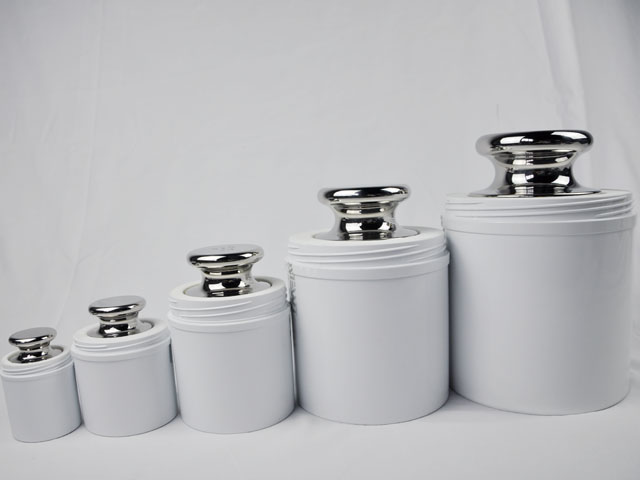
The selection of stainless steel as the core material for 20g calibration weights is closely matched with the actual needs of school laboratory environments and student experimental operations. Stainless steel materials feature excellent structural stability, low surface porosity, and strong resistance to external environmental interference, which effectively avoids common problems faced by ordinary metal weights such as oxidation, rust, and quality attenuation after long-term placement and use. In school laboratories with frequent personnel flow and high tool utilization rates, experimental equipment is often exposed to air, trace moisture, and occasional contact with dilute chemical reagents or dust. Stainless steel can maintain stable physical properties under such conventional environmental conditions, preventing mass changes caused by surface corrosion or oxidation that would affect experimental accuracy. Meanwhile, the material has moderate hardness and smooth surface finish, which resists surface wear caused by frequent handling, wiping, and placement during student experiments. This durability ensures that the 20g mass reference value remains stable throughout long-term teaching cycles, meeting the repetitive use requirements of daily teaching, group experiments, and experimental skill assessments.
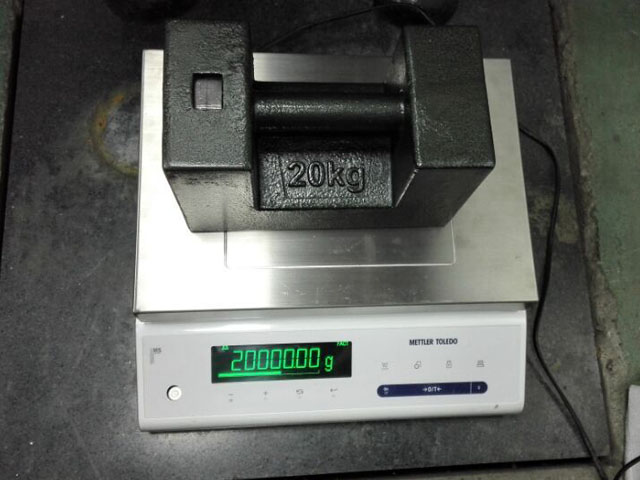
In basic school experimental teaching, the core function of the 20g stainless steel calibration weight is to calibrate and verify the accuracy of various weighing instruments, including mechanical triple beam balances, electronic analytical balances, and portable precision scales commonly used in middle and high school laboratories. All weighing instruments will produce subtle measurement deviations after long-term use, frequent vibration, accidental collision, or changes in ambient temperature and humidity. These deviations are usually difficult to observe through daily naked-eye use but will directly affect the authenticity and accuracy of experimental data, leading to inconsistent experimental results and hindering students from summarizing correct scientific laws. The 20g calibration weight provides a fixed and reliable standard mass reference. Before students start formal experimental measurement, they can place the calibration weight on the center of the weighing instrument’s tray, observe the instrument’s display reading or balance state, and compare it with the standard 20g mass value to judge whether the instrument has measurement deviation. If a deviation is found, teachers can guide students to complete simple instrument debugging and correction according to standard operating procedures, ensuring that the weighing instrument is in a normal working state before data collection, which standardizes the whole process of experimental measurement.
Beyond basic instrument calibration, the 20g stainless steel calibration weight plays an irreplaceable role in guiding students to master core scientific experimental methods and cultivate quantitative thinking ability. Most basic science experiments in schools require quantitative data support rather than simple qualitative observation. For example, in physics experiments exploring the relationship between mass and gravity, verifying the law of conservation of mechanical energy, and measuring the density of solid and liquid substances, accurate mass data is the core basis for deriving experimental formulas and summarizing physical laws. In chemistry experiments involving solution preparation, solute mass fraction calculation, and solid reagent quantification, stable mass measurement also directly determines the success rate and data authenticity of the experiment. The 20g calibration weight, with its moderate mass specification, is highly suitable for the measuring range of conventional school laboratory balances. Its mass value is neither too light to be affected by tiny air flow and operating errors nor too heavy to exceed the bearing range of student experimental instruments, making it an ideal teaching aid for students to learn quantitative measurement skills.
In group teaching experiments, the application of 20g stainless steel calibration weight also helps standardize the operating standards of different student groups and reduce systematic errors in collective experimental data. In conventional classroom experimental teaching, multiple groups of students carry out the same experimental operation simultaneously, and subtle differences in instrument status and operating habits among groups often lead to scattered experimental data, which is not conducive to teachers’ unified teaching summary and students’ correct understanding of scientific laws. By uniformly using the 20g calibration weight to calibrate experimental balances before each group’s operation, the measurement benchmark of all experimental groups can be unified, effectively reducing data differences caused by instrument deviations. This standardized operation not only improves the consistency of classroom experimental results but also enables students to intuitively understand the importance of calibration operations in scientific experiments, helping them develop standardized experimental habits of calibrating instruments first and verifying parameters before formal data measurement.
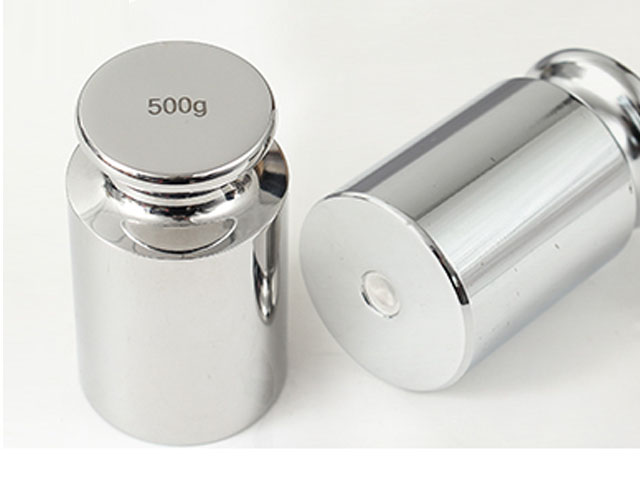
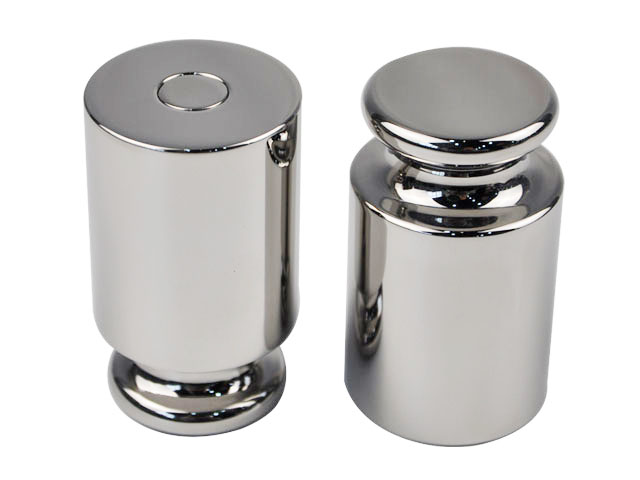
The structural design of the conventional 20g stainless steel calibration weight also fully adapts to the safety and operability requirements of student experimental operations. The overall structure is compact and regular, mostly designed with a smooth integrated structure without sharp edges and corners, which avoids scratch risks during student handling and placement. The uniform surface treatment reduces the adhesion of dust and experimental residues, making daily cleaning and maintenance convenient for teachers and students. In order to adapt to different experimental scenarios, some conventional styles adopt a flat stacked structure or a hanging structure, which can meet the use needs of tray balance calibration and mechanical dynamics experiments respectively. The integrated molding process eliminates internal gaps and hollow structures inside the weight, ensuring uniform overall density, avoiding local mass imbalance, and guaranteeing stable placement on the weighing tray without tilting or shaking, which further improves the accuracy of calibration and measurement operations.
In the teaching of experimental error analysis, the 20g stainless steel calibration weight is also an important teaching carrier for teachers to explain the sources and control methods of experimental errors. Students in the initial stage of experimental learning often have vague understanding of experimental errors, easily attributing all data deviations to operational mistakes. Through the calibration experiment with 20g standard weight, teachers can intuitively guide students to distinguish systematic errors and accidental errors in experiments. Systematic errors often come from the deviation of the weighing instrument itself, which can be effectively reduced by calibration with standard weights. Accidental errors are caused by human operation, environmental changes and other uncertain factors, which can be weakened by standardized operation and repeated measurement. In the process of repeated calibration and verification, students can personally observe the data changes of the balance before and after calibration, clearly understand the generation mechanism of experimental errors, and master basic error control methods, which is of great significance for cultivating students’ rigorous scientific literacy and experimental analysis ability.
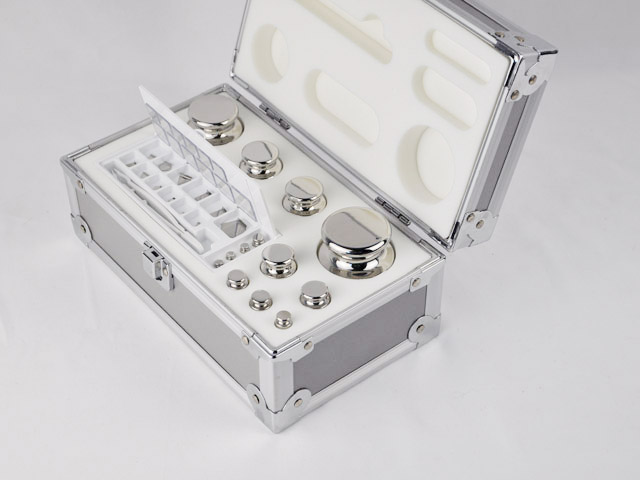
Correct use and standardized maintenance of 20g stainless steel calibration weights are essential to maintain their long-term measurement stability and extend service life, and these operational norms are also important content in school experimental safety and skill teaching. In the process of student use, teachers need to guide students to avoid direct contact with the weight surface by hand, because sweat, oil stains and fine impurities on the human skin will adhere to the surface of the weight, causing subtle changes in surface quality and affecting calibration accuracy. Students should use clean special tweezers or filter paper to take and place the weight, and place it stably in the center of the weighing tray to avoid sliding collision and surface wear. After the experiment, the weight should be cleaned with dry soft cotton cloth to remove surface dust and experimental residues, and then placed in a dry and dust-proof storage box for sealed preservation, avoiding long-term exposure to humid air or corrosive experimental environments. Regular surface inspection and cleaning can effectively maintain the surface finish and mass stability of the stainless steel weight, ensuring that it can maintain accurate reference value in long-term repeated teaching experiments.
Compared with calibration weights made of other materials, stainless steel 20g weights have obvious adaptability advantages in school teaching scenarios. Cast iron weights are prone to rust and powder falling after long-term use, which will pollute laboratory instruments and experimental samples, and their mass stability is poor, requiring frequent correction. Plastic weights have low structural hardness, are easy to deform and wear, and cannot meet the precision requirements of middle and high school quantitative experiments. In contrast, stainless steel materials balance precision, stability and cost performance, fully adapting to the high-frequency use characteristics of school laboratories. The stable physical and chemical properties enable the weight to resist daily environmental interference, and the moderate precision level perfectly matches the accuracy requirements of basic educational experiments, avoiding the performance redundancy of high-precision professional experimental weights while meeting teaching needs, making it the most suitable conventional calibration tool for basic school science laboratories.
In the progressive teaching of scientific experimental skills, the 20g stainless steel calibration weight also undertakes the important task of helping students complete the transition from intuitive observation to quantitative analysis. Junior students initially contact scientific experiments mainly through intuitive phenomenon observation to understand scientific knowledge, while with the improvement of grade and experimental difficulty, experiments require accurate quantitative data to verify theoretical formulas and summarize objective laws. The 20g standard weight provides students with a clear quantitative reference standard. In repeated calibration and measurement operations, students can gradually establish the concept of measurement benchmark, understand the objectivity and rigor of scientific measurement, and realize that any scientific experimental conclusion must be supported by accurate and reliable data. This transformation of scientific thinking is far more important than the completion of a single experimental operation, laying a solid thinking foundation for students’ subsequent learning of advanced physics, chemistry and natural science experiments.
In addition to conventional balance calibration and basic quantitative experiments, the 20g stainless steel calibration weight can also be applied to a variety of extended innovative experimental projects in school teaching. In physics teaching, it can be used as a standard load to explore the deformation law of elastic objects, verify the relationship between elastic force and deformation variable, and carry out simple mechanical balancing experiments. In interdisciplinary innovative experiments, it can cooperate with measuring tools such as stopwatches and measuring tapes to complete comprehensive experimental projects such as energy conversion verification and simple mechanical efficiency measurement. These extended applications break the single use mode of traditional calibration weights, enrich the diversity of school experimental teaching, and provide more flexible experimental carriers for teachers to carry out exploratory teaching and students to carry out independent innovative experiments.
The popularization and standardized application of 20g stainless steel calibration weights in school laboratories also helps standardize the overall construction of basic science experimental teaching. As a basic standardized measuring tool, its unified specification and stable performance ensure the consistency of experimental teaching standards in different schools and different classrooms, which is conducive to the unified implementation of experimental teaching syllabi and experimental skill assessment standards. In experimental skill competitions and academic proficiency tests for middle and high school students, the standardized use of stainless steel calibration weights is also a key assessment point for students’ experimental operational norms, examining whether students master the basic instrument calibration methods and standardized experimental operation habits required for scientific experiments.
In conclusion, the 20g stainless steel calibration weight, as a basic and essential precision experimental tool in school science laboratories, has far-reaching teaching value beyond simple instrument calibration. Its stable material performance, standardized specification design and wide experimental adaptability meet the diversified needs of basic science experimental teaching, instrument verification, error analysis and innovative exploration. In daily teaching experiments, it not only ensures the accuracy and authenticity of experimental data, but also helps students cultivate standardized operational habits, rigorous scientific thinking and accurate quantitative analysis ability. With standardized use and scientific maintenance, this compact and practical experimental tool can stably serve long-term school experimental teaching, continuously assist students to understand the essence of scientific measurement, and lay a solid foundation for students’ subsequent in-depth exploration of natural science laws and improvement of scientific literacy.
20g Stainless Steel Calibration Weight School Experiment
https://www.veidtweighing.com/calibration-weights.html
Post Date: Jun 19, 2026

![Light Weight Stainless Steel Small Calibration Weight]()
Light Weight Stainless Steel Small Calibration Weight
Light weight stainless steel small calibration weights are essential precision measuring accessories widely adopted in precision measurement, laboratory testing, and daily…![Standard Weight For Floor Scales]()
Standard Weight For Floor Scales
Floor scales serve as the foundational weighing equipment in industrial, logistics, manufacturing, and warehousing environments, delivering reliable weight measurement for…![Analytical Balance Test Weight]()
Analytical Balance Test Weight
In the realm of precision laboratory measurement, analytical balance test weights stand as the most fundamental and indispensable reference standard, underpinning the accu…![Digital Scale Calibration Weight]()
Digital Scale Calibration Weight
In all fields that rely on precise mass measurement, digital scale calibration weights serve as fundamental auxiliary tools that underpin consistent and reliable weighing …![20kg M1 Heavy Duty Calibration Weight Weighbridge Use]()
20kg M1 Heavy Duty Calibration Weight Weighbridge Use
Weighbridges serve as core weighing equipment in industrial production, logistics transportation, material trading, and resource statistical accounting, undertaking the cr…