Working Principle of Calibration Weight
A calibration weight serves as a fundamental mass reference medium in all kinds of weighing measurement and instrument adjustment scenarios, undertaking the core task of unifying measured values and eliminating systematic deviations in weighing equipment operation. Its entire working logic is not limited to the simple external feature of being a solid metal block with fixed size and shape, but relies on a complete set of basic physical laws, precise material physical property control, and standardized force balance comparison mechanisms. Whether applied in laboratory fine weighing environments, industrial production batch weighing links, or daily metering equipment routine debugging processes, the essential working core of a calibration weight remains consistent, which is to use a stable and known mass foundation to provide a reliable comparison benchmark for various weighing instruments, so as to judge the operating state of the equipment and correct subtle measurement errors generated during long-term use. To fully understand the working principle of a calibration weight, it is necessary to start from the essential difference between mass and gravitational force, clarify the internal physical connection between the two, and then analyze how the structural design and material characteristics of the calibration weight maintain mass stability, and finally explain the actual operation mechanism of matching and comparing with different types of weighing equipment to complete calibration work.
The most basic physical basis supporting the normal work of all calibration weights lies in the inherent distinction and close correlation between mass and weight in the field of physics. Mass is an inherent physical property of an object, which will not change with the difference of geographical location, environmental altitude, atmospheric conditions and external surrounding environment, and always maintains a fixed numerical value as long as the object itself does not undergo material loss or quality increase. In contrast, the weight perceived in daily weighing work is essentially the gravitational force exerted on the object by the planet’s gravitational field, and its magnitude is affected by the local gravitational acceleration value. The core conversion relationship between the two follows the basic mechanical formula of classical physics, that is, the gravitational force generated by an object is equal to the product of its inherent mass and the local gravitational acceleration coefficient. This physical relationship constitutes the primary premise for the calibration weight to realize its calibration function, because all weighing instruments, whether traditional mechanical lever balances or modern electronic precision balances, do not directly measure the mass of the measured object in the actual working process. Instead, they sense the downward pressure or tension generated by the object under the action of gravity, and then convert the collected force signal into intuitive mass data through internal mechanical transmission structures or electronic signal processing systems. This means that all weighing equipment relies on the indirect conversion of force and mass to complete measurement, and the calibration weight acts as a standard carrier with known accurate mass, enabling the weighing equipment to complete the correction of the internal conversion relationship between force and mass.
In the actual calibration process, the working process of the calibration weight follows the force balance comparison principle in a strict sense. When the calibration weight is stably placed on the bearing platform of the weighing instrument, the downward gravitational force generated by the calibration weight acts on the stress sensing part of the equipment. For traditional mechanical weighing equipment based on lever transmission structure, the gravitational force of the calibration weight will drive the lever system to tilt and balance, and the balance state of the lever directly reflects the consistency between the equipment’s internal scale setting and the actual standard mass of the calibration weight. If the equipment is in a normal accurate state, the balance position of the lever will correspond exactly to the marked mass value of the calibration weight; if there is a deviation in the mechanical transmission part or the scale marking of the equipment, the lever will show an unbalanced state, and staff can adjust the mechanical fine-tuning parts of the equipment according to the unbalanced degree to restore the balance state, so as to complete the calibration correction. For modern electronic weighing instruments adopting magnetic force restoration or load cell sensing technology, the working principle is essentially the same in the core link of force comparison. The load cell inside the electronic equipment will convert the downward pressure generated by the calibration weight into a weak electrical signal, and the internal circuit system of the equipment will convert this electrical signal into a displayed mass value according to the preset program algorithm. By comparing the displayed value with the actual known mass of the calibration weight, the system can identify the signal conversion deviation of the equipment, and automatically store correction parameters to adjust the subsequent signal conversion standard, ensuring that the equipment can accurately convert the gravitational force of any measured object into real mass data in subsequent use.
To ensure that the calibration weight can always play a stable reference role in long-term repeated use, its working principle also includes the core guarantee link of maintaining long-term mass stability through reasonable material selection and structural design. The basic function of the calibration weight determines that its own actual mass must not have obvious fluctuation and change with the change of external environment and use time, otherwise it will lose the foundation as a reference benchmark and lead to inaccurate calibration results. In terms of material selection, the raw materials used to make calibration weights are all selected for low thermal expansion coefficient, strong oxidation resistance, and weak physical and chemical activity characteristics. This is because the ambient temperature change in different use environments will cause the thermal expansion and contraction of the object, and materials with excessive thermal expansion coefficient will produce subtle volume changes with temperature fluctuation, which will affect the overall mass distribution and even cause slight mass changes due to surface adsorption of moisture in the air. At the same time, materials with poor oxidation resistance will undergo chemical reactions with oxygen and moisture in the air during long-term placement and use, resulting in surface corrosion and material loss, which directly changes the inherent mass of the calibration weight. The special material selection effectively avoids these problems, keeping the physical and chemical state of the calibration weight stable for a long time, so that its inherent mass can always remain at the fixed standard value, and providing a stable and unchanging reference basis for each calibration work.
The structural design of the calibration weight also serves the core demand of maintaining mass stability and optimizing force transmission effect, which is an important part of its overall working principle. The surface of the calibration weight is usually processed into a smooth and flat structure, and the overall shape is designed to be regular and symmetrical. The smooth surface design can reduce the adsorption of dust, moisture and other impurities in the air, avoiding the temporary increase of additional mass caused by impurity adhesion in a short time, which would interfere with the accuracy of calibration comparison. The regular and symmetrical overall structure ensures that the gravity center of the calibration weight is concentrated in the central position, and the downward pressure generated by gravity can be evenly and stably acted on the stress bearing area of the weighing instrument when placed on the weighing platform. This uniform force transmission state avoids measurement errors caused by eccentric force or partial stress concentration, ensures that the force signal received by the weighing instrument is completely consistent with the standard gravitational force corresponding to the mass of the calibration weight, and makes the comparison and calibration process more accurate and reliable. In addition, the internal solid structure design of most calibration weights avoids internal hollow or gap settings, preventing subtle mass changes caused by internal air flow, moisture penetration or structural deformation, further consolidating the stability of the reference mass basis in the working process.
In practical application scenarios, the working principle of the calibration weight also involves the adaptive correction of external environmental interference factors, which is a key link to ensure the accuracy of calibration results in different use scenarios. Although the inherent mass of the calibration weight is fixed, the local gravitational acceleration will vary slightly with different geographical latitudes and altitudes, and the air buoyancy generated by atmospheric pressure and air density will also have a subtle offset effect on the weighing state of the calibration weight on the equipment. In the calibration work of high-precision laboratory weighing instruments, these subtle environmental factors need to be fully combined with the basic working principle of the calibration weight for unified consideration and correction. Air buoyancy will produce an upward counteracting force on the calibration weight placed in the air, reducing the actual downward pressure acting on the weighing instrument. The magnitude of this buoyancy is related to the volume of the calibration weight and the local air density. Professional calibration work will calculate the buoyancy offset according to the actual environmental conditions, and combine it with the gravitational acceleration difference to fine-tune the reference comparison standard, so that the calibration weight can still provide accurate reference comparison effect under different environmental conditions. This adaptive correction based on environmental physical factors makes the working principle of the calibration weight more complete, enabling it to adapt to various complex use environments and maintain the consistency and accuracy of calibration work results.
The working principle of the calibration weight also reflects the essential logical relationship between metrological traceability and measurement consistency in the whole weighing measurement system. All weighing measurement work in various industries needs to be based on unified mass standards to ensure that the measurement data obtained by different equipment in different regions and links can be mutually recognized and consistent. The calibration weight acts as a transmission carrier of mass standards, and its working process is essentially the process of transmitting accurate mass reference values from high-level standard benchmarks to various terminal weighing equipment. Each calibration weight is manufactured and processed according to unified basic mass parameters, and its own mass is locked within a very small error range. When calibrating the terminal weighing equipment, the equipment takes the mass value of the calibration weight as the only accurate reference, adjusts its internal measurement and conversion system, so that the measurement data of the equipment is consistent with the unified standard. Through this working mode, the calibration weight connects the top-level mass standard with the actual production and measurement links, eliminates the measurement deviation caused by different equipment models, different use times and different operating environments, and ensures the overall uniformity and accuracy of all weighing measurement work in all fields.
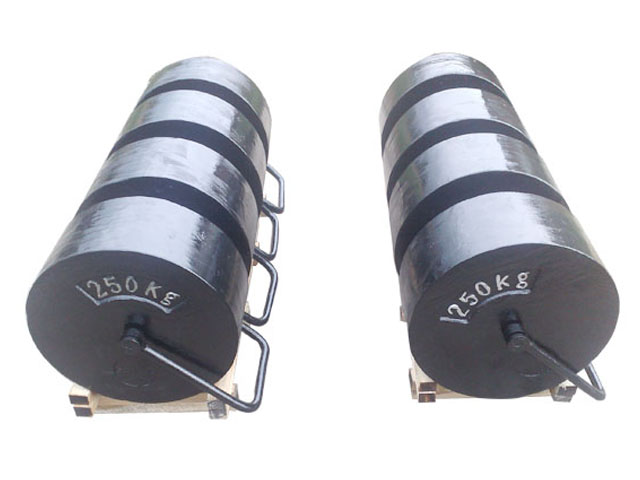
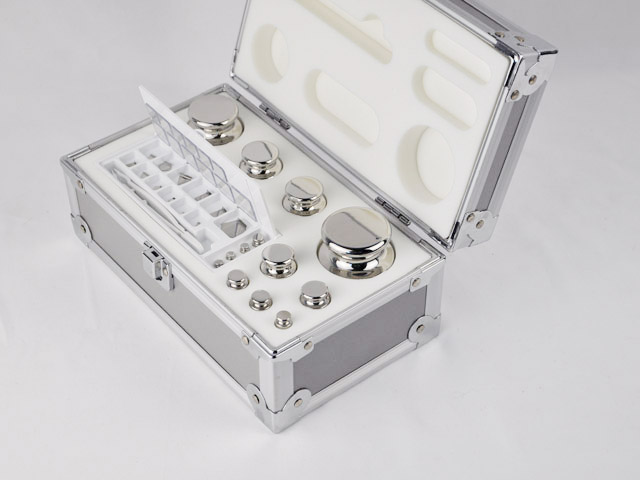
It is also necessary to distinguish the working difference between calibration weights of different specifications in actual use, so as to deeply understand the extensional application of its core working principle. Calibration weights with different mass specifications are suitable for different weighing ranges and precision levels of weighing equipment, but their core working principles of force balance comparison and mass reference benchmarking are completely consistent. Small-specification calibration weights are used for calibrating high-precision micro-weighing equipment in laboratories, requiring higher mass stability and smaller error control range, and their material processing and surface precision treatment are more refined to adapt to the high-sensitivity sensing characteristics of precision equipment. Large-specification calibration weights are mostly used for calibrating industrial large-scale weighing equipment with wide weighing range, focusing on maintaining overall structural stability and uniform force transmission, ensuring that they can still maintain stable mass and force transmission effect under long-term heavy-load calibration work. No matter how the specification and application scenarios change, the core logic of relying on fixed known mass to generate standard gravitational force and complete comparison and correction of weighing equipment has never changed, which is the inherent core of the working principle of all calibration weights.
In the long-term use cycle, the continuous effectiveness of the calibration weight’s working principle also depends on regular maintenance and reasonable use management, which is an auxiliary guarantee for the stable operation of its basic physical mechanism. Although the calibration weight is made of stable materials and reasonable structures, long-term placement in humid, dusty or corrosive environments may still cause subtle surface changes, and frequent collision and friction in use may lead to slight surface wear, both of which will affect the accuracy of its inherent mass. Regular maintenance can keep the surface of the calibration weight clean and intact, avoid external factors damaging its physical and chemical stability, and ensure that it can always work according to the original working principle. Reasonable use methods can avoid structural deformation and mass loss caused by improper operation, maintain the gravity center balance and force transmission performance of the calibration weight, and make the core links of force balance comparison and mass reference always in the best working state. Only when the auxiliary maintenance work is in place can the basic working principle of the calibration weight give full play to its role and provide reliable calibration support for weighing measurement work for a long time.
To sum up, the working principle of a calibration weight is a comprehensive system formed by the combination of basic classical mechanical physics laws, material physical and chemical stability characteristics, structural design optimization, environmental interference adaptive correction and metrological standard traceability transmission. Starting from the essential difference between mass and gravity, taking force balance comparison as the core operation mode, relying on high-stability materials and reasonable structure to maintain the fixed reference mass, and combining environmental factor correction and standardized use maintenance to ensure long-term accurate work, the calibration weight completes the core work of calibrating and correcting various weighing instruments. It is not only a simple physical object for weighing comparison, but also a key medium for realizing unified and accurate weighing measurement in all walks of life. All its structural design, material selection and use specifications are centered on ensuring the stable implementation of the core working principle, so that every weighing equipment can maintain accurate measurement performance in long-term use, and provide reliable basic data support for industrial production, laboratory scientific research, commodity transaction and other links that rely on weighing measurement.
Working Principle of Calibration Weight
https://www.veidtweighing.com/calibration-weights.html
Post Date: May 3, 2026

![Standard Weight Sets]()
Standard Weight Sets
For anyone embarking on a strength training journey, whether building a dedicated home workout space or refining a consistent gym routine, standard weight sets stand as on…![Purposes of Calibration Weight]()
Purposes of Calibration Weight
In every field that relies on weighing and mass measurement as a core operational foundation, calibration weights stand as indispensable foundational tools that quietly un…![Calibration Weight Supplier]()
Calibration Weight Supplier
In every sector that relies on precise mass measurement as the foundation of daily operation and quality control, calibration weights stand as the most fundamental and ind…![5kg Test Weight]()
5kg Test Weight
In the complex and interconnected world of modern measurement operations, standardized physical reference objects form the invisible backbone of all quantitative data coll…![M1 Class Test Weight]()
M1 Class Test Weight
Understanding the relationship between physical load, bodily adaptation, and consistent movement practice stands as one of the most foundational yet deeply nuanced aspects…