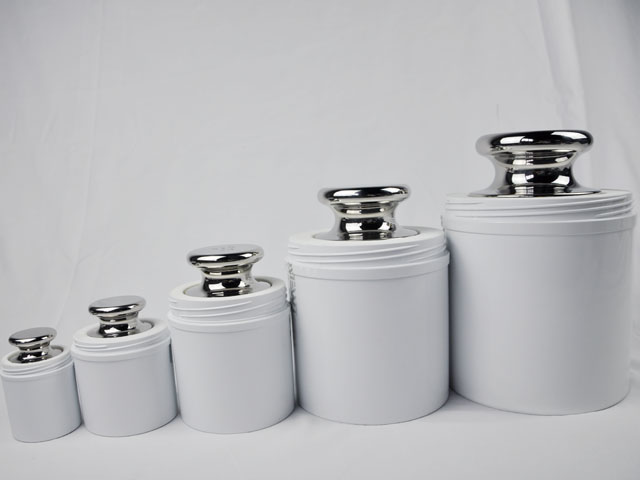
Analytical Balance Calibration Weight
Analytical balance calibration weights serve as fundamental reference tools in precision weighing operations, forming the core foundation for maintaining the accuracy and reliability of analytical balance measurements across laboratory, pharmaceutical, chemical, and material science research environments. Analytical balances are highly sensitive measuring instruments designed to detect minor mass variations in tiny samples, and their long-term operational stability is prone to subtle deviations influenced by environmental changes, mechanical wear, and continuous use. Calibration weights act as standardized mass references to correct these deviations, ensuring that all weighing data generated by analytical balances remains consistent, traceable, and credible for experimental analysis, quality testing, and academic research. Unlike ordinary weighing tools, these specialized weights are engineered with strict dimensional precision, stable physical properties, and uniform mass consistency, making them uniquely suited to match the high sensitivity requirements of analytical balance systems.
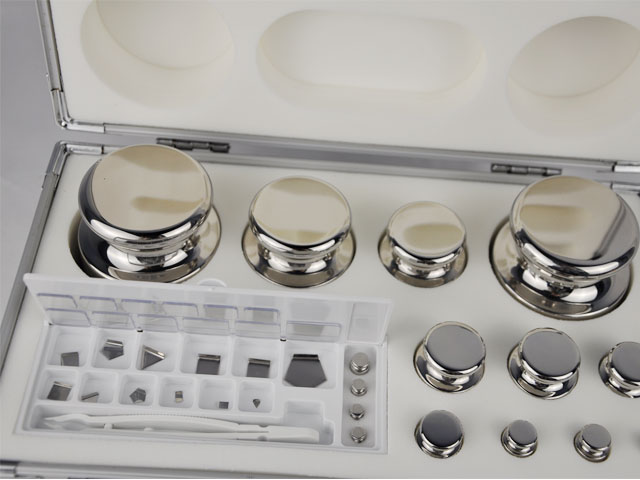
The structural and material design of analytical balance calibration weights is tailored to adapt to high-precision weighing scenarios. Most calibration weights for analytical balance use adopt dense, non-porous metal materials with low thermal expansion coefficients, which effectively reduce mass fluctuations caused by temperature variations and avoid surface deformation that may affect measurement accuracy. The surface of each weight undergoes fine polishing and anti-corrosion treatment to prevent oxidation, dust adhesion, and chemical erosion during long-term storage and use. Surface smoothness minimizes the accumulation of tiny impurities, which is critical because even microscopic particle deposition can cause detectable mass errors on high-sensitivity analytical balances. The overall structure of the weights is compact and uniform, with symmetrical geometric designs that eliminate eccentric force interference during placement on the balance pan, ensuring stable contact and consistent force transmission during each calibration test.
A core attribute of qualified analytical balance calibration weights is stable mass retention. In routine laboratory operations, subtle changes in balance measurement performance are inevitable over time. Frequent vibration in laboratory spaces, fluctuations in ambient temperature and humidity, and slight mechanical fatigue of balance internal components will gradually lead to offset weighing readings. Regular calibration with standard weights can effectively identify and eliminate such systematic errors. Each calibration weight maintains a fixed nominal mass value with controlled minor tolerance ranges, providing a stable reference benchmark for balance parameter adjustment. By comparing the balance’s displayed reading with the known standard mass of the calibration weight, operators can adjust the balance’s internal parameters to restore its weighing accuracy, ensuring that subsequent sample weighing results reflect the true mass of measured objects.
The application logic of analytical balance calibration weights revolves around standardized comparison and error correction, covering single-point verification and multi-point linear calibration scenarios. Single-point calibration is commonly used for daily routine inspection, selecting a weight with a nominal mass close to the conventional weighing range of the balance to verify the basic accuracy of the instrument. Multi-point calibration covers multiple mass gradients across the balance’s full measuring range, effectively correcting linear errors that may exist in different weighing intervals. This comprehensive calibration method optimizes the balance’s overall measurement performance, avoiding inaccurate data caused by inconsistent sensitivity at different load levels. In rigorous experimental scenarios requiring high data precision, multi-point calibration with gradient standard weights becomes an essential operational step to ensure the integrity and uniformity of measurement performance throughout the instrument’s working range.
Environmental control is an indispensable auxiliary condition for effective calibration using analytical balance calibration weights. High-sensitivity analytical balances and their matching calibration weights are highly susceptible to ambient environmental factors. Air convection in the laboratory can generate subtle airflow resistance on the weight surface and balance pan, interfering with static weighing stability. Temperature differences cause slight thermal expansion or contraction of both the weight and balance components, leading to temporary mass deviation and mechanical displacement. Humidity fluctuations may produce faint moisture adsorption on the weight surface, increasing additional invisible mass that affects calibration results. Therefore, calibration operations must be carried out in stable laboratory environments with constant temperature, stable humidity, and no obvious airflow or vibration. Before formal calibration, both the balance and calibration weights need sufficient standing time to adapt to the ambient environment, achieving consistent temperature and humidity balance to eliminate environmental interference errors.
Standard operating specifications directly determine the effectiveness of calibration weight application and the stability of balance performance. During the calibration process, direct manual contact with calibration weights must be avoided, as skin grease, sweat, and fine contaminants can adhere to the weight surface, causing slow mass changes and affecting long-term accuracy. Special non-contact gripping tools are used to take and place weights, ensuring the surface integrity and cleanliness of each standard weight. Before calibration, the balance pan and weight surface need gentle cleaning with soft, non-abrasive cleaning materials to remove floating dust and tiny impurities without scratching the polished surface structure. The balance must be leveled and zeroed in an unloaded state first to eliminate baseline offset errors, providing a zero-reference foundation for subsequent mass comparison tests.
The placement state of calibration weights also exerts a subtle influence on calibration results. Weights should be placed gently in the center of the balance pan to avoid eccentric placement. Eccentric loading will generate uneven mechanical stress on the balance’s internal sensing components, producing eccentric errors that deviate actual readings from standard values. For multi-point calibration, weights of different specifications need to be placed and tested in an orderly manner according to mass gradients, with each weighing process maintained for a stable duration to ensure the balance reading stabilizes before data recording. Repeated weighing tests for the same weight can effectively reduce random errors caused by accidental factors, improving the reliability of calibration results. After completing calibration, the balance needs to undergo secondary verification to confirm that its reading error is within the acceptable range, completing the entire calibration closed-loop operation.
Scientific maintenance and management of analytical balance calibration weights extend their service life and maintain long-term mass stability. After each use, calibration weights need to be placed in a dry, dust-proof, and corrosion-resistant storage environment, isolated from volatile chemical reagents, acidic and alkaline substances, and abrasive particles. Long-term exposure to open environments will lead to gradual surface oxidation, dust accumulation, and micro-scratches, all of which will alter the original standard mass of the weights. Regular manual inspection and cleaning are required during daily storage, with timely removal of surface floating impurities and regular checks for surface damage, deformation, or discoloration. Weights that have been dropped, collided, or exposed to extreme environments should be suspended from use for performance confirmation, avoiding the application of inaccurate reference standards that lead to continuous weighing errors.
The value of analytical balance calibration weights penetrates all precision measurement links in laboratory research and industrial quality control. In chemical titration, reagent configuration, and trace component detection experiments, accurate sample mass data is the prerequisite for valid experimental results and data analysis. In pharmaceutical ingredient testing and food safety detection, precise weighing ensures the accuracy of component ratio analysis and meets the basic requirements of quality control standards. In material science research, tiny mass changes of samples before and after reactions need high-precision balance support, and calibration weights guarantee the authenticity and comparability of such micro-measurement data. Without regular calibration with standard weights, analytical balances will gradually produce cumulative errors, leading to inconsistent experimental data, poor repeatability of research results, and even misjudgment of experimental conclusions and product quality indicators.
It is also essential to match appropriate calibration weights according to the performance parameters of different analytical balances. Analytical balances with different measuring ranges and sensitivity levels correspond to matching weight specification combinations. Low-range micro-analytical balances require ultra-precise small-mass calibration weights to verify micro-weighing accuracy, while large-range analytical balances need medium-mass gradient weights to cover full-range performance calibration. Reasonable matching of weight specifications avoids the problem of insufficient calibration accuracy caused by mismatched mass ranges, ensuring that each calibration operation can fully detect the performance state of the balance. Meanwhile, the frequency of calibration can be adjusted according to the intensity of instrument use, laboratory environmental conditions, and precision requirements of experimental work. Instruments used frequently in complex environments need more regular calibration maintenance to sustain stable working performance.
In summary, analytical balance calibration weights are indispensable basic reference tools for maintaining the precision of analytical weighing systems. Their stable physical properties, standardized mass indicators, and rigorous application specifications provide reliable guarantee for the accuracy, consistency, and traceability of analytical balance measurement data. Standardized use, scientific maintenance, and reasonable matching of calibration weights can effectively reduce balance measurement errors, eliminate systematic and accidental interference factors, and provide solid technical support for laboratory scientific research, industrial quality detection, and various precision weighing work. In all professional scenarios that rely on accurate mass measurement, the standardized application of calibration weights is a key link to ensure data credibility and operational standardization, and it is also an important foundation for maintaining the normative nature of precision analytical work.Analytical balance calibration weights serve as fundamental reference tools in precision weighing operations, forming the core foundation for maintaining the accuracy and reliability of analytical balance measurements across laboratory, pharmaceutical, chemical, and material science research environments. Analytical balances are highly sensitive measuring instruments designed to detect minor mass variations in tiny samples, and their long-term operational stability is prone to subtle deviations influenced by environmental changes, mechanical wear, and continuous use. Calibration weights act as standardized mass references to correct these deviations, ensuring that all weighing data generated by analytical balances remains consistent, traceable, and credible for experimental analysis, quality testing, and academic research. Unlike ordinary weighing tools, these specialized weights are engineered with strict dimensional precision, stable physical properties, and uniform mass consistency, making them uniquely suited to match the high sensitivity requirements of analytical balance systems.
The structural and material design of analytical balance calibration weights is tailored to adapt to high-precision weighing scenarios. Most calibration weights for analytical balance use adopt dense, non-porous metal materials with low thermal expansion coefficients, which effectively reduce mass fluctuations caused by temperature variations and avoid surface deformation that may affect measurement accuracy. The surface of each weight undergoes fine polishing and anti-corrosion treatment to prevent oxidation, dust adhesion, and chemical erosion during long-term storage and use. Surface smoothness minimizes the accumulation of tiny impurities, which is critical because even microscopic particle deposition can cause detectable mass errors on high-sensitivity analytical balances. The overall structure of the weights is compact and uniform, with symmetrical geometric designs that eliminate eccentric force interference during placement on the balance pan, ensuring stable contact and consistent force transmission during each calibration test.
A core attribute of qualified analytical balance calibration weights is stable mass retention. In routine laboratory operations, subtle changes in balance measurement performance are inevitable over time. Frequent vibration in laboratory spaces, fluctuations in ambient temperature and humidity, and slight mechanical fatigue of balance internal components will gradually lead to offset weighing readings. Regular calibration with standard weights can effectively identify and eliminate such systematic errors. Each calibration weight maintains a fixed nominal mass value with controlled minor tolerance ranges, providing a stable reference benchmark for balance parameter adjustment. By comparing the balance’s displayed reading with the known standard mass of the calibration weight, operators can adjust the balance’s internal parameters to restore its weighing accuracy, ensuring that subsequent sample weighing results reflect the true mass of measured objects.
The application logic of analytical balance calibration weights revolves around standardized comparison and error correction, covering single-point verification and multi-point linear calibration scenarios. Single-point calibration is commonly used for daily routine inspection, selecting a weight with a nominal mass close to the conventional weighing range of the balance to verify the basic accuracy of the instrument. Multi-point calibration covers multiple mass gradients across the balance’s full measuring range, effectively correcting linear errors that may exist in different weighing intervals. This comprehensive calibration method optimizes the balance’s overall measurement performance, avoiding inaccurate data caused by inconsistent sensitivity at different load levels. In rigorous experimental scenarios requiring high data precision, multi-point calibration with gradient standard weights becomes an essential operational step to ensure the integrity and uniformity of measurement performance throughout the instrument’s working range.
Environmental control is an indispensable auxiliary condition for effective calibration using analytical balance calibration weights. High-sensitivity analytical balances and their matching calibration weights are highly susceptible to ambient environmental factors. Air convection in the laboratory can generate subtle airflow resistance on the weight surface and balance pan, interfering with static weighing stability. Temperature differences cause slight thermal expansion or contraction of both the weight and balance components, leading to temporary mass deviation and mechanical displacement. Humidity fluctuations may produce faint moisture adsorption on the weight surface, increasing additional invisible mass that affects calibration results. Therefore, calibration operations must be carried out in stable laboratory environments with constant temperature, stable humidity, and no obvious airflow or vibration. Before formal calibration, both the balance and calibration weights need sufficient standing time to adapt to the ambient environment, achieving consistent temperature and humidity balance to eliminate environmental interference errors.
Standard operating specifications directly determine the effectiveness of calibration weight application and the stability of balance performance. During the calibration process, direct manual contact with calibration weights must be avoided, as skin grease, sweat, and fine contaminants can adhere to the weight surface, causing slow mass changes and affecting long-term accuracy. Special non-contact gripping tools are used to take and place weights, ensuring the surface integrity and cleanliness of each standard weight. Before calibration, the balance pan and weight surface need gentle cleaning with soft, non-abrasive cleaning materials to remove floating dust and tiny impurities without scratching the polished surface structure. The balance must be leveled and zeroed in an unloaded state first to eliminate baseline offset errors, providing a zero-reference foundation for subsequent mass comparison tests.
The placement state of calibration weights also exerts a subtle influence on calibration results. Weights should be placed gently in the center of the balance pan to avoid eccentric placement. Eccentric loading will generate uneven mechanical stress on the balance’s internal sensing components, producing eccentric errors that deviate actual readings from standard values. For multi-point calibration, weights of different specifications need to be placed and tested in an orderly manner according to mass gradients, with each weighing process maintained for a stable duration to ensure the balance reading stabilizes before data recording. Repeated weighing tests for the same weight can effectively reduce random errors caused by accidental factors, improving the reliability of calibration results. After completing calibration, the balance needs to undergo secondary verification to confirm that its reading error is within the acceptable range, completing the entire calibration closed-loop operation.
Scientific maintenance and management of analytical balance calibration weights extend their service life and maintain long-term mass stability. After each use, calibration weights need to be placed in a dry, dust-proof, and corrosion-resistant storage environment, isolated from volatile chemical reagents, acidic and alkaline substances, and abrasive particles. Long-term exposure to open environments will lead to gradual surface oxidation, dust accumulation, and micro-scratches, all of which will alter the original standard mass of the weights. Regular manual inspection and cleaning are required during daily storage, with timely removal of surface floating impurities and regular checks for surface damage, deformation, or discoloration. Weights that have been dropped, collided, or exposed to extreme environments should be suspended from use for performance confirmation, avoiding the application of inaccurate reference standards that lead to continuous weighing errors.
The value of analytical balance calibration weights penetrates all precision measurement links in laboratory research and industrial quality control. In chemical titration, reagent configuration, and trace component detection experiments, accurate sample mass data is the prerequisite for valid experimental results and data analysis. In pharmaceutical ingredient testing and food safety detection, precise weighing ensures the accuracy of component ratio analysis and meets the basic requirements of quality control standards. In material science research, tiny mass changes of samples before and after reactions need high-precision balance support, and calibration weights guarantee the authenticity and comparability of such micro-measurement data. Without regular calibration with standard weights, analytical balances will gradually produce cumulative errors, leading to inconsistent experimental data, poor repeatability of research results, and even misjudgment of experimental conclusions and product quality indicators.
It is also essential to match appropriate calibration weights according to the performance parameters of different analytical balances. Analytical balances with different measuring ranges and sensitivity levels correspond to matching weight specification combinations. Low-range micro-analytical balances require ultra-precise small-mass calibration weights to verify micro-weighing accuracy, while large-range analytical balances need medium-mass gradient weights to cover full-range performance calibration. Reasonable matching of weight specifications avoids the problem of insufficient calibration accuracy caused by mismatched mass ranges, ensuring that each calibration operation can fully detect the performance state of the balance. Meanwhile, the frequency of calibration can be adjusted according to the intensity of instrument use, laboratory environmental conditions, and precision requirements of experimental work. Instruments used frequently in complex environments need more regular calibration maintenance to sustain stable working performance.
In summary, analytical balance calibration weights are indispensable basic reference tools for maintaining the precision of analytical weighing systems. Their stable physical properties, standardized mass indicators, and rigorous application specifications provide reliable guarantee for the accuracy, consistency, and traceability of analytical balance measurement data. Standardized use, scientific maintenance, and reasonable matching of calibration weights can effectively reduce balance measurement errors, eliminate systematic and accidental interference factors, and provide solid technical support for laboratory scientific research, industrial quality detection, and various precision weighing work. In all professional scenarios that rely on accurate mass measurement, the standardized application of calibration weights is a key link to ensure data credibility and operational standardization, and it is also an important foundation for maintaining the normative nature of precision analytical work.
Analytical Balance Calibration Weight
https://www.veidtweighing.com/calibration-weights.html
Post Date: Jun 19, 2026
https://www.supplier-manufacturer.com/calibration-weight/analytical-balance-calibration-weight.html

![Test Weight Sets]()
Test Weight Sets
Test weight sets stand as foundational reference tools in every field that relies on reliable mass measurement, forming the essential bridge between theoretical mass stand…![Standard Calibration Weight]()
Standard Calibration Weight
In every corner of modern production, scientific research, experimental analysis, and daily industrial operation, the reliability of weighing data stands as an invisible f…![E2 Calibration Weight]()
E2 Calibration Weight
Mass measurement stands as one of the most fundamental and essential elements in all forms of scientific experimentation, industrial production, material research, and qua…![Precision Test Weight]()
Precision Test Weight
In every corner of modern industrial production, scientific research exploration, laboratory analysis, and daily quality inspection work, accurate weighing measurement has…![2kg Calibration Weight]()
2kg Calibration Weight
In the modern system of industrial production, laboratory scientific research, commercial measurement and daily precision weighing management, the stability and consistenc…