Oiml Calibration Weight Set
In the field of precision measurement and industrial metrology, accurate mass reference serves as the fundamental foundation for all quantitative weighing operations, and OIML calibration weight sets stand out as essential standard tools to maintain the uniformity and reliability of weighing data across diverse scenarios. Designed to align with unified international metrological specifications, these weight sets are engineered to provide stable, repeatable mass references for calibrating, testing, and verifying various weighing instruments, covering applications from high-precision laboratory analysis to conventional industrial production and commercial weighing checks. As a core component of modern metrological systems, they eliminate mass measurement discrepancies caused by inconsistent manufacturing standards of weighing equipment, ensuring that all weighing results obtained from different devices and environments maintain consistent reference benchmarks.
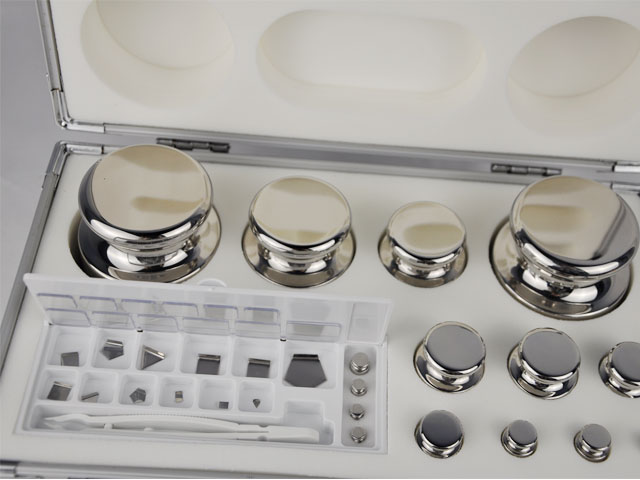
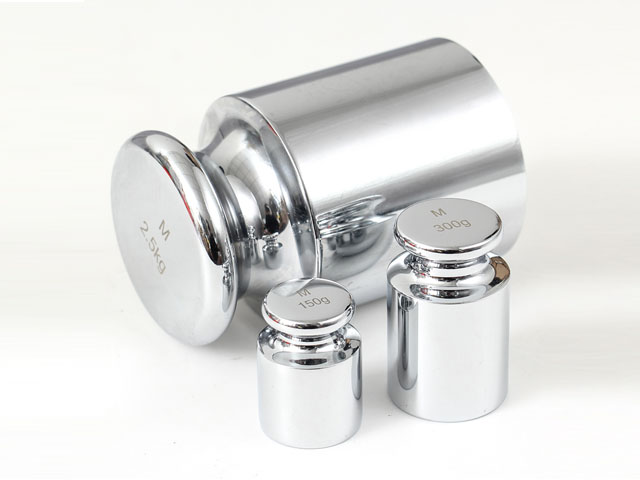
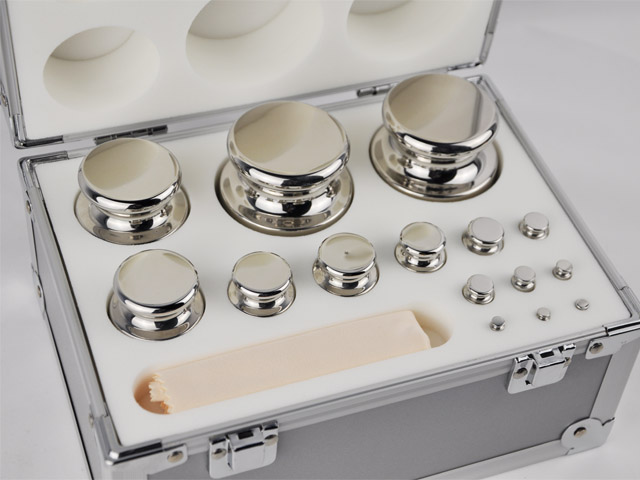
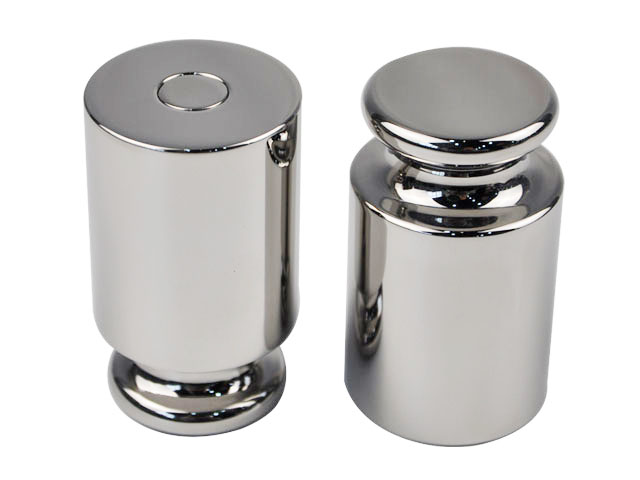
The structural design and material selection of OIML calibration weight sets focus on long-term stability and environmental adaptability, two core attributes that determine their practical application value. Most weight units in the sets adopt high-density metal materials with excellent anti-corrosion, anti-oxidation and anti-wear properties. Such materials effectively resist the erosion of moisture, dust, and trace chemical substances in the air, avoiding gradual mass deviation caused by surface oxidation, corrosion or abrasion during long-term use. The surface of each weight unit undergoes fine polishing and smooth treatment, which not only prevents the adhesion of impurities that may affect mass accuracy but also reduces the impact of air friction and surface adsorption during weighing processes. Meanwhile, the overall structural design follows standardized dimensional specifications, with regular shapes and uniform stress distribution, which effectively avoids local deformation and mass change caused by external pressure or accidental collision in daily use. Each complete weight set is equipped with a matched storage container with shockproof and dustproof functions, which provides a safe storage environment for weights during idle periods and further guarantees the stability of their mass attributes.
OIML calibration weight sets are classified into multiple accuracy grades based on standardized metrological requirements, with each grade corresponding to specific allowable mass deviation ranges and applicable usage scenarios, forming a complete hierarchical application system. High-grade weight units feature extremely strict mass tolerance control, with tiny allowable error ranges, making them suitable for ultra-precision measurement scenarios in scientific research institutions and professional metrology laboratories. These high-grade weights are mainly used for calibrating high-sensitivity analytical balances, micro-weighing instruments and other precision equipment, as well as for tracing and verifying the accuracy of other lower-grade standard weights, acting as the core reference benchmark in the entire mass measurement system. Medium-grade weight sets balance accuracy performance and environmental adaptability, adapting to conventional laboratory testing, pharmaceutical ingredient weighing, fine chemical production and other medium-precision scenarios. They can effectively correct the systematic errors of daily precision weighing equipment and ensure the stability of experimental data and production ingredient ratio control. Ordinary-grade weight sets are more oriented to industrial and commercial conventional weighing scenarios, suitable for routine calibration and daily inspection of production line weighing scales, market trading weighing equipment, and logistics weighing devices, meeting the basic accuracy requirements of mass measurement in general production and trading links.
The application scope of OIML calibration weight sets covers almost all industries and scenarios that require quantitative mass measurement, providing standardized support for the stable operation of various industrial and academic systems. In pharmaceutical production, precise weighing of raw materials and auxiliary materials is directly related to the stability of product components and usage safety. Regular calibration of pharmaceutical weighing instruments with standard weight sets ensures accurate proportioning of various ingredients in drug manufacturing, avoids component deviation caused by inaccurate weighing, and maintains the stable efficacy of pharmaceutical products. In the food and beverage industry, these weight sets are used to calibrate packaging weighing equipment and quality inspection weighing devices, ensuring consistent net content of packaged products, avoiding uneven product specifications caused by weighing errors, and standardizing product packaging and sales measurement standards.
In industrial manufacturing fields such as precision machinery and automotive parts processing, mass matching and component weighing accuracy affect the assembly precision and operational stability of finished products. Manufacturers use OIML calibration weight sets to regularly calibrate production and testing weighing equipment, ensuring that the mass parameters of processed parts meet design specifications, reducing product failure rates caused by mass deviation, and improving the overall quality consistency of industrial products. In the chemical industry, many production processes require precise weighing of chemical raw materials to control chemical reaction ratios. Accurate weighing calibration through standard weight sets stabilizes reaction conditions, ensures the consistency of chemical product quality, and avoids safety risks and product quality problems caused by inaccurate raw material proportioning.
In scientific research and educational fields, OIML calibration weight sets are indispensable basic experimental tools. Laboratory scientific research involving material analysis, physical property testing, and chemical component measurement relies on accurate mass data. Regular calibration of experimental weighing instruments with standard weight sets eliminates systematic errors of equipment, ensures the authenticity and repeatability of experimental data, and provides reliable data support for scientific research conclusions. In university and vocational school metrology and physics teaching experiments, these weight sets help students understand the basic principles of precision weighing and metrological calibration, cultivate standardized measurement operation habits, and lay a solid foundation for professional technical talent training in the metrology industry.
In commercial trade and logistics transportation fields, standardized weighing measurement is the basis of fair trading and standardized transportation management. Various weighing devices used in market commodity trading, goods warehousing and logistics weighing need regular calibration with OIML calibration weight sets to ensure accurate weighing data of goods, avoid trading disputes caused by weighing deviation, and maintain the fair and orderly development of commodity trading markets. For large-scale weighing equipment such as truck scales and warehouse platform scales used in logistics and transportation, matched large-specification weight sets can complete equipment calibration and testing, ensuring that vehicle load detection and goods weighing data meet industry management requirements and supporting standardized logistics operation management.
Standardized operation and scientific maintenance are key factors to maintain the long-term accuracy and service life of OIML calibration weight sets. In daily use, operators need to follow standardized operation procedures to avoid improper operation affecting weight accuracy. It is necessary to wear clean and soft gloves when taking and placing weights to prevent direct contact between hands and the weight surface, avoiding mass changes caused by sweat, oil stains and skin residue adhesion. Weights should be placed gently during use to prevent collision, drop and friction with hard objects, so as not to cause surface abrasion, deformation or local mass loss. Different specifications and grades of weights need to be used in classified scenarios, and high-precision weights are prohibited from being used in rough industrial testing scenarios to prevent unnecessary loss of accuracy.
Environmental control also plays a vital role in the use and storage of calibration weight sets. Precision weighing calibration operations should be carried out in a stable environment with constant temperature and humidity, avoiding accuracy deviation caused by thermal expansion and contraction of metal materials due to drastic temperature changes, as well as surface moisture adhesion caused by excessive humidity. After each use, all weight units need to be cleaned with clean soft tools to remove surface dust and tiny impurities, and then placed in the matched sealed storage box. The storage environment should be kept dry, clean and ventilated, away from corrosive gases, high temperature and humid areas, to prevent long-term environmental erosion from affecting the stability of weight quality.
Regular periodic inspection and recalibration are essential to ensure the continuous effectiveness of OIML calibration weight sets. After long-term use, even high-stability weights will have tiny mass changes affected by environmental factors and use frequency. Regular professional inspection and recalibration can timely detect minor mass deviations of weights, complete fine adjustment and correction, and restore their standard mass attributes. For weights used in high-precision scenarios, the inspection and recalibration cycle is relatively short to ensure that the reference accuracy of mass standards is always maintained. For weights used in conventional industrial scenarios, regular inspection can also eliminate potential accuracy risks and ensure the reliability of daily calibration work.
The popularization and application of OIML calibration weight sets have greatly promoted the standardized development of global metrological work and realized the unification of mass measurement standards in cross-industry and cross-regional scenarios. In international trade and industrial cooperation, unified metrological reference tools eliminate measurement differences caused by different regional standards, facilitate the docking of industrial production and commodity trading standards in different regions, and reduce communication and error costs caused by inconsistent measurement data. For enterprises, the standardized calibration system built on these weight sets helps unify internal production and testing measurement standards, realize consistent control of product quality in different production links and different production batches, and improve the overall production standardization level of enterprises.
With the continuous upgrading of industrial manufacturing technology and the continuous improvement of scientific research precision requirements, the performance requirements for calibration weight sets are also constantly improving. Modern OIML calibration weight sets are gradually optimized in material technology, structural design and processing technology, with higher mass stability, stronger environmental adaptability and lower error fluctuation. The continuous optimization of these products provides more reliable basic support for the development of high-precision manufacturing, advanced scientific research, standardized commercial trade and other fields. As the basic guarantee of mass measurement accuracy, OIML calibration weight sets will always occupy an irreplaceable core position in the entire metrological system, continuously supporting the stable operation and innovative development of various industries relying on precise measurement.
Oiml Calibration Weight Set
https://www.veidtweighing.com/calibration-weights.html
Post Date: Jun 19, 2026
https://www.supplier-manufacturer.com/calibration-weight/oiml-calibration-weight-set.html

![150g Standard Weight]()
150g Standard Weight
In the quiet rhythm of daily life, we often overlook the subtle power of a fixed standard weight, a simple numerical measure that quietly shapes how we eat, live, and conn…![Calibration Weight Exporter]()
Calibration Weight Exporter
In the intricate ecosystem of global industrial manufacturing, scientific research, and commercial trade, consistent and accurate weight measurement serves as a fundamenta…![10kg Standard Weight]()
10kg Standard Weight
In every sector that relies on reliable mass measurement to maintain operational stability, product consistency, and data credibility, the 10kg standard weight stands as a…![Crane Scales]()
Crane Scales
In modern industrial production and material handling processes, accurate weight measurement serves as a fundamental guarantee for operational standardization, safety mana…![What is Standard Weight]()
What is Standard Weight
In the fields of metrological inspection and industrial weighing, standard weights are core basic instruments that maintain the unification of mass value and ensure the ac…