What is Standard Weight
In the fields of metrological inspection and industrial weighing, standard weights are core basic instruments that maintain the unification of mass value and ensure the accurate operation of various weighing equipment. They also serve as a key link connecting metrological benchmarks with actual production and testing. Standard weights play an irreplaceable core role in precision metrology in scientific research laboratories, hierarchical dissemination of metrological values by metrological institutions, daily weighing calibration of industrial production lines, and compliance verification of commercial weighing instruments. Their metrological accuracy, scenario adaptability, service life and application effect are all determined by four core attributes: grade, specification, material and structure. Scientific and reasonable selection is a prerequisite for ensuring long-term stable and reliable metrological work. A comprehensive understanding of the core characteristics of standard weights and mastering the selection logic adapted to working conditions are essential foundations for the orderly development of various metrology and weighing related work.

Precision Grading and Gradient Adaptation: Core Grades of Standard Weights
The core performance of standard weights is defined by their precision grade. The grading is mainly determined by the maximum allowable metrological error of the weights, following general metrological grading specifications, forming a complete gradient sequence from high to low precision, with each grade corresponding to exclusive application positioning and metrological value dissemination links. The overall grade sequence includes seven core levels: E1, E2, F1, F2, M1, M2 and M3. The higher the number and the later the letter order, the lower the metrological accuracy and the looser the application scenario requirements. Among them, E1 and E2 are ultra-high precision reference-level weights, mainly used for top-level value traceability and benchmark inheritance with extremely strict error control, only suitable for professional core metrological institutions and high-end scientific research laboratories. F1 and F2 are precision working-level transition weights, undertaking the dissemination of high-level benchmark metrological values, balancing precision and practicality, and being the main type for the calibration of conventional precision laboratory balances and verification of secondary metrological instruments. The M series are industrial general-purpose weights, whose accuracy meets the basic metrological needs of conventional industrial production, ordinary weighing instrument calibration and on-site working condition detection, adapting to various extensive and high-frequency operation scenarios. Different grades of weights perform their respective duties, forming a closed-loop and complete top-down mass value dissemination system to prevent the gradual amplification of metrological deviations.
Full Coverage and Diversified Adaptation: Conventional Specification System of Standard Weights
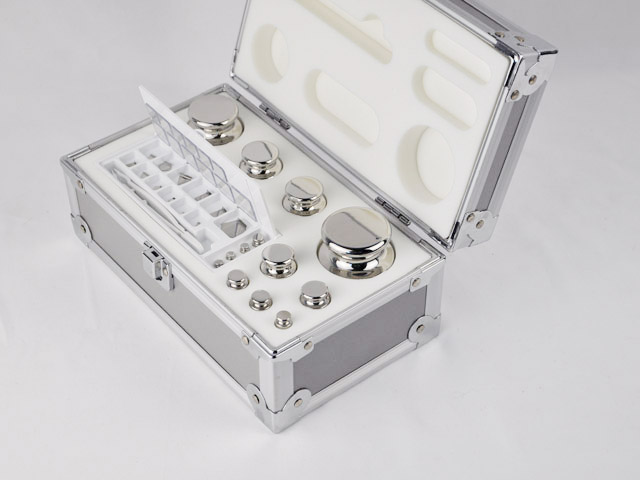
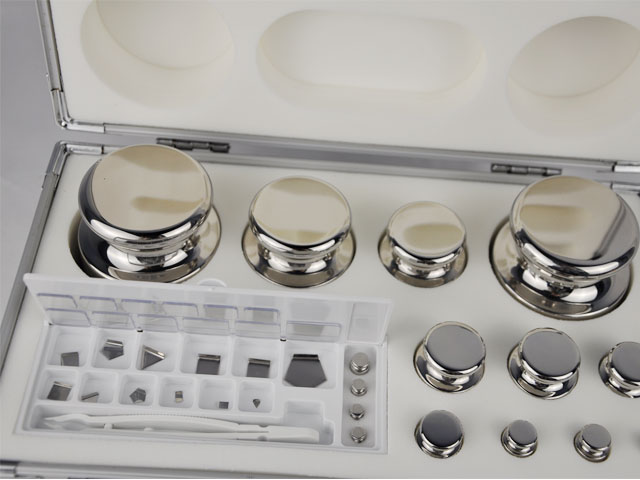
Standard weights are mainly divided by nominal mass, covering the full range from micro precision metrology to heavy-duty industrial weighing, with two application modes: single independent use and combined set matching. Micro specifications include milligram and gram-level small-range products, mostly used for the calibration of precision analytical balances and micro detection equipment, suitable for chemical quality inspection, biomedicine, precision scientific research and other micro-weighing scenarios. Conventional general specifications are mainly kilogram-level, the mainstream specifications for routine laboratory testing and small and medium-sized weighing instrument calibration, with the widest application scope and highest use frequency. Heavy-duty specifications are ton-level large-mass products, specially designed for the calibration of large truck scales, wagon balances and large industrial weighing equipment, meeting the heavy-duty weighing verification needs of heavy industry, warehousing logistics, mining and other industries. In addition to single fixed specifications, most laboratories and metrological institutions prefer combined set specifications, which can flexibly match different mass weights to form various required metrological values, adapting to diverse calibration and testing needs while balancing flexibility and comprehensive coverage.
Material Selection for Stability and Durability: Mainstream Application Materials of Standard Weights
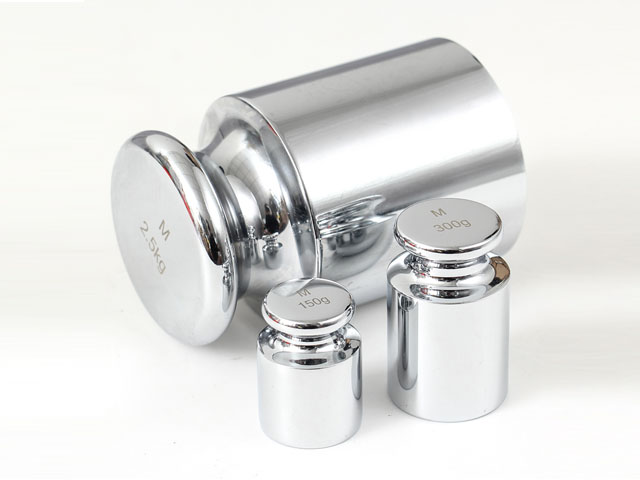
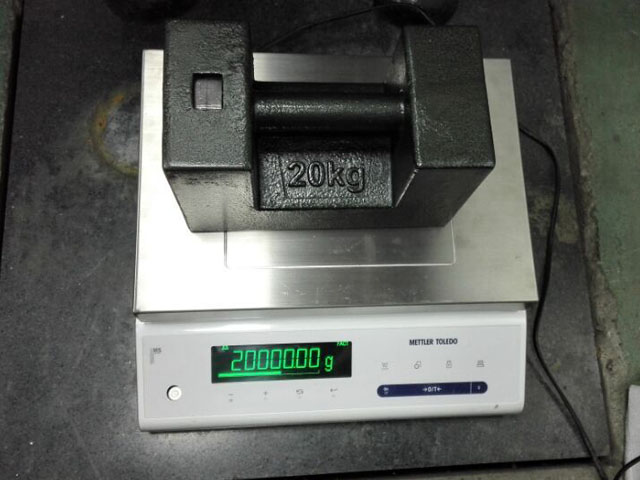
The material directly determines the metrological stability, anti-interference ability and service life of standard weights. Weights of different grades and application scenarios are matched with exclusive suitable materials, selected based on four core indicators: corrosion resistance, low magnetizability, uniform density and low deformation tendency. High-precision grade weights are generally made of non-magnetic stainless steel, which features uniform density, extremely low magnetizability, corrosion and oxidation resistance, minimal impact from temperature and humidity changes, no mass attenuation or surface rust during long-term use, and can maintain permanent metrological accuracy, suitable for high-precision laboratories and benchmark value dissemination. Medium-end precision working conditions often adopt high-quality carbon steel with refined anti-rust passivation treatment, featuring moderate hardness, good mass stability and outstanding cost performance, meeting the needs of conventional precision calibration and general metrological value dissemination. Industrial general low-grade weights are mostly made of cast iron, with sturdy and impact-resistant structure and friendly use cost, adapting to complex industrial on-site working conditions and high-frequency extensive outdoor use. Slight bumps and wear will not affect the basic industrial metrological accuracy. All material selections follow the principle of precision matching; high-grade weights do not blindly adopt ordinary materials, and industrial scenarios do not redundantly use high-end materials, balancing performance and practicality.
Structure Adaptation and Practical Operation: Conventional Core Structure of Standard Weights
The structural design of standard weights is optimized for metrological accuracy, operational convenience, storage safety and transportation stability, with a simple and practical overall structure and differentiated forms for different specifications and grades. Small-mass micro and conventional precision weights mostly adopt an integral solid one-piece structure without splicing or counterweight adjustment gaps, ensuring uniform overall density and avoiding metrological deviations caused by structural deformation during long-term use. The surface is smooth and regular, matched with supporting protective storage containers for dust and moisture resistance and convenient handling, suitable for fine operation in clean laboratory environments. Medium and large-specification weights mostly adopt an adjustable cavity structure with internal fine-tuning counterweight space, which can accurately adjust mass values during production and later maintenance to meet nominal quality standards. The external sealed protective design effectively prevents dust and moisture intrusion. Heavy-duty industrial weights are generally equipped with integrated hoisting or hand-held auxiliary structures, suitable for handling and on-site hoisting calibration of large equipment. The structure is compression and fall resistant with reinforced corners to resist bumps and extrusion losses on industrial sites. All structural designs take into account both core metrological needs and practical working conditions, ensuring constant mass parameters and adapting to the whole process of handling, use and storage in different scenarios.
Clear Division of Responsibilities and Scenario Segmentation: Core Applications of Standard Weights
Relying on the differentiated characteristics of grade, specification, material and structure, standard weights cover the whole fields of metrological traceability, scientific research experiments, industrial production and commercial verification. High-grade precision weights are mainly used for metrological benchmark value dissemination and traceability, building regional metrological quality standard systems, providing accurate value benchmarking for lower-level metrological instruments and working weights, and ensuring the unification and compliance of overall metrological data. In laboratory scenarios, various precision weights are used for daily calibration and regular verification of analytical balances, precision electronic scales and testing weighing equipment, ensuring accurate and reliable data for scientific research experiments, product quality inspection and proportioning. In the industrial production field, industrial-grade weights are regularly used for the routine calibration of production line weighing equipment, material proportioning scales and finished product testing scales, avoiding production weighing deviations and ensuring stable and consistent product production quality. In the field of commercial circulation and public metrology, standard weights are used for the compliance verification of supermarket scales, market weighing equipment and logistics weighing instruments, maintaining metrological fairness in commercial transactions and avoiding weighing measurement disputes.
Accurate Matching and Scientific Adaptation: Practical Selection Guidelines for Standard Weights
The selection of standard weights follows three core principles: working condition adaptation, precision matching and scenario fitting, avoiding insufficient accuracy or resource redundancy caused by blind selection. First, select the weight grade according to the accuracy of the weighing and calibration equipment; precision analysis equipment is matched with high-grade weights, and ordinary industrial scales are matched with industrial-grade weights, ensuring that the weight accuracy is much higher than that of the calibrated equipment to guarantee accurate calibration and verification. Secondly, determine the weight specification according to the range of the calibrated equipment; priority shall be given to the main specification close to the common range of the equipment for conventional calibration, and combined set specifications can be selected for multi-scenario calibration to balance adaptability and flexibility. Furthermore, select materials and structures according to the use environment; non-magnetic stainless steel solid structure weights are preferred for clean and dry laboratory environments, and cast iron reinforced structure weights are selected for humid and bumpy industrial outdoor working conditions to improve service durability. Finally, optimize the selection according to use frequency; wear-resistant materials are preferred for high-frequency continuous use working conditions, and high-stability precision materials are selected for low-frequency precision traceability scenarios, comprehensively balancing metrological needs, use cost and service life to maximize the value of weights.
What is Standard Weight
https://www.veidtweighing.com/standard-weights.html
Post Date: May 4, 2026
https://www.supplier-manufacturer.com/standard-weight/what-is-standard-weight.html

![Laboratory Standard Weight]()
Laboratory Standard Weight
In every scientific laboratory that engages in experimental research, material analysis, chemical formulation, physical property testing, and industrial precision testing,…![Specifications of Standard Weight]()
Specifications of Standard Weight
Standard weight serves as a fundamental reference tool in the field of metrology, laying a solid foundation for accurate weight measurement and consistent data comparison …![Astm Class Standard Weight]()
Astm Class Standard Weight
In the complex and interconnected system of modern industrial production, scientific research experimentation, and commercial transaction settlement, accurate mass measure…![20kg Cast Iron Calibration Weight For Truck Scale]()
20kg Cast Iron Calibration Weight For Truck Scale
Truck scales serve as essential measuring equipment in logistics, transportation, industrial production, and commercial trading sectors, undertaking the critical task of a…![M2 Class Standard Weight]()
M2 Class Standard Weight
Mass measurement forms the invisible backbone of all modern social and economic activities, serving as a fundamental foundation for fair transactions, orderly industrial p…