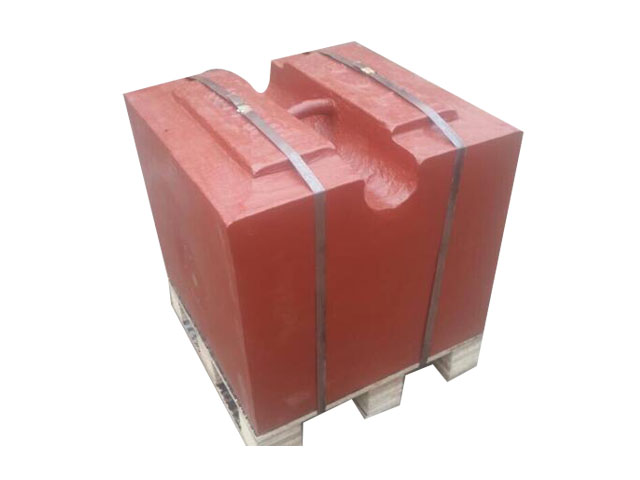
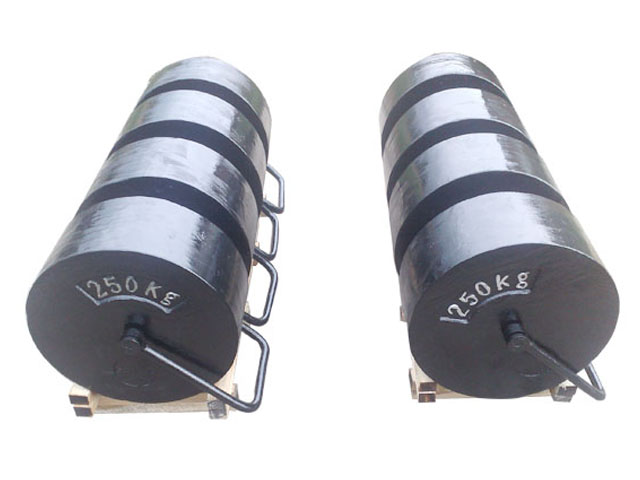
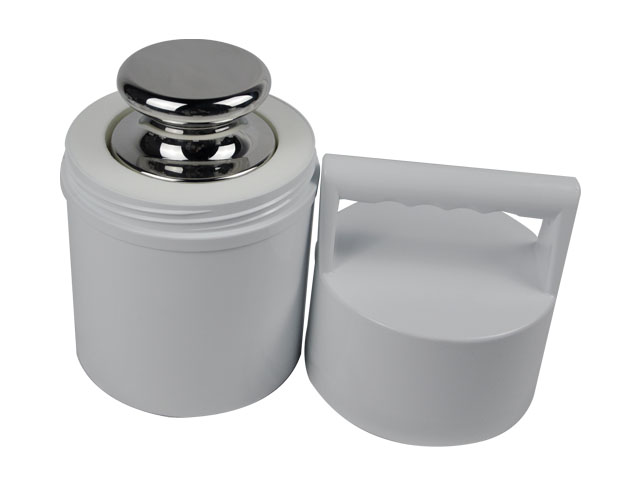
Cast Iron Standard Weight
Cast iron standard weight stands as a fundamental and reliable balancing and calibration component widely adopted across industrial production, mechanical operation, measurement verification and heavy equipment debugging fields, gaining long-term recognition for its stable physical properties, excellent structural rigidity and adaptable application characteristics. As a conventional counterweight and calibration medium made from mature iron-carbon alloy casting technology, this type of weight has maintained an irreplaceable position in basic industrial supporting work, even with the continuous emergence of various new alloy and metal counterweight products in modern industrial development. Its core value lies in providing stable and consistent mass reference and load balancing effects for diverse mechanical and measurement scenarios, ensuring the normal operating state of equipment and the accuracy of daily measurement work in different production and operation links. The inherent material advantages of cast iron and mature and standardized casting and processing techniques enable standard cast iron weights to adapt to complex working environments, long-term continuous use requirements and frequent handling and placement operations, showing good durability and practicality that meet the basic demands of most industrial and public infrastructure operational regulation work.
The inherent material foundation of cast iron standard weight determines its core performance in actual use scenarios. Cast iron, as the main raw material for producing such standard weights, is an iron-carbon alloy material with a carbon content ranging from 2.1 percent to 4 percent, supplemented by reasonable proportions of silicon, manganese and other trace elements, forming a stable internal microstructure after smelting and casting molding. The reasonable matching of various chemical components gives cast iron ideal compressive strength and structural stability, effectively avoiding obvious deformation, structural loosening or mass deviation caused by external pressure, long-term placement or slight collision during daily use. Carbon plays a key role in promoting graphite formation inside the alloy, optimizing the internal structure uniformity of the cast iron body, while silicon assists in improving the fluidity of molten iron during the casting process, ensuring that the internal structure of each standard weight blank is dense and free of obvious pores and sand holes. Manganese elements function to purify the alloy structure, neutralize the adverse effects of trace sulfur components in raw materials, and enhance the overall toughness and compression resistance of cast iron products. Such a stable material formula and internal structural characteristics make cast iron standard weight not easy to produce subtle mass changes due to environmental temperature and humidity fluctuations, maintaining long-term mass stability which is the most essential prerequisite for it to serve as a standard calibration and balancing component.
The production and processing process of cast iron standard weight follows standardized casting and finishing procedures, focusing on every detail from raw material smelting to finished product forming to ensure the consistency of product specifications and mass uniformity. The whole production process starts with the precise proportioning of cast iron raw materials, strictly controlling the content of each trace element according to the basic performance requirements of standard weights, avoiding performance differences caused by raw material proportion deviation. After high-temperature smelting, the molten iron with uniform components is poured into pre-made professional casting molds, and the mold structure is designed according to the conventional external shape and size specifications of standard weights, ensuring that the initial blank of each weight has a regular shape and uniform wall thickness. The natural cooling and solidification process after pouring is carried out in a stable temperature environment, effectively preventing internal structural cracks and local density differences caused by too fast or uneven cooling speed. After the cast iron blank is initially formed, subsequent finishing treatment is carried out, including surface polishing, burr removal and overall shape trimming, to make the appearance of the weight smooth and regular, convenient for stacking, handling and daily storage. The key link in the production process lies in fine mass debugging. Workers carry out repeated fine grinding and material adjustment on the basis of the initial blank according to the set mass requirements, gradually approaching the standard mass value, and ensuring that the mass error of each finished cast iron standard weight is controlled within a reasonable small fluctuation range through repeated detection and correction. This rigorous production and debugging process ensures that every cast iron standard weight leaving the production link has stable quality and consistent specifications, laying a solid foundation for subsequent formal industrial and measurement application work.
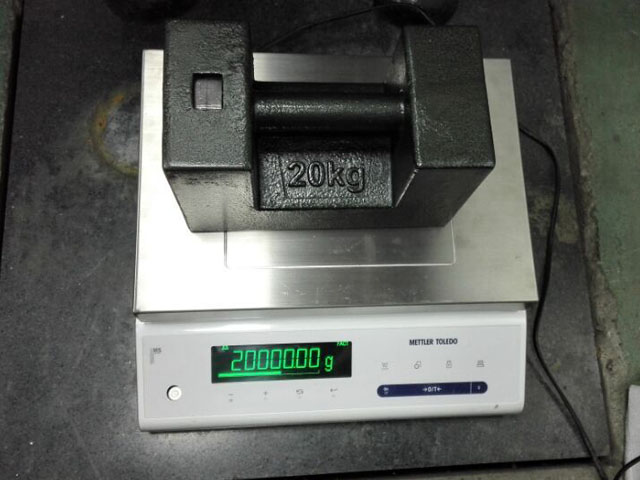
In industrial measurement and instrument calibration work, cast iron standard weight undertakes the core basic work of mass value traceability and instrument accuracy verification, becoming an indispensable auxiliary tool for maintaining the normal operation of the entire measurement system. Various weighing equipment used in industrial production and daily commercial circulation, including floor scales, electronic weighing instruments, platform scales and various heavy-duty weighing devices used in ports and logistics terminals, need regular calibration and verification work to ensure accurate weighing data and avoid measurement deviation affecting production statistics, cargo settlement and production process parameter adjustment. In the calibration process, staff place cast iron standard weights with known stable mass on the surface of the weighing equipment to be detected, observe the display data of the weighing equipment, and compare it with the standard mass of the cast iron weights. By checking the data difference, they can judge whether the weighing equipment has measurement errors, and carry out targeted adjustment and correction according to the deviation degree. This basic calibration work needs to be carried out regularly and repeatedly, and cast iron standard weight can adapt to frequent repeated use due to its wear resistance and structural stability, without frequent replacement due to slight wear and tear, ensuring the long-term stability of calibration work. In addition, in the measurement training and daily detection work of measurement institutions, cast iron standard weights are also used as conventional teaching and detection tools, helping relevant practitioners master the basic operation methods of instrument calibration and accumulate practical experience in measurement error judgment.
Mechanical equipment balancing and heavy load debugging is another important application field of cast iron standard weight, which plays a vital role in maintaining the stable operation of various mechanical and power equipment and reducing equipment operation vibration and wear. Many large mechanical equipment and power devices will produce unbalanced force during operation due to structural asymmetry, component wear or long-term use displacement, resulting in equipment vibration, increased operating noise, accelerated component wear, and even affecting the overall operating safety and service life of the equipment. In the daily maintenance and regular debugging of mechanical equipment, staff need to use cast iron standard weights for counterweight balancing treatment, placing weights of corresponding specifications on the designated balancing parts of the equipment to offset the unbalanced force generated during equipment operation, making the equipment run smoothly and reducing vibration and friction loss. Elevator operation debugging, ship balance adjustment, mining mechanical equipment commissioning and large machine tool base stabilization all need the assistance of cast iron standard weights. The good vibration damping performance of cast iron material itself can cooperate with the counterweight function of standard weights to further reduce the resonance phenomenon of equipment during operation, improve the overall operational stability of mechanical devices, and extend the service life of mechanical equipment and various matching components. For some mechanical equipment that needs to maintain fixed load state for a long time, cast iron standard weight can be used as a long-term fixed counterweight component, maintaining the stable load state of the equipment and ensuring the consistent operating parameters of the equipment in long-term continuous production work.
Cast iron standard weight also shows strong adaptability and practicability in outdoor engineering, port logistics and construction infrastructure scenarios, adapting to harsh working environments and long-term open-air placement use conditions. Different from indoor laboratory and factory production environments, outdoor and port working scenarios are often affected by wind, rain, temperature change and environmental humidity alternation, putting higher requirements on the corrosion resistance and structural stability of counterweight and calibration components. Cast iron materials after special surface anti-rust and anti-corrosion treatment can effectively resist the erosion of humid air, rainwater and external environmental impurities, avoiding rapid rust, corrosion and structural damage of standard weights in long-term open-air placement. In port cargo handling and container weighing work, cast iron standard weights are often used for regular calibration of large-scale weighing and measuring equipment at the port, ensuring the accuracy of cargo weighing data and the smooth progress of cargo loading, unloading and transportation work. In construction infrastructure construction and bridge equipment debugging, standard cast iron weights are used for load testing and structural stress detection of engineering facilities, providing accurate load reference data for engineering safety detection and structural performance evaluation. In municipal engineering and public facility maintenance work, such weights are also used for balancing various municipal mechanical equipment and debugging public service devices, ensuring the stable operation of municipal facilities and the smooth progress of maintenance work. The strong environmental adaptability makes cast iron standard weight still maintain stable performance and good use effect in various harsh working conditions, meeting the diversified use needs of different industry scenarios.
Daily maintenance and scientific storage are key factors to ensure the long-term service life and continuous mass stability of cast iron standard weight, and reasonable maintenance management can effectively avoid unnecessary mass deviation and structural damage in the use process. Although cast iron materials have good wear resistance and compression resistance, long-term neglect of maintenance, random stacking and improper handling will still lead to surface damage, local wear and rust corrosion of standard weights, thus affecting mass accuracy and normal use effect. In daily use, staff should avoid violent throwing and collision of cast iron standard weights, prevent surface deformation and internal structural changes caused by strong impact, and avoid mass deviation caused by local material loss. After each use, the surface of the weight should be cleaned in time to remove surface dust, sundries and residual stains, keeping the surface clean and dry to reduce the chance of rust and corrosion. For standard weights used in humid and outdoor environments, regular anti-rust maintenance work should be done, checking the surface anti-corrosion coating regularly, and carrying out supplementary anti-rust treatment in time if local coating falls off to prevent rust from spreading and affecting the structural integrity and mass stability of the weight. In terms of storage, cast iron standard weights should be placed in a dry, ventilated and flat special storage area, classified and stacked according to different specifications and mass levels, avoiding long-term extrusion and stacking of heavy weights causing deformation of the bottom weights. Regular regular mass detection and performance inspection should be carried out for stored standard weights, and timely fine debugging and correction should be done if slight mass deviation is found to ensure that each weight is always in a qualified usable state.
With the continuous progress of industrial modernization and the continuous improvement of measurement standardization requirements, cast iron standard weight, as a basic industrial supporting product, is also constantly optimized and upgraded in production technology and application matching degree, adapting to the changing market demand and industrial development requirements. Although new types of counterweight materials are constantly emerging in the industry, cast iron standard weight still occupies an important market position by virtue of mature production technology, stable product performance and reasonable application cost. In the future industrial production, measurement calibration and mechanical equipment operation and maintenance work, the basic role of cast iron standard weight will not be replaced. On the contrary, with the continuous improvement of industrial production precision and measurement accuracy requirements, the production and processing technology of cast iron standard weight will be further refined, and the product performance and quality stability will be continuously improved to better meet the diversified and high-standard use needs of various industries. Whether in basic industrial production links, professional measurement and detection work, or large engineering construction and public infrastructure operation and maintenance scenarios, cast iron standard weight will continue to rely on its excellent material characteristics and reliable use performance to provide solid basic support for the stable operation of various industries and the accurate development of measurement work, becoming an indispensable basic component in the steady development of modern industrial society.
Cast Iron Standard Weight
https://www.veidtweighing.com/cast-iron-weights.html
Post Date: May 4, 2026
https://www.supplier-manufacturer.com/cast-iron-weight/cast-iron-standard-weight.html

![Digital Viscometers]()
Digital Viscometers
Viscosity stands as one of the most fundamental physical properties of fluid substances, reflecting the internal friction and flow resistance that occurs when a fluid unde…![Cast Iron Weight Factory]()
Cast Iron Weight Factory
A cast iron weight factory operates as a vital industrial cornerstone, focused on the meticulous creation of durable, dimensionally stable, and functionally reliable cast …![Stainless Steel Weights]()
Stainless Steel Weights
The weight of stainless steel is a fundamental physical attribute that underpins nearly every aspect of its industrial production, structural application, transportation m…![Cast Iron Weight For Laboratory]()
Cast Iron Weight For Laboratory
Within every laboratory environment where physical measurement consistency and reliable experimental baseline data form the foundation of daily operations, cast iron weigh…![Laboratory Calibration Weight For Electronic Precision Balance]()
Laboratory Calibration Weight For Electronic Precision Balance
In modern laboratory quantitative analysis and experimental research, the accuracy of electronic precision balance measurement data is the core foundation of reliable expe…