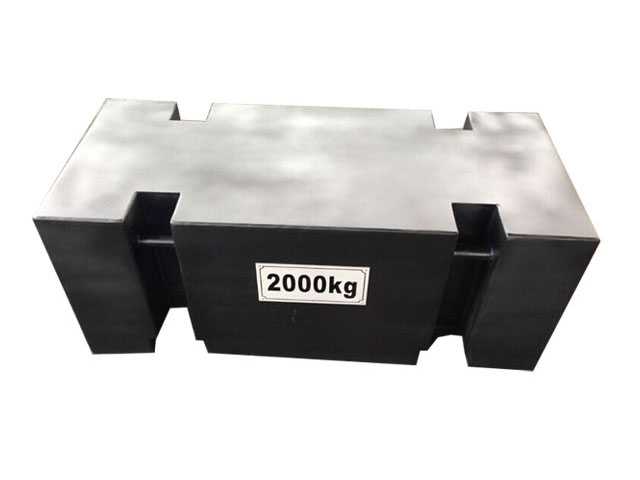
Cast Iron Weight For Bench Scales
Cast iron weights serve as fundamental auxiliary components for bench scale operation, playing an indispensable role in daily weighing verification, scale debugging, and measurement consistency maintenance across commercial and industrial scenarios. As traditional yet highly practical weighing accessories, these weights are tailored to match the structural and functional characteristics of bench scales, adapting to the conventional working modes of both mechanical and electronic bench scales. Their stable physical properties and adaptable structural design make them a common choice for regular weighing calibration and load testing in various production, trading, and inspection environments. Unlike high-precision specialized weighing accessories designed for extreme laboratory conditions, cast iron bench scale weights focus on balancing practicality, durability, and stable mass performance, perfectly fitting the frequent and routine use needs of bench scales in general working scenarios.
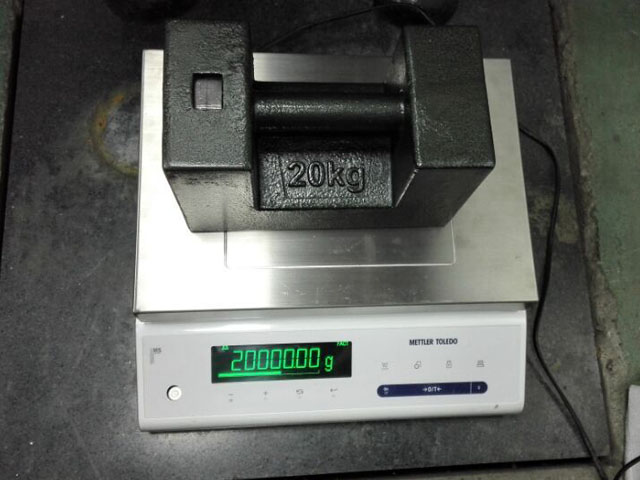
The core value of cast iron weights for bench scales lies in their reliable mass stability under conventional environmental conditions. Cast iron as the base material features uniform density, compact internal structure, and low deformation probability under normal temperature and daily load conditions. This material attribute ensures that the effective mass of each weight remains consistent over long-term use, avoiding frequent mass deviation that may affect weighing judgment. In the working scenarios of bench scales, most weighing operations focus on conventional mass measurement within medium and low load ranges, requiring supporting weights to maintain stable quality without subtle changes caused by slight environmental fluctuations or frequent handling. The inherent physical advantages of cast iron just meet this core demand, providing a stable reference standard for bench scale calibration and testing.
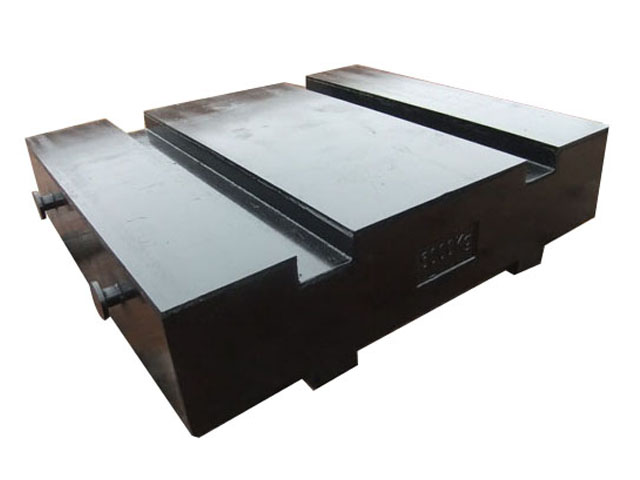
In terms of structural design, cast iron weights for bench scales adopt mature and reasonable styling specifications that align with the operating habits of bench scale equipment. Most products feature regular geometric shapes with flat and smooth bearing surfaces, which can ensure stable placement on the scale’s weighing platform without tilting or sliding during load testing. The overall structural thickness and outline size are designed to match the effective weighing area of conventional bench scales, making it convenient for staff to conduct single-weight placement or combined superposition testing. Some integrated structural designs also reserve convenient stress parts for handling, reducing operational difficulty during repeated use. The standardized structural design not only improves the convenience of daily operation but also ensures uniform stress on the bench scale platform during testing, avoiding local pressure concentration that may cause abnormal scale data and ensuring the authenticity and effectiveness of test results.
The production process of cast iron bench scale weights directly determines their surface quality and internal structural stability. Most qualified products adopt mature sand casting technology, which can form uniform and dense casting structures inside the weights and reduce internal porosity and sand hole defects. In the casting process, strict control of material proportion and cooling speed helps eliminate internal structural inconsistencies, ensuring that each finished weight has uniform density distribution and stable mass parameters. After casting molding, the weights will go through multiple finishing processes, including surface polishing, burr removal, and flatness correction of the bearing surface. These processes remove sharp edges and surface protrusions generated during casting, making the weights fit closely with the bench scale platform. Subsequent surface anti-rust treatment forms a protective layer on the surface of the cast iron, isolating air and moisture and slowing down the oxidation and rusting speed of the material in daily use environments.
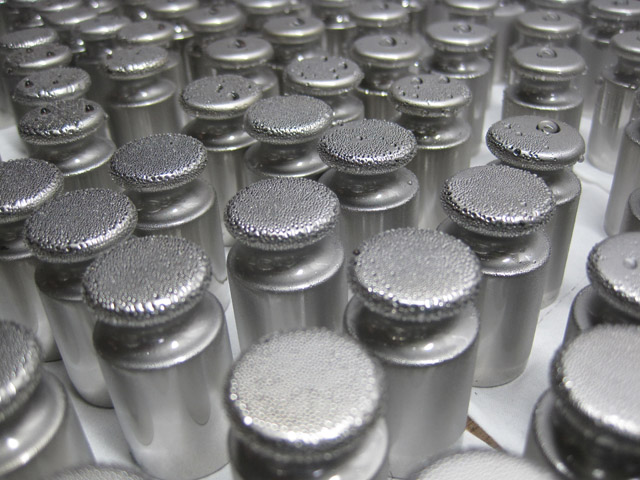
Surface treatment is a key link to extend the service life of cast iron weights and maintain measurement stability. Conventional anti-rust coating treatment covers the entire surface of the weight with a uniform protective film, which avoids direct contact between the cast iron matrix and external humid air, dust, and corrosive substances in the working environment. For bench scales used in workshops, warehouses, and trading markets, the working environment often contains floating dust, slight moisture, and trace corrosive components, and the complete protective coating can effectively prevent surface rust and material corrosion. Regular surface maintenance can further optimize the use state of the weights. Daily cleaning with soft dry materials to remove surface dust and stains, and regular application of thin neutral anti-rust oil can supplement the protective effect of the coating, avoid coating aging and peeling, and keep the weight surface intact and smooth for a long time.
Cast iron weights for bench scales cover a complete range of conventional mass specifications, which can meet the diverse calibration and testing needs of bench scales with different measuring ranges. From small mass specifications suitable for light-load precision testing to large mass specifications matching the heavy-load limit of bench scales, the complete specification system supports single-weight independent testing and multi-weight combined superposition testing. In actual use, staff can select weights of corresponding specifications according to the measuring range and use scenario of the bench scale, conduct full-range load testing, zero-point verification, and accuracy detection, and check whether the scale has data deviation, delayed response, or unstable reading problems after long-term operation. The flexible collocation of multiple specifications greatly improves the comprehensiveness of bench scale daily inspection and ensures that the weighing equipment can maintain good working condition in long-term continuous use.
The application scenarios of cast iron bench scale weights are extremely extensive, covering most fields that rely on bench scales for mass measurement. In commercial trading links such as market retail, commodity wholesale, and material distribution, staff regularly use cast iron weights to calibrate bench scales to ensure the fairness and accuracy of commodity weighing transactions and avoid measurement errors caused by equipment aging or accidental collision. In industrial production and processing links, bench scales are often used for raw material batching, finished product weighing, and semi-finished product quality inspection, and regular calibration with cast iron weights can ensure the consistency of production batching parameters and stabilize product quality. In warehouse inventory and logistics weighing scenarios, repeated load testing of bench scales with standard weights can eliminate measurement errors caused by frequent equipment vibration and load changes, ensuring the accuracy of inventory data and logistics metering.
In addition to conventional commercial and industrial scenarios, cast iron bench scale weights also play an important role in teaching, scientific research, and institutional inspection work. Teaching laboratories use these standard weights to carry out basic weighing experiment teaching, helping learners understand the basic principles of mass measurement and equipment calibration methods. Scientific research institutions use bench scales matched with standard cast iron weights for daily debugging of experimental weighing equipment to provide basic measurement guarantee for small-scale experimental data recording. Inspection and supervision institutions rely on standard cast iron weights to conduct regular spot checks and performance tests on bench scale equipment used in various industries, maintaining the standardization of industry measurement work. The strong environmental adaptability of cast iron materials enables the weights to work stably in indoor conventional temperature and humidity environments, adapting to the use needs of different scenarios.
Standardized use and operation norms are crucial to maintaining the long-term stability of cast iron weights and ensuring the accuracy of bench scale testing results. In the process of use, it is necessary to avoid violent throwing, collision, and friction of the weights, as severe impact may cause local deformation, surface depression or internal structural changes of the weights, leading to mass deviation. When placing the weights on the bench scale platform, they should be placed gently and in the center of the weighing area as much as possible to avoid eccentric load placement, which may cause unbalanced stress on the scale body and affect the judgment of equipment accuracy. It is also necessary to avoid using cast iron weights in extreme temperature environments or environments with strong corrosive gases for a long time, so as to prevent accelerated material aging and mass change caused by extreme environmental factors. After each use, the weights should be cleaned of surface dust and stains in time to keep the surface clean and dry.
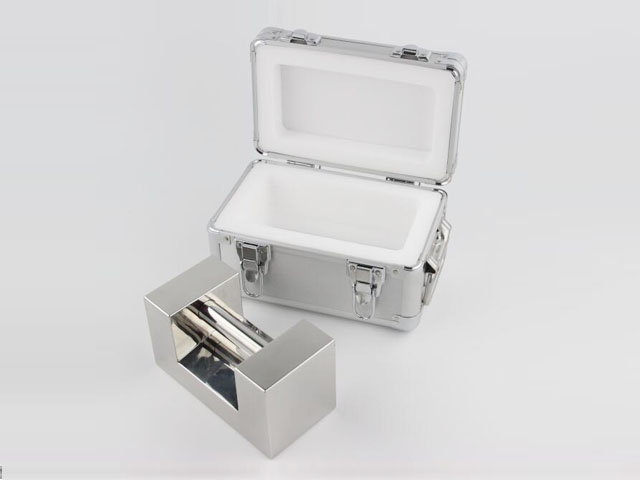
Scientific storage management is an important part of extending the service life of cast iron bench scale weights. The weights should be stored in dry, ventilated, and clean indoor spaces, avoiding long-term stacking in humid, dusty, or poorly ventilated environments. Special storage containers can be used for classified storage of weights of different specifications, and soft cushioning materials can be laid inside the containers to avoid mutual friction and collision between weights during stacking and handling. Placing desiccant in the storage environment can effectively absorb moisture in the air, reduce the risk of surface oxidation and rust of cast iron. In addition, classified sorting and regular inventory of weights can avoid loss and mixing of specifications, facilitate rapid selection and use in daily work, and improve the efficiency of bench scale calibration and testing work.
Regular inspection and maintenance work can effectively avoid the use of defective weights and ensure the reliability of bench scale detection data. In daily inspection, it is necessary to check whether the weight surface has rust spots, depressions, cracks, coating peeling and other abnormal conditions, and check whether the overall structure is complete and deformed. For weights with slight surface stains and floating rust, they can be cleaned and maintained in time to restore their good surface state. For weights with obvious structural deformation, crack damage or long-term rust leading to mass change, they should be isolated and stopped from use in time to avoid affecting the calibration accuracy of bench scales. Regular unified inspection and sorting can eliminate potential safety hazards and measurement errors caused by damaged weights.
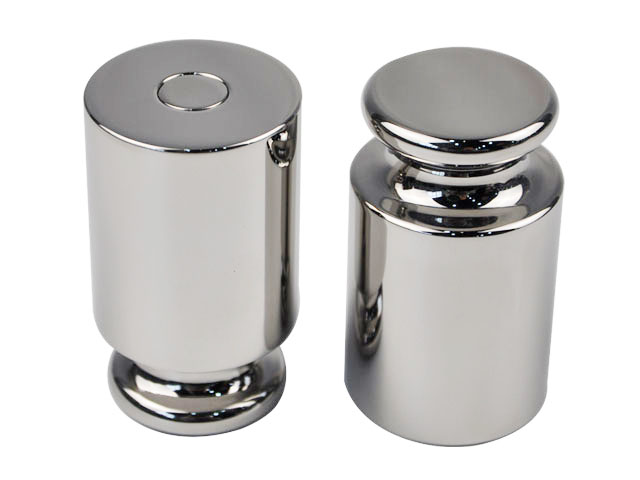
Compared with other material weighing accessories, cast iron weights have outstanding comprehensive adaptability for bench scale matching. Metal materials such as stainless steel have higher production costs and are more suitable for high-precision laboratory scenarios, while cast iron materials balance performance and applicability, meeting the high-frequency conventional use needs of bench scales. Non-metal weighing accessories have problems such as poor pressure resistance and easy deformation, and cannot adapt to long-term repeated load testing work. Cast iron weights, with their good pressure resistance, structural stability, and convenient maintenance characteristics, have become the mainstream matching accessories for bench scale daily calibration. Their stable performance in long-term repeated use and diverse specification coverage can fully meet the daily operation and maintenance needs of bench scales in various industries.
In the whole process of bench scale equipment management, cast iron weights act as a bridge to maintain measurement accuracy and equipment stability. Regular calibration and testing with standard cast iron weights can timely discover subtle changes in bench scale performance, including zero-point drift, load response delay, and reading deviation, so as to carry out equipment debugging and maintenance in advance, avoid large measurement errors in formal weighing work, and reduce production and transaction losses caused by inaccurate measurement. For enterprises and institutions that rely on bench scales for long-term operation, standardized use and maintenance of cast iron weights can effectively extend the service life of weighing equipment, maintain long-term stable measurement performance of the equipment, and provide reliable basic guarantee for daily production, transaction and inspection work.
With the continuous standardized development of industrial measurement and commercial weighing work, the application value of cast iron weights for bench scales is becoming more prominent. Stable material performance, mature structural design, and convenient use and maintenance methods enable them to adapt to the continuous updated use needs of bench scale equipment. In future daily measurement work, standardized selection, use, storage and maintenance of cast iron weights will still be an important part of ensuring the accuracy and stability of bench scale measurement. By maintaining the good performance of standard weights, the overall operation level of weighing equipment can be improved, and the standardized and orderly development of various industries relying on bench scale measurement can be further guaranteed.
Cast Iron Weight For Bench Scales
https://www.veidtweighing.com/cast-iron-weights.html
Post Date: Jun 7, 2026
https://www.supplier-manufacturer.com/cast-iron-weight/cast-iron-weight-for-bench-scales.html

![Test Weight Production]()
Test Weight Production
Test weight production stands as a foundational industrial manufacturing activity that underpins the reliability and consistency of weighing operations across countless in…![Attribute of Calibration Weight]()
Attribute of Calibration Weight
Calibration weights serve as foundational physical references for all weighing and metering operations across industrial production, laboratory research, commercial transa…![Calibration Weight Price]()
Calibration Weight Price
The pricing of calibration weights is never determined by a single superficial factor or random market fluctuation, but by a complex and interconnected system of industria…![Cast Iron Weight For Calibration]()
Cast Iron Weight For Calibration
In the intricate and interconnected landscape of modern industrial production, commercial trade, and scientific measurement, the reliability of weighing data stands as an …![2000kg Test Weight]()
2000kg Test Weight
In the complex and interconnected ecosystem of modern industrial production, logistics transportation, engineering construction, and mechanical equipment operation, the st…