Cast Iron Weight For Laboratory
Within every laboratory environment where physical measurement consistency and reliable experimental baseline data form the foundation of daily operations, cast iron weight units stand as fundamental and indispensable auxiliary tools that support a wide range of weighing verification, experimental demonstration, and equipment debugging work. Unlike delicate precision measuring accessories that require extremely strict storage and operating conditions, cast iron weights designed for laboratory use strike a practical balance between stable mass performance, sturdy structural durability, and adaptable application scenarios, making them deeply suitable for routine laboratory measurement work, basic scientific research experiments, teaching demonstration activities, and daily calibration of conventional weighing equipment. These solid mass reference objects have long moved beyond simple industrial counterweight functions, evolving into core basic supplies that maintain the accuracy and repeatability of laboratory measurement links, ensuring that all experimental data derived from weighing and force-related tests can maintain sufficient credibility and comparability in long-term repeated use. The inherent physical properties of cast iron materials lay a solid foundation for the long-term stable performance of these weights, and reasonable structural design and standardized later-stage maintenance further optimize their adaptability to complex laboratory use environments, allowing them to maintain stable mass state and good usability even after years of frequent handling, stacking, and experimental application.
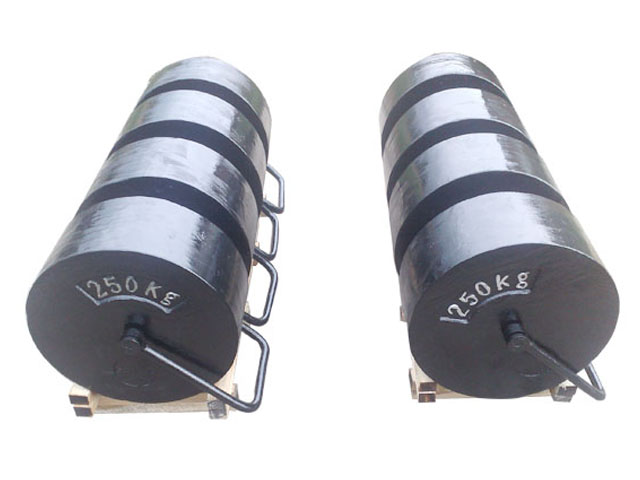
The selection of cast iron as the core raw material for laboratory dedicated weight production stems from the unique physical and chemical characteristics of this alloy material, which perfectly fits the core demands of laboratory reference mass carriers. Cast iron features high overall density and uniform internal material distribution, avoiding the internal hollowing, uneven density distribution, or easy deformation problems that often occur in some lightweight alloy or plastic weight products. This uniform density structure ensures that each cast iron weight can maintain stable overall mass balance, with no obvious mass deviation caused by internal material differences during long-term placement and use. In addition, cast iron has strong compressive resistance and structural rigidity, and it is not easy to produce permanent shape changes under the action of conventional external force extrusion, collision, or stacking pressure that are common in laboratory daily operations. For laboratory scenarios where weights need to be frequently moved, placed on weighing equipment, stacked and stored, or repeatedly used for load testing, this structural stability is particularly critical. Any slight deformation of the weight body may lead to changes in effective mass and contact surface flatness, which in turn affects the accuracy of subsequent weighing calibration and experimental results. Moreover, the surface of cast iron can be treated with simple protective finishing, which can effectively slow down the oxidation and corrosion rate caused by contact with air, laboratory trace chemical volatile gases, and slight moisture in the environment, extending the service life of the weight and reducing the frequency of mass value deviation caused by material corrosion and surface rust peeling. Compared with other metal materials that are prone to rapid oxidation and require complex anti-corrosion treatment, or non-metal materials that are easy to wear and deform, cast iron has become a cost-effective and reliable choice for manufacturing laboratory conventional reference weights.
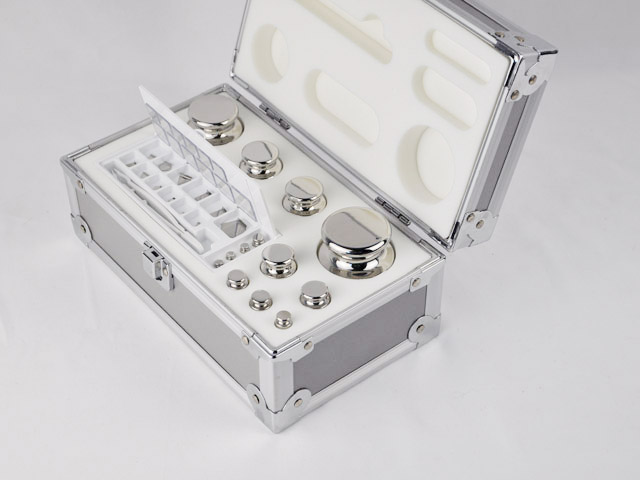
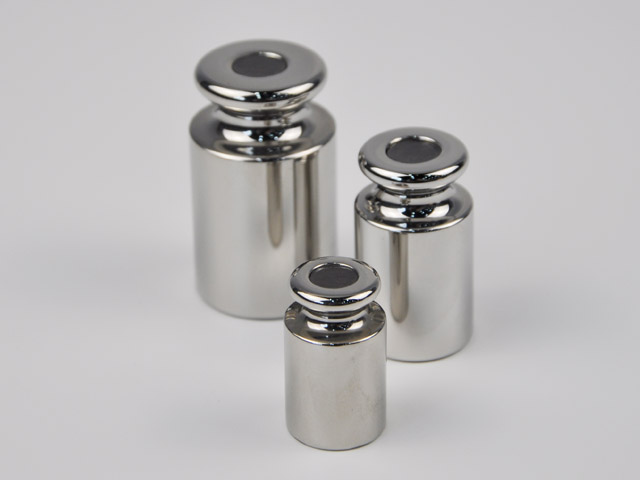
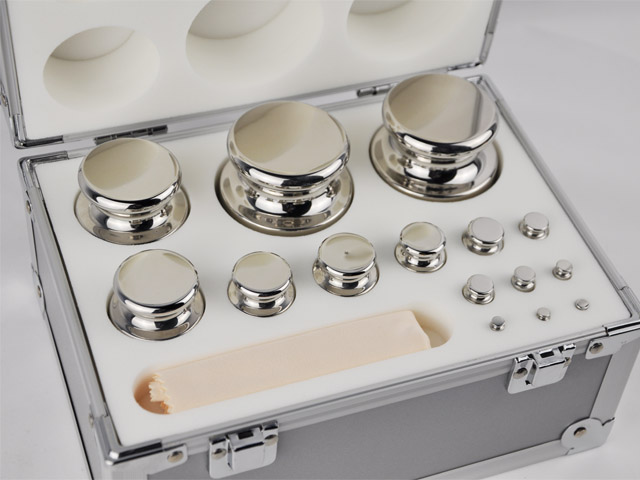
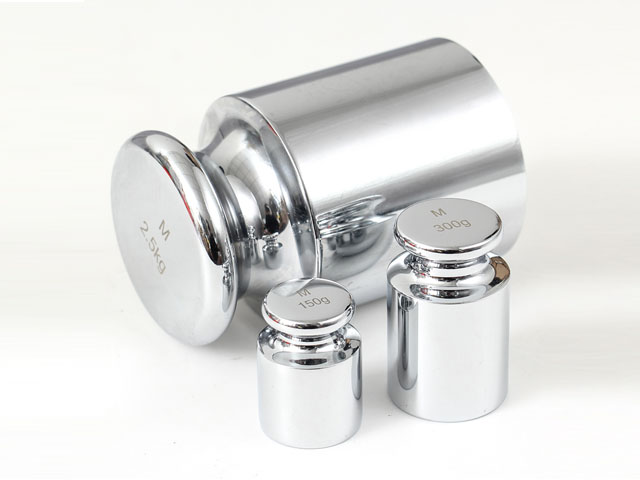
The structural design of laboratory cast iron weights is carefully optimized around the actual use habits and safety operation requirements of laboratory staff, fully considering the convenience of handling, the stability of placement, the safety of stacking storage, and the compatibility with various laboratory weighing instruments and experimental devices. Most laboratory cast iron weights adopt regular geometric shapes, with common designs including hexagonal overall structures, square block structures with integrated handles, and ring-shaped slotted structures suitable for hanging and superposition. The hexagonal structural design effectively prevents the weights from rolling and sliding randomly when placed on laboratory workbenches or flat weighing platforms, avoiding accidental falling and collision damage that may occur during use and storage, and also enabling multiple weights to be stacked closely and stably without toppling, saving laboratory storage space and keeping the experimental work area neat and orderly. The integrated handle design added to some weight bodies is processed integrally during the casting process, without subsequent welding or assembly links, ensuring that the connection between the handle and the weight body is firm and reliable, and no loosening or breaking will occur during frequent lifting and moving by staff. This design reduces the safety risks in the handling process and facilitates staff to quickly take, place, and replace weights in various experimental and calibration operations. The slotted and hooked cast iron weight styles are mainly designed for targeted physical experiments and special load testing work, which can be directly hung on experimental brackets, force measuring devices, or balance hanging structures, providing stable fixed load sources for experiments related to force measurement, pressure testing, torque demonstration, and mechanical balance verification in laboratories.
The surface treatment process of laboratory cast iron weights is also formulated according to the special environmental requirements of laboratory work, focusing on improving surface durability, anti-fouling performance, and operation safety while maintaining the stability of the weight’s mass value. After the casting and finishing process, the surface of the weight body is polished smoothly to remove sharp burrs, rough edges, and casting protrusions generated during the casting process. On the one hand, this smooth treatment prevents staff from being scratched by sharp edges during daily handling and use, improving the safety of manual operation. On the other hand, it avoids the problem of inaccurate contact between the weight bottom and the weighing equipment platform caused by uneven surface protrusions, ensuring that each weight can be placed stably and flatly on the weighing surface, maintaining the consistency of stress state during each calibration and measurement process. A layer of uniform protective coating is covered on the polished surface, which does not add excessive thickness or extra mass deviation to the weight body. This protective layer can effectively isolate the direct contact between the cast iron matrix and the external environment, prevent rust and corrosion caused by moisture in the air, volatile acid-base gases generated by chemical experiments, and residual liquid splashing in the laboratory, and avoid mass changes caused by rust falling off and material loss. At the same time, the smooth surface is not easy to adhere to dust, experimental debris, and dirt generated in the laboratory daily work. Staff can clean the surface of the weights with conventional soft cleaning tools and simple cleaning methods in daily maintenance, ensuring that the weights are always kept in a clean and tidy use state and will not affect the measurement accuracy due to surface dirt accumulation.
Laboratory cast iron weights undertake diverse and core application functions in all types of laboratory daily work, covering routine calibration of weighing equipment, basic scientific experiment research, teaching and training demonstration, and internal quality control testing of experimental data, becoming an essential basic guarantee for the normal development of various laboratory businesses. In the daily calibration and regular inspection of laboratory weighing instruments, these cast iron weights serve as stable mass reference standards, used to detect and verify the working state and measurement accuracy of various mechanical balances, electronic weighing scales, and experimental special weighing devices. All weighing instruments used in laboratories will have slight measurement errors due to long-term use, frequent vibration, environmental temperature and humidity changes, and component aging. Regular calibration with standard cast iron weights can timely check whether the weighing data of the instrument is within the normal deviation range, adjust and correct the instrument in time when abnormal data deviation is found, ensure that the weighing results obtained in all subsequent experiments are accurate and reliable, and avoid the overall failure of experimental research work caused by inaccurate basic weighing data.
In basic scientific research and physical mechanics experiment projects carried out in laboratories, cast iron weights provide stable and controllable standard load sources for various experimental tests, supporting the development of experiments related to mechanical stress, pressure testing, material bearing capacity detection, and structural balance verification. Many mechanical property experiments require applying fixed and known load pressure to experimental samples and experimental devices to observe the deformation degree, stress change, and structural bearing limit of materials under specific load conditions. Cast iron weights can provide continuous and stable static load for these experiments due to their stable mass and pressure resistance. The weight will not produce mass fluctuation or structural deformation due to long-term load action, ensuring that the load conditions set in the experiment remain unchanged, and the experimental data obtained has good repeatability and comparability. Researchers can adjust the number and combination of cast iron weights according to the experimental design requirements to obtain different gradient load values, complete multiple groups of comparative experiments under different load conditions, summarize experimental laws and data changes, and lay a solid data foundation for subsequent scientific research analysis and experimental conclusion summary.
In school teaching laboratories and professional skill training laboratory scenarios, cast iron weights are important teaching aids for teachers to carry out basic physics knowledge teaching and experimental operation skill training. They are used for intuitive demonstration of basic knowledge such as mass cognition, weight comparison, balance principle, and force balance rule, helping students and trainees intuitively understand abstract physical concepts through practical operation and hands-on experience. Teachers can guide students to use cast iron weights of different specifications to complete balance weighing operation exercises, stacking weighing comparison experiments, and simple force measurement demonstration experiments, so that learners can master basic weighing operation methods and experimental data reading skills in practical operation. The sturdy and durable characteristics of cast iron weights are very suitable for frequent use in teaching and training scenarios. Even in the case of improper operation and occasional slight collision by novice operators, the weights will not be easily damaged or have obvious mass changes, which can meet the long-term and repeated use needs of teaching and training work and reduce the replacement frequency of laboratory teaching supplies.
Standardized daily maintenance and correct storage management are key links to ensure the long-term stable performance and extended service life of laboratory cast iron weights, and also important work to maintain the consistent mass value of weights and ensure the accuracy of subsequent use. In the daily use process, staff should avoid violent collision, arbitrary throwing, and excessive extrusion of cast iron weights as much as possible. Although cast iron has good compressive resistance, severe impact and violent collision may cause local structural damage to the weight body, tiny cracks inside, or deformation of the contact bottom surface, resulting in changes in mass distribution and affecting the accuracy of measurement and calibration use. After each use, the surface of the weights should be cleaned in time to remove experimental dust, residual debris, and slight dirt attached to the surface. Cleaning work only needs to be wiped with a soft dry cloth, and avoid using corrosive chemical cleaning agents to prevent damaging the surface protective coating and causing subsequent corrosion and rust of the cast iron matrix.
In terms of storage management, laboratory cast iron weights need to be placed in a dry, ventilated, and stable indoor storage area, avoiding long-term placement in humid environments, areas with strong volatile chemical gases, or positions prone to vibration and extrusion. Humid environment will accelerate the oxidation and rust speed of cast iron, and long-term exposure to corrosive gas will damage the surface protective layer, leading to material loss and mass deviation of weights. Weights of different specifications should be classified and stored separately, stacked neatly in a fixed storage rack or storage cabinet, avoiding random mixing and stacking of heavy and light weights, preventing small-specification weights from being crushed and deformed by heavy weights, and also facilitating staff to quickly find and take the required weights when in use, improving laboratory work efficiency. Regular regular inspection work should be arranged every certain cycle. Staff need to check whether the surface of each cast iron weight is rusted, deformed, damaged, or peeled off the protective layer, check whether the handle and other structural parts are firm, and whether the bottom placement surface is flat. For weights with slight surface rust and dirt, timely cleaning and maintenance should be carried out; for weights with obvious deformation, damage, and large mass deviation that cannot be repaired, they should be sorted out in time and stopped from use to prevent unqualified weights from being put into laboratory calibration and experimental work and affecting the accuracy of experimental data.
In the long-term operation and development of the laboratory, the value of cast iron weights is not reflected in a single use function, but in the long-term stable basic support role they play in the entire laboratory measurement system and experimental research work. All experimental data, research conclusions, and teaching training effects in the laboratory are based on accurate and reliable basic measurement work, and cast iron weights are the basic tools to maintain the stability of this measurement foundation. With the continuous upgrading of laboratory experimental technology and the gradual improvement of measurement accuracy requirements, the use and management of laboratory cast iron weights have also become more standardized and refined. More and more laboratories pay attention to the standardized use, scientific storage, and regular maintenance of cast iron weights, realizing the long-term stable use of each weight, reducing the cost of frequent replacement of consumables, and ensuring that every link from equipment calibration, experimental research to teaching training can be carried out in an orderly manner under accurate measurement conditions. Simple in appearance and practical in function, laboratory cast iron weights have become an indispensable and important part of the laboratory’s basic hardware configuration, silently supporting the steady development of various laboratory scientific research, teaching, and testing work with stable quality and reliable performance.
Cast Iron Weight For Laboratory
https://www.veidtweighing.com/cast-iron-weights.html
Post Date: May 4, 2026
https://www.supplier-manufacturer.com/cast-iron-weight/cast-iron-weight-for-laboratory.html

![High Precision Laboratory Weight Set]()
High Precision Laboratory Weight Set
In every modern laboratory environment where quantitative measurement serves as the fundamental foundation for all experimental research, data recording, and material form…![Cylindrical Standard Weight]()
Cylindrical Standard Weight
Cylindrical standard weights are fundamental mass measurement tools widely adopted in metrology laboratories, industrial production lines, quality inspection procedures, a…![Laboratory Standard Weight]()
Laboratory Standard Weight
In every scientific laboratory that engages in experimental research, material analysis, chemical formulation, physical property testing, and industrial precision testing,…![Specifications of Standard Weight]()
Specifications of Standard Weight
Standard weight serves as a fundamental reference tool in the field of metrology, laying a solid foundation for accurate weight measurement and consistent data comparison …![Astm Class Standard Weight]()
Astm Class Standard Weight
In the complex and interconnected system of modern industrial production, scientific research experimentation, and commercial transaction settlement, accurate mass measure…