Cast Iron Weight Production
Cast iron weights serve as essential foundational components across a wide spectrum of industrial and commercial operational scenarios, fulfilling core functional needs for mechanical balancing, load stabilization, counterbalance adjustment, and static pressure bearing in diverse equipment and engineering systems. The production of cast iron weights is a systematic and meticulous industrial process that integrates material science, casting technology, mechanical processing, and precise dimensional and mass calibration, requiring strict control over every production stage to ensure the final finished products possess stable physical properties, uniform density distribution, accurate dimensional specifications, and reliable long-term service performance. Unlike ordinary cast iron parts that only focus on basic structural forming, cast iron weight production places higher emphasis on the consistency of internal material structure, the accuracy of overall mass proportion, and the durability of external surface protection, as these key characteristics directly determine the operational stability and service life of the equipment matched with the weights in long-term continuous working environments. Every procedure from raw material preparation to final finished product inspection and delivery needs to follow standardized production norms and refined operational requirements, avoiding any internal defects, dimensional deviations, or surface damage that may affect the practical application effect of cast iron weights, and ensuring each batch of products can adapt to various complex working conditions and meet the actual usage demands of different application fields.
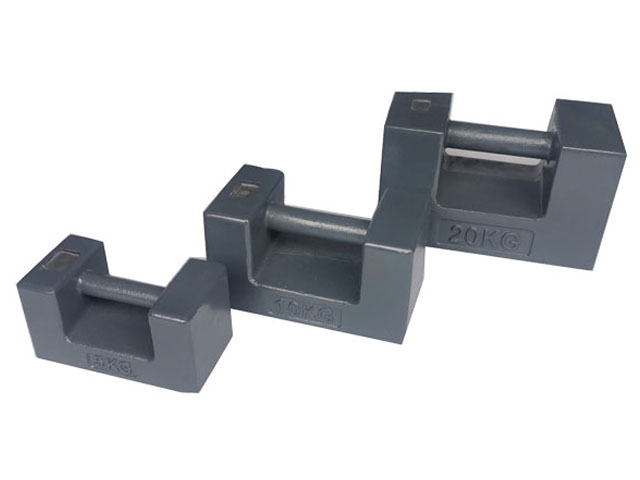
The initial stage of cast iron weight production centers on scientific raw material selection and proportioning optimization, which lays a solid foundation for the overall quality and inherent performance of subsequent finished products. Gray cast iron remains the mainstream base material for cast iron weight manufacturing due to its excellent comprehensive casting performance, stable internal structural density, good vibration damping characteristics, and suitable hardness and toughness matching long-term load-bearing use. This type of cast iron has reasonable carbon and silicon element content ratios, enabling the molten iron to have excellent fluidity during the melting and pouring process, which can fully fill every corner of the mold cavity and effectively reduce the occurrence of internal shrinkage cavities, porosity, and slag inclusions inside the castings. In the raw material preparation link, production personnel mainly select high-quality pig iron materials and qualified recycled cast iron scrap as the main melting raw materials, and reasonably allocate auxiliary alloy elements according to the structural thickness and usage environment of different cast iron weight specifications. The addition of appropriate manganese elements can effectively improve the internal structural compactness of cast iron and enhance the wear resistance and pressure resistance of finished weights, while controlling the content of harmful impurity elements such as sulfur and phosphorus within a reasonable range to prevent excessive impurities from causing structural brittleness, local cracking, or uneven density of cast iron weights in the later use process. Before formal batching and melting, all raw materials need to undergo strict manual screening and preliminary inspection to remove rusted, deformed, or impurity-contaminated scrap materials, and ensure the surface cleanliness and component uniformity of all raw materials, avoiding the impact of raw material quality fluctuations on the stability of molten iron composition and the overall quality consistency of subsequent cast iron weight products.
Raw material melting and molten iron purification treatment are crucial intermediate links connecting raw material preparation and formal casting forming, directly determining the internal metallographic structure and inherent quality of cast iron weight blanks. At present, medium-frequency induction furnaces are widely used in mainstream cast iron weight production workshops for melting operations, as this melting equipment can achieve precise and stable control of melting temperature and molten iron composition, with fast melting speed and uniform heating effect, which is more conducive to producing high-quality molten iron with stable performance compared with traditional melting equipment. After putting the proportioned pig iron, scrap cast iron, and auxiliary alloy materials into the furnace in sequence according to the process requirements, the melting temperature is gradually raised and strictly maintained within the optimal process range suitable for gray cast iron melting. In the early stage of melting, the solid raw materials are slowly heated and melted into a uniform liquid molten iron, and production personnel regularly observe the melting state inside the furnace and adjust the heating power in real time to avoid local overheating or insufficient melting temperature that may lead to uneven molten iron composition. After the completion of preliminary melting, molten iron purification and slag removal operations are carried out immediately. A reasonable amount of flux is added to the molten iron to fully adsorb and gather suspended slag, oxide impurities, and non-metallic inclusions in the molten iron, and the floating slag on the surface of the molten iron is thoroughly cleaned up through professional slag removal tools. This purification treatment work cannot be omitted in any production batch, because residual impurities in the molten iron will form internal structural defects inside the cast iron weight after pouring and solidification, resulting in local density differences, reduced structural strength, and even hidden dangers of cracking during long-term load-bearing use. After purification and slag removal, sampling and composition testing are carried out to fine-tune the proportion of alloy elements according to the test results, ensuring that the molten iron composition fully meets the production process standards for cast iron weights and preparing for subsequent mold pouring operations.
Pattern making and mold preparation are key pre-pouring processes that determine the basic shape, dimensional benchmark, and forming quality of cast iron weight blanks. The pattern is an accurate prototype manufactured according to the design drawings of cast iron weights, and its production size needs to reasonably reserve a certain shrinkage allowance according to the physical shrinkage characteristics of gray cast iron after cooling and solidification. This is because molten iron will produce a certain degree of volume shrinkage in the process of cooling from liquid state to solid state, and reserving shrinkage allowance on the pattern can ensure that the cast iron weight blank after cooling and demoulding can meet the basic dimensional design requirements. According to the production batch and structural complexity of cast iron weights, patterns can be made of wood, metal, or high-strength plastic materials. Wooden patterns are suitable for small-batch and multi-specification trial production and small-scale customized production, with low production cost and convenient processing and modification; metal patterns have high structural strength and good wear resistance, suitable for large-scale mass production of conventional standard cast iron weights, and can ensure the long-term dimensional consistency of multiple batches of castings. After the pattern is completed, formal mold making operations are carried out using high-quality molding sand with good air permeability and compression resistance. The molding sand is compacted uniformly around the pattern through professional molding equipment to form a closed mold cavity that completely matches the shape of the cast iron weight. At the same time, a standardized gating system is set on the mold, including sprue, runner, and ingate structures, to ensure that the molten iron can flow smoothly and evenly into the mold cavity during pouring, reduce the turbulence and splashing of molten iron in the pouring process, and avoid air entrainment and secondary slag inclusion caused by excessive molten iron fluctuation. After the mold making is completed, the mold needs to be placed for a certain period of time for natural drying and hardening to enhance the structural stability of the mold, prevent mold deformation or sand falling during pouring, and ensure the smooth forming of cast iron weight blanks.
Molten iron pouring, casting cooling, and shakeout cleaning are the core process links for the formal forming of cast iron weight blanks, and the control of each operation detail directly affects the surface quality and internal structural integrity of the blanks. When the molten iron temperature and composition meet the pouring process requirements, the molten iron is steadily poured into the mold cavity through the reserved gating system. The pouring operation needs to maintain a stable and continuous flow rate, neither too fast to cause mold erosion and molten iron splashing, nor too slow to cause insufficient mold filling and premature local solidification of molten iron, resulting in incomplete forming of cast iron weights. In the pouring process, special personnel are arranged to observe the molten iron filling state in real time to ensure that the molten iron fully fills every part of the mold cavity and discharges the air inside the mold smoothly through the reserved exhaust holes. After the pouring operation is completed, the castings and the mold are placed in a natural cooling area for a sufficient period of slow cooling and solidification. The slow cooling mode is very important for cast iron weight production, as rapid cooling will lead to excessive internal temperature difference of the castings, resulting in internal stress concentration, surface cracking, and uneven internal metallographic structure, seriously affecting the structural stability and service performance of the weights. After the castings are completely cooled and solidified to room temperature, the shakeout operation is carried out to break the outer molding sand mold and take out the initially formed cast iron weight blanks. Subsequently, professional cleaning work is carried out to remove residual molding sand, pouring risers, sprue leftovers, and surface burrs on the surface and inside of the blanks. The cleaning process adopts a combination of mechanical grinding and manual trimming to ensure that the surface of the cast iron weight blanks is smooth and flat, the outline dimensions are neat, and no excess attachments or sharp burrs remain, laying a good foundation for subsequent mechanical processing and mass calibration operations.
Precision mechanical processing and mass fine calibration are the key steps to ensure that cast iron weights meet dimensional accuracy and mass balance standards, and are also the core links to distinguish qualified finished products from rough cast blanks. Although the cast iron weight blanks have basic shapes after casting and cleaning, there are inevitable dimensional tolerances, surface unevenness, and mass deviation on the surface and inside, which cannot directly meet the precise matching and load-bearing balance requirements of actual industrial applications. Therefore, all cast iron weight blanks need to be sent to professional processing equipment for turning, milling, planing, and drilling according to the design drawing requirements, processing the blank surface to the flatness and dimensional tolerance range specified by the process, and finishing the reserved installation holes, connecting grooves, and assembly positioning surfaces to ensure that the cast iron weights can be accurately installed and stably matched with supporting equipment. After the completion of mechanical processing, the most critical mass fine calibration work is carried out. Each cast iron weight is placed on professional weighing and testing equipment for accurate mass detection, and the unqualified parts with excessive mass deviation are finely adjusted by means of micro-cutting and grinding local redundant materials. The mass calibration work is carried out repeatedly and iteratively, with strict detection and adjustment for each product, to ensure that the actual mass of each cast iron weight is within the allowable deviation range of the design standard. This fine calibration process requires high patience and operational precision, because even a small mass deviation will affect the balance effect and stable operation of the entire mechanical equipment, especially for cast iron weights used in high-precision mechanical balancing and precision load-bearing scenarios, and the mass accuracy control requirements are more stringent. After calibration, each cast iron weight is marked with basic specification information for subsequent batch management and product traceability.
Surface anti-corrosion treatment and final overall inspection are the final links in the entire cast iron weight production process, ensuring that the finished products have good anti-rust and anti-corrosion performance and stable overall quality for long-term storage and outdoor or harsh environment use. Cast iron materials are prone to oxidation and rust when exposed to humid air, corrosive gas, or complex natural environments for a long time, which will not only affect the appearance of cast iron weights, but also cause surface corrosion and material loss, leading to mass changes and structural damage, and affecting the long-term use effect. Therefore, after the completion of processing and calibration, all cast iron weights need to undergo standardized surface anti-corrosion treatment. Firstly, the surface of the weights is thoroughly derusted and decontaminated to remove surface oxide scale, rust spots, oil stains, and dust, ensuring that the surface is clean and dry. Then, professional anti-corrosion coating treatment is carried out, with a uniform and dense protective coating formed on the surface of the cast iron weights. The coating has good adhesion and weather resistance, which can effectively isolate the cast iron matrix from the external humid and corrosive environment, prevent oxidation and corrosion, and extend the overall service life of the weights. After the surface coating is completely dried and solidified, the final overall finished product inspection is carried out. The inspection content covers dimensional accuracy recheck, mass deviation re-detection, surface coating integrity inspection, internal structural defect sampling inspection, and appearance quality overall check. All inspection items are implemented in accordance with unified production inspection standards, and unqualified products with dimensional deviation, mass exceeding the limit, surface coating peeling, or appearance damage are screened out and reworked and corrected in a timely manner. Only the cast iron weights that pass all inspection procedures can be packaged and stored waiting for delivery.
In the whole production process of cast iron weights, standardized process management and refined quality control run through every link from raw material entry to finished product delivery. Each production procedure has clear operational specifications and quality assessment standards, and production and inspection personnel strictly implement process requirements to avoid quality fluctuations caused by human operation errors or process management loopholes. With the continuous upgrading of industrial production technology and the continuous improvement of equipment matching requirements, cast iron weight production technology is also constantly optimized and upgraded, with more precise melting control methods, more efficient molding and casting processes, and more accurate processing and calibration technologies continuously applied to actual production. This continuous optimization not only improves the production efficiency of cast iron weights, but also further enhances the structural stability, dimensional accuracy, mass consistency, and environmental adaptability of finished products. Whether used in large mechanical engineering equipment, industrial production machinery, transportation vehicle balancing, or mechanical equipment load-bearing stabilization scenarios, cast iron weights produced through standardized and standardized full-process production can always maintain stable working performance, reliably meet the diverse usage needs of different industrial fields, and provide solid and reliable basic support for the stable operation of various mechanical equipment and engineering systems.
Cast Iron Weight Production
https://www.veidtweighing.com/cast-iron-weights.html
Post Date: May 4, 2026
https://www.supplier-manufacturer.com/cast-iron-weight/cast-iron-weight-production.html

![Light Weight Stainless Steel Small Calibration Weight]()
Light Weight Stainless Steel Small Calibration Weight
Light weight stainless steel small calibration weights are essential precision measuring accessories widely adopted in precision measurement, laboratory testing, and daily…![Standard Weight For Floor Scales]()
Standard Weight For Floor Scales
Floor scales serve as the foundational weighing equipment in industrial, logistics, manufacturing, and warehousing environments, delivering reliable weight measurement for…![Analytical Balance Test Weight]()
Analytical Balance Test Weight
In the realm of precision laboratory measurement, analytical balance test weights stand as the most fundamental and indispensable reference standard, underpinning the accu…![Digital Scale Calibration Weight]()
Digital Scale Calibration Weight
In all fields that rely on precise mass measurement, digital scale calibration weights serve as fundamental auxiliary tools that underpin consistent and reliable weighing …![20kg M1 Heavy Duty Calibration Weight Weighbridge Use]()
20kg M1 Heavy Duty Calibration Weight Weighbridge Use
Weighbridges serve as core weighing equipment in industrial production, logistics transportation, material trading, and resource statistical accounting, undertaking the cr…