Low Tolerance Cast Iron Weight
Low tolerance cast iron weight stands as a fundamental and reliable component across modern industrial production, mechanical operation, and precision measurement fields, crafted specifically to maintain steady mass consistency and dimensional accuracy in every practical application scenario. Unlike ordinary cast iron counterweights or common iron casting parts that allow wide deviation ranges in mass and physical dimensions, this type of cast iron weight is engineered and produced with strict control over every production link, from raw material proportioning and smelting treatment to casting forming, precision machining, and surface finishing, focusing on minimizing mass error and dimensional variation to meet the rigorous precision demands of various professional working environments. Cast iron as the core base material boasts inherent superior properties including high density, stable internal microstructure, excellent vibration damping capacity, and good castability, all of which lay a solid foundation for low tolerance weights to maintain long-term stable performance and reliable structural integrity during prolonged use. The unique graphite flake structure inside standard cast iron materials further brings good wear resistance and deformation resistance, enabling these weights to resist external environmental interference and mechanical stress without obvious mass loss or shape deformation over years of continuous service, making them far more suitable for precision balance and measurement work than many other metal or non-metal counterweight materials.
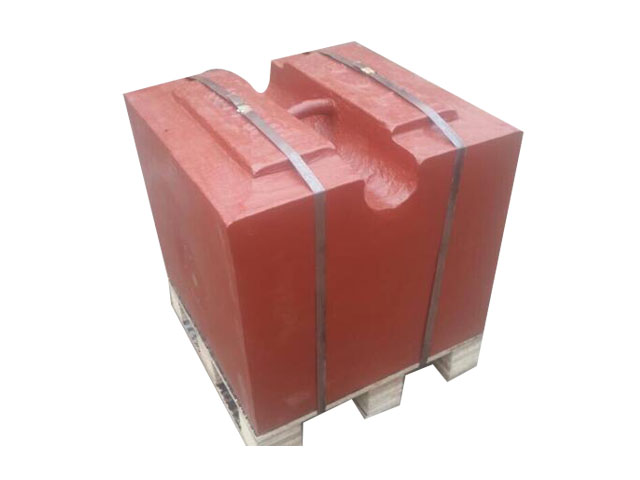
The production of low tolerance cast iron weight starts with the scientific selection and precise proportioning of raw materials, a preliminary step that directly determines the base stability and follow-up machining feasibility of the finished weight. Strict screening of iron raw materials is carried out to control the content of various trace elements and impurities within a reasonable range, avoiding excessive impurity components that would cause uneven internal material density, local structural loose ness, or inconsistent mass distribution inside the casting. In the smelting process, the melting temperature and holding time are carefully regulated to ensure the raw materials are fully melted and uniformly mixed, eliminating internal bubbles, shrinkage cavities, and sand holes that commonly appear in ordinary cast iron castings. Any tiny internal defects in cast iron weights will not only affect the overall structural firmness but also lead to subtle changes in actual mass and uneven stress distribution, which gradually cause dimensional deviation and mass drift during long-term placement or mechanical vibration. Through standardized smelting and refining processes, the internal structure of the cast iron material becomes dense and uniform, with consistent density per unit volume across all parts of the weight, creating essential preconditions for subsequent low tolerance control of mass and size. After smelting, the molten iron is poured into professionally customized precision molds, and the casting cooling rate and solidification environment are precisely managed to prevent uneven cooling shrinkage and local structural deformation, ensuring the initial rough casting meets basic dimensional and mass qualification requirements before fine processing.
Precision machining serves as the core link to achieve the low tolerance characteristics of cast iron weight, distinguishing it greatly from ordinary cast iron products that only require simple shaping without strict precision control. After the rough casting is fully cooled and demolded, preliminary surface cleaning and deburring are conducted to remove surface attachments and casting excess materials, followed by multi-step fine machining processes including turning, milling, grinding, and surface finishing. Each machining procedure is operated with precise processing parameters and stable mechanical equipment, with every dimensional index and surface flatness strictly controlled within a narrow deviation range. The key contact surfaces, bearing surfaces, and calibration reference surfaces of the weight undergo repeated fine grinding and trimming to ensure smooth surface texture and consistent flatness, avoiding uneven contact stress caused by rough surfaces during use that could affect balance accuracy and placement stability. In the mass calibration and trimming stage, professional weighing and measuring tools are used for repeated detection and fine adjustment of each finished weight, with tiny material removal carried out according to detected deviation data to keep the final mass within the required low tolerance range. This gradual and refined processing method avoids excessive one-time material removal that may cause structural damage or new unbalanced stress, ensuring both the external dimensional accuracy and internal mass uniformity of the weight reach the standard required for professional application. Every machining step is recorded and inspected sequentially, with unqualified products eliminated in a timely manner to prevent defective semi-finished products from entering subsequent processing links and affecting the overall quality of the final finished product.
The inherent performance advantages of low tolerance cast iron weight make it adaptable to complex and diverse working conditions, maintaining stable working performance in different temperature, humidity, and mechanical vibration environments. Cast iron materials have good compressive strength and structural stability, not prone to deformation or structural damage under long-term static pressure and frequent mechanical impact, allowing the weight to maintain a fixed shape and stable mass without bending, warping, or local collapse even in heavy-duty mechanical operation scenarios. The excellent vibration damping property of cast iron effectively absorbs and buffers mechanical vibration generated during equipment operation, reducing vibration transmission and resonance impact, which not only improves the overall operating stability of mechanical equipment but also prevents mass deviation and position offset of the weight caused by long-term vibration shaking. In terms of environmental adaptability, with simple and reasonable surface protection treatment, low tolerance cast iron weight can resist daily oxidation and corrosion in conventional working environments, avoiding surface rust and corrosion that would cause changes in surface roughness and actual mass. Unlike some lightweight counterweight materials that are easily affected by temperature expansion and contraction, cast iron has a low thermal expansion coefficient, with negligible dimensional and mass changes under normal temperature fluctuation ranges, ensuring the tolerance accuracy of the weight is not affected by seasonal temperature changes or short-term working environment temperature differences. This stable environmental adaptability enables the weight to maintain consistent precision performance whether used in indoor laboratory precision calibration workshops, outdoor industrial production sites, or mechanical equipment operation areas with continuous vibration.
Low tolerance cast iron weight has a wide range of practical applications, covering industrial mechanical balance adjustment, weighing equipment calibration, production process debugging, and mechanical equipment stable operation assistance, playing an irreplaceable role in multiple industrial links. In the field of mechanical equipment manufacturing and assembly, many large mechanical devices, rotating equipment, and reciprocating machinery need to be equipped with matching counterweight components to balance mechanical operation torque, offset structural unbalanced force, and reduce equipment operation vibration and noise. The application of low tolerance cast iron weight can accurately match the counterweight demand of mechanical equipment, ensuring the equipment runs smoothly within the designed operating range, reducing mechanical wear and energy consumption, and extending the overall service life of mechanical parts. In the weighing measurement industry, various large weighing devices and industrial weighing facilities need regular daily calibration and accuracy verification, and low tolerance cast iron weight, with its stable mass and accurate deviation control, becomes a reliable auxiliary tool for weighing equipment debugging and calibration work, ensuring the accuracy and consistency of industrial weighing data and avoiding measurement errors that affect production quality and product qualification rate.
In engineering construction and heavy machinery operation scenarios, low tolerance cast iron weight is often used for equipment leveling, foundation stabilization, and mechanical counterweight balancing of construction facilities, providing stable gravity support and balance restraint for large construction machinery and temporary construction facilities. Its high density and stable structural performance allow it to maintain a fixed position and stable counterweight effect even in complex construction operation environments with frequent mechanical movement and external force interference, preventing equipment tilting, position deviation, and operational instability. In laboratory precision research and industrial quality control links, such weights are used for precision experiment debugging, product performance testing, and production process parameter verification, providing accurate mass reference standards for experimental research and quality inspection work. The low tolerance feature ensures the accuracy and repeatability of experimental data and detection results, providing reliable data support for product research and development, production process optimization, and product quality improvement. Whether in large-scale industrial production lines, professional precision measurement laboratories, or daily mechanical equipment maintenance and debugging work, low tolerance cast iron weight can always exert its stable performance and accurate precision advantages to meet the diversified use needs of different industries.
Daily maintenance and proper storage management are crucial to maintaining the long-term tolerance accuracy and service life of low tolerance cast iron weight, as good maintenance habits can effectively avoid external factor interference leading to mass deviation and structural damage. In daily use, it is necessary to avoid violent collision, fall, and excessive extrusion of the weight, as severe impact will not only cause surface damage and deformation but also lead to internal structural stress changes, resulting in subtle mass deviation and dimensional tolerance exceeding the standard. When placing and using the weight, keep the placement surface flat and stable to ensure uniform stress on the weight, avoiding long-term placement on uneven surfaces that cause local structural deformation and affect balance accuracy. Regular surface cleaning work should be done to remove surface dust, oil stains, and sundries, preventing long-term attachment of dirt that may cause surface corrosion and affect the actual mass and surface flatness of the weight. For weights stored for a long time, place them in a dry and ventilated storage environment, avoid long-term exposure to humid, high temperature, or corrosive gas environments, and take necessary moisture-proof and anti-corrosion protection measures to prevent oxidation and rust corrosion.
Regular regular inspection and re-calibration work are also essential for low tolerance cast iron weight in long-term use. After a period of use or long-term storage, slight mass changes and dimensional deviations may occur due to environmental influence and subtle mechanical stress accumulation. Regular professional measurement and calibration can timely detect tiny deviation changes and conduct fine trimming and adjustment according to actual detection conditions, ensuring the weight always maintains low tolerance accuracy during subsequent use. During inspection, attention should be paid to checking whether the weight has surface deformation, structural cracks, and corrosion damage; once abnormal conditions are found, timely maintenance and replacement treatment should be carried out to avoid affecting the normal use effect and measurement balance accuracy. Scientific maintenance and management not only maintain the working precision of low tolerance cast iron weight for a long time but also reduce the frequency of replacement and comprehensive use cost, improving the overall use economy and work stability.
With the continuous upgrading of modern industrial manufacturing technology and the continuous improvement of industrial production precision requirements, the market demand and application value of low tolerance cast iron weight are constantly improving, and the production and processing technology of such weights is also constantly optimized and upgraded. Traditional cast iron weight production focuses more on structural firmness and basic counterweight functions, while modern low tolerance cast iron weight production pays more attention to the whole-process precision control from raw materials, casting, machining to calibration and maintenance, taking precision stability and long-term reliability as the core production goals. The continuous progress of casting technology and precision machining equipment makes the tolerance control range of cast iron weights narrower and the mass stability higher, able to adapt to the higher precision use requirements emerging in various emerging industrial fields. In future industrial development and mechanical upgrading work, low tolerance cast iron weight will continue to rely on its excellent material performance, mature production technology, and wide application adaptability, serving as an important basic precision component for industrial production, mechanical operation, and precision measurement work. Through continuous optimization of production processes, strict control of production precision, and standardized daily maintenance management, low tolerance cast iron weight will always maintain stable and reliable working performance, provide solid basic support for the stable operation and precision development of various industries, and create stable and reliable basic conditions for the continuous progress and upgrading of modern industrial manufacturing.
Low Tolerance Cast Iron Weight
https://www.veidtweighing.com/cast-iron-weights.html
Post Date: May 4, 2026
https://www.supplier-manufacturer.com/cast-iron-weight/low-tolerance-cast-iron-weight.html

![What is Stainless Steel Weight]()
What is Stainless Steel Weight
Stainless steel weights serve as essential foundational tools for routine weighing adjustment and daily precision checking across various laboratory, industrial and educat…![Laboratory Weight Set]()
Laboratory Weight Set
In every laboratory environment dedicated to scientific research, experimental analysis, quality inspection, and academic teaching, consistent and dependable mass measurem…![500g Stainless Steel Weight]()
500g Stainless Steel Weight
A 500g stainless steel weight stands as one of the most fundamental and widely utilized weighing auxiliary tools across countless professional sectors, daily operational s…![Stainless Steel Cylindrical Calibration Weight All Sizes]()
Stainless Steel Cylindrical Calibration Weight All Sizes
Stainless steel cylindrical calibration weights serve as fundamental metrological tools across laboratory research, industrial production, commercial measurement, and qual…![M1 Class Stainless Steel Weight]()
M1 Class Stainless Steel Weight
In the intricate and interconnected world of modern measurement and industrial operation, maintaining consistent and dependable weighing results stands as a foundational r…