Cast Iron Weight With Lifting Eye
Cast iron weight with lifting eye stands as a fundamental and dependable component widely utilized across industrial operation, mechanical commissioning, engineering testing, and equipment balancing work scenarios. Crafted from dense, high-quality cast iron materials through mature casting and fine machining processes, this type of weight is engineered to deliver stable mass performance, consistent structural integrity, and convenient handling conditions for all kinds of heavy-duty weight matching and load bearing tasks. The integrated lifting eye structure embedded on the upper part of the cast iron weight body serves as a core functional design that distinguishes it from ordinary flat cast iron counterweights, effectively solving the difficulties of moving, hoisting, positioning, and stacking heavy weight blocks in complex working environments. Unlike small portable weighing tools that rely on manual carrying, cast iron weights equipped with lifting eyes are tailored for medium and heavy load application demands, where mechanical hoisting cooperation is required for overall placement and fixed installation, ensuring every operation link proceeds in a steady, orderly, and safe manner without unnecessary displacement or structural damage during use and transportation.
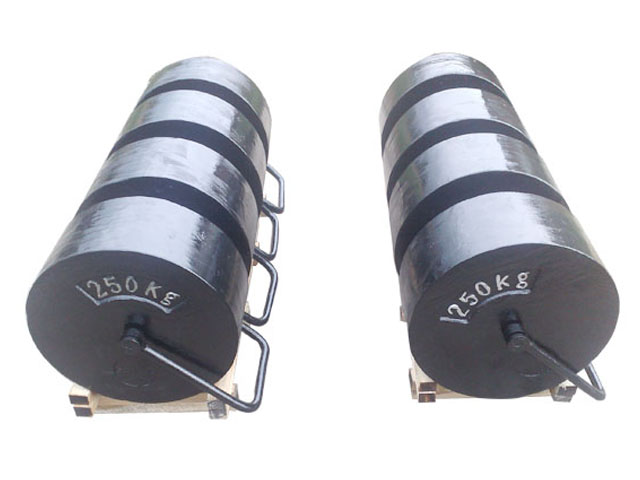
The core material selected for manufacturing cast iron weight with lifting eye is high-purity cast iron alloy with compact internal molecular structure and uniform density distribution. This material boasts excellent compressive resistance, strong deformation resistance, and good anti-aging performance, enabling the weight to maintain stable physical properties and fixed mass state for a long time even under long-term outdoor placement, frequent mechanical hoisting, and continuous heavy load pressure. In the casting production process, raw iron materials are fully smelted at constant temperature to ensure the internal texture of each weight body is free of pores, sand holes, cracks, and other casting defects that may affect mass accuracy and structural firmness. After the initial casting forming, each weight undergoes natural aging treatment for a certain period to eliminate internal casting stress generated during the cooling and forming process, preventing structural deformation or mass deviation caused by temperature changes and external force extrusion in subsequent long-term use. The surface of the weight body is treated with smooth finishing and uniform protective coating treatment, which can effectively isolate moisture, dust, and corrosive substances in the external working environment, slow down the oxidation and rusting speed of the cast iron surface, and extend the overall service life of the weight while keeping the outer surface neat and easy to clean and maintain in daily work.
The lifting eye, as the key auxiliary structure of the cast iron weight, is integrally cast with the weight body instead of being separately welded or assembled and then fixed. This one-piece forming processing method ensures that the connection between the lifting eye and the main weight body is tight and seamless, with strong bearing capacity and good stress dispersion effect. When the weight is hoisted by cranes, electric hoists, and other hoisting equipment, the pulling force generated during the hoisting process can be evenly transmitted to the entire weight body through the integrated lifting eye, avoiding local stress concentration that easily leads to fracture and damage at the connection position of assembled structures. The inner hole of the lifting eye is polished smoothly after fine machining, with no sharp edges or burrs on the edge of the hole wall, which can prevent wear and scratching on the matched steel wire ropes, lifting chains, and hoisting hooks during frequent hoisting and moving processes. The overall size and hole diameter of the lifting eye are designed according to the conventional hoisting operation specifications of industrial sites, matching most common hoisting accessories on the market, so that workers can complete the hoisting connection work quickly and conveniently without special customized accessories or complex connection steps, greatly improving the overall work efficiency of weight handling and placement.
In terms of overall structural design, the main body of cast iron weight with lifting eye adopts a regular and symmetrical block shape, with a flat bottom and neat side outlines. The flat bottom design enables the weight to be placed stably on various horizontal working surfaces such as concrete ground, steel platform, and equipment base, without tilting or shaking after placement, maintaining a stable center of gravity state during equipment balancing and load testing. The symmetrical body structure ensures uniform mass distribution of the weight itself, avoiding unbalanced stress caused by uneven weight concentration on one side during hoisting and placement, which is conducive to improving the safety and stability of hoisting operations and the accuracy of subsequent weight matching work. The surface of the weight body is marked with clear and durable weight identification marks through mechanical engraving, and the marks will not fade or fall off due to long-term outdoor exposure, friction and collision, or environmental erosion. Workers can quickly and accurately identify the actual weight specification of each weight during use, facilitating reasonable combination and collocation according to different working requirements, and meeting the diversified weight superposition and adjustment needs of different engineering projects and mechanical equipment.
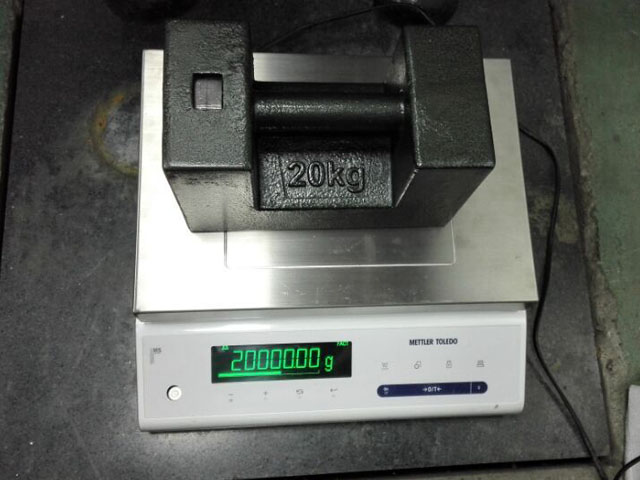
The application scope of cast iron weight with lifting eye covers multiple core links of modern industrial production and engineering construction, showing strong practicability and wide adaptability. In the field of weighing instrument calibration and detection, this kind of cast iron weight is used as a stable mass reference standard for regular verification and calibration of large floor scales, truck scales, belt scales, and various heavy-duty electronic weighing equipment. By placing cast iron weights with known and stable mass on the weighing equipment, workers can check whether the weighing data of the instrument is accurate and reliable, adjust the weighing deviation in time, and ensure that the weighing results of industrial raw materials, finished product transportation, and cargo loading and unloading are consistent with the actual situation, providing accurate measurement basis for production accounting, cargo settlement, and quality control of enterprises. In port terminals, logistics warehouses, and freight yards, a large number of cast iron weights with lifting eyes are used for daily calibration and regular maintenance of weighing equipment, ensuring that the weighing work of bulk goods such as grain, minerals, and building materials is carried out in a standardized and accurate state all year round.
In the field of mechanical equipment balancing and debugging, cast iron weight with lifting eye plays an indispensable role in adjusting the center of gravity balance of various large mechanical facilities. Many large mechanical equipment such as engineering cranes, lifting machinery, mining equipment, and ship mechanical auxiliary devices will have center of gravity deviation and unbalanced operation problems after long-term operation or component replacement. By reasonably adding and placing cast iron weights with corresponding specifications at the reserved balance positions of the equipment, workers can effectively correct the unbalanced state of the equipment, reduce vibration and shaking during equipment operation, reduce mechanical wear and operating failure rate, and ensure the mechanical equipment runs smoothly and stably under various working conditions. For elevator operation testing and safety performance inspection, this kind of cast iron weight is also used for load-bearing simulation tests of elevator carriages, simulating the actual load state of the elevator during passenger and cargo transportation, detecting the bearing capacity and safety protection performance of the elevator, and ensuring the elevator meets safe operation standards before formal put into use and daily operation.
In engineering construction and infrastructure load testing work, cast iron weight with lifting eye is used for static load testing and bearing capacity detection of building foundations, bridge structures, supporting platforms, and new engineering materials. By stacking and placing cast iron weights step by step according to the test plan, testers can apply stable and continuous fixed load to the tested structure or facility, observe the structural deformation, pressure resistance, and bearing limit state under different load conditions, collect accurate test data, and judge whether the engineering structure meets the design requirements and construction safety standards. This kind of load test method relying on cast iron weights is stable and reliable, with uniform load application and easy control of test process, which can effectively simulate the actual bearing pressure that engineering facilities may bear in long-term use, and provide reliable data support for engineering acceptance, structural optimization, and hidden danger troubleshooting.
In addition to large-scale industrial and engineering scenarios, cast iron weight with lifting eye also has important application value in equipment maintenance, mechanical processing auxiliary work, and temporary facility fixing work. In the equipment maintenance process of machinery manufacturing factories and processing workshops, weights can be used for pressing and fixing mechanical parts to avoid displacement and position deviation of parts during maintenance, disassembly, and assembly, ensuring the smooth progress of maintenance work and improving maintenance accuracy. In some temporary construction and outdoor operation scenarios, cast iron weights can be used for fixing temporary supporting frames, protective facilities, and temporary operation platforms, preventing equipment and facilities from shaking or collapsing due to external wind force and external impact, and ensuring the safety of on-site construction operators. The convenient hoisting and moving performance brought by the lifting eye makes the weight flexible to switch between different use positions, and the stable and heavy mass characteristics can meet various temporary fixing and pressure bearing auxiliary work needs.
Daily maintenance and scientific storage are important prerequisites to ensure the long-term stable performance and extended service life of cast iron weight with lifting eye. Although cast iron materials have good durability and corrosion resistance, regular maintenance work still needs to be done in daily use to avoid unnecessary performance attenuation and structural damage. After each use, the surface of the weight body and the inner hole of the lifting eye should be cleaned in time to remove surface dust, sediment, oil stains, and other sundries, preventing corrosive substances from adhering to the surface for a long time and causing oxidation and rust of the cast iron. For weights used in humid outdoor environments or corrosive working places, regular surface anti-rust maintenance work should be carried out to supplement the protective coating on the surface, maintain the integrity of the protective layer, and enhance the environmental adaptation capacity of the weight. When storing, the cast iron weights should be stacked neatly in a dry and ventilated storage area, avoiding long-term direct contact with humid ground and corrosive chemicals. The stacking height should be reasonably controlled to avoid excessive extrusion between weights causing structural deformation and mass change. Regular inspection of the lifting eye structure and weight body surface should be arranged to check for cracks, deformation, coating falling off, and other abnormal conditions, and timely maintenance and replacement should be carried out once problems are found to ensure safety and reliability in subsequent use.
In the whole industrial supporting and engineering auxiliary field, cast iron weight with lifting eye has always maintained irreplaceable practical value with its stable material performance, reasonable structural design, convenient operation and use, and wide application adaptability. Its simple and solid overall structure does not require complex maintenance and frequent replacement, and it can maintain consistent working performance after long-term repeated use, creating stable and reliable basic supporting conditions for all kinds of weighing calibration, equipment balancing, engineering testing, and auxiliary fixing work. With the continuous development of modern industrial production and engineering construction towards standardization and refinement, the application demand for high-quality cast iron weights with lifting eyes in various industries is constantly increasing. All production and use links also pay more attention to the casting quality, structural stability, and use safety of weights. Adhering to mature production processes and scientific use and maintenance methods can give full play to the core performance advantages of cast iron weights with lifting eyes, ensure the smooth progress of various industrial and engineering work, and provide solid and reliable basic guarantee for the stable operation of mechanical equipment and the safe implementation of engineering projects.
Cast Iron Weight With Lifting Eye
https://www.veidtweighing.com/cast-iron-weights.html
Post Date: May 4, 2026
https://www.supplier-manufacturer.com/cast-iron-weight/cast-iron-weight-with-lifting-eye.html

![Light Weight Stainless Steel Small Calibration Weight]()
Light Weight Stainless Steel Small Calibration Weight
Light weight stainless steel small calibration weights are essential precision measuring accessories widely adopted in precision measurement, laboratory testing, and daily…![Standard Weight For Floor Scales]()
Standard Weight For Floor Scales
Floor scales serve as the foundational weighing equipment in industrial, logistics, manufacturing, and warehousing environments, delivering reliable weight measurement for…![Analytical Balance Test Weight]()
Analytical Balance Test Weight
In the realm of precision laboratory measurement, analytical balance test weights stand as the most fundamental and indispensable reference standard, underpinning the accu…![Digital Scale Calibration Weight]()
Digital Scale Calibration Weight
In all fields that rely on precise mass measurement, digital scale calibration weights serve as fundamental auxiliary tools that underpin consistent and reliable weighing …![20kg M1 Heavy Duty Calibration Weight Weighbridge Use]()
20kg M1 Heavy Duty Calibration Weight Weighbridge Use
Weighbridges serve as core weighing equipment in industrial production, logistics transportation, material trading, and resource statistical accounting, undertaking the cr…