What is Stainless Steel Weight
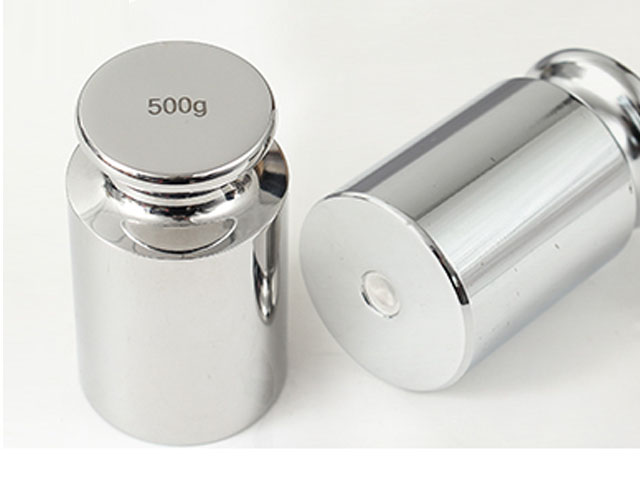
Stainless steel weights serve as essential foundational tools for routine weighing adjustment and daily precision checking across various laboratory, industrial and educational scenarios, standing out steadily among common weighing auxiliary tools thanks to their excellent inherent material properties and refined manufacturing craftsmanship. Crafted from well-selected stainless steel raw materials, these weights feature remarkable resistance to oxidation and corrosion, effectively avoiding mass changes caused by rust, moisture erosion and daily environmental exposure that often trouble ordinary metal weighing tools during long-term placement and repeated use. The surface of each stainless steel weight is processed with fine polishing treatment, forming a smooth and non-porous outer layer that prevents dust, fine debris and external stains from adhering or accumulating on the surface and tiny gaps, which greatly reduces the impact of external attachments on weighing consistency and keeps the overall mass stable for a long time. With reasonable structural design and standardized shaping processing, these weights maintain stable physical performance even under frequent handling, repeated placement and conventional daily wear, without easy deformation or surface damage. They adapt perfectly to the daily debugging of various weighing equipment, regular precision verification in experimental operations, and basic weighing calibration work in production and processing links, delivering stable and reliable auxiliary effects for all work scenarios that require accurate mass reference. Simple and convenient to handle and store, they fit long-term daily use and regular repeated operation needs, always maintaining steady and reliable working performance in different use environments and bringing consistent and effective support for all kinds of weighing related work.

Grades and Specifications of Stainless Steel Weights
Stainless steel weights are essential basic measuring instruments for precision metrology, industrial weighing and laboratory testing work. Featuring core advantages of corrosion resistance, oxidation resistance and high stability, they have replaced traditional cast iron weights and become the mainstream choice for weighing and calibration in various industries. The core practical value of weights relies on accurate grade classification and scenario-matched specification settings. Different grades determine the upper limit of measurement accuracy, and different specifications are suitable for various weighing equipment and operation scenarios. The reasonable matching of the two can ensure accurate and reliable weighing data and meet the diverse metrology needs of scientific research experiments, industrial production and daily calibration. The grade classification of stainless steel weights is mainly based on the difference in measurement accuracy, forming a gradient accuracy system to cover the full-scenario application needs from reference value dissemination to general industrial weighing. The two types of weights with the highest accuracy levels are mainly used in professional metrology fields and high-end scientific research experiments. These weights have extremely low magnetic susceptibility and uniform material density with exquisite overall workmanship and finely polished surfaces, which can minimize measurement errors caused by external environments and air adsorption. They are corely applied for the in-depth calibration of high-precision weighing instruments and the value dissemination of lower-level weights, serving as the accuracy foundation of the entire metrology system and only suitable for professional scenarios with extremely strict requirements on data deviation. Stainless steel weights of medium accuracy grades belong to the general precision category, balancing measurement accuracy and practical applicability with a wider range of applications. They can steadily meet the daily calibration of precision laboratory balances and the verification of weighing equipment in the precision production links of small and medium-sized enterprises. As a core transitional category connecting high-precision reference metrology and general industrial metrology, they have moderate error control and balance cost performance and measurement accuracy. Basic-grade stainless steel weights are general-purpose conventional models. Their accuracy meets the basic calibration needs of ordinary industrial production, warehousing and logistics, and commercial weighing equipment. Focusing on durability and practicality without the need for extreme micro-error control, they are suitable for the daily calibration and maintenance of various conventional electronic scales, platform scales and truck scales, ranking as the most frequently used type in basic industrial metrology scenarios.
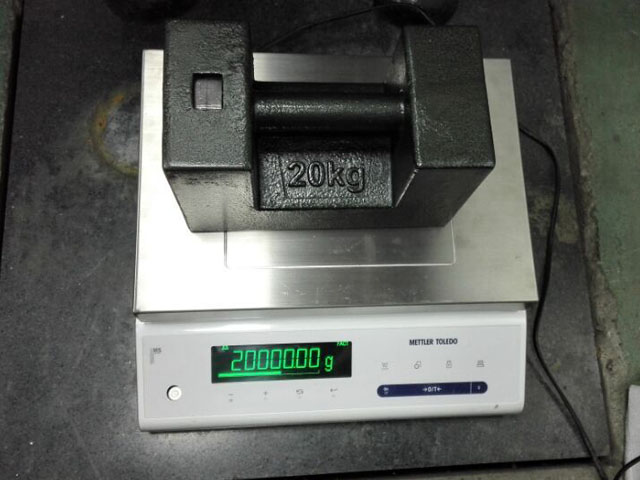
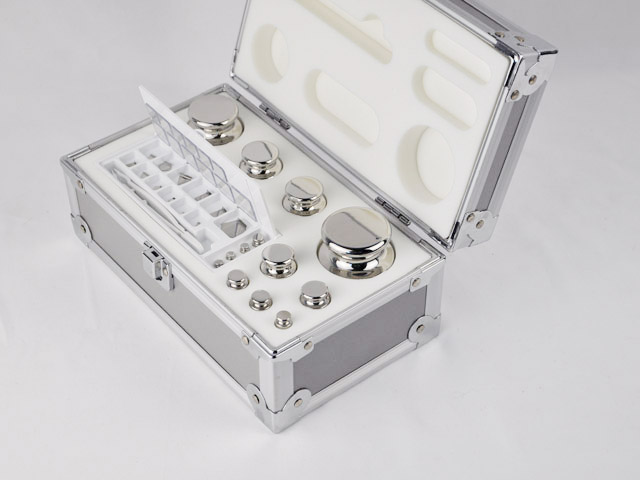
The specifications of stainless steel weights are divided progressively according to mass magnitudes, covering all-dimensional needs from micro-mass precision weighing to the calibration of large-tonnage heavy weighing instruments, including single independent specifications and combined complete set specifications to adapt to different usage habits and operation requirements. Micro-mass specifications start from the milligram level, mostly adopting an integrated and compact structure with delicate size and standardized workmanship, mainly used for the calibration of laboratory micro-precision weighing instruments and adapted to refined operation scenarios such as chemical reagent proportioning and precision scientific research sample weighing. Conventional commonly used specifications range from gram level to twenty kilograms, which are the most widely used specification range on the market. Each single weight has a regular structure and mostly adopts a standard cylindrical shape. Some specifications for convenient handling are equipped with simple handles, balancing easy access and measurement stability, and suitable for the routine calibration of various laboratory balances, commercial electronic scales and small industrial weighing equipment. Large-mass specifications extend from tens of kilograms to super-large tonnage levels, which can be customized as required for the calibration of large weighing instruments. These weights have a solid and stable structure and strong impact resistance, suitable for the regular verification of large factory weighbridges, logistics heavy-duty weighing equipment and large industrial weighing instruments to ensure accurate data in heavy-load weighing scenarios. Stainless steel weights of different specifications are made of matched stainless steel materials. High-precision small-size weights are mostly made of non-magnetic high-quality stainless steel to ensure stable accuracy, while conventional and large-size weights adopt wear-resistant and corrosion-resistant stainless steel materials to avoid loss and deformation during long-term use. Regardless of grades and specifications, stainless steel weights can maintain stable mass during long-term storage and frequent use, reduce measurement deviations caused by external environmental corrosion and bump wear, maintain good metrological performance for a long time, and lay a solid foundation for accurate weighing work of all types.
Material and Structure of Stainless Steel Weights
As essential basic measuring instruments for various weighing and calibration operations, stainless steel weights rely heavily on material selection and structural design to determine their metrological stability, service life and adaptability to various working conditions. Compared with traditional iron weights, the combination of high-quality stainless steel base materials and scientific structural design enables these weights to maintain long-term accurate and reliable performance in both high-precision laboratory testing and complex industrial production scenarios. The material of a weight serves as the fundamental foundation for ensuring long-term stable metrological accuracy. Stainless steel base materials with different component ratios are tailored to diverse precision requirements and service environments, fundamentally avoiding metrological deviations and body wear caused by external environmental interference. Stainless steel weights for conventional working conditions are mostly made of versatile austenitic stainless steel. This type of base material features a uniform and dense internal metallographic structure with excellent corrosion and oxidation resistance. Even when exposed to humid air, slight acid-base contact or dusty working environments for a long time, it will not suffer surface rust, material peeling or other damages, keeping the weight’s overall mass constant and eliminating weighing and calibration errors caused by material wear from the ground up. Weights used for high-precision metrology scenarios adopt special stainless steel raw materials with low magnetic susceptibility. Such materials hardly produce magnetic adsorption characteristics, effectively preventing the weights from absorbing fine iron debris during use or experiencing metrological deviations affected by weak surrounding magnetic fields, making them perfectly suitable for the calibration of precision analytical weighing equipment. In addition, stainless steel base materials feature high hardness and good wear resistance. Daily taking, stacking and minor collisions and friction will not cause surface damage or shape abrasion, and the original shape, specifications and standard mass parameters can be maintained after long-term repeated use.
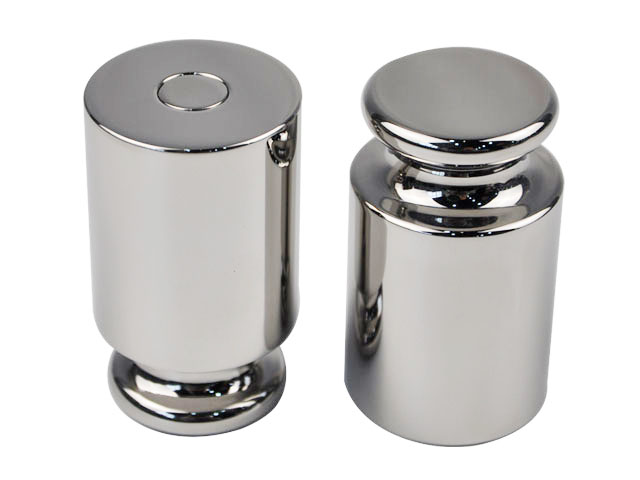
The structural design of stainless steel weights is developed around three core requirements: metrological accuracy adjustment, convenient handling and stacking stability. The internal structure and external shape are finely differentiated according to the different specifications and weights of the weights. Small gram stainless steel weights mostly adopt an integrated solid monolithic structure, forged and polished as a whole without any internal cavities or splicing gaps. They feature a compact and regular shape, uniform center of gravity distribution and consistent overall density, which can fully meet the high-precision requirements of small-range calibration operations. The solid integrated structure also completely avoids internal structural deformation and component loosening during long-term use, making it ideal for micro-precision weighing and calibration work. Large-size and heavy stainless steel weights are generally designed with a built-in adjusting cavity hidden inside the weight body, maintaining a complete and round overall appearance without affecting stacking and use safety. The cavity is mainly used for fine-tuning the basic mass of the weight; the tiny mass deviations of the weight after production and long-term use can be accurately corrected by adding or subtracting appropriate internal filling materials, ensuring continuous compliance with standard metrological requirements. The external structure is humanized and optimized with a smooth overall shape and passivated and polished edges and corners, preventing hand scratches during handling and surface damage caused by mutual collision during stacking. Some large-tonnage stainless steel weights are equipped with integrally formed gripping and stacking auxiliary structures without additional installed parts, which facilitate manual or mechanical handling and ensure multiple weights fit closely without sliding or toppling during stacking, improving safety in storage and use. The in-depth matching of material characteristics and structural design enables stainless steel weights to combine durability, accuracy and practicality. Supported by the stable properties of high-quality stainless steel and a scientific structural layout, they provide reliable metrological support for various weighing and calibration work for a long time.
Purposes and Selection of Stainless Steel Weights
In various metrology and weighing systems, stainless steel weights are core basic measuring tools that ensure accurate and consistent weighing values. Featuring strong material stability, excellent corrosion and oxidation resistance, and resistance to deformation caused by environmental interference, they have gradually replaced traditional cast iron and other types of weights. Widely applied in scientific research experiments, industrial manufacturing, daily measurement and quality inspection, they serve as essential supporting tools for the accurate operation of all weighing equipment and standardized product quality control. Their core functions focus on metrological calibration and quality verification. They are indispensable for the daily commissioning and correction of high-precision weighing instruments, the material proportioning and finished product weight sampling inspection in production and processing, and practical teaching demonstrations of mass measurement in training sessions. Relying on their constant standard mass values, they establish a unified and reliable metrological benchmark for all weighing operations, fundamentally avoiding production errors and distorted experimental data caused by weighing deviations.
Stainless steel weights are adaptable to a wide range of practical application scenarios. In precision scientific research and laboratory testing, they are mainly used for the regular calibration of precision analytical balances and micro-weighing equipment, ensuring the accuracy of numerical values in chemical experiment proportioning, material density testing, scientific research data collection and other work, and preventing equipment weighing drift from affecting the final results of scientific research. In industrial production and processing, they are mostly used for finished product weight sorting on production lines, calibration of raw material feeding weighing equipment, and parts counterweight detection, meeting the daily quality inspection needs of food processing, chemical production, machinery manufacturing and other industries, and maintaining the stability and consistency of weight parameters in the production process. In basic metrology and teaching training, they act as practical teaching aids and basic measurement references, helping operators get familiar with weighing operation specifications, consolidating the standardized foundation of basic metrology work, and ensuring the standardized and orderly development of grass-roots weighing operations. Compared with ordinary weights, stainless steel can withstand complex working conditions such as conventional humidity and slight acid-base contact. It is not easy to rust or wear after long-term use, maintains stable mass for a long time, requires no frequent replacement and maintenance, and is suitable for long-term and high-frequency use.
Reasonable selection is the key to giving full play to the core role of stainless steel weights. There is no need to pursue over-standard configuration in selection. The core is to follow three major principles: adapting to actual application scenarios, matching the accuracy of supporting weighing equipment, and suiting the on-site use environment, so as to avoid metrological inaccuracy and resource waste caused by improper selection. Material selection is the primary basis. For conventional indoor dry environments, ordinary industrial quality inspection and basic weighing operations, basic stainless steel materials can meet the use requirements, with basic rust and wear resistance suitable for daily conventional precision metrology work. For humid production workshops with slight corrosive media or high-precision micro-detection scenarios, high-quality stainless steel materials with corrosion resistance and low magnetic susceptibility are required. Such materials have a more stable structure, are not easily disturbed by the external environment, and their mass parameters remain constant all year round without subtle mass fluctuations caused by environmental impacts.
The selection of accuracy level must be strictly aligned with the precision of supporting weighing equipment. High-precision level weights are required for micro-weighing in precision laboratories and high-precision scientific research testing to meet the calibration requirements of precision balances and control subtle weighing errors. Medium-precision level weights are suitable for conventional industrial production line calibration and basic weighing in ordinary laboratories, fully meeting the calibration and testing needs of conventional electronic scales and industrial platform scales. Conventional basic precision weights are sufficient for basic teaching training and simple weighing verification for common commercial use, and there is no need to excessively pursue high-precision configuration. In addition, single weights or combined weight sets of corresponding specifications shall be selected according to the weight range of actual weighing operations. Large-specification weights are used for calibrating large truck scales and heavy-duty platform scales, while small gram micro weights are used for micro-weighing in laboratories and commissioning of small balances. Proper matching can balance metrological accuracy and ease of use. Moreover, for working conditions with long-term and high-frequency frequent use, attention should be paid to the surface finish and structural workmanship of the weights. It is advisable to select finely polished and uniformly textured styles that are not easy to be damaged by collision, so as to extend service life and ensure long-term stable and reliable metrology work.
What is Stainless Steel Weight
https://www.veidtweighing.com/ssweight/StainlessSteelWeight
Post Date: May 4, 2026
https://www.supplier-manufacturer.com/stainless-steel-weight/what-is-stainless-steel-weight.html

![Light Weight Stainless Steel Small Calibration Weight]()
Light Weight Stainless Steel Small Calibration Weight
Light weight stainless steel small calibration weights are essential precision measuring accessories widely adopted in precision measurement, laboratory testing, and daily…![Standard Weight For Floor Scales]()
Standard Weight For Floor Scales
Floor scales serve as the foundational weighing equipment in industrial, logistics, manufacturing, and warehousing environments, delivering reliable weight measurement for…![Analytical Balance Test Weight]()
Analytical Balance Test Weight
In the realm of precision laboratory measurement, analytical balance test weights stand as the most fundamental and indispensable reference standard, underpinning the accu…![Digital Scale Calibration Weight]()
Digital Scale Calibration Weight
In all fields that rely on precise mass measurement, digital scale calibration weights serve as fundamental auxiliary tools that underpin consistent and reliable weighing …![20kg M1 Heavy Duty Calibration Weight Weighbridge Use]()
20kg M1 Heavy Duty Calibration Weight Weighbridge Use
Weighbridges serve as core weighing equipment in industrial production, logistics transportation, material trading, and resource statistical accounting, undertaking the cr…