Laboratory Weight Set
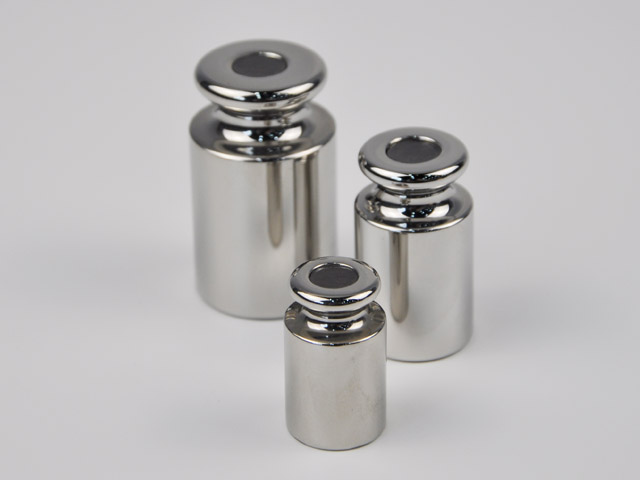
In every laboratory environment dedicated to scientific research, experimental analysis, quality inspection, and academic teaching, consistent and dependable mass measurement stands as one of the most fundamental prerequisites for valid and repeatable experimental outcomes. A laboratory weight set serves as a core foundational tool in such settings, functioning as a unified assembly of standardized mass units designed to align, verify, and maintain the stable performance of all types of laboratory weighing instruments. Unlike ordinary mass tools used for simple daily weighing tasks, laboratory weight sets are engineered exclusively for professional laboratory scenarios, where even minor deviations in mass reading can lead to flawed experimental conclusions, distorted data records, and unreliable follow-up research and production processes. Every component within a laboratory weight set is crafted with meticulous attention to dimensional uniformity, surface integrity, and long-term mass stability, making these sets an indispensable part of daily laboratory operation, routine equipment maintenance, and continuous experimental data reliability management across chemistry, biology, physics, environmental testing, industrial quality control, and educational laboratory disciplines.
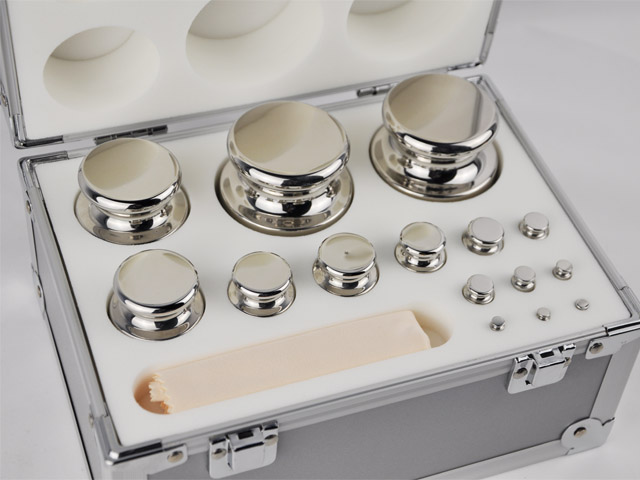
The basic composition of a standard laboratory weight set is thoughtfully structured to meet diverse weighing demands covering micro to conventional mass ranges, ensuring comprehensive adaptability for different laboratory balance types and experimental requirements. Each complete set consists of multiple individual mass units with distinct nominal values, arranged in reasonable numerical gradients to support flexible combination and matching during weighing verification and instrument alignment work. These mass units are configured to cover small milligram-level masses for high-precision analytical balance adjustment and larger gram-level masses for general precision balance testing, forming a complete mass reference system that allows laboratory personnel to conduct targeted verification for weighing equipment of varying maximum capacities and resolution levels. Every single weight included in the set is produced to maintain consistent physical specifications, with uniform shape and surface finish to avoid unexpected external influences that could affect mass stability during long-term use. The overall configuration of each weight set follows practical laboratory usage habits, enabling convenient selection, combination, and placement during daily operational procedures, while ensuring each independent mass unit can work in coordination to meet the full range of conventional and special weighing calibration needs in routine laboratory work.
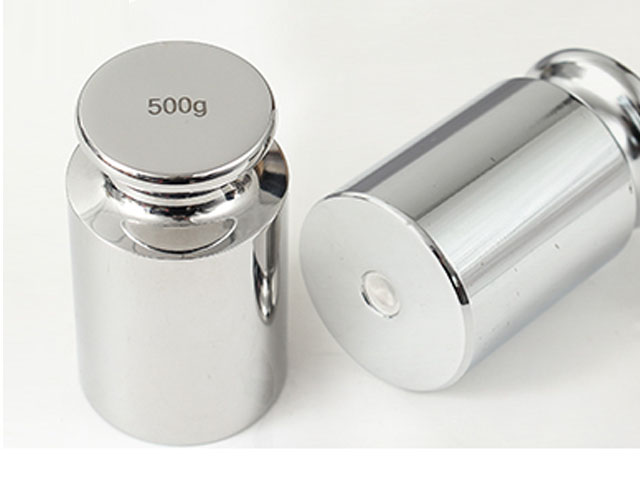
Material selection represents one of the most critical factors determining the service life, mass stability, and overall performance of a laboratory weight set, as the working environment of laboratories often involves exposure to trace chemical vapors, temperature fluctuations, humidity changes, and frequent manual handling and repeated placement. High-quality laboratory weight sets are commonly made of durable, corrosion-resistant, and magnetically neutral metal materials that can effectively resist oxidation, surface corrosion, and mass loss caused by long-term environmental exposure and regular use. Such materials maintain stable physical properties under conventional laboratory temperature and humidity changes, avoiding slight mass drift that may occur due to material expansion, contraction, or chemical reactions with surrounding substances. The surface of each weight undergoes fine polishing and smooth finishing treatment, which not only prevents surface adhesion of dust, experimental residues, and tiny impurities but also reduces the impact of surface contamination on actual mass accuracy during use. Unlike ordinary low-grade mass tools that are prone to rust, surface wear, and obvious mass changes after short-term use, weights made of professional laboratory-grade materials can maintain stable mass attributes for a long time even after years of repeated use, reducing the frequency of replacement and ensuring long-term consistent reference performance for laboratory weighing work.
The core functional value of a laboratory weight set lies in providing reliable mass reference standards for the daily calibration and routine verification of laboratory weighing instruments. All laboratory balances, whether high-precision analytical balances used for micro sample testing or general precision balances for conventional sample weighing, will gradually produce slight measurement deviations after long-term continuous use, frequent start-stop operation, and changes in laboratory placement environment. These subtle deviations are not easy to detect through daily weighing alone but will gradually accumulate over time, affecting the accuracy of experimental sample weighing data and ultimately interfering with the authenticity and repeatability of experimental results. By using a laboratory weight set on a regular basis, laboratory staff can conduct systematic alignment and deviation detection for weighing equipment, adjusting the working state of balances to ensure each weighing operation can obtain true and accurate mass data. This regular calibration and verification work is not only a basic requirement for standardized laboratory operation but also a key link to ensure the credibility of all experimental data, whether for basic scientific research experiments requiring high data accuracy or routine quality control testing that needs stable and consistent detection standards.
Beyond basic instrument calibration work, laboratory weight sets play an important supporting role in experimental operation assistance and teaching demonstration work in different types of laboratories. In chemical laboratories, researchers often need to accurately configure experimental samples and reagents with specific mass ratios, and weight sets can provide accurate mass reference for auxiliary weighing operations, ensuring the proportion of various experimental raw materials meets experimental design requirements and avoiding experimental failure caused by inaccurate sample preparation. In biological laboratories, precise mass measurement of biological samples, culture medium raw materials, and experimental reagents is directly related to the growth state of biological samples and the validity of experimental observation results, and the stable mass reference provided by weight sets creates a reliable basic condition for such delicate experimental work. In physics teaching and research laboratories, weight sets are commonly used for basic experiments on mass measurement, gravity research, force balance verification, and mechanical principle demonstration, helping learners and researchers intuitively understand the basic laws of mass and force while cultivating standardized and accurate experimental operation habits. In industrial quality control laboratories, weight sets are used to regularly check the stability of production testing weighing equipment, ensuring that product quality testing data remains consistent and effective throughout the production process, and providing reliable data support for product quality control and production process optimization.
Reasonable daily storage and standardized manual handling are essential to maintain the long-term performance and accuracy of a laboratory weight set, as even well-made high-quality weights will experience mass deviation and surface damage if improperly stored or operated. Each complete laboratory weight set is equipped with a specially designed protective storage container with independent fixed cavities for each individual weight, ensuring every mass unit can be placed in a fixed position separately during storage. This dedicated storage method effectively avoids surface friction, collision damage, and mutual extrusion between different weights, prevents surface wear and edge deformation that may affect mass accuracy, and also reduces the chance of dust and impurity adhesion on the weight surface. During daily use, laboratory personnel need to follow standardized operating procedures to handle weights, avoiding direct contact with the weight surface by hands, as the sweat, oil, and tiny impurities on human hands will adhere to the surface, causing subtle mass changes and affecting measurement accuracy over time. It is recommended to use special matching handling tools to take and place weights gently, avoiding throwing, dropping, or violent collision during use, and placing each weight back to its fixed position in the storage container in a timely manner after each use to keep the entire weight set complete and well-organized.
Regular daily cleaning and periodic maintenance management further extend the service life and maintain the stable performance of laboratory weight sets, adapting to the long-term continuous use needs of laboratory environments. In the daily laboratory working process, tiny dust, experimental powder residues, and suspended particles in the air may gradually adhere to the surface of weights, and long-term accumulation of these attachments will cause subtle changes in the actual mass of weights, affecting the accuracy of subsequent calibration and weighing work. Regular simple surface cleaning with soft, non-abrasive cleaning tools and mild cleaning supplies can effectively remove surface attachments without causing damage or corrosion to the weight material and surface polishing layer. It is important to avoid using strong corrosive cleaning liquids or rough cleaning tools during the cleaning process, to prevent surface scratches, material corrosion, or surface finish damage that may affect the stability of the weights. In addition to daily cleaning, regular regular inspection of each weight in the set is also necessary, checking for surface wear, edge damage, obvious oxidation, or deformation problems. Any weight with abnormal surface conditions or suspected mass deviation should be isolated in a timely manner and stopped from use, ensuring only intact and stable weights are put into laboratory calibration and weighing work, and avoiding the use of abnormal weights to cause inaccurate instrument calibration and flawed experimental data.
Different application scenarios and laboratory work scales have different matching requirements for the configuration and type of laboratory weight sets, allowing the tool to achieve optimal use effect in corresponding working environments. Small teaching laboratories and basic student experimental training environments usually adopt conventionally configured weight sets with moderate mass ranges, meeting the needs of basic experimental teaching, simple balance debugging, and basic mass measurement practice, with simple and convenient operation suitable for novice laboratory operators to learn and master standardized weighing and calibration operations. Professional scientific research laboratories and professional quality inspection testing laboratories need weight sets with more complete mass gradient configuration and higher overall stability, adapting to long-term high-frequency calibration work of high-precision analytical balances and long-term accurate mass reference needs of sophisticated experimental research. Regardless of the configuration scale, all laboratory weight sets follow the core design concept of stable mass, convenient use, and easy management, ensuring they can adapt to the corresponding laboratory work intensity and application scenarios, and provide stable and reliable mass reference support for all weighing-related laboratory work.
The continuous stable operation of laboratory work and the continuous improvement of experimental data credibility are inseparable from the basic guarantee provided by qualified laboratory weight sets, which are not merely simple auxiliary laboratory tools but important basic guarantees to maintain the accuracy and standardization of the entire laboratory weighing system. All experimental research, data testing, and quality inspection work based on mass measurement need to rely on the stable reference value provided by weight sets to ensure the authenticity, repeatability, and comparability of experimental data. In the process of long-term laboratory operation, attaching importance to the selection, standardized use, proper storage, and regular maintenance of laboratory weight sets can effectively reduce the deviation of weighing instrument operation, avoid experimental errors caused by inaccurate mass measurement, and lay a solid foundation for the smooth development of various laboratory scientific research, teaching, and testing work. With the continuous improvement of laboratory experimental precision requirements and the continuous standardization of laboratory management work, the role of laboratory weight sets in daily laboratory work will become more prominent, and standardized management and scientific use of weight sets will always be an indispensable key part of maintaining the overall working level and data credibility of all types of laboratories.
Laboratory Weight Set
https://www.veidtweighing.com/laboratory-weights.html
Post Date: May 4, 2026
https://www.supplier-manufacturer.com/laboratory-weight/laboratory-weight-set.html

![25kg Stainless Steel Weight]()
25kg Stainless Steel Weight
In the intricate framework of industrial operation, daily commercial measurement, and equipment debugging work, standard weights serve as one of the most fundamental and i…![10kg Stainless Steel Metrology Inspection Calibration Weight]()
10kg Stainless Steel Metrology Inspection Calibration Weight
In the intricate framework of modern measurement and metrology operations, standardized mass references serve as the foundational guarantee for consistent and accurate wei…![5kg Stainless Steel Weight]()
5kg Stainless Steel Weight
A 5kg stainless steel weight stands as one of the most fundamental and widely utilized weighing and balancing tools across countless professional sectors, daily operationa…![Economical Stainless Steel M1 Class Calibration Weight]()
Economical Stainless Steel M1 Class Calibration Weight
In modern industrial production, laboratory testing, and daily metrological verification work, accurate weighing results serve as the fundamental guarantee for product qua…![Stainless Steel Weight For Balance Calibration]()
Stainless Steel Weight For Balance Calibration
Balance calibration stands as one of the most foundational and indispensable steps in all fields that rely on accurate mass measurement, forming the bedrock of reliable da…