Material of Cast Iron Weight
The material selection for cast iron weight production stands as a foundational factor that directly shapes the practical performance, long-term service stability, and application adaptability of various counterweight and calibration weights used across industrial production, mechanical operation, engineering construction, and measurement regulation fields. Cast iron, as a traditional and mature iron-carbon alloy material system, has maintained a dominant position in weight manufacturing for decades, relying on its unique inherent material characteristics that perfectly match the core functional demands of weights, rather than relying on auxiliary processing or external surface treatment alone. Unlike other metal materials such as steel, aluminum alloy, or stainless steel that are widely used in mechanical manufacturing and hardware production, cast iron formulated specifically for weight use is proportioned and smelted with a single core goal: to achieve stable density distribution, reliable structural rigidity, consistent dimensional retention, and excellent resistance to external environmental interference during long-term static and occasional dynamic use. Every component element contained in this dedicated cast iron material, every microscopic structural form formed during the casting and cooling process, and every physical and mechanical property derived from material proportioning and subsequent natural aging treatment collectively determine whether the final cast iron weight can maintain stable mass data, keep intact overall structure, and adapt to complex on-site use environments for a long time without frequent replacement or repeated correction. Understanding the essential attributes and internal characteristics of cast iron weight material is not only conducive to grasping the inherent advantages of such weights in practical application scenarios but also helps to clarify why this material has never been replaced by emerging lightweight or high-strength alloy materials in the professional weight manufacturing industry, and how material fundamentals support the basic functional requirements of weights in different application scenarios.
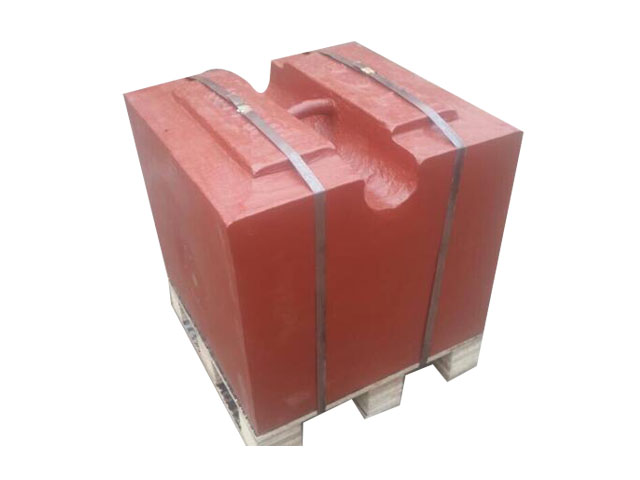
The basic chemical composition of cast iron for weight production is centered on iron-carbon alloy matrix, with carbon and silicon serving as the two most core alloying elements that determine the fundamental material properties, supplemented by a small amount of manganese, sulfur, phosphorus and other trace elements appropriately controlled within a reasonable range to balance material castability and structural stability. The carbon content in this special cast iron material is maintained within a stable medium to high proportion range, which is significantly higher than that of ordinary carbon steel and low-alloy structural steel, and this reasonable high carbon proportion is the key to forming the unique microstructure and physical properties required for weight use. Silicon element plays an indispensable auxiliary role in the material, mainly promoting the uniform precipitation of graphite phase in the molten iron solidification process, improving the fluidity of molten cast iron during pouring casting, avoiding internal hollowing, shrinkage holes, and uneven density distribution inside the weight blank, and ensuring that each part of the cast iron weight has consistent compactness after forming. Manganese element added in a small amount can effectively improve the basic compressive performance and wear resistance of the cast iron material, reduce the adverse impact of trace harmful impurities on the structural toughness of the material, and make the cast iron weight not easy to produce local deformation or surface chipping even under long-term stacking, handling and slight external collision. Sulfur and phosphorus are strictly controlled trace elements in cast iron weight material, because excessive content of these two elements will increase the brittleness of the material, easily lead to internal micro-cracks inside the weight during casting cooling and later use, affect the overall structural integrity, and even cause subtle changes in local density to interfere with the long-term mass stability of the weight. All element proportioning designs are not randomly configured but adjusted according to the basic use attributes of weights, focusing more on the balance of density uniformity and structural stability rather than pursuing excessive tensile toughness or high-temperature resistance that are required for mechanical moving parts.
The microscopic microstructure of cast iron weight material is mainly composed of uniform graphite phase and stable iron matrix, and the form and distribution of graphite phase are the core symbols that distinguish weight-specific cast iron from other industrial cast iron used for mechanical equipment parts. Most cast iron for weight production adopts the microstructure formed by flake graphite evenly distributed in the iron matrix after controlled cooling, which brings multiple material advantages suitable for weight functional needs. First, this uniform graphite distribution structure makes the overall density of the cast iron material stable and consistent, with no large difference in density between different parts of the casting, ensuring that after the weight is cast and processed, the overall mass is uniform, and the center of gravity is stable without deviation, which is crucial for weight calibration and counterweight work that requires high mass balance. Second, the existence of graphite phase inside the material gives cast iron excellent vibration damping performance, enabling the cast iron weight to absorb and buffer the vibration generated by mechanical operation and on-site handling during use, avoiding structural loosening or internal microdamage caused by long-term vibration, and maintaining the long-term structural stability of the weight. In addition, this microscopic structure also gives the cast iron material good compressive deformation resistance, so that the weight will not produce permanent compression deformation or volume change under long-term static pressure and stacking state, and the basic mass and volume specifications can be kept unchanged for a long time. Unlike ductile cast iron used for dynamic mechanical parts that needs to pursue high toughness and tensile strength, cast iron weight material does not need complex graphite spheroidizing treatment, and the simple and stable flake graphite structure can fully meet the static use needs of weights, while making the material casting process more stable and the internal structure of the finished product more reliable.
The physical properties of cast iron weight material are highly compatible with the core functional requirements of counterweight and calibration scenarios, among which stable density, good volume stability, and excellent wear resistance are the most prominent practical advantages. The overall density of qualified cast iron weight material is maintained in a stable fixed range, with small density fluctuation between different batches and different individual castings, which provides a reliable material basis for the accurate mass production of weights. Stable density ensures that according to the required weight specification, the weight can be accurately produced through standardized casting and simple finishing processing, and the mass error generated by material density difference is controlled within a very small range. At the same time, cast iron material has low thermal expansion coefficient, and the volume and mass change very slightly under different ambient temperature and humidity conditions in different seasons and regions. This temperature and humidity adaptability enables cast iron weights to be used normally in indoor constant-temperature measurement rooms, outdoor open-air construction sites, factory high-temperature production workshops and other diverse environments, without obvious mass deviation caused by environmental changes, and without frequent mass correction and parameter adjustment. The good wear resistance of the material ensures that the surface of the cast iron weight will not be severely worn or peeled off after long-term handling, stacking, placement and slight friction contact, avoiding mass reduction caused by surface material loss, and effectively extending the service cycle of the weight. In addition, cast iron material has good rigidity, no obvious elastic deformation under conventional external force action, and will not produce rebound displacement or shape change after bearing pressure, always maintaining the original shape and volume state required for weight use.
The mechanical properties of cast iron weight material are designed and optimized for static use scenarios, focusing on outstanding compressive strength and structural stability, rather than high tensile strength and impact toughness required for dynamic moving mechanical components. Cast iron itself belongs to a brittle alloy material system, but this brittleness becomes a favorable condition for weight production and use instead of a disadvantage. Weights are mostly used in static placement, counterweight calibration, mechanical balancing and other working states, and rarely bear strong tensile force and severe impact load. High compressive strength enables cast iron weights to withstand long-term stacking and mutual pressure without structural collapse, local depression or overall deformation, ensuring that the internal structure and external shape of each weight remain intact during storage and use. The moderate brittleness of the material makes the cast iron weight not easy to produce plastic deformation, and the shape and volume can be kept fixed for a long time, avoiding mass change caused by deformation. Although the tensile strength of cast iron material is relatively general, this performance characteristic does not affect the conventional use of weights, because the working environment of cast iron weights hardly involves long-term tensile load or frequent strong impact. On the contrary, the low tensile and high compressive mechanical characteristics make the material have better structural stability in static state, not easy to produce internal stress concentration and slow deformation, and maintain consistent mass and shape for many years. After casting forming, the cast iron weight material will go through a natural aging process for a certain period of time, which can effectively release the internal casting stress of the material, further stabilize the internal microscopic structure, avoid slow structural changes and mass deviation caused by stress release during later use, and make the mechanical properties of the weight more stable and reliable in long-term service.
The casting and processing adaptability of cast iron weight material is another important reason why it has been widely used in weight manufacturing for a long time, and the material’s own casting performance directly determines the production efficiency and finished product quality of cast iron weights. The molten cast iron has good fluidity in the high-temperature molten state, which can fully fill various weight molds with different shapes and specifications, including cylindrical, square, rectangular and other conventional weight shapes, as well as special structural weights with handling holes and adjustment grooves. Good fluidity effectively avoids casting defects such as incomplete mold filling, surface depressions and internal gaps in the weight blank, ensures that the inner cavity of the mold is fully filled with molten iron, and the blank structure is compact and uniform after cooling and forming. In addition, cast iron material has low shrinkage rate during cooling and solidification, the size shrinkage after casting is stable and controllable, and the dimensional error of the weight blank is small, which reduces the difficulty of subsequent finishing processing. The machinability of cast iron is excellent, and the surface of the weight blank can be easily polished, trimmed and finely processed to meet the flatness and dimensional accuracy requirements of the weight surface, without complex processing equipment and tedious processing procedures. For some cast iron weights that need fine mass adjustment, the material can also be locally processed and adjusted in a small range to fine-tune the mass to meet the required calibration standard. The simple and stable casting and processing characteristics of cast iron material make the production process of cast iron weights more controllable, the quality consistency of finished products higher, and it is suitable for mass production and standardized manufacturing, meeting the market demand for various specifications of weights in different industries.
The environmental adaptability and long-term durability of cast iron weight material ensure that the weight can maintain stable performance in various complex use environments and achieve long-term repeated use. Although cast iron material itself has certain natural oxidation characteristics, conventional surface anti-rust treatment can effectively isolate the contact between the material and external air, moisture and corrosive substances, slow down the surface oxidation and corrosion speed, and protect the internal matrix structure of the cast iron weight from damage. The internal structure of cast iron material will not change due to long-term placement and use, no material aging, performance attenuation or internal component deterioration will occur with the passage of time, and the core physical and mechanical properties can be kept stable for a long time. Whether it is used in dry and cold northern regions, humid and rainy southern environments, or industrial sites with slight corrosive gas and dust, cast iron weights made of qualified materials can maintain stable mass and complete structure without frequent replacement. Compared with some lightweight alloy materials that are easy to deform and age, and non-metal materials that are easy to wear and damage, cast iron weight material has more reliable long-term durability, lower later maintenance frequency, and more stable use effect. Even after long-term storage and repeated handling, the basic performance and mass state of the cast iron weight will not change significantly, which can meet the long-term use needs of industrial production and measurement work.
In practical industrial and measurement application scenarios, the matching between cast iron weight material and weight use function is far more important than pursuing advanced material types and complex alloy formulas. All performance designs of cast iron for weight production are centered on the most basic core needs of weights: stable mass, fixed shape, reliable structure and strong environmental adaptability. This material does not need to pursue extreme high strength, super toughness or special high-temperature and corrosion resistance, but only needs to maintain the stability of all core indicators within the conventional use range for a long time. The reasonable collocation of chemical components, stable microscopic structure, appropriate physical and mechanical properties, good casting and processing performance, and excellent long-term environmental durability together constitute the comprehensive advantages of cast iron weight material. With the continuous development of industrial production and measurement standardization construction, the production process and element proportioning of cast iron weight material are constantly optimized and adjusted, but the core material attributes and basic structural characteristics have always remained stable. This traditional and practical metal material will continue to occupy an important position in the weight manufacturing industry, relying on its mature and reliable material fundamentals, and provide stable and reliable counterweight and calibration support for all walks of life that need accurate weight management and mechanical balance adjustment.
Material of Cast Iron Weight
https://www.veidtweighing.com/cast-iron-weights.html
Post Date: May 4, 2026
https://www.supplier-manufacturer.com/cast-iron-weight/material-of-cast-iron-weight.html

![Types of Standard Weight]()
Types of Standard Weight
Standard weights serve as the foundational physical reference tools for all mass measurement activities across industrial production, laboratory research, commercial trade…![Hooked Standard Weight]()
Hooked Standard Weight
Hooked standard weights are essential foundational tools widely utilized in experimental research, teaching demonstrations, and routine mechanical calibration scenarios. D…![10g Standard Weight]()
10g Standard Weight
In the quiet and intricate world of measurement, every small unit of mass carries profound significance that connects human daily life, professional production, and scient…![Cast Iron Weight For Bench Scales]()
Cast Iron Weight For Bench Scales
Cast iron weights serve as fundamental auxiliary components for bench scale operation, playing an indispensable role in daily weighing verification, scale debugging, and m…![M3 Class Standard Weight]()
M3 Class Standard Weight
Within the entire framework of industrial weighing and daily commercial measurement operations, standard weights serve as the foundational cornerstone that maintains the u…