Rectangular Cast Iron Weight
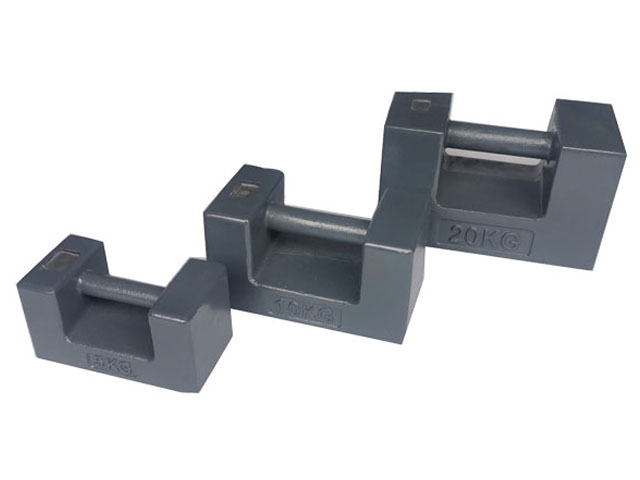
Rectangular cast iron weight stands as one of the most fundamental and widely applied load-bearing and balancing components across modern industrial production, mechanical operation, infrastructure construction and daily equipment debugging fields. Crafted from high-quality grey cast iron as the core raw material, this type of weight adopts a regular rectangular geometric structure design, which perfectly combines the inherent physical and mechanical properties of cast iron with the practical advantages of standardized rectangular shaping, forming a functional component that integrates stable gravity output, reliable structural firmness and convenient handling and placement. Unlike special-shaped counterweight parts with complex outlines and single-purpose metal weights made of light alloy materials, rectangular cast iron weight focuses on practicality, durability and universal adaptability in overall design and manufacturing, meeting the long-term and stable counterweight, balancing, calibration and pressing demands of numerous scenarios without relying on additional auxiliary reinforcement or frequent later maintenance. Its simple and neat appearance hides rigorous material selection standards and refined production processes, and every link from raw material proportioning to finished product surface treatment is carefully controlled to ensure that each finished rectangular cast iron weight can maintain consistent performance and stable structural state in various complex working environments, becoming an indispensable basic supporting part in the operation and debugging of various mechanical equipment and engineering facilities.
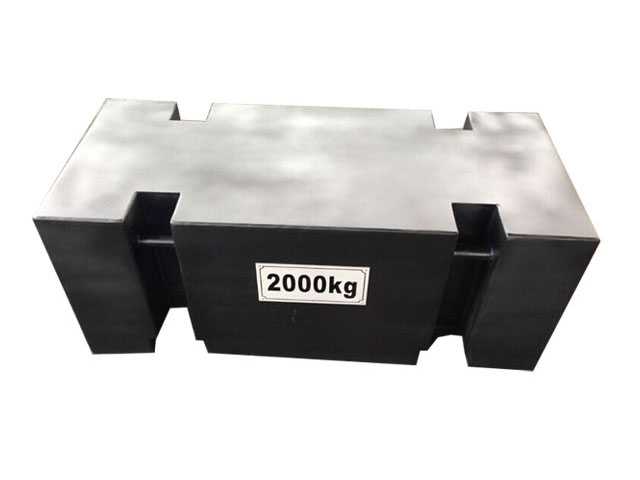
The inherent material characteristics of cast iron lay a solid foundation for the excellent comprehensive performance of rectangular cast iron weight. The grey cast iron selected for production contains a reasonable proportion of carbon and other trace elements, with a dense internal metal structure, good compressive bearing capacity, outstanding wear resistance and excellent shock absorption performance, which are essential core qualities for long-term use as a counterweight component. In the actual service process, many counterweight parts need to bear continuous mechanical vibration, external extrusion and environmental temperature changes, and ordinary metal materials are prone to structural deformation, surface wear and performance attenuation after long-term stress. However, cast iron materials can effectively resist the impact of these external factors due to their stable internal molecular structure and good mechanical toughness. It will not produce obvious plastic deformation under long-term static pressure and frequent dynamic vibration, and can maintain the integrity of the overall structure and the stability of gravity output for a long time. In addition, cast iron has good density uniformity, which enables the rectangular cast iron weight to achieve uniform weight distribution in the overall rectangular space structure. This uniform weight distribution is very important for equipment balancing and accurate scale calibration, as it avoids the problem of gravity deviation caused by uneven internal material density, ensuring that the stress of the weight acting on the equipment or measured object is balanced and consistent in all directions.
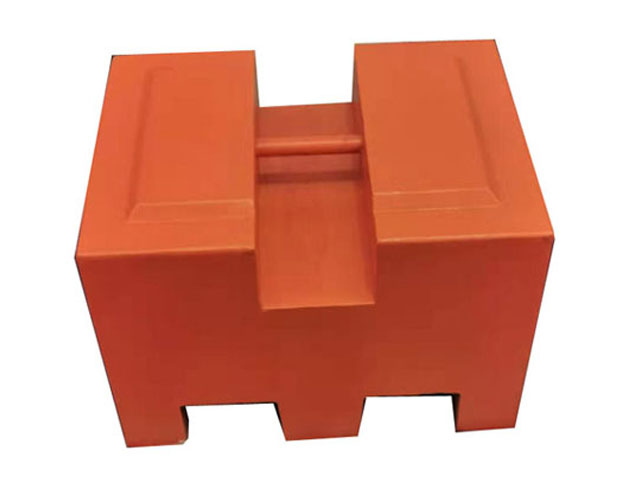
The rectangular structural shape adopted by the product further amplifies the practical application advantages of cast iron materials and makes up for the application limitations of weights with other shapes. The regular rectangular outline features flat and smooth surfaces on all sides, right-angle transitions at the edges and corners, and a regular overall specification, which brings great convenience to placement, stacking, handling and fixed installation. In industrial production workshops and construction sites, counterweight components often need to be placed in designated fixed positions, stacked in an orderly manner for storage, or stably installed at the reserved clamping positions of mechanical equipment. Special-shaped weights or cylindrical weights are easy to roll and shift during placement and use, requiring additional fixing parts to assist in positioning, which not only increases the auxiliary operation steps but also may cause potential safety hazards due to sliding and displacement during equipment operation. The rectangular structure completely avoids such problems, as the flat contact surface can fit closely with the ground, equipment base and installation platform, forming a stable contact state without random rolling and sliding. At the same time, the standardized rectangular size design enables multiple rectangular cast iron weights to be stacked neatly and orderly, saving storage space and facilitating unified inventory management and centralized handling and transportation. Many rectangular cast iron weights are designed with integrated grip structures on both sides according to actual use needs, which are formed integrally during casting without subsequent welding and assembly. This integrated grip design allows operators to easily carry and move the weight without using additional handling tools, improving the overall operation efficiency and ensuring the safety of personnel during handling and placement.
The production and manufacturing process of rectangular cast iron weight follows scientific and standardized casting and mechanical processing procedures, and each production link is closely linked to ensure the dimensional accuracy, structural stability and surface quality of finished products. The whole production process starts with raw material proportioning and melting, where high-quality cast iron raw materials are selected and proportioned according to fixed material ratios to ensure that the molten iron after melting has stable chemical composition and uniform texture. The fully melted molten iron is injected into pre-made professional sand molds, and the internal cavity of the sand mold is precisely made according to the design size of the rectangular weight to ensure that the initial outline of the cast blank meets the basic specification requirements. The casting cooling link is strictly controlled in terms of cooling speed and cooling environment, and rapid cooling that easily causes internal structural cracks and uneven stress of the casting is avoided through natural cooling and slow cooling treatment. Reasonable cooling treatment can effectively eliminate internal casting stress, prevent the finished weight from cracking and deforming during subsequent use, and improve the overall structural firmness and service life of the product.
After the cast blank is completely cooled and formed, the subsequent cleaning and finishing process is carried out first, including removing the residual molding sand on the surface of the blank, trimming the casting flash and burrs at the edges and corners, and polishing the rough parts of the surface to make the basic outline of the rectangular weight smooth and neat. On the basis of the qualified blank, precision mechanical processing is carried out by professional processing equipment such as gantry milling machines. The key processing parts include the mounting reference surface, fitting contact surface and grip structure of the weight, and the flatness and verticality of each surface are strictly controlled during processing to make the overall dimensional tolerance within a reasonable range. For some rectangular cast iron weights used for precision calibration and accurate balancing, fine grinding and trimming are also carried out on the local surface to further optimize the surface flatness and contact tightness. After the mechanical processing is completed, the surface anti-corrosion and rust-proof treatment is carried out uniformly. A layer of protective coating is sprayed on the outer surface of the weight, which can effectively isolate the external air, moisture and corrosive substances, prevent the cast iron material from rusting and corroding in long-term use and storage, and maintain the good appearance and stable performance of the product for a long time. The whole production process does not involve complex redundant processing steps, focusing on ensuring the structural stability, dimensional standardization and surface durability of the product, so that each batch of finished rectangular cast iron weights can maintain consistent quality and performance.
Rectangular cast iron weight has extremely wide application coverage, involving industrial manufacturing, engineering construction, weighing instrument calibration, mechanical equipment debugging, commodity detection and many other fields, and can adapt to different use environments and functional demands. In the field of mechanical equipment operation and balancing, many large mechanical devices such as conveyor equipment, mixing machinery and engineering machinery need to be equipped with supporting counterweight parts to balance the mechanical stress generated during operation, reduce equipment vibration amplitude, maintain stable operation state and avoid equipment failure caused by unbalanced stress. The rectangular cast iron weight is installed at the reserved counterweight position of the equipment, relying on its stable gravity and firm structural performance to provide lasting balancing force, ensuring that the equipment runs smoothly for a long time and reducing the wear and loss of mechanical parts. In the infrastructure construction industry, rectangular cast iron weight is often used for pressing and fixing various building materials and temporary construction facilities, such as pressing and fixing waterproof coiled materials, stabilizing temporary construction brackets and compacting loose foundation materials. Its heavy weight and stable placement effect can effectively ensure the stability and firmness of construction operation and avoid construction quality problems and safety accidents caused by the displacement and tilting of building materials and facilities.
In the field of weighing instrument detection and calibration, rectangular cast iron weight plays an irreplaceable core role as a standard load-bearing component. Various industrial scales, platform scales, weighbridges and commercial weighing equipment need regular calibration and detection to ensure the accuracy of weighing data and meet the basic requirements of production and transaction measurement. Staff place rectangular cast iron weights with stable and fixed weight on the surface of the weighing equipment, and judge whether the weighing accuracy of the equipment meets the normal use standards by observing the weighing feedback data of the equipment. Due to the uniform material density and stable weight of rectangular cast iron weight, it can provide reliable standard gravity reference for calibration work, ensuring the accuracy and effectiveness of weighing equipment detection. In addition, in the daily production and processing links of factories, rectangular cast iron weight is also used for product pressure shaping, material compaction and other processing auxiliary work. Its stable pressure effect can help process materials maintain a fixed shape and compact state, improving the processing quality and production efficiency of products.
The later maintenance and daily management of rectangular cast iron weight is simple and convenient, which is another important reason for its wide popularity and long-term application in various industries. Compared with precision metal parts that need regular lubrication, calibration and professional maintenance, rectangular cast iron weight has low maintenance requirements in the whole service cycle. In daily use, only regular surface cleaning is needed to remove the dust, dirt and sundries attached to the surface, so as to keep the surface protective coating intact and avoid long-term accumulation of corrosive dirt causing local rust on the surface. During storage, it is only necessary to place the rectangular cast iron weights in a dry and ventilated environment, avoid long-term immersion in water and long-term exposure to harsh corrosive environments such as strong acid and alkali, which can ensure long-term stable use performance. In the process of handling and use, although the cast iron material has good impact resistance, avoiding violent throwing and heavy collision can further protect the structural integrity of the edges and corners and the smoothness of the surface, prolonging the overall service life. Even after long-term use and slight surface wear, the core weight and structural performance of the rectangular cast iron weight will not be affected, and it can still continue to meet various basic counterweight and calibration use demands without frequent replacement and updating, effectively reducing the use cost and equipment maintenance cost of enterprises and construction units.
With the continuous development of modern industrial upgrading and engineering construction standardization, the market demand for rectangular cast iron weight remains stable all the time, and the application scenarios are constantly expanding and optimizing. All walks of life have higher and higher requirements for the stability, durability and standardization of basic counterweight components, and the simple structure, reliable performance and strong adaptability of rectangular cast iron weight just meet the current development needs of various industries. Different specifications and sizes of rectangular cast iron weights can be customized and produced according to the actual use demands of different scenarios, whether it is small-sized weights for laboratory precision calibration or large-sized heavy weights for large engineering machinery balancing and construction pressing, which can be produced and processed according to actual demand parameters. In the future, with the continuous optimization and improvement of casting production technology and surface anti-corrosion treatment technology, the comprehensive performance of rectangular cast iron weight will be further improved, and the application scope in emerging industrial fields and new engineering projects will be more extensive. As a basic and practical industrial component, rectangular cast iron weight will always rely on its excellent material performance mature production technology and convenient use characteristics to provide solid basic support for the stable operation of various industries and the smooth progress of engineering construction, maintaining its important practical value and application status in the industrial field for a long time.
Rectangular Cast Iron Weight
https://www.veidtweighing.com/cast-iron-weights.html
Post Date: May 4, 2026
https://www.supplier-manufacturer.com/cast-iron-weight/rectangular-cast-iron-weight.html

![What is Test Weight]()
What is Test Weight
Test weights serve as essential foundational tools in the field of mass measurement, acting as reliable reference objects to maintain the stability and precision of all ki…![Maintenance of Calibration Weight]()
Maintenance of Calibration Weight
Calibration weights serve as foundational physical references for all forms of precision weighing operations, supporting consistent and reliable measurement outcomes acros…![Calibration Weight Production]()
Calibration Weight Production
Calibration weights stand as the foundational backbone of all precise mass measurement activities across industrial production, laboratory research, commercial trade, and …![25kg Test Weight]()
25kg Test Weight
In the complex and interconnected system of modern social production, commercial circulation, public infrastructure operation and daily life management, the accuracy and s…![M3 Class Test Weight]()
M3 Class Test Weight
In the entire system of industrial measurement, commercial weighing and daily metering verification work, test weights stand as one of the most fundamental and indispensab…