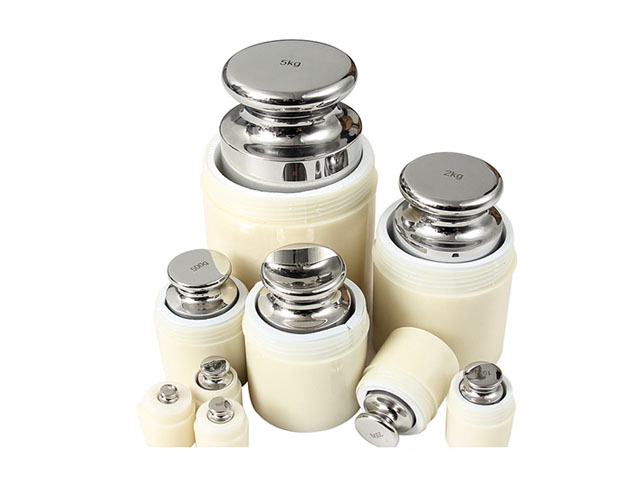
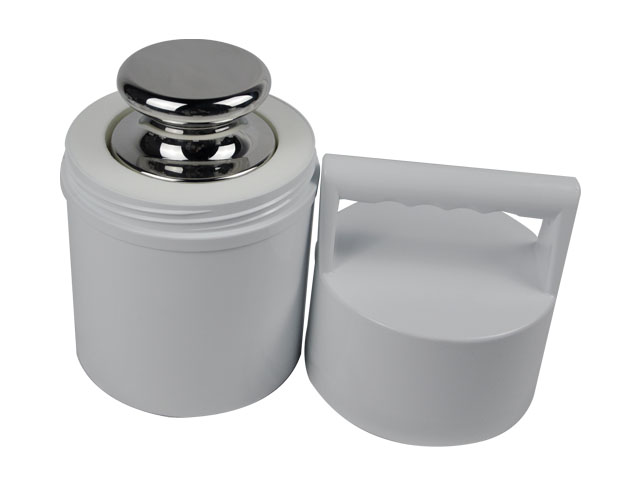
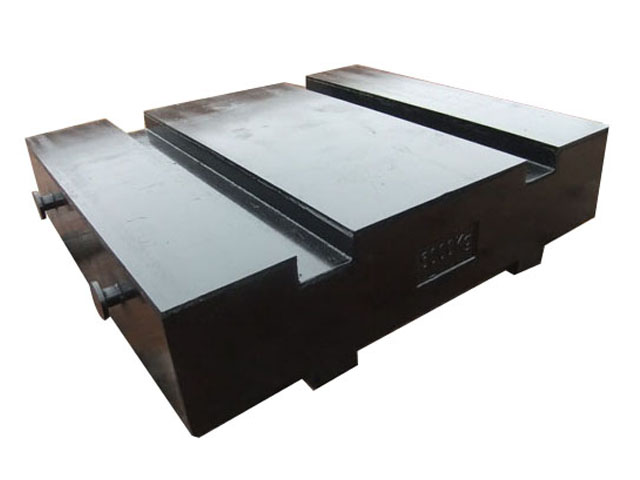
What is Cast Iron Weight
Cast iron weights stand as one of the most fundamental and widely used physical weighing standards in modern industrial production, commercial measurement, and equipment commissioning fields. As essential physical measuring tools for mass calibration, load testing, and mechanical balancing, these cast iron-based weighting objects have maintained irreplaceable value for decades due to their excellent structural stability, reliable physical properties, and adaptable practical performance. Unlike high-precision metal weighing tools designed for laboratory fine measurement, cast iron weights focus more on practicality, durability, and long-term stable mass retention in complex on-site working environments. They are not only core auxiliary tools for verifying the accuracy of various weighing instruments but also indispensable matching components for mechanical equipment balancing, engineering load detection, and safety performance testing.
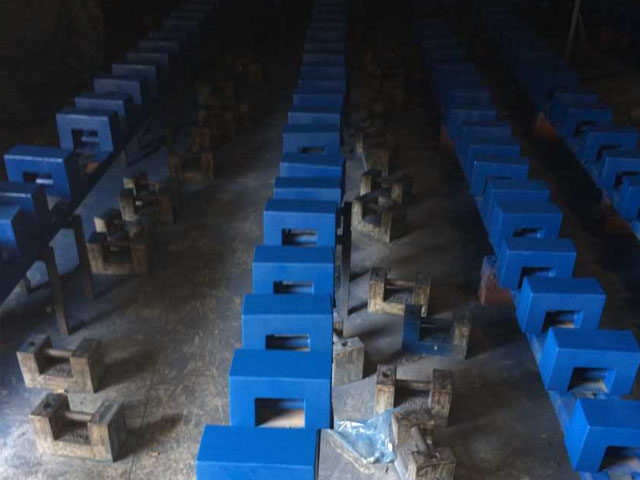
Precision Grades of Cast Iron Weights
The grade classification of cast iron weights is the core standard that determines their measurement accuracy, applicable scenarios, and control range of mass deviation. The grading system is formulated based on the allowable mass error, surface finish requirements, and long-term mass stability of each weight, forming a hierarchical precision system suitable for different measurement and testing needs. In practical industrial and conventional measurement applications, cast iron weights are mainly divided into three mainstream core grades, which are set according to the tolerance range of nominal mass and the strictness of production and processing requirements, forming a clear gradient from high relative precision to ordinary practical precision.
The first grade is the high-precision cast iron weight grade, which features extremely strict control of single-piece mass deviation and slight surface processing treatment during production. This grade of cast iron weight undergoes fine grinding and trimming on the casting surface after forming, with smooth overall appearance, uniform material density, and minimal surface pores and trachoma. Its mass change caused by long-term external environment erosion and frequent handling is extremely small, so it is suitable for basic calibration work of medium and high-precision weighing equipment and regular accuracy verification of measurement devices that require stable reference mass. The second is the medium conventional precision grade, which is the most widely used mainstream grade in the market. It balances moderate mass error control requirements and cost performance, with conventional surface anti-rust treatment and standard mass adjustment procedures. This grade has stable comprehensive performance, can adapt to frequent handling and on-site use in conventional industrial environments, and meets the daily calibration needs of most industrial weighing equipment and conventional load testing work.
The third is the ordinary heavy-duty practical grade, which focuses more on structural firmness and impact resistance rather than ultra-low mass deviation. The production and processing of this grade of cast iron weight simplifies fine surface processing, retains the rough and sturdy characteristics of cast iron materials, and has strong resistance to collision, extrusion, and harsh environmental corrosion. Its mass tolerance range is relatively wide, and it is mainly used for heavy equipment load debugging, mechanical counterweight fixing, and low-precision weighing auxiliary testing scenarios that do not require high measurement accuracy. The core significance of grade division lies in enabling users to match weights with actual use precision requirements, avoiding the waste of performance caused by selecting high-grade products for low-precision work, and preventing measurement errors and potential safety hazards caused by using low-grade weights for precision calibration work.
Mainstream Specifications and Size Classification of Cast Iron Weights
Cast iron weights have a complete and standardized specification system, covering a continuous mass range from small portable single pieces to large heavy-duty combined products, fully meeting the diverse needs of light-duty weighing calibration, medium-sized equipment testing, and large engineering load experiments. The specification division is based on the nominal mass of a single weight as the core standard, and the overall dimensions, structural thickness, and external shape of each specification are designed in proportion according to the density characteristics of cast iron materials, ensuring that each weight has a reasonable center of gravity, stable placement, and convenient handling and stacking performance.
In terms of small and medium-sized conventional specifications, the common single-piece nominal mass starts from small unit weights, including 1kg, 2kg, 5kg, 10kg, 20kg, and 25kg. These small and medium-sized cast iron weights are compact in overall size, light in single-piece weight, and mostly designed with integrated handling structures, which are convenient for single-person carrying and manual placement. They are widely used for daily calibration of small and medium-sized electronic scales, mechanical platform scales, and desktop weighing equipment, as well as small mechanical equipment balancing debugging and laboratory conventional auxiliary weighing work. The size design of these specifications follows the principle of easy manual operation, with moderate overall thickness and compact structure, and will not cause toppling or unstable placement during use and stacking.
For large and medium-sized heavy-duty specifications, the mainstream single-piece mass includes 50kg, 100kg, 200kg, 500kg, and other medium-heavy models. Such specifications are mostly used for calibration of industrial floor scales, truck scales, and medium-sized weighing detection equipment in factories, ports, and logistics parks. Their overall size is appropriately increased, and the structural thickness is thickened to ensure structural firmness. Most of them are equipped with reinforced handling structures to adapt to handling and moving with simple mechanical auxiliary tools. The super-large heavy-duty cast iron weight specifications cover 1000kg and 2000kg single-piece products, which are huge in size and heavy in mass, and must be handled and placed by professional handling machinery and equipment. These super-large specifications are mainly used for heavy-duty engineering load testing, large bridge pressure resistance detection, and precision calibration of super-large industrial weighing devices, providing stable and reliable heavy reference mass for large-scale engineering and industrial testing work. All specifications are designed with unified dimensional proportions, ensuring good stacking performance between weights of the same specification, convenient centralized storage and management, and no deformation or damage during long-term stacking.
Core Material Characteristics of Cast Iron Weights
The comprehensive performance of cast iron weights is fundamentally determined by the raw cast iron materials used for production, and the selection of materials directly affects the mass stability, structural firmness, corrosion resistance, and service life of the weights. The mainstream raw materials for producing qualified cast iron weights are high-quality gray cast iron materials with stable internal structure and uniform density, which have been verified by long-term industrial application and have become the preferred material for cast iron weight manufacturing due to their unique physical and chemical properties. A small number of special-scenario cast iron weights adopt optimized ductile cast iron materials to enhance impact resistance and structural toughness, adapting to harsh working environments with frequent collisions and extrusion.
Gray cast iron used for conventional cast iron weights has moderate carbon content and compact internal metallographic structure, with the characteristics of high overall density, good compressive strength, and strong wear resistance. This material will not produce obvious mass deviation due to internal structural changes after long-term use, and has excellent mass retention performance, ensuring that the nominal mass of the weight remains stable for a long time and avoiding frequent mass correction caused by material structural changes. In addition, gray cast iron has good shock absorption and pressure resistance, will not crack or deform under conventional collision, extrusion, and stacking conditions, and has strong structural durability. The material has good casting molding performance, can be made into various complex structural shapes according to design requirements, and the casting process is mature and stable, which is conducive to ensuring the consistency of batch production of weights.
In terms of surface protection and material anti-corrosion performance, all cast iron weights will undergo standardized surface treatment after casting forming and finishing. The surface is coated with uniform and durable anti-rust protective coatings, which effectively isolate the cast iron matrix from external air, moisture, and corrosive substances, prevent rust and corrosion on the surface of the weight, and avoid mass changes and structural damage caused by material oxidation. Compared with other metal materials, cast iron materials have outstanding cost performance while meeting the performance requirements of weights. They do not have the problem of high cost of precision metal materials, and are more suitable for large-scale production and widespread industrial application. Even in humid, dusty, and conventional corrosive industrial working environments, cast iron weights made of high-quality cast iron materials can maintain stable performance and long service life, reducing the frequency of replacement and maintenance in actual use.
Structural Design and Internal Composition of Cast Iron Weights
The structural design of cast iron weights follows the dual core principles of stable placement and convenient handling, combining integrated casting molding technology and humanized functional design, forming a variety of mature and reliable structural forms suitable for different use scenarios. Regardless of the size and specification of the weight, the overall structure is designed to be solid and integrated, with no loose assembled parts, ensuring that the structure will not be loose or deformed during long-term use, handling, and stacking, and maintaining the stability of overall mass and structural performance.
The most common mainstream structure is the lock-type cast iron weight structure, which is designed with an integrated closed lifting and handling part on the upper part of the weight body, forming a stable overall lock-shaped structure. This structural design is ingenious and practical. The integrated handle part is convenient for manual handling of small and medium-sized weights and mechanical lifting of large weights. The bottom of the weight body is designed to be flat and smooth, ensuring stable placement on various horizontal planes without tilting or shaking. The interior of the lock-type weight is a solid cast iron main body, and a reserved mass adjustment cavity is designed inside the individual weight body. In the later production and processing stage, fine mass adjustment can be carried out by adding a small amount of filling materials, so that the actual mass of the weight meets the standard requirements of the corresponding grade.
Another common structural form is the flat plate stacked cast iron weight structure, which is designed into a regular square or rectangular flat plate shape with uniform thickness and smooth upper and lower surfaces. This structure has no protruding handle parts, the overall structure is simple and neat, and the stacking fit between weights is high. It is very suitable for centralized stacking storage and combined use of multiple weights. The edge of the flat plate weight is designed with rounded corners to prevent scratches during handling and use and avoid structural damage caused by edge collision. In addition, there are special cylindrical and roller-type cast iron weight structures, which are mainly designed for special suspended weighing and mechanical counterweight scenarios. The cylindrical structure has uniform stress and stable suspension performance, and is suitable for matching with suspended weighing equipment for load detection and calibration work.
All structural designs of cast iron weights abandon complex redundant designs and focus on practicality and durability. The integrated casting process makes the weight body and handling structure integrated, with strong pressure resistance and impact resistance. The surface of the weight is smooth without sharp burrs, and the overall dimensional tolerance is controlled within a reasonable range. Whether it is single use or multiple combined use, it can maintain stable structural state and consistent mass performance, adapting to various on-site use and storage conditions.
Core Application Fields of Cast Iron Weights
Cast iron weights have a wide range of application coverage, involving industrial production, commercial trade, engineering construction, equipment safety detection, and many other fields. With their stable mass performance, sturdy structure, and strong environmental adaptability, they undertake core work such as weighing instrument calibration, equipment load testing, mechanical balancing, and engineering safety detection, and are essential basic supporting tools for the normal operation and safety guarantee of various industries.
In the industrial weighing calibration industry, cast iron weights are the most commonly used standard reference tools. Various industrial weighing equipment such as factory floor scales, logistics truck scales, workshop electronic platform scales, and mechanical weighing instruments need regular calibration and accuracy verification with matched cast iron weights. By placing standard cast iron weights with known nominal mass on the weighing equipment, operators can check whether the measurement data of the weighing instrument is accurate, adjust the instrument deviation in time, ensure the accuracy of industrial material weighing, product batching, and cargo measurement, and avoid production errors and economic losses caused by inaccurate weighing data.
In the field of mechanical equipment balancing and counterweight debugging, many large mechanical production equipment, elevator operation systems, and industrial transmission equipment need to be equipped with cast iron weights for fixed counterweight and operating balance debugging. The stable mass and sturdy structure of cast iron weights can balance the stress of mechanical equipment, ensure the stable operation of the equipment during operation, reduce vibration and deviation during mechanical operation, and extend the service life of mechanical equipment. At the same time, in the safety performance testing of elevators and lifting equipment, cast iron weights are used for load-bearing simulation tests to detect the load-bearing capacity and safety performance of the equipment, ensuring that the lifting equipment meets the safe operation standards.
In engineering construction and infrastructure testing, cast iron weights are used for pressure resistance testing of bridges, building foundation load detection, and engineering structure compression performance experiments. Through placing heavy-duty cast iron weights to simulate the actual load-bearing pressure of the engineering structure, construction personnel can detect the structural stability and safety of engineering facilities, find potential structural hidden dangers in advance, and ensure the construction quality and later operation safety of engineering projects. In addition, in agricultural measurement, port cargo detection, and mine equipment debugging, cast iron weights also play an irreplaceable basic role, providing reliable mass reference and load guarantee for various production and detection work.
Scientific Selection Principles of Cast Iron Weights
The reasonable selection of cast iron weights directly affects the accuracy of measurement and detection work and the service life of the weights. Users need to comprehensively select suitable cast iron weights according to actual use scenarios, required measurement accuracy, use environment, and operation mode, instead of blindly choosing high-grade or low-specification products. Scientific selection needs to follow multiple core principles to ensure matching between weights and actual use needs, achieving the best use effect and cost performance.
First, select the precision grade according to the actual measurement accuracy requirements. For scenario work that requires high weighing calibration accuracy, such as regular precision verification of medium and high-precision industrial weighing instruments, it is necessary to choose high-precision grade cast iron weights with strict mass deviation control. For conventional industrial daily calibration and general load testing work, medium conventional precision grade products with balanced performance and cost can be selected. For heavy equipment counterweight fixing and low-precision engineering load detection scenarios that do not require high measurement accuracy, ordinary practical grade cast iron weights can be selected to avoid unnecessary performance waste.
Second, determine the weight specification and single-piece mass according to the use demand and operation conditions. For small-scale weighing calibration and manual operation scenarios, small and medium-sized portable specifications should be selected to facilitate manual handling and placement. For large industrial weighing equipment calibration and engineering load testing work, medium and large heavy-duty specifications should be matched, and the combination of multiple specifications can be selected according to the actual load demand to meet different mass superposition use needs. At the same time, the size and structural dimensions of the weight should be matched with the use space and weighing equipment bearing area to ensure stable placement and accurate calibration.
Third, select the appropriate structural form according to the use environment and handling mode. For frequent handling and mobile calibration work, lock-type cast iron weights with integrated handling structure should be selected to improve operation convenience. For long-term fixed stacking storage and combined use scenarios, flat plate stacked weights with high stacking fit should be selected. For special suspended weighing and mechanical counterweight scenarios, special cylindrical or roller-type structural weights should be matched. In addition, for humid and dusty harsh use environments, cast iron weights with good surface anti-rust treatment and strong corrosion resistance should be prioritized to extend the service life.
Finally, comprehensive consideration should be given to long-term use stability and later maintenance convenience. Select cast iron weights made of high-quality raw materials with uniform density and stable mass retention, avoiding products with rough casting and poor structural firmness. On the premise of meeting use performance requirements, balance practical performance and application value, select cost-effective and durable products, and ensure that the weights can maintain stable performance in long-term use, reducing later maintenance and replacement costs.Cast iron weights stand as one of the most fundamental and widely used physical weighing standards in modern industrial production, commercial measurement, and equipment commissioning fields. As essential physical measuring tools for mass calibration, load testing, and mechanical balancing, these cast iron-based weighting objects have maintained irreplaceable value for decades due to their excellent structural stability, reliable physical properties, and adaptable practical performance. Unlike high-precision metal weighing tools designed for laboratory fine measurement, cast iron weights focus more on practicality, durability, and long-term stable mass retention in complex on-site working environments. They are not only core auxiliary tools for verifying the accuracy of various weighing instruments but also indispensable matching components for mechanical equipment balancing, engineering load detection, and safety performance testing.
What is Cast Iron Weight
https://www.veidtweighing.com/cast-iron-weights.html
Post Date: May 4, 2026
https://www.supplier-manufacturer.com/cast-iron-weight/what-is-cast-iron-weight.html

![F1 Class Stainless Steel Weight]()
F1 Class Stainless Steel Weight
In the intricate and foundational field of modern metrology, the consistency and reliability of mass measurement lay the groundwork for countless industrial production pro…![Stainless Steel Standard Weight For Chemical Lab Use]()
Stainless Steel Standard Weight For Chemical Lab Use
In modern chemical laboratory operations, accurate mass measurement serves as the fundamental foundation for all quantitative experimental research, formula configuration,…![2kg Test Weight]()
2kg Test Weight
In every corner of industrial production, laboratory research, commercial trading, and daily quality inspection work, accurate weighing data stands as one of the most basi…![Specifications of Stainless Steel Weight]()
Specifications of Stainless Steel Weight
Stainless steel weight specifications serve as a fundamental technical reference for material selection, structural design, engineering construction, and industrial produc…![Test Weight Production]()
Test Weight Production
Test weight production stands as a foundational industrial manufacturing activity that underpins the reliability and consistency of weighing operations across countless in…