Platform Scale TCS SERIES
TCS platform scale series adopts steel strong tube double-layer carbon steel base, and the bearing base is stable and solid. The whole series platform scale adopts foot-standing sensor and aluminum alloy structure, which can ensure high accuracy and stability of weighing results. This series of weighing pan is made of 304 stainless steel, aviation five-star metal to interface, self-locking metal switch, built-in 6V/4v endurance lead-acid large-capacity battery, AC and DC dual-use. Precision casting ABS Environmental protection material instrument, weighing and counting 2 models, with one-key switching mode in Chinese and English interface, resolution as high as 1.2 million, high-speed 24bitsad, excellent anti-interference ability, anti-radiation, anti-static high efficiency, fast weighing speed, high accuracy, stability and reliability, widely used in food, chemical, hardware and various industrial metering industries. The product conforms to the JJG1036-2008 Verification regulation and GB/T26497-2011 product standard.
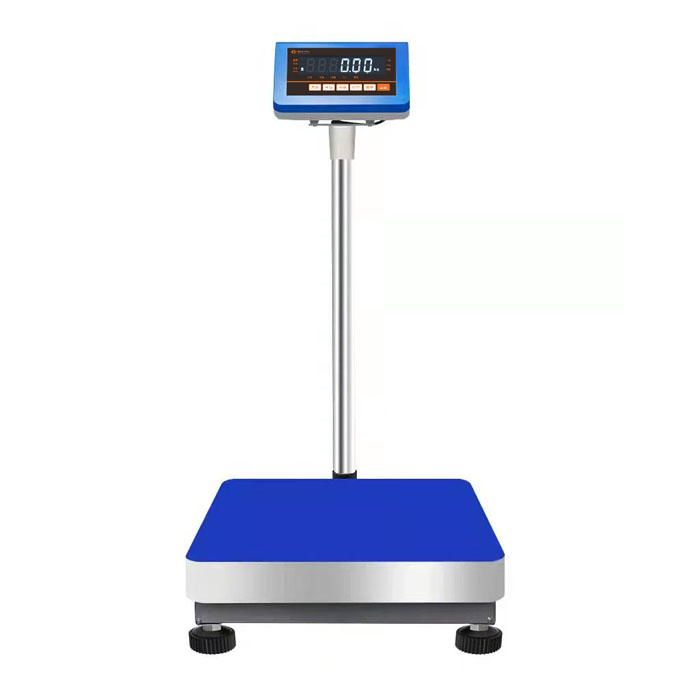
In modern industrial and commercial operation systems, reliable weight measurement serves as a fundamental supporting element for standardized production, orderly circulation, and quality control. As a core weighing device widely adopted across diverse scenarios, the platform scale has gradually evolved from a simple mechanical measuring tool into a multifunctional intelligent equipment that integrates structural stability, data visualization and environmental adaptability. Its application value runs through the entire industrial chain, covering raw material proportioning in manufacturing, cargo inspection in logistics and warehousing, batch detection in product processing, and standardized metering in daily commercial transactions, forming an indispensable basic guarantee for the orderly operation of modern economic activities.
The core design logic of the platform scale originates from the demand for stable and flat bearing measurement. Different from limited-range desktop weighing equipment, it adopts an expanded flat bearing structure, which can adapt to the weighing needs of goods in different forms, including bulk materials, packaged products, and integral mechanical parts. The structural design focuses on balancing bearing stability and stress uniformity. The overall rigid frame structure can disperse the pressure generated by the weight of goods evenly on the sensing components inside the equipment, avoiding measurement deviation caused by local stress concentration. This basic structural advantage enables the equipment to maintain stable working performance under long-term and frequent use, adapting to the high-frequency operation rhythm of industrial production and commercial scenarios.
In terms of working principle, modern platform scales mainly rely on high-sensitivity sensing components to complete weight collection and data conversion. When measured objects are stably placed on the bearing platform, the sensing elements capture subtle pressure changes and convert mechanical signals into identifiable digital signals. After filtering, amplification and algorithm correction through the internal processing system, the final weight data is output in an intuitive form. Compared with traditional mechanical weighing methods that rely on lever balance and pointer reading, the current measurement mode effectively reduces human reading errors and mechanical wear interference, improving the stability and consistency of measurement results in continuous operation. This technological upgrade not only optimizes the basic measurement capability but also lays a foundation for the subsequent digital management of weighing data.
Environmental adaptability is a key advantage that makes platform scales widely applicable in complex working scenarios. Many industrial production environments face variable conditions such as humid air, dust accumulation, and mild corrosive gas erosion, which put forward high requirements on the waterproof, dustproof and anti-corrosion performance of weighing equipment. Optimized structural sealing and special surface treatment processes enable the equipment to resist the interference of external environmental factors effectively. In wet processing workshops, daily flushing and cleaning will not affect the internal precision components; in dusty processing and storage spaces, the closed structural design can prevent fine particles from entering the equipment interior to cause component blockage or sensitivity attenuation; in special processing scenarios with trace corrosive substances, the anti-corrosion materials used for the bearing platform and shell can slow down material aging and wear, extending the stable service cycle of the equipment.
In industrial production links, the application of platform scales penetrates multiple key process nodes. In the raw material feeding stage of processing and manufacturing, accurate weighing helps enterprises realize standardized proportioning of various raw materials, ensuring the consistency of product formula and stabilizing product quality. Many production processes have strict requirements on the dosage ratio of different materials, and subtle measurement differences may cause changes in product performance and qualification rate. Stable and accurate weighing data provides a reliable basis for process parameter adjustment, helping production lines maintain a standardized operation state. In the finished product inspection link, platform scales complete batch weight detection of products, screen out unqualified products with insufficient or excessive weight, and control the overall quality level of delivered goods. In addition, in the link of product packaging and loading, weighing data can assist enterprises in completing standardized packaging and capacity counting, realizing refined management of production output.
The logistics and warehousing industry is another important application scenario for platform scales, where its efficient and convenient weighing characteristics help improve the overall operational efficiency of the supply chain. In the inbound and outbound inspection of warehouse goods, staff can complete rapid weighing of bulk goods and packaged goods through flat bearing platforms without complex auxiliary operations. The simple and fast operation mode adapts to the high-efficiency throughput demand of warehouse daily operation. At the same time, accurate weighing data provides basic data support for goods inventory and account checking. By recording the weight information of goods in and out of the warehouse, enterprises can realize dynamic monitoring of inventory quantity, reduce the deviation between actual inventory and system data, and improve the refinement level of warehouse management. In the field of cargo transportation, weighing detection also helps standardize loading standards, avoid irregular loading behaviors, and ensure the safety and standardization of transportation operations.
With the continuous development of digital technology, the functional attributes of platform scales have been further expanded, realizing the transformation from single weighing measurement to data management terminal. Modern equipment is equipped with mature data processing and transmission functions, which can automatically record, store and upload weighing data. The system can sort and summarize daily, weekly and monthly weighing information according to user needs, forming standardized data records. This data-based management mode replaces the traditional manual paper recording method, effectively avoiding data loss, recording errors and statistical deviation caused by human factors. For enterprise operation management, these accumulated weighing data can reflect production volume, material consumption, cargo throughput and other key operational indicators, providing effective data support for enterprise production scheduling, cost accounting and operational decision-making.
The humanized design of modern platform scales further optimizes the user operation experience and reduces the operational threshold. The equipment is equipped with intuitive display interfaces, which can clearly present real-time weighing data, stable status and equipment working parameters, enabling operators to quickly read and judge. The practical tare function can automatically deduct the weight of packaging containers, trays and auxiliary tools, directly obtaining the net weight of measured objects and simplifying the operation process. The overload protection mechanism built in the equipment can automatically identify the over-range bearing state, effectively protect internal precision sensors and structural components from damage caused by excessive pressure, and reduce equipment failure rates in daily use. In addition, the optimized structural layout reduces the difficulty of equipment placement and movement, meeting the flexible use needs of different operation stations.
In commercial trading scenarios, platform scales undertake the important function of fair metering and maintain the orderly development of market transactions. In bulk commodity transactions, centralized wholesale and retail sales, accurate and stable weighing results ensure the fairness and rationality of transaction measurement, avoid measurement disputes caused by inaccurate equipment, and build a trustworthy transaction environment. The good stability and repeatability of the equipment ensure that the weighing results of the same batch of goods in multiple measurements remain consistent, providing a unified measurement standard for both parties to the transaction. At the same time, the standardized metering performance of the equipment also conforms to the basic requirements of market supervision for trading metering tools, helping standardize market transaction behaviors.
In terms of equipment maintenance and operation cost control, platform scales show good economic applicability. The robust overall structure and wear-resistant materials reduce the frequency of daily failures and loss, avoiding frequent equipment replacement and maintenance caused by structural damage and precision attenuation. The modular internal structure design simplifies the subsequent maintenance work. When individual components are aged or faulty, targeted replacement and debugging can be completed without overall disassembly, reducing maintenance time and labor cost. The low energy consumption operation mode adapts to long-term continuous working scenarios, effectively reducing the daily operation energy consumption cost of enterprises. Long-term stable operation and low maintenance cost make the equipment have high cost performance in long-term industrial and commercial application.
Looking at the development trend of platform scale industry, with the continuous upgrading of manufacturing technology and the deep integration of digital intelligence technology, the functional performance and application scope of platform scales are still expanding. Future equipment will develop towards higher measurement stability, stronger environmental adaptability and more intelligent data management. The continuous optimization of sensing technology will further improve the anti-interference ability of equipment in complex environments and maintain stable measurement accuracy in high-frequency and high-intensity operation scenarios. The deep integration with industrial Internet and enterprise management systems will realize real-time interconnection and intelligent analysis of weighing data, helping enterprises build a more efficient refined management system. At the same time, the personalized and customized design will better adapt to the differentiated weighing needs of different industries and different operation scenarios, covering more segmented production and transaction links.
As a basic metering equipment integrating tradition and innovation, the platform scale has completed the iterative upgrade from mechanical measurement to digital intelligence measurement. It is not only a tool for weight data acquisition, but also an important part of enterprise production standardization, supply chain management refinement and market transaction standardization. In the continuous development of modern industry and commercial economy, the value of accurate, stable and efficient weighing measurement will continue to be highlighted. With the continuous progress of technology and the continuous optimization of design, platform scales will always adapt to the changing market demand, continuously empower the efficient and standardized operation of various industries, and provide solid basic metering support for the stable development of social economic production activities.
Platform Scale TCS SERIES
https://www.pruiste.com/qtxl/dztctcs
Post Date: Jun 7, 2026
https://www.supplier-manufacturer.com/counting-weighing-balance/platform-scale-tcs-series.html

![Electronic Balance YP SERIES]()
Electronic Balance YP SERIES
The YP series adopts high-definition keys, which is economical. The entire series of balances adopt Nuosheng sensors, brand sensors, and aluminum alloy structure to ensure…![Digital Viscometer Factory]()
Digital Viscometer Factory
Viscosity stands as one of the most fundamental physical properties of fluid materials, reflecting the internal friction and flow resistance that occur when fluids undergo…![Compact Digital Viscometer]()
Compact Digital Viscometer
Viscosity stands as one of the most fundamental physical properties of fluid materials, reflecting the internal friction and flow resistance that occur when a substance un…![Benchtop Digital Viscometer]()
Benchtop Digital Viscometer
Viscosity stands as one of the most fundamental physical properties of fluid substances, reflecting the internal friction and flow resistance generated during the movement…![Moisture Analyzer Exporter]()
Moisture Analyzer Exporter
Moisture content stands as one of the most critical physical indicators that determine the quality, stability, and usability of raw materials and finished products across …