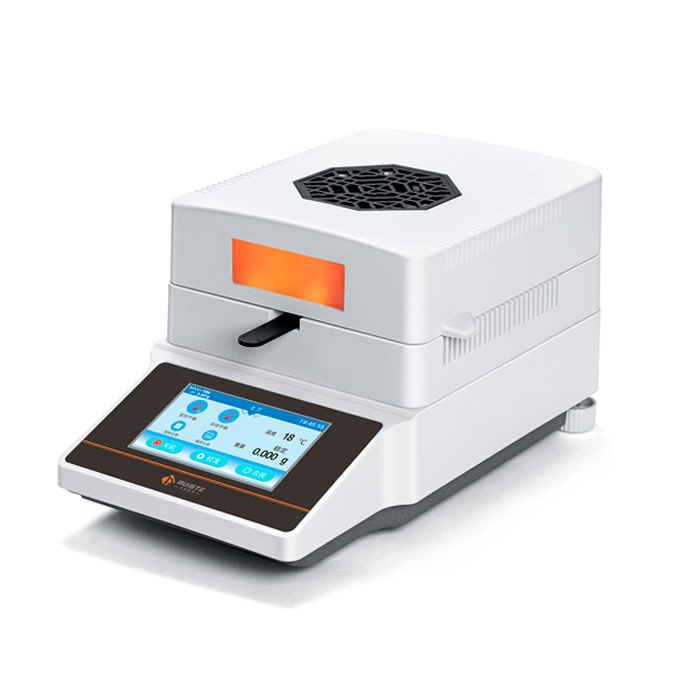
Portable Moisture Analyzer
Moisture content stands as one of the most critical physical indicators that determine the quality, stability, and processing performance of diverse materials across industrial production, agricultural processing, construction engineering, and environmental monitoring fields. Excess or insufficient moisture in raw materials, semi-finished products, and finished goods can trigger a series of quality risks, including reduced structural stability, shortened service life, impaired chemical activity, and inconsistent processing effects. In traditional material detection workflows, laboratory-based moisture testing equipment often requires fixed placement, complicated sample preprocessing, and long testing cycles, which fail to meet the demands of on-site, real-time, and batch rapid detection in outdoor production, field sampling, and mobile operation scenarios. As a flexible and efficient detection device, the portable moisture analyzer has gradually become an essential tool for modern industrial quality control and material parameter monitoring, relying on its compact structural design, convenient operation mode, and stable detection performance. It breaks the spatial and temporal limitations of traditional detection equipment, enabling accurate moisture data acquisition at the production site and providing reliable data support for process adjustment, quality screening, and storage condition optimization.
The working mechanisms of portable moisture analyzers are derived from mature physical and physical-chemical detection principles, with different technical routes adapted to distinct material characteristics and detection accuracy requirements, forming a diversified product system that covers macro moisture detection and trace moisture detection. Among the mainstream technical principles, electromagnetic wave detection technology is widely applied in portable devices for solid and semi-solid material testing. This technology takes advantage of the significant difference in electromagnetic wave absorption characteristics between water molecules and other material molecules. Water molecules are typical polar molecules, which can produce obvious attenuation and phase shift effects on specific-frequency electromagnetic signals. When the device’s sensor emits low-power electromagnetic waves to the surface and interior of a tested sample, the internal water molecules of the material will interfere with the propagation of electromagnetic waves. The device’s internal sensing module captures the changes in signal amplitude and phase, and the built-in microprocessor converts these physical signal changes into intuitive moisture content data through algorithm calculation and calibration. This detection method belongs to non-destructive testing, which will not cause damage or structural changes to the tested sample, allowing the sample to be reused in subsequent tests and effectively reducing material waste in the detection process.
In addition to electromagnetic wave detection, capacitance and resistance detection technologies are also common working principles for portable moisture analyzers, especially suitable for porous materials and conductive medium materials. For capacitance-based devices, the dielectric constant of water is far higher than that of most solid materials. When the moisture content inside the material changes, the overall dielectric constant of the material will change synchronously, and the sensor can calculate the corresponding moisture value by detecting the capacitance variation of the material. Resistance-based detection works on the principle that the conductivity of materials is positively correlated with internal moisture content. Higher moisture content enables better ion conduction inside the material, resulting in lower resistance values. The device establishes a stable mathematical model between resistance parameters and moisture content through pre-calibration, so as to realize rapid quantitative detection. These two technical methods feature simple structural design and low energy consumption, making them highly adaptable for on-site rapid screening of wood, building materials, grains, and soil materials.
For scenarios requiring high-precision trace moisture detection in gas and low-moisture solid materials, some portable moisture analyzers adopt electrolytic detection and spectral auxiliary detection technologies. The electrolytic detection principle relies on the quantitative electrolysis reaction of water molecules. The internal hygroscopic sensor fully absorbs trace moisture in the sample, and the electrolytic cell converts the absorbed water molecules into measurable current signals. The system calculates the precise trace moisture content based on the corresponding relationship between current intensity and water molecule quantity, achieving accurate detection of low-concentration moisture parameters. Near-infrared spectral technology, another advanced portable detection method, uses specific wavelength light sources to irradiate sample surfaces. Water molecules have characteristic absorption peaks in the near-infrared band; the device detects the light energy absorption degree of the sample, and calculates the internal moisture content through spectral analysis and data modeling. This method realizes instantaneous non-contact detection, with no need for direct contact between the sensor and the sample, avoiding cross-contamination between samples and ensuring the purity and integrity of tested materials.
The structural design of portable moisture analyzers fully focuses on mobile operation and on-site application scenarios, abandoning the bulky and fixed structure of traditional laboratory analyzers. The whole machine is compact and lightweight, easy to carry and hold for a long time, and can adapt to complex operation environments such as construction sites, outdoor farmland, production workshops, and warehousing storage areas. Most devices are equipped with rechargeable power supply modules, which can support long-term continuous detection without relying on fixed power sockets, greatly improving the flexibility of field operation. The humanized operation interface is equipped with a high-definition display screen, which can directly display real-time moisture data, detection parameters, and working status. The physical buttons or touch control modules are simple and easy to understand, requiring no professional operation skills. Staff can master the detection process through simple training, realizing rapid sampling and data reading.
In terms of functional configuration, modern portable moisture analyzers have achieved intelligent upgrading on the basis of basic detection functions. The built-in data storage module can record dozens or even hundreds of detection data in chronological order, which is convenient for staff to view historical data and track material moisture changes in real time. Some devices support data export and external connection functions, which can transmit detection data to terminal equipment for sorting, analysis, and report generation, facilitating digital management of production quality. In addition, the devices have stable environmental adaptability, and can maintain stable detection performance within a certain range of temperature and humidity changes, avoiding large data fluctuations caused by environmental interference. The anti-interference design of the sensor effectively filters out the influence of material surface dust, subtle impurities, and weak electromagnetic signals in the environment, ensuring the stability and repeatability of detection results.
Portable moisture analyzers have extensive application coverage in multiple industries, providing important technical support for refined production and quality control. In the agricultural and grain processing industry, grain moisture content directly affects storage safety and processing quality. Excessive moisture in grains such as wheat, corn, and rice will lead to mildew, fermentation, and insect infestation during storage, while too low moisture will cause grain cracking and weight loss during processing. Portable moisture analyzers can conduct random sampling detection in grain purchasing, warehousing, drying, and processing links, helping staff adjust drying parameters and storage conditions in a timely manner to ensure grain storage stability and processing yield. Meanwhile, the devices can also detect moisture in forage and agricultural products, providing data basis for agricultural product grading and preservation.
In the construction and building materials industry, the moisture content of building materials is a key factor affecting engineering quality and structural safety. Wood, plywood, cement mortar, concrete, and wall insulation materials all have suitable moisture content ranges. Excess moisture in wood materials will cause deformation, cracking, and mildew after installation, affecting the stability of furniture and building structures; excessive moisture in concrete and wall materials will lead to hollowing, peeling, and mildew on wall surfaces, and even affect the overall thermal insulation and waterproof performance of buildings. Construction personnel can use portable moisture analyzers to detect material moisture before construction and during project acceptance, screen unqualified materials, and guide construction process optimization to improve the overall quality and service life of engineering projects.
In the food and pharmaceutical industries, material moisture detection is closely related to product quality, shelf life, and production standardization. Food raw materials such as flour, starch, nuts, and dried fruits require strict moisture control to prevent microbial growth and product deterioration during circulation and storage. In pharmaceutical production, the moisture content of raw powder materials, auxiliary materials, and finished preparations affects the stability of drug efficacy and the safety of drug use. Portable moisture analyzers can realize on-site rapid detection of incoming raw materials and semi-finished products in production lines, quickly screen unqualified materials, avoid batch production quality problems, and ensure the consistency and safety of product quality. The non-destructive detection feature of the devices also meets the detection requirements of high-purity food and pharmaceutical materials, avoiding sample waste and contamination caused by destructive testing.
In the chemical and new material industry, many raw materials and finished chemical products are sensitive to moisture. Fine chemical powders, polymer materials, and inorganic chemical raw materials will undergo chemical property changes such as hydrolysis, agglomeration, and performance degradation when absorbing moisture, affecting the chemical stability and application effect of materials. In the links of raw material incoming inspection, production process monitoring, and finished product storage, portable moisture analyzers can quickly detect material moisture parameters, help enterprises control production humidity and storage environment, ensure the stability of material performance, and reduce product loss caused by moisture problems. At the same time, in the research and development of new materials, the devices can assist researchers in exploring the relationship between moisture content and material performance, providing accurate data support for formula optimization and process improvement.
In environmental monitoring and soil research fields, portable moisture analyzers provide convenient detection means for field research and data collection. Soil moisture content is an important parameter reflecting soil fertility and ecological environment, which is of great significance for agricultural irrigation guidance, ecological restoration, and land resource evaluation. Researchers and environmental workers can carry the device to conduct real-time detection of soil moisture in different regions and depths, obtain accurate field data, and provide basis for formulating scientific irrigation plans and ecological management strategies. In addition, the devices can also detect moisture in environmental samples such as sludge and sediment, supporting environmental quality assessment and pollution control research.
Compared with traditional laboratory moisture detection methods, portable moisture analyzers show obvious comprehensive advantages in practical application. Laboratory detection usually requires fixed-site operation, professional sample pretreatment, and long detection waiting time, which is difficult to adapt to the rapid screening demand of large-batch materials and on-site uncertain scenarios. Portable devices complete detection in a short time, realizing instant sampling and instant result acquisition, greatly improving detection efficiency. Their portable and mobile features break the limitation of detection space, enabling detection work to be carried out in any link of production, storage, and transportation. In terms of operation cost, portable moisture analyzers do not need complex auxiliary reagents and professional laboratory equipment, with low daily use and maintenance costs, suitable for long-term large-scale promotion and use in various enterprises and institutions.
In terms of daily use and maintenance, portable moisture analyzers have low threshold and strong durability. Daily maintenance mainly includes regular cleaning of the sensor surface to avoid residual sample dust and impurities affecting detection accuracy, timely charging and power maintenance to ensure stable power supply for field operation, and regular calibration according to standard samples to maintain long-term detection accuracy. The equipment has good anti-fall and anti-shock performance, adapting to slight vibration and collision in field operation, with low failure rate and long service life. In different application scenarios, users can select devices with corresponding technical principles and detection ranges according to material types and accuracy requirements, realizing targeted detection and improving the pertinence and effectiveness of quality control work.
With the continuous upgrading of industrial intelligent manufacturing and refined quality management requirements, the application value of portable moisture analyzers is constantly highlighted. Traditional moisture detection modes can no longer meet the real-time and dynamic management needs of modern production, while portable moisture detection equipment builds a bridge between on-site production and data management. It helps enterprises realize dynamic monitoring of material moisture in the whole process from raw material incoming inspection, production process supervision to finished product storage and transportation, effectively reducing quality risks and production costs. In the future, with the continuous innovation of sensing technology and intelligent algorithm technology, portable moisture analyzers will develop towards higher detection accuracy, stronger environmental adaptability, more intelligent data management, and wider material adaptability, providing more comprehensive and accurate technical support for quality control in various industries.
In conclusion, portable moisture analyzers, as efficient, flexible, and practical detection tools, rely on diverse and mature working principles, humanized structural design, and rich functional configurations to solve the pain points of slow detection speed, limited detection space, and complicated operation in traditional moisture testing. They play an irreplaceable role in agricultural production, industrial manufacturing, engineering construction, environmental monitoring, and other fields. By providing real-time and accurate moisture data support, the devices help all walks of life optimize production processes, control product quality, reduce resource waste, and promote the standardized and refined development of industrial production and scientific research work. With the continuous progress of industrial technology and the improvement of quality management standards, portable moisture analyzers will become more popular in various application scenarios and continuously release greater application value.
Portable Moisture Analyzer
https://www.pruiste.com/moisture-analyzer.html
Post Date: May 23, 2026
https://www.supplier-manufacturer.com/moisture-analyzer/portable-moisture-analyzer.html

![Electronic Balance YP SERIES]()
Electronic Balance YP SERIES
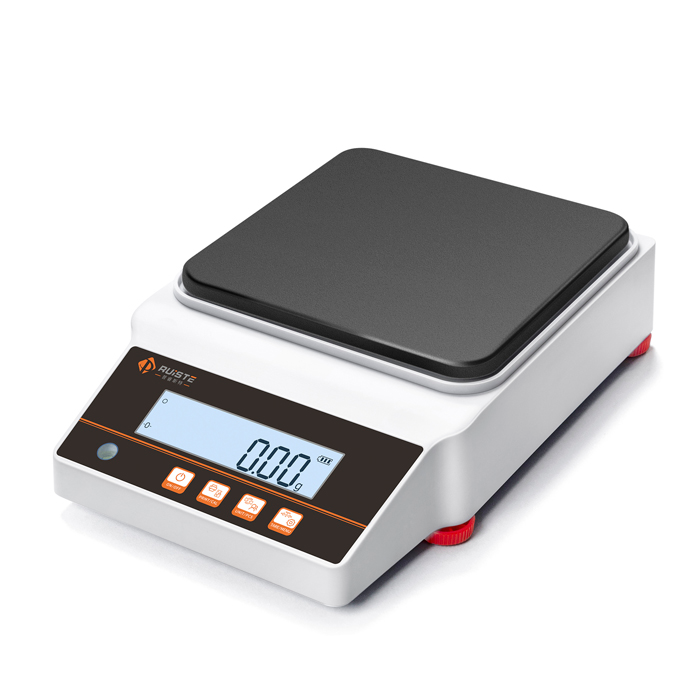
The YP series adopts high-definition keys, which is economical. The entire series of balances adopt Nuosheng sensors, brand sensors, and aluminum alloy structure to ensure…![Digital Viscometer Factory]()
Digital Viscometer Factory
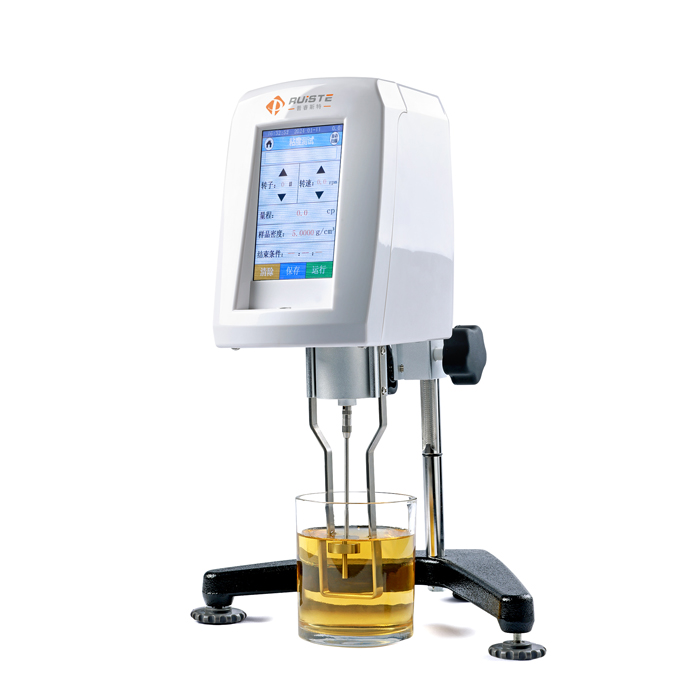
Viscosity stands as one of the most fundamental physical properties of fluid materials, reflecting the internal friction and flow resistance that occur when fluids undergo…![Compact Digital Viscometer]()
Compact Digital Viscometer
Viscosity stands as one of the most fundamental physical properties of fluid materials, reflecting the internal friction and flow resistance that occur when a substance un…![Benchtop Digital Viscometer]()
Benchtop Digital Viscometer
Viscosity stands as one of the most fundamental physical properties of fluid substances, reflecting the internal friction and flow resistance generated during the movement…![Moisture Analyzer Exporter]()
Moisture Analyzer Exporter
Moisture content stands as one of the most critical physical indicators that determine the quality, stability, and usability of raw materials and finished products across …