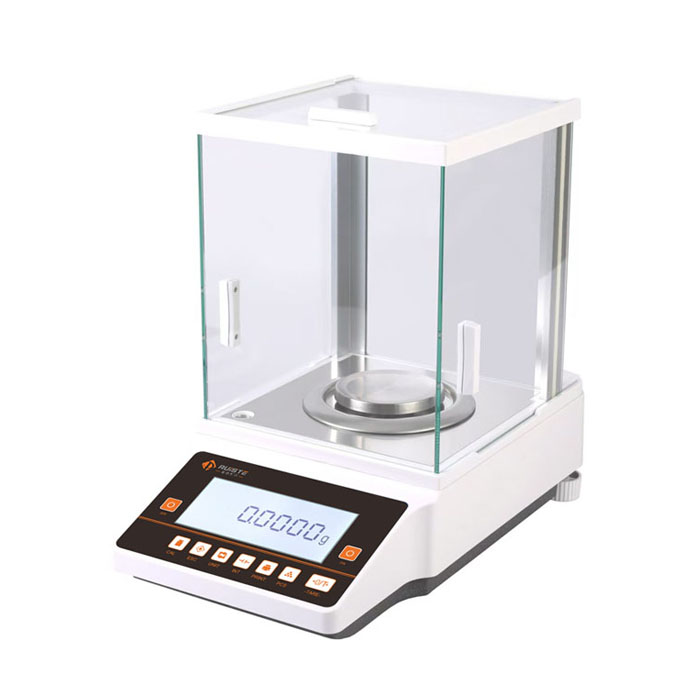
Bench Top Electronic Balance
In modern laboratory testing, industrial production quality control, pharmaceutical research, food ingredient preparation and daily scientific research experimentation, the bench top electronic balance has become an indispensable fundamental weighing device that supports accurate mass measurement work across numerous professional fields. Unlike traditional mechanical weighing equipment that relies on physical counterweights and manual mechanical adjustment to complete weighing readings, this type of electronic weighing instrument adopts mature and reliable electromagnetic force balance compensation technology as the core working foundation, realizing automatic induction, rapid signal conversion, stable data output and intuitive digital display in the whole weighing process. It effectively optimizes the defects of slow response, large manual reading error and poor long-term use stability existing in traditional mechanical weighing tools, and can maintain stable and consistent weighing performance under standardized placement and correct use conditions, meeting the daily precision weighing needs of different industries and different experimental and production scenarios. The popularization and application of bench top electronic balances not only simplifies the overall weighing operation steps for operators, but also provides reliable basic data support for subsequent experimental data analysis, product formula proportioning, raw material quality inspection and finished product parameter verification, laying a solid foundation for the accuracy and reproducibility of all subsequent work links that rely on mass measurement data.
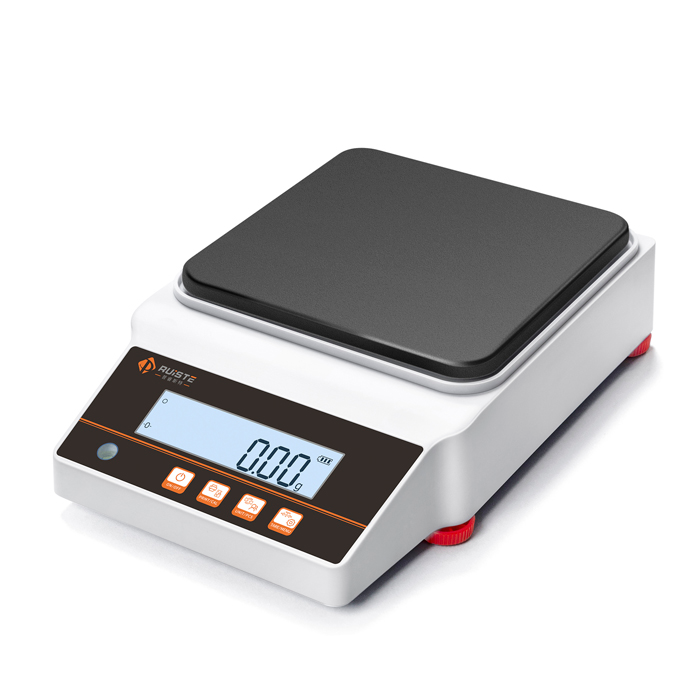
The basic working principle of the bench top electronic balance centers on the precise matching and dynamic balance adjustment between electromagnetic force and gravity, forming a closed-loop stable weighing system inside the equipment. When no object is placed on the weighing pan of the balance, the internal displacement detection component maintains the initial balance position, the built-in microprocessor keeps the electromagnetic output signal in the initial stable state, and the display screen presents a zero reading for standby use. Once the sample or container to be weighed is stably placed on the weighing pan, the gravity generated by the load will drive the rigidly connected load bearing structure and internal coil assembly to produce a tiny and controllable downward displacement. The high-sensitivity displacement sensor installed inside the balance can instantly capture this subtle position change without delay, and convert the detected mechanical displacement signal into a recognizable electrical signal, which is quickly transmitted to the core microprocessor for real-time processing and calculation. The microprocessor immediately adjusts the current output of the internal coil according to the received signal intensity, generating a corresponding electromagnetic force that is equal in magnitude and opposite in direction to the gravity of the weighed load. This continuous dynamic adjustment process will not stop until the internal mechanical structure returns to the initial balance position detected by the sensor. At this time, the current value required to maintain the balance state has a stable and fixed proportional relationship with the mass of the weighed object. After a series of algorithm optimization and data conversion processing by the internal program, the final accurate mass value will be displayed clearly on the high-definition digital display screen, completing the whole weighing work efficiently and accurately.
The internal structural design of the bench top electronic balance follows the concept of compact layout, stable operation and anti-interference performance, and each core component cooperates closely to jointly ensure the stable operation and accurate weighing of the equipment in various conventional use environments. The weighing pan, as the direct bearing part for placing samples and containers, is mostly made of smooth, corrosion-resistant and wear-resistant metal materials, with a reasonable structural size and flat surface design, which can ensure that various solid samples, experimental vessels and preparation containers can be placed stably without tilting or shaking, avoiding weighing errors caused by unstable placement. Below the weighing pan is the core sensing and load-bearing connection structure, including precision coil components, high-performance magnetic steel parts and fixed pole靴 structures, which together form the core electromagnetic force generation and adjustment module of the balance. This module is the key core area to ensure the accuracy of weighing data, and it needs to maintain long-term structural stability and internal cleanliness to prevent external dust, debris and residual samples from affecting the normal operation of the coil and magnetic steel, which would lead to signal deviation and unstable weighing data. The high-sensitivity displacement detection device is installed close to the load-bearing structure, with extremely high detection accuracy and fast response speed, which can capture even the smallest position changes in real time and feed back accurate signals to the microprocessor without signal delay or distortion. The built-in microprocessor is equivalent to the brain of the electronic balance, responsible for receiving all detection signals, executing internal calculation programs, adjusting electromagnetic current output, optimizing data stability and driving the display screen to output accurate readings. In addition, the whole machine is equipped with a stable power supply module and simple and practical function control keys, which can meet the daily switching, zero clearing, taring and other conventional operation needs of operators, and the overall structural configuration is simple and efficient, convenient for daily use and later maintenance management.
Bench top electronic balances have a wide range of application coverage, covering almost all scenarios that require conventional precision weighing and accurate mass measurement, showing strong practical adaptability in different industry environments and work links. In chemical laboratories, researchers often use this type of balance to weigh various chemical reagents, experimental raw materials and standard samples required for quantitative experiments. Whether it is trace powder reagents for precise proportioning in chemical reaction experiments or liquid samples placed in special containers for mass comparison and measurement, the bench top electronic balance can provide accurate weighing data, ensuring that the reagent proportioning in chemical experiments meets the experimental design standards, avoiding experimental result deviation and experimental failure caused by inaccurate reagent mass ratio. In biological research and biochemical experimental work, the balance is used for weighing biological samples, culture medium raw materials, microbial culture additives and experimental preparation reagents. The stable weighing performance ensures the consistency of sample processing and culture medium configuration in each group of comparative experiments, making the experimental data more comparable and the experimental conclusion more scientific and reliable.
In the food processing and food safety testing industry, bench top electronic balances play an important role in raw material formula proportioning and finished product sampling inspection. Food production enterprises need to accurately weigh various raw materials, additives and auxiliary materials according to fixed product formulas in the production and processing links, and accurate weighing data directly affects the taste, quality and safety and stability of finished food products. Food safety testing institutions need to weigh food sampling samples and testing reagents during routine testing work, providing accurate basic data for subsequent food component detection, additive content analysis and harmful substance residue testing. In the pharmaceutical preparation and pharmaceutical research field, the precision of weighing work is particularly strict. The bench top electronic balance is used for weighing pharmaceutical raw materials, auxiliary materials and experimental drug samples in drug research and development and preparation processes, ensuring that the proportion of each component in the drug formula is accurate, which is not only related to the efficacy and stability of the drug, but also closely related to the safety of drug use. In addition, in industrial production quality control, teaching laboratory teaching, agricultural product quality testing and other fields, this type of electronic balance is also widely used, becoming an essential basic measuring equipment to ensure the smooth progress of work and the accuracy of detection data.
Standardized daily operation steps are crucial to maintaining the weighing accuracy and long-term service life of the bench top electronic balance, and operators need to strictly follow the correct operation process to complete all weighing work. Before starting the weighing operation every day, it is necessary to select a suitable placement position for the balance in advance, ensuring the placement platform is flat, solid and stable, avoiding placement on shaking countertops or positions with obvious air convection. It is also necessary to stay away from positions with severe temperature changes, strong electromagnetic interference and easy vibration impact, so as to prevent external environmental factors from interfering with the internal sensing and signal processing system of the balance and affecting the stability of weighing results. After the balance is placed stably, connect the power supply and preheat the equipment for a certain period of time, so that all internal electronic components and sensing modules can reach a stable working state, avoiding data drift and inaccurate initial zero position caused by insufficient preheating time. Before formal weighing, check the cleanliness of the weighing pan and the internal load-bearing structure, clean up the residual dust, sample debris and sundries on the surface in time with a soft brush or clean soft cloth, and ensure the balance displays zero reading in the no-load state; if the zero position is deviated, perform manual zero clearing operation through the function keys to correct the initial state.
In the formal weighing process, operators need to place the container or weighing paper required for weighing stably on the center of the weighing pan first, and avoid placing the container or sample on the edge of the weighing pan to prevent weighing deviation caused by uneven force on the load-bearing structure. After placing the container, press the tare key to make the balance automatically deduct the container mass and return to zero state, then slowly add the sample to be weighed into the container until the display data reaches the required mass value. During the sample adding process, operate gently to avoid sample splashing on the internal structure of the balance or excessive impact on the weighing pan, which may cause damage to internal precision components. After the display data is completely stable without obvious fluctuation and jumping, record the weighing data truthfully and timely to avoid data recording errors caused by premature reading. After all weighing work is completed every day, turn off the balance in the correct order, cut off the power supply if the equipment is not used for a long time, clean the weighing pan and the surrounding working area again, remove all residual samples and sundries, and keep the whole equipment and working environment clean and tidy. It is forbidden to place overweight objects beyond the bearing range on the weighing pan for weighing, and avoid weighing corrosive, volatile or highly polluting samples directly on the weighing pan without protection, so as to protect the structural integrity and sensing performance of the balance.
The environmental adaptation and regular calibration management of the bench top electronic balance are key factors to maintain its long-term stable weighing performance and consistent data accuracy, and good environmental conditions and scientific calibration work can effectively reduce weighing errors and prolong the service life of the equipment. The working environment temperature of the balance needs to be kept relatively stable, avoiding rapid temperature rise and fall and long-term exposure to high temperature or low temperature environment, because drastic temperature changes will cause slight thermal expansion and contraction of internal metal components and electronic parts, affecting the sensitivity of the sensor and the stability of signal transmission, resulting in continuous small deviation of weighing data. The ambient humidity should also be kept within a reasonable range, avoiding excessive humidity leading to internal circuit moisture and dust adhesion, or excessive dryness causing static electricity accumulation, both of which will interfere with the normal operation of the electronic balance and affect the accuracy of weighing results. In addition, the placement position should avoid direct sunlight, strong wind blowing and frequent personnel walking vibration, maintaining a relatively closed and stable small working environment for the balance.
Regular calibration and performance inspection work cannot be ignored in the daily management of bench top electronic balances. With the increase of use time and the change of use environment, the internal sensing system and electronic components of the balance will have slight performance changes, resulting in subtle deviation of weighing data. Therefore, it is necessary to carry out regular calibration according to the frequency of daily use and the requirements of work precision. For equipment used frequently in experimental testing and production links, the calibration cycle can be appropriately shortened, while for equipment used occasionally, the calibration cycle can be reasonably extended according to the actual situation. The calibration process needs to be carried out in a stable use environment, with standardized operation steps and stable calibration weights, to ensure that the calibration effect meets the basic weighing requirements. In addition to regular professional calibration, operators should also conduct simple daily performance checks before each use, compare the weighing data with conventional standard samples, and timely find and solve small data deviation problems. Once abnormal data fluctuation, slow response or unstable zero position of the balance is found during use, stop using it in time for inspection and maintenance, and do not continue to operate with faults to avoid affecting the accuracy of weighing work and causing greater damage to internal precision components.
In the long-term use process, reasonable daily maintenance and careful maintenance can effectively keep the working performance of the bench top electronic balance stable, reduce the failure rate of the equipment, and extend the overall service cycle of the weighing instrument. Daily cleaning work needs to be carried out regularly and carefully. Use only soft and clean cleaning tools to wipe the weighing pan and the outer surface of the equipment. Do not use strong corrosive cleaning solvents or hard cleaning tools to avoid scratching the surface of the equipment and damaging internal precision structures. For powder and particulate samples scattered in the gap of the weighing pan and the internal load-bearing parts, clean them with a soft brush in time to prevent long-term accumulation of dust and debris from affecting the flexible operation of the internal moving structure and the normal induction of the sensor. When weighing special samples such as corrosive chemicals and volatile substances, take protective measures in advance, use sealed containers for weighing, and clean the relevant parts of the balance in time after weighing to prevent chemical corrosion and volatile gas damage to internal components.
When the bench top electronic balance is not used for a long time, it should be placed in a dry, ventilated and dust-proof storage environment, with protective measures taken to prevent dust, moisture and collision extrusion. Avoid moving the balance frequently in the daily use process. If it is necessary to adjust the placement position, handle it gently with stable force, and avoid violent shaking and impact, so as to prevent the displacement and damage of internal precision coil, sensor and circuit components. Operators should receive simple operational training before using the balance, be familiar with the basic operation methods and taboo use matters, and avoid equipment failure and weighing errors caused by irregular operation and misoperation. Through standardized operation, scientific environmental management, regular calibration and careful daily maintenance, the bench top electronic balance can always maintain good working condition, provide accurate and stable weighing data for various professional work scenarios, and continuously play an important basic supporting role in scientific research, experimental testing, industrial production and quality inspection work in various fields.
Bench Top Electronic Balance
https://www.pruiste.com/electronic-balance.html
Post Date: May 5, 2026
https://www.supplier-manufacturer.com/electronic-balance/bench-top-electronic-balance.html

![Industrial Digital Viscometer]()
Industrial Digital Viscometer
Viscosity stands as one of the most critical physical properties of fluid materials, reflecting the internal frictional resistance that occurs when a fluid undergoes flow …![Gravimetric Moisture Analyzer]()
Gravimetric Moisture Analyzer
Moisture content stands as one of the most critical physical parameters that define the quality, stability, and processing performance of diverse materials across industri…![Automatic Moisture Analyzer]()
Automatic Moisture Analyzer
Moisture content stands as one of the most critical physical indicators that determine the quality, stability and practical performance of various raw materials and finish…![Benchtop Moisture Analyzer]()
Benchtop Moisture Analyzer
Moisture content stands as one of the most critical physical parameters for a vast range of raw materials, semi-finished products, and finished goods across industrial, ag…![Compact Laboratory Balance]()
Compact Laboratory Balance
Compact laboratory balances serve as essential precision measuring instruments in modern scientific research, educational experimentation, industrial sample processing, an…