Laboratory Calibration Weight For Electronic Precision Balance
In modern laboratory quantitative analysis and experimental research, the accuracy of electronic precision balance measurement data is the core foundation of reliable experimental results and industrial detection data. Electronic precision balances are widely used in chemical analysis, pharmaceutical research, food testing, material science, and environmental monitoring laboratories, providing accurate mass measurement support for various fine experimental operations. However, like all precision measuring instruments, electronic precision balances will produce subtle measurement deviations after long-term use, frequent vibration, environmental changes, and repeated operation. These tiny deviations cannot be identified through daily visual observation and conventional operation, but they will gradually affect the consistency and authenticity of experimental data, leading to errors in experimental analysis, product testing, and data recording. Laboratory calibration weights serve as the core matching tool for eliminating such measurement deviations and correcting the operating state of electronic precision balances, playing an indispensable basic role in maintaining the stable measurement performance of precision balance equipment.

The essential value of laboratory calibration weights lies in providing a standard mass reference for electronic precision balances. The working principle of electronic precision balances relies on electromagnetic force balance or sensor induction to convert mass signals into readable digital data. During long-term operation, internal sensor aging, mechanical structure micro-displacement, dust accumulation inside the instrument, and changes in ambient temperature and humidity will all interfere with the signal conversion accuracy of the balance. Different from ordinary weighing tools, calibration weights are manufactured and processed according to unified mass standard specifications, with stable mass attributes, uniform surface finish, and standardized structural design, which can provide a fixed and reliable mass benchmark for balance calibration. By placing calibration weights on the weighing pan of the electronic precision balance, operators can compare the instrument’s displayed value with the standard mass value of the weight, judge the existing measurement deviation of the balance, and complete parameter adjustment and error correction of the equipment, so that the balance can restore accurate and stable weighing performance.
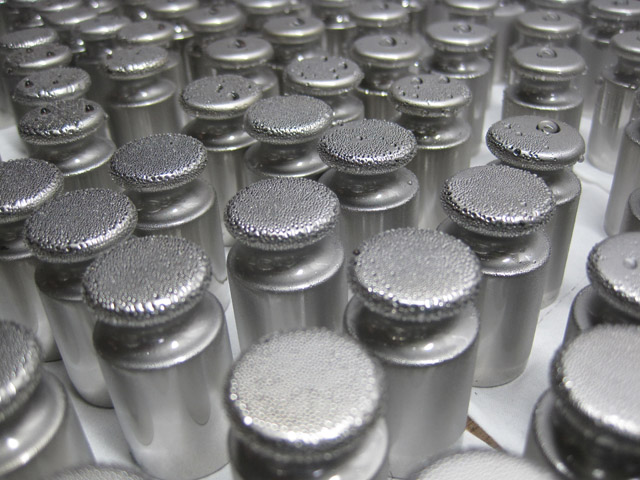
Material selection is a key factor that determines the service performance and calibration stability of laboratory calibration weights. Suitable manufacturing materials can ensure that the weight maintains constant mass and stable physical properties in complex laboratory environments, avoiding mass changes caused by external factors that affect the calibration effect. Most high-performance laboratory calibration weights adopt metal alloy materials with high density, low thermal expansion coefficient, and strong oxidation resistance. Such materials have compact internal structure, uniform texture, and no internal pores or impurities, which can effectively prevent the mass loss caused by surface abrasion, oxidation, and corrosion during long-term use. In addition, the density characteristics of high-quality materials enable the weight to achieve a smaller volume under the same mass specification, reducing the contact area with air, thereby weakening the influence of air buoyancy and dust adhesion on the calibration accuracy. Some calibration weights used in high-precision experimental scenarios will also undergo fine surface treatment, which can isolate air moisture and corrosive gases in the laboratory, further improving the environmental adaptability and service life of the weights.
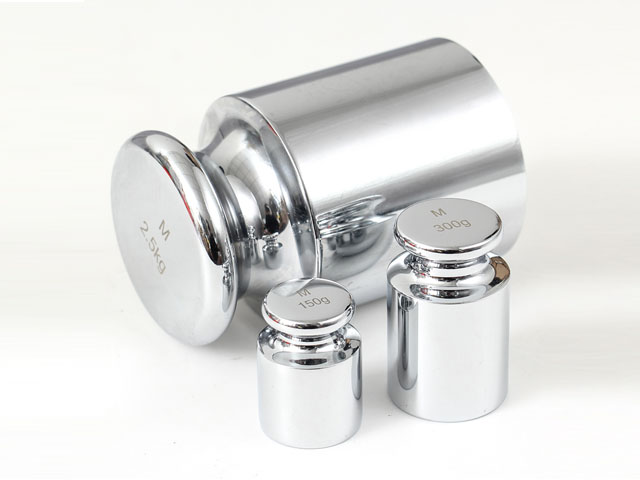
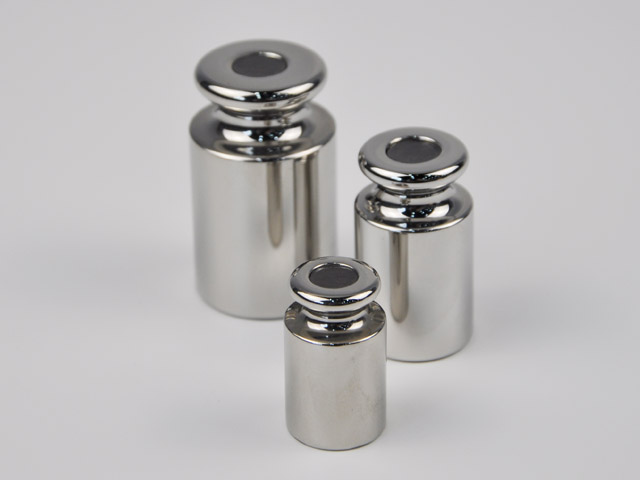
The structural design of laboratory calibration weights follows the principles of standardization, stability, and operability to adapt to the use characteristics of electronic precision balances of different ranges. Conventional calibration weights adopt a cylindrical or block integrated structure, with smooth and flat surfaces, no sharp edges and corners, which can avoid accidental scratching of the balance weighing pan and ensure stable placement during calibration. The overall structure of the weight is compact and symmetrical, which can evenly bear force when placed on the center of the weighing pan, preventing measurement errors caused by unbalanced force. For weights of different mass specifications, the structural size is scientifically matched with the weighing range and bearing area of electronic precision balances, ensuring full contact and stable placement without sliding or tilting during the calibration process. At the same time, the surface of the calibration weight is designed with a matte finish, which can effectively reduce static electricity accumulation, avoid the adsorption of fine dust and suspended particles in the air, and maintain the long-term stability of the weight’s standard mass.
Scientific selection of calibration weights is the premise to ensure the effective calibration of electronic precision balances. Different electronic precision balances have different weighing ranges, resolution, and precision levels, and matching calibration weights of corresponding specifications is required to complete accurate calibration. In actual laboratory operation, the calibration mass should be close to the common weighing range of the balance or the middle and upper limit of the instrument’s rated range, which can more truly simulate the conventional working state of the balance and detect the measurement deviation under actual load conditions. If the selected calibration weight mass is too small, it cannot fully test the load-bearing performance and signal induction accuracy of the balance under conventional working conditions; if the mass exceeds the matching range of the balance, it will easily cause pressure damage to the internal sensor of the precision balance and affect the service life of the equipment. Therefore, operators need to select single or combined calibration weights according to the specific parameters of the electronic precision balance, to ensure that the calibration process covers the main working interval of the instrument.
Standardized operation steps directly affect the calibration effect of electronic precision balances and the maintenance of weight performance. Before carrying out calibration work, it is necessary to place the electronic precision balance and calibration weights in a stable laboratory environment for a period of standing, so that the temperature of the equipment and weights is consistent with the ambient temperature, eliminating the measurement error caused by thermal expansion and contraction of materials. The laboratory environment should maintain stable temperature and appropriate humidity, avoid direct sunlight, strong air convection, and mechanical vibration, because these environmental factors will interfere with the balance’s sensor induction and the placement stability of weights. Before calibration, the surface of the balance weighing pan and the calibration weight should be gently cleaned with a soft, lint-free cleaning tool to remove surface dust, residual particles, and tiny stains, ensuring that there is no foreign matter interference in the weighing process.
In the formal calibration operation, the electronic precision balance needs to be preheated according to the standard operating requirements to make the internal circuit and sensor reach a stable working state, and then complete the zero-point reset and blank calibration of the instrument. After the balance displays a stable zero value, the matched calibration weight is gently placed in the center of the weighing pan, avoiding collision, extrusion, and sliding friction between the weight and the weighing pan. After the balance data is completely stable, observe and record the displayed weighing value, and compare it with the standard mass value of the calibration weight to calculate the measurement deviation of the balance. For electronic precision balances with adjustable parameters, fine adjustment can be carried out according to the deviation value to make the instrument’s displayed value consistent with the standard mass of the weight. In the case of slight deviation that does not require parameter adjustment, the deviation data should be recorded in the laboratory equipment operation file to provide reference for subsequent experimental data correction and regular equipment maintenance.
Daily maintenance and scientific storage of laboratory calibration weights are crucial to maintaining their long-term calibration accuracy and extending service life. Calibration weights belong to precision measuring auxiliary tools, and improper use and storage will cause irreversible mass changes and structural damage. In daily use, it is forbidden to directly touch the surface of the calibration weight with hands, because the sweat, grease, and fine impurities on the human skin will adhere to the weight surface, causing subtle mass changes and surface corrosion over time. Operators should use special non-metallic tweezers or protective gloves to take and place weights, and handle them gently to avoid falling, collision, and violent friction. After each use, the weights need to be cleaned again to remove possible residual pollutants, and placed in a dry, dust-proof, and shock-proof special storage box.
The storage environment of calibration weights needs to maintain constant temperature and low humidity, avoiding long-term exposure to humid, corrosive, and high-dust environments. Humid air will cause oxidation and rust on the metal surface of the weight, changing the standard mass; corrosive gases in the laboratory will slowly erode the weight structure, affecting surface flatness and mass stability. In addition, the storage position should be kept away from vibrating equipment and strong magnetic field interference devices, because long-term vibration will cause subtle structural changes inside the weight, and magnetic field interference will affect the surface physical properties of the weight, thus interfering with the calibration accuracy of electronic precision balances. Regular manual inspection and maintenance of calibration weights are also required in daily laboratory management. Operators can regularly check the surface flatness, surface finish, and structural integrity of the weights, and eliminate individual weights with surface wear, corrosion, deformation, and obvious mass deviation in time to ensure that all weights in use meet the standard calibration requirements.
The periodic calibration of electronic precision balances with laboratory calibration weights is an important part of laboratory quality control management. With the increase of equipment use time, the measurement performance of electronic balances will gradually drift, and regular calibration can effectively control the measurement error within a reasonable range and ensure the traceability and accuracy of laboratory experimental data. The calibration cycle can be reasonably formulated according to the frequency of equipment use, laboratory environmental conditions, and experimental precision requirements. For balances used frequently in conventional experimental scenarios, the calibration cycle can be appropriately shortened; for equipment with low use frequency and placed in a stable and clean environment, the calibration cycle can be moderately extended. No matter the use frequency, the balance needs to be calibrated in time after accidental vibration, movement, and environmental mutation, to avoid long-term use with hidden errors.
In different laboratory application scenarios, the application value of calibration weights is fully reflected. In chemical titration analysis and solute preparation experiments, accurate balance weighing is the basis for ensuring the accurate concentration of chemical solutions and reliable experimental reaction results; in pharmaceutical ingredient testing and sample screening, tiny mass errors will affect the judgment of drug component content and product qualification rate, and calibration weights can eliminate balance measurement errors to ensure the standardization of pharmaceutical testing data; in food safety detection, the accurate weighing of test samples and reagents directly affects the accuracy of harmful substance detection and nutritional component analysis results, providing reliable data support for food safety evaluation; in material science research, the precise mass measurement of new material samples is conducive to accurate analysis of material density, proportion, and structural performance changes, promoting the smooth progress of material research and development experiments.
It is worth noting that the matching use of laboratory calibration weights and electronic precision balances needs to adhere to the principle of pertinence and standardization. Different levels of precision balances have different error tolerance ranges, and the accuracy stability of the supporting calibration weights should be higher than the detection accuracy of the balance, so as to effectively identify the tiny measurement errors of the instrument. In the process of combined use of multiple weights, the superposition error of multiple weights should be fully considered, and the combination mode with fewer weight quantities should be preferred to complete the calibration, reducing the cumulative error caused by multiple contact and superposition. At the same time, the calibration work should be completed by professional and trained operators, who can standardize the operation process, accurately judge the deviation state of the equipment, and avoid inaccurate calibration results caused by irregular operation.
In the overall laboratory precision measurement system, laboratory calibration weights are seemingly simple auxiliary tools, but they undertake the important task of maintaining the accuracy and consistency of precision weighing equipment. All experimental data and detection results based on electronic precision balance measurement are based on the standard mass reference provided by calibration weights. Good use habits, scientific maintenance methods, and standardized calibration processes can not only maintain the stable performance of calibration weights and electronic precision balances for a long time, reduce equipment failure rates and replacement costs, but also fundamentally improve the overall accuracy level of laboratory measurement data, ensure the repeatability and comparability of experimental results, and provide solid basic support for scientific research innovation, industrial detection, and quality inspection work in various fields. With the continuous improvement of laboratory precision experimental requirements, the standardized application and fine management of laboratory calibration weights will become more important, and always run through the whole process of laboratory precision measurement work.
Laboratory Calibration Weight For Electronic Precision Balance
https://www.veidtweighing.com/laboratory-weights.html
Post Date: Jun 7, 2026

![Stainless Steel Flat Test Weight For Platform Scale Calibration]()
Stainless Steel Flat Test Weight For Platform Scale Calibration
Stainless steel flat test weights serve as essential precision tools for the routine calibration and accuracy verification of platform scales across diverse industrial and…![Standard Weight For Platform Scales]()
Standard Weight For Platform Scales
In industrial production, commercial trading, logistics warehousing, and quality inspection industries, platform scales serve as one of the most fundamental and indispensa…![Calibration Weight For Laboratory Instrument Factory Calibration Use]()
Calibration Weight For Laboratory Instrument Factory Calibration Use
In the rigorous operational system of modern laboratory instrument manufacturing and daily calibration practices, calibration weights stand as one of the most fundamental …![Calibration Weight For Mechanical Balance Scale]()
Calibration Weight For Mechanical Balance Scale
Mechanical balance scales remain a foundational tool in precision weighing operations across laboratories, industrial workshops, educational institutions, and quality insp…![200g F2 Precision Calibration Weight Quality Control Lab]()
200g F2 Precision Calibration Weight Quality Control Lab
In modern quality control laboratory operations, accurate and repeatable mass measurement serves as the foundational pillar of reliable experimental data, product testing,…