Portable Precision Balance
In modern measurement science, the demand for accurate and convenient mass detection continues to grow across diverse industrial, academic, and daily application scenarios. A portable precision balance stands out as a practical measuring instrument that balances delicate weighing capability with flexible mobility, breaking the spatial limitations of traditional large-scale analytical weighing equipment. Unlike bulky stationary balances that require fixed laboratory placement, this type of measuring device integrates compact structural design and sensitive sensing technology, enabling high-precision mass measurement while maintaining a lightweight body and convenient carrying performance. Its unique combination of accuracy and portability makes it widely adopted in numerous fields where real-time and on-site weighing data are essential, gradually becoming an indispensable tool for modern fine measurement work.
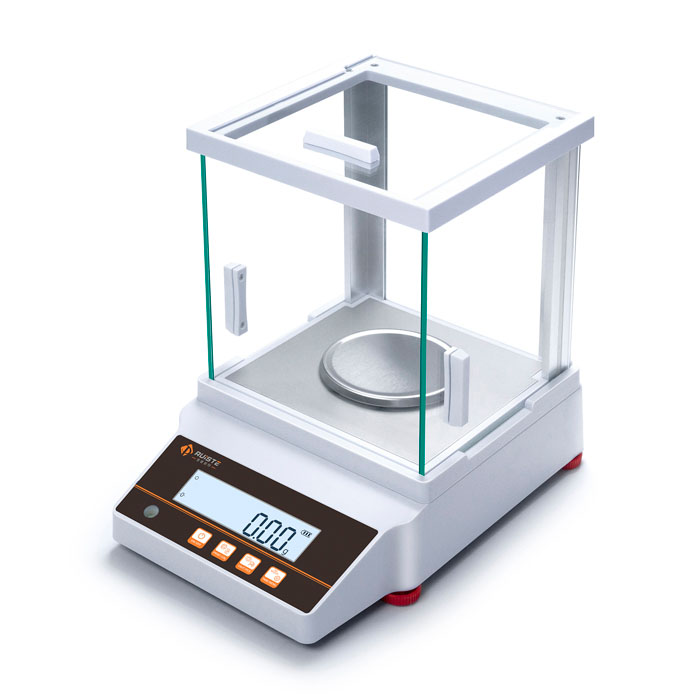
The internal working mechanism of a portable precision balance relies on mature and stable physical sensing principles, with modern electronic sensing structures replacing the traditional mechanical lever weighing mode of early balances. Most portable precision weighing devices adopt advanced capacitance sensing structures, which can convert subtle pressure changes generated by placed samples into stable electronic signals. During the weighing process, when a sample is placed on the weighing pan, the mechanical stress formed by gravity acts on the internal sensing component, causing tiny changes in the internal capacitance structure. The built-in microprocessor captures these subtle signal fluctuations, converts them into recognizable digital data through internal algorithm calculation, and finally presents accurate mass values on the display screen. This electronic induction mode effectively reduces measurement errors caused by mechanical friction, ensuring relatively stable detection accuracy within a compact structural space. Meanwhile, some improved models incorporate temperature compensation designs to counteract data deviation induced by ambient temperature fluctuations, further optimizing the stability of measurement results in variable environments.
The structural design of portable precision balances fully considers the dual requirements of durability and portability. The outer shell is usually made of high-strength lightweight alloy materials, which possess excellent compression resistance and anti-deformation properties, avoiding structural damage caused by accidental collision or extrusion during outdoor carrying and transportation. The surface undergoes matte treatment to reduce wear and fingerprint residue, facilitating daily cleaning and long-term maintenance. The weighing pan, as the direct bearing component for samples, adopts integrated molding technology with a smooth and flat surface. This structural design not only prevents tiny granular samples from accumulating in gaps but also ensures uniform force bearing during weighing, laying a foundation for consistent measurement data. In terms of overall layout, internal components are reasonably miniaturized and arranged densely, removing redundant mechanical structures of traditional balances. The streamlined body design lowers overall weight, allowing users to place the equipment in ordinary storage bags for easy carrying and mobile use.
In actual usage scenarios, environmental adaptability is a prominent advantage of portable precision balances. Traditional high-precision weighing instruments often require strict laboratory conditions, including constant temperature, stable air pressure, and horizontal vibration-free platforms, which greatly limit their application range. In contrast, portable precision balances are optimized for complex conventional usage environments. The built-in horizontal correction structure can assist users in adjusting the equipment to a balanced state on slightly uneven surfaces, reducing the impact of placement inclination on data accuracy. The sealed internal structure can block fine dust and ordinary water vapor in the air, preventing tiny impurities from interfering with the normal operation of internal sensing components. Such environmental adaptability enables the equipment to maintain reliable working performance in outdoor sampling, field detection, and factory workshop inspection, breaking the environmental restrictions of precision weighing work.
In the chemical and biochemical industries, portable precision balances provide convenient measurement support for sample preparation and raw material inspection. Many chemical experiments require trace amounts of powdered or granular reagents, and subtle mass deviations may affect the chemical reaction process and final experimental results. Staff can carry the balance to temporary experimental sites to complete real-time weighing of raw materials, avoiding measurement errors caused by multiple transfers of samples. In biochemical sampling work, researchers need to collect biological samples in wild natural environments. The portable structure allows the equipment to be transported to sampling points, completing sealed weighing of fresh samples on-site to prevent mass changes caused by prolonged storage and transportation, thereby retaining the authenticity of sample data. For routine quality inspection of daily chemical raw materials, inspectors can use the balance to randomly check the mass of raw material particles, providing basic data support for raw material qualification screening.
The jewelry and precious material trading industry also relies heavily on portable precision balances for daily measurement work. Precious stones, metal fragments, and small jewelry accessories have small individual volumes and low mass, requiring high-resolution weighing equipment to record accurate mass data. In offline physical transactions and field appraisal work, evaluators need to quickly measure the mass of samples to assist in preliminary value judgment. The compact size of the portable balance allows it to be used in different trading environments without being restricted by fixed sites. The smooth weighing pan will not cause scratches on the surface of polished precious metal samples, protecting the integrity and appearance of detected items. Moreover, the equipment can maintain stable measurement performance during frequent movement and use, adapting to the high-frequency detection needs of the jewelry trading industry.
In agricultural and food detection fields, portable precision balances undertake multiple basic measurement tasks. Agricultural researchers often need to weigh small-grained seeds to count thousand-grain weight data, which is an important indicator for evaluating seed quality and crop growth potential. By using portable balances, researchers can complete weighing operations in farmland experimental areas without transporting seeds back to fixed laboratories, improving the efficiency of agricultural experiments. In food safety inspection, staff can collect trace food samples from production, processing, and sales links on-site to weigh and cooperate with subsequent component detection. For solid condiments, additive particles, and other food raw materials, precise mass measurement helps standardize ingredient ratios and ensure the taste and quality stability of finished food products. The simple operation logic of the balance also enables ordinary inspection personnel to master the usage method in a short time, reducing the threshold for precision detection work.
Educational and scientific research institutions are important application scenarios for portable precision balances. In middle school and university physics and chemistry experimental courses, students need to understand the basic principles of mass measurement and master standardized weighing operation methods. Portable balances feature simple operation steps and intuitive data display, which are suitable for teaching and demonstration scenarios. The lightweight structure facilitates teachers to carry and distribute equipment among different classrooms, realizing the sharing of teaching instruments. In scientific research projects requiring field investigation, such as soil sampling, mineral screening, and environmental sediment detection, researchers can use portable balances to record the mass of collected samples on the spot, providing accurate basic data for subsequent data analysis and experimental research. Compared with large laboratory balances, portable equipment has lower space occupation requirements, making it convenient for temporary storage and repeated use in teaching and research environments.
To ensure stable measurement accuracy and extend service life, portable precision balances require standardized daily maintenance and correct usage habits. Before each use, users need to check the horizontal state of the equipment and gently wipe the surface of the weighing pan with a dry soft cloth to remove residual dust and sample impurities. It is necessary to avoid placing samples with excessive temperature difference directly on the weighing pan; overheating or supercooled items will cause subtle air convection around the weighing structure, interfering with signal judgment of internal sensors. During the weighing process, external vibration and strong air flow should be avoided as much as possible to reduce subtle fluctuations of digital data. After use, the equipment should be placed in a dry and ventilated storage environment, avoiding long-term exposure to humid, high-temperature, or corrosive gas spaces. Regular zero calibration is also an essential maintenance step, which can eliminate cumulative errors generated by long-term use and keep the measurement accuracy within a stable range.
With the continuous progress of microelectronic manufacturing technology, the overall performance of portable precision balances is steadily optimized. The sensing components are developing toward higher sensitivity and lower energy consumption, enabling the equipment to capture tinier mass changes while reducing battery power consumption. The human-computer interaction interface is constantly upgraded, with clearer display fonts and simple functional keys, optimizing the operation experience for different users. In terms of structural optimization, the anti-interference performance of the equipment is further enhanced, which can resist the impact of weak electromagnetic signals and subtle airflow in conventional environments on measurement results. In the future, portable precision balances will combine intelligent data recording and wireless transmission functions to realize real-time storage and remote transmission of weighing data, further improving the intelligence level of mobile measurement work.
From traditional mechanical weighing tools to modern electronic portable precision balances, the evolution of measuring equipment reflects the continuous improvement of human demand for measurement efficiency and accuracy. As a combination of precision sensing technology and miniaturized structural design, portable precision balances break the usage limitations of traditional high-precision weighing equipment. They not only meet the accurate measurement demand of trace samples in multiple industries but also adapt to flexible mobile working scenarios, bringing convenient and reliable detection conditions for various professional fields. With the continuous development of downstream industries and the upgrading of detection standards, portable precision balances will gain broader application space, continuously optimizing performance to adapt to more complex usage environments and diverse measurement demands, and providing stable basic technical support for fine measurement work in all walks of life.
Portable Precision Balance
https://www.pruiste.com/precision-balance.html
Post Date: May 18, 2026
https://www.supplier-manufacturer.com/precision-balance/portable-precision-balance.html

![Online Digital Viscometer]()
Online Digital Viscometer
Viscosity stands as one of the most fundamental physical properties of fluid substances, reflecting the internal frictional resistance that occurs when a fluid flows and d…![Digital Viscometer Supplier]()
Digital Viscometer Supplier
Viscosity stands as one of the most fundamental physical properties of fluid materials, reflecting the internal frictional resistance that occurs when a fluid flows or und…![Portable Digital Viscometer]()
Portable Digital Viscometer
Viscosity stands as one of the most fundamental physical properties of fluid substances, reflecting the internal friction and flow resistance that occurs when liquids move…![Food Moisture Analyzer]()
Food Moisture Analyzer
Moisture content stands as one of the most fundamental and influential physical parameters in all types of food materials and finished food products. It exerts a profound …![Chemical Moisture Analyzer]()
Chemical Moisture Analyzer
Moisture content stands as one of the most critical physical and chemical indicators for evaluating the quality, stability, and applicability of various materials across i…