Lab Stainless Steel Weight Kit
In every laboratory environment where precise mass measurement serves as the core of daily experimental operations, quality inspection procedures, and routine metrology management, reliable weighing reference tools stand as an indispensable basic guarantee for all follow-up work. A lab stainless steel weight kit has long been recognized as one of the most fundamental and widely used auxiliary tools in modern laboratories of all types, supporting consistent and stable weighing calibration, instrument testing, and experimental data verification across countless professional scenarios. Unlike ordinary weighing accessories that only meet simple rough weighing needs, this kind of weight kit is specially designed and manufactured to adapt to the long-term stable use environment inside laboratories, focusing on balancing excellent material performance, stable structural design, convenient daily operation, and long service life, creating a solid and dependable reference standard for all work links that rely on accurate mass data. Whether in scientific research laboratories engaged in basic academic exploration, testing laboratories responsible for product component detection and quality screening, teaching laboratories undertaking professional skill training and metrology knowledge teaching, or industrial quality control departments conducting regular production equipment debugging and product sampling inspection, the practical value of a well-made stainless steel weight kit runs through every key step of weighing work, ensuring that all measured data maintain good consistency and credibility over long-term repeated use.
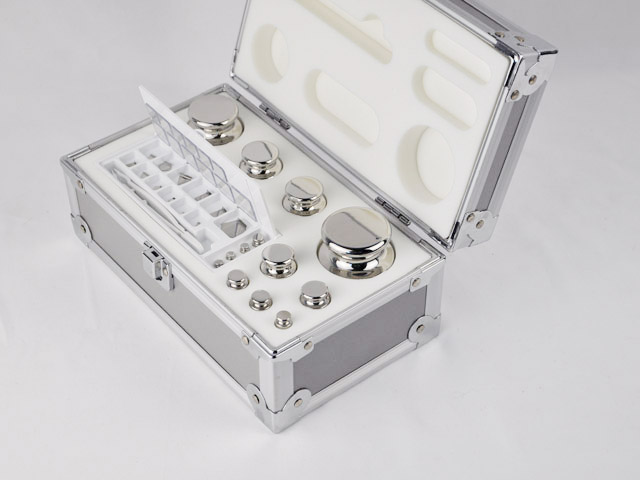
The core advantages of a lab stainless steel weight kit first originate from the inherent excellent performance of the selected stainless steel material, which lays a solid foundation for the overall stability and durability of the entire set of weights. The stainless steel used for manufacturing laboratory dedicated weight kits is carefully selected to have fine internal organizational structure, uniform material density, and stable physical and chemical properties, avoiding the common defects of ordinary metal materials such as easy oxidation, surface corrosion, density deviation, and obvious thermal expansion and contraction changes. In the daily working environment of laboratories, there are often various subtle influencing factors that may damage weighing tools, including temperature and humidity fluctuations caused by air conditioning and ventilation systems, trace chemical volatile substances generated by experimental reagents, slight dust and particle deposition in the air, and frequent manual handling and placement operations by operators. The stainless steel material can effectively resist these adverse external interferences, maintaining the integrity and flatness of the weight surface for a long time without rusting, discoloration, or material falling off. Even after years of frequent use and long-term placement in conventional laboratory storage environments, the basic physical properties and surface state of each weight in the kit will not undergo obvious changes, and the mass state can always remain in a stable range. This inherent material stability is particularly critical for metrology work, because any tiny change in the surface or internal structure of the weight may bring subtle deviations to the weighing reference effect, and long-term accumulation of such deviations will directly affect the accuracy of experimental results and testing data, interfering with the normal progress of laboratory research and quality judgment work.
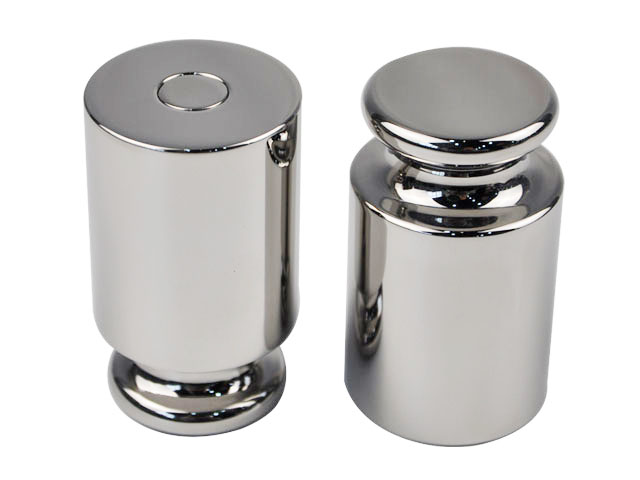
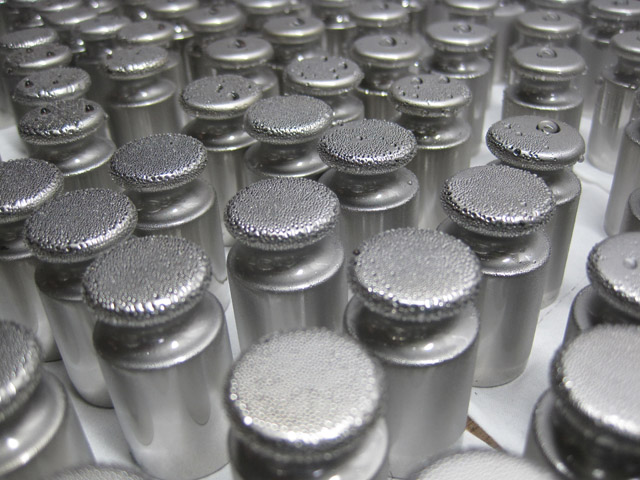
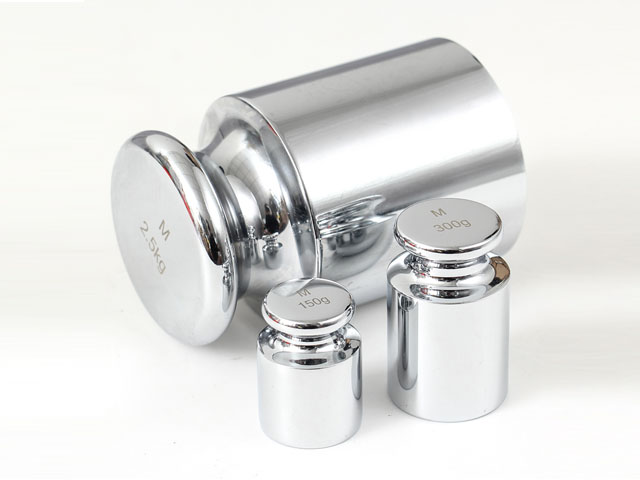
In addition to the superior material foundation, the meticulous and standardized manufacturing and processing technology adopted for each component of the lab stainless steel weight kit further optimizes its practical performance and use experience, making every weight in the kit meet the rigorous use requirements of laboratory precision weighing scenarios. Each single weight included in the complete kit undergoes fine machining and surface polishing treatment, with smooth and burr-free edges and regular and symmetrical overall shape structure. The surface polishing process not only gives the weight a neat and uniform appearance, but more importantly, effectively reduces the surface roughness, minimizing the contact area between the weight and external air, dust, and moisture, thereby reducing the possibility of surface adhesion of impurities and chemical residues. At the same time, the precise machining process ensures that the center of gravity of each weight is stable and the overall structure is compact, avoiding tilting, shaking, or unstable placement during placement on weighing instruments. The internal structure of the weight is solid and uniform without internal pores, hollow areas, or density unevenness, which ensures that the mass distribution of each weight is uniform and the stress state remains stable during long-term use, and no mass deviation occurs due to internal structural changes. The matching design between different weights in the kit is also very reasonable, with specifications covering multiple commonly used mass ranges required for laboratory daily calibration and testing work. The collocation of different specifications can meet the combined use needs of various small-range fine calibration and large-range conventional detection, allowing laboratory staff to flexibly select appropriate weights according to the actual model, measuring range, and use requirements of different weighing instruments, completing various calibration and testing operations efficiently and conveniently.
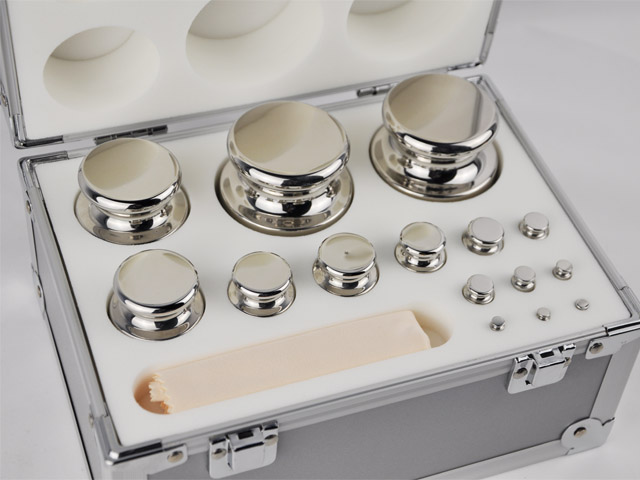
The scientific supporting configuration of the lab stainless steel weight kit further enhances its practicability and standardization in actual laboratory operation, making the whole set of weights form a complete and independent working system that integrates use, storage, and protection. A complete weight kit is usually equipped with a specially matched integrated storage box, which is designed with fixed embedded grooves corresponding to the specifications and sizes of each weight inside. Each weight can be placed in a fixed position accurately and stably, avoiding collision, friction, extrusion, or mixing and confusion between different weights during storage, handling, and transfer. The storage box has good sealing and shockproof performance, which can effectively isolate external dust, moisture, and other pollutants, prevent the weights from being affected by the external environment during long-term storage, and also avoid accidental damage caused by external impact and vibration during handling and movement. In addition, the kit is usually equipped with professional auxiliary handling tools suitable for precision weight operation, which helps operators complete the picking and placing work of each weight in a standardized manner. Direct hand contact with the weight surface is avoided in the whole operation process, effectively preventing the transfer of hand sweat, oil stains, and fine impurities on the skin to the weight surface. These invisible pollutants may not only cause surface contamination of the weights but also gradually affect the surface flatness and mass stability of the weights over time, bringing potential hidden dangers to the accuracy of weighing calibration. The matching of these auxiliary tools standardizes the operation process of weight use, reduces human-induced adverse effects, and helps maintain the long-term good working state of the entire weight kit.
The application scenarios of the lab stainless steel weight kit cover almost all laboratory work links that require accurate mass reference and weighing instrument calibration, playing an irreplaceable basic supporting role in different professional fields. In scientific research laboratories engaged in chemical analysis, biological research, and material science experiments, all experimental work involving raw material weighing, sample preparation, and product component testing needs to rely on various precision electronic balances and analytical balances. These weighing instruments will inevitably produce slight performance attenuation and indication deviation after long-term continuous use and frequent vibration and environmental changes. Regular calibration and debugging with stainless steel weight kits can correct the indication errors of weighing instruments in time, ensuring that the weighing data of experimental samples and raw materials are true and reliable, and avoiding experimental failure or data distortion caused by inaccurate weighing. In pharmaceutical testing and food inspection laboratories, which have high requirements for data repeatability and result stability, weight kits are used for daily routine inspection and regular calibration of special weighing equipment, ensuring that the detection data of product ingredient content, sample weight ratio, and quality indicators meet consistent testing standards, providing reliable data support for product safety and quality assessment.
In teaching laboratories for vocational education and university professional teaching, lab stainless steel weight kits are important practical teaching tools for students to learn metrology basic knowledge and master weighing operation skills. Through hands-on operation of weight calibration and weighing debugging, students can intuitively understand the basic principles of mass measurement, master standardized weighing operation specifications, and cultivate good experimental operation habits and rigorous experimental thinking. This practical teaching experience enables students to accurately grasp the importance of accurate measurement in professional work, laying a solid foundation for their subsequent professional practice and technical work. In industrial production quality control laboratories and commodity inspection and testing institutions, weight kits are used for regular performance testing of various weighing and measuring equipment on the production line, as well as random sampling inspection of product net weight and specification compliance. Stable and accurate weight reference ensures that the quality inspection work of industrial products is carried out in an orderly manner, maintaining the standardized and orderly development of production and inspection work. No matter in which application scenario, the stable performance and convenient use of the stainless steel weight kit can well adapt to the actual work needs, and continuously provide reliable mass reference standards for laboratory daily work.
Standardized daily maintenance and scientific storage management are key links to maintain the long-term performance stability and extend the service life of the lab stainless steel weight kit, and also important daily management work that every laboratory staff needs to pay attention to and implement in place. In the daily use process, all operators need to follow unified operating specifications, use supporting auxiliary tools to pick and place weights gently and steadily, avoid throwing, dropping, rubbing, and colliding weights at will, and prevent surface scratches, structural deformation, and mass changes caused by external force damage. After each use, each weight needs to be inspected briefly to check whether there is surface contamination, dust adhesion, or accidental damage. For slightly contaminated weight surfaces, soft and clean professional wiping tools should be used for gentle cleaning and dedusting. It is necessary to wait for the weight surface to be completely dry and free of any residual stains before putting it back into the fixed position of the storage box in order. Weights should never be left exposed in the laboratory environment for a long time after use, so as to prevent long-term contact with air moisture, experimental volatile gas, and dust from affecting the surface state and performance of the weights.
In terms of daily storage management, the storage box of the weight kit should be placed in a dry, clean, constant temperature, and well-ventilated laboratory storage area, avoiding placement in environments with high humidity, high temperature, strong corrosive gas, and direct sunlight. Extreme environmental conditions will accelerate the aging and surface corrosion of the weights and storage box, affecting the overall service life and performance stability. The storage position should also avoid frequent personnel passage and mechanical equipment vibration, to prevent the weight kit from being vibrated and squeezed for a long time. Laboratories can formulate regular inspection and maintenance plans according to the frequency of use of the weight kit, regularly check the surface state and placement integrity of each weight, and confirm that there is no obvious abnormality in the overall use state. For weight kits that are frequently used for a long time, regular manual sorting and surface maintenance should be done to keep the whole set of weights in the best working condition at all times. Good maintenance and storage management can not only maintain the stable accuracy of the weight kit for a long time and ensure the reliability of each calibration and weighing work but also reduce the frequency of replacement and maintenance, making the use of laboratory metrology tools more economical and efficient.
With the continuous progress of laboratory technology and the continuous improvement of metrology work requirements in various industries, the importance of basic weighing reference tools represented by lab stainless steel weight kits in laboratory work has become increasingly prominent. All experimental research, testing and inspection, quality control, and teaching and training work in the laboratory are inseparable from accurate mass measurement data, and all accurate measurement data must rely on stable and reliable weighing reference standards as the premise and foundation. A well-produced and well-maintained stainless steel weight kit can provide continuous and stable technical support for laboratory metrology work, ensure the consistency, accuracy, and repeatability of all weighing data, and effectively avoid various work errors and result deviations caused by inaccurate weighing references. In the long-term operation and development of the laboratory, attaching importance to the selection, standardized use, and scientific maintenance of the stainless steel weight kit is not only a basic requirement for standardizing laboratory management work but also an important guarantee for improving the overall work quality and technical level of the laboratory.
Every seemingly simple stainless steel weight in the kit carries the basic requirements of precision and rigor in laboratory work. Every standardized use and careful maintenance is an important part of maintaining the accuracy of metrology work. In the future laboratory daily operation and professional work development, the lab stainless steel weight kit will continue to play its irreplaceable basic role, always guarding the accurate bottom line of laboratory weighing work, and providing solid and reliable basic support for the smooth development of scientific research experiments, product testing, talent training, and industrial quality control in various fields.In every laboratory environment where precise mass measurement serves as the core of daily experimental operations, quality inspection procedures, and routine metrology management, reliable weighing reference tools stand as an indispensable basic guarantee for all follow-up work. A lab stainless steel weight kit has long been recognized as one of the most fundamental and widely used auxiliary tools in modern laboratories of all types, supporting consistent and stable weighing calibration, instrument testing, and experimental data verification across countless professional scenarios. Unlike ordinary weighing accessories that only meet simple rough weighing needs, this kind of weight kit is specially designed and manufactured to adapt to the long-term stable use environment inside laboratories, focusing on balancing excellent material performance, stable structural design, convenient daily operation, and long service life, creating a solid and dependable reference standard for all work links that rely on accurate mass data. Whether in scientific research laboratories engaged in basic academic exploration, testing laboratories responsible for product component detection and quality screening, teaching laboratories undertaking professional skill training and metrology knowledge teaching, or industrial quality control departments conducting regular production equipment debugging and product sampling inspection, the practical value of a well-made stainless steel weight kit runs through every key step of weighing work, ensuring that all measured data maintain good consistency and credibility over long-term repeated use.
The core advantages of a lab stainless steel weight kit first originate from the inherent excellent performance of the selected stainless steel material, which lays a solid foundation for the overall stability and durability of the entire set of weights. The stainless steel used for manufacturing laboratory dedicated weight kits is carefully selected to have fine internal organizational structure, uniform material density, and stable physical and chemical properties, avoiding the common defects of ordinary metal materials such as easy oxidation, surface corrosion, density deviation, and obvious thermal expansion and contraction changes. In the daily working environment of laboratories, there are often various subtle influencing factors that may damage weighing tools, including temperature and humidity fluctuations caused by air conditioning and ventilation systems, trace chemical volatile substances generated by experimental reagents, slight dust and particle deposition in the air, and frequent manual handling and placement operations by operators. The stainless steel material can effectively resist these adverse external interferences, maintaining the integrity and flatness of the weight surface for a long time without rusting, discoloration, or material falling off. Even after years of frequent use and long-term placement in conventional laboratory storage environments, the basic physical properties and surface state of each weight in the kit will not undergo obvious changes, and the mass state can always remain in a stable range. This inherent material stability is particularly critical for metrology work, because any tiny change in the surface or internal structure of the weight may bring subtle deviations to the weighing reference effect, and long-term accumulation of such deviations will directly affect the accuracy of experimental results and testing data, interfering with the normal progress of laboratory research and quality judgment work.
In addition to the superior material foundation, the meticulous and standardized manufacturing and processing technology adopted for each component of the lab stainless steel weight kit further optimizes its practical performance and use experience, making every weight in the kit meet the rigorous use requirements of laboratory precision weighing scenarios. Each single weight included in the complete kit undergoes fine machining and surface polishing treatment, with smooth and burr-free edges and regular and symmetrical overall shape structure. The surface polishing process not only gives the weight a neat and uniform appearance, but more importantly, effectively reduces the surface roughness, minimizing the contact area between the weight and external air, dust, and moisture, thereby reducing the possibility of surface adhesion of impurities and chemical residues. At the same time, the precise machining process ensures that the center of gravity of each weight is stable and the overall structure is compact, avoiding tilting, shaking, or unstable placement during placement on weighing instruments. The internal structure of the weight is solid and uniform without internal pores, hollow areas, or density unevenness, which ensures that the mass distribution of each weight is uniform and the stress state remains stable during long-term use, and no mass deviation occurs due to internal structural changes. The matching design between different weights in the kit is also very reasonable, with specifications covering multiple commonly used mass ranges required for laboratory daily calibration and testing work. The collocation of different specifications can meet the combined use needs of various small-range fine calibration and large-range conventional detection, allowing laboratory staff to flexibly select appropriate weights according to the actual model, measuring range, and use requirements of different weighing instruments, completing various calibration and testing operations efficiently and conveniently.
The scientific supporting configuration of the lab stainless steel weight kit further enhances its practicability and standardization in actual laboratory operation, making the whole set of weights form a complete and independent working system that integrates use, storage, and protection. A complete weight kit is usually equipped with a specially matched integrated storage box, which is designed with fixed embedded grooves corresponding to the specifications and sizes of each weight inside. Each weight can be placed in a fixed position accurately and stably, avoiding collision, friction, extrusion, or mixing and confusion between different weights during storage, handling, and transfer. The storage box has good sealing and shockproof performance, which can effectively isolate external dust, moisture, and other pollutants, prevent the weights from being affected by the external environment during long-term storage, and also avoid accidental damage caused by external impact and vibration during handling and movement. In addition, the kit is usually equipped with professional auxiliary handling tools suitable for precision weight operation, which helps operators complete the picking and placing work of each weight in a standardized manner. Direct hand contact with the weight surface is avoided in the whole operation process, effectively preventing the transfer of hand sweat, oil stains, and fine impurities on the skin to the weight surface. These invisible pollutants may not only cause surface contamination of the weights but also gradually affect the surface flatness and mass stability of the weights over time, bringing potential hidden dangers to the accuracy of weighing calibration. The matching of these auxiliary tools standardizes the operation process of weight use, reduces human-induced adverse effects, and helps maintain the long-term good working state of the entire weight kit.
The application scenarios of the lab stainless steel weight kit cover almost all laboratory work links that require accurate mass reference and weighing instrument calibration, playing an irreplaceable basic supporting role in different professional fields. In scientific research laboratories engaged in chemical analysis, biological research, and material science experiments, all experimental work involving raw material weighing, sample preparation, and product component testing needs to rely on various precision electronic balances and analytical balances. These weighing instruments will inevitably produce slight performance attenuation and indication deviation after long-term continuous use and frequent vibration and environmental changes. Regular calibration and debugging with stainless steel weight kits can correct the indication errors of weighing instruments in time, ensuring that the weighing data of experimental samples and raw materials are true and reliable, and avoiding experimental failure or data distortion caused by inaccurate weighing. In pharmaceutical testing and food inspection laboratories, which have high requirements for data repeatability and result stability, weight kits are used for daily routine inspection and regular calibration of special weighing equipment, ensuring that the detection data of product ingredient content, sample weight ratio, and quality indicators meet consistent testing standards, providing reliable data support for product safety and quality assessment.
In teaching laboratories for vocational education and university professional teaching, lab stainless steel weight kits are important practical teaching tools for students to learn metrology basic knowledge and master weighing operation skills. Through hands-on operation of weight calibration and weighing debugging, students can intuitively understand the basic principles of mass measurement, master standardized weighing operation specifications, and cultivate good experimental operation habits and rigorous experimental thinking. This practical teaching experience enables students to accurately grasp the importance of accurate measurement in professional work, laying a solid foundation for their subsequent professional practice and technical work. In industrial production quality control laboratories and commodity inspection and testing institutions, weight kits are used for regular performance testing of various weighing and measuring equipment on the production line, as well as random sampling inspection of product net weight and specification compliance. Stable and accurate weight reference ensures that the quality inspection work of industrial products is carried out in an orderly manner, maintaining the standardized and orderly development of production and inspection work. No matter in which application scenario, the stable performance and convenient use of the stainless steel weight kit can well adapt to the actual work needs, and continuously provide reliable mass reference standards for laboratory daily work.
Standardized daily maintenance and scientific storage management are key links to maintain the long-term performance stability and extend the service life of the lab stainless steel weight kit, and also important daily management work that every laboratory staff needs to pay attention to and implement in place. In the daily use process, all operators need to follow unified operating specifications, use supporting auxiliary tools to pick and place weights gently and steadily, avoid throwing, dropping, rubbing, and colliding weights at will, and prevent surface scratches, structural deformation, and mass changes caused by external force damage. After each use, each weight needs to be inspected briefly to check whether there is surface contamination, dust adhesion, or accidental damage. For slightly contaminated weight surfaces, soft and clean professional wiping tools should be used for gentle cleaning and dedusting. It is necessary to wait for the weight surface to be completely dry and free of any residual stains before putting it back into the fixed position of the storage box in order. Weights should never be left exposed in the laboratory environment for a long time after use, so as to prevent long-term contact with air moisture, experimental volatile gas, and dust from affecting the surface state and performance of the weights.
In terms of daily storage management, the storage box of the weight kit should be placed in a dry, clean, constant temperature, and well-ventilated laboratory storage area, avoiding placement in environments with high humidity, high temperature, strong corrosive gas, and direct sunlight. Extreme environmental conditions will accelerate the aging and surface corrosion of the weights and storage box, affecting the overall service life and performance stability. The storage position should also avoid frequent personnel passage and mechanical equipment vibration, to prevent the weight kit from being vibrated and squeezed for a long time. Laboratories can formulate regular inspection and maintenance plans according to the frequency of use of the weight kit, regularly check the surface state and placement integrity of each weight, and confirm that there is no obvious abnormality in the overall use state. For weight kits that are frequently used for a long time, regular manual sorting and surface maintenance should be done to keep the whole set of weights in the best working condition at all times. Good maintenance and storage management can not only maintain the stable accuracy of the weight kit for a long time and ensure the reliability of each calibration and weighing work but also reduce the frequency of replacement and maintenance, making the use of laboratory metrology tools more economical and efficient.
With the continuous progress of laboratory technology and the continuous improvement of metrology work requirements in various industries, the importance of basic weighing reference tools represented by lab stainless steel weight kits in laboratory work has become increasingly prominent. All experimental research, testing and inspection, quality control, and teaching and training work in the laboratory are inseparable from accurate mass measurement data, and all accurate measurement data must rely on stable and reliable weighing reference standards as the premise and foundation. A well-produced and well-maintained stainless steel weight kit can provide continuous and stable technical support for laboratory metrology work, ensure the consistency, accuracy, and repeatability of all weighing data, and effectively avoid various work errors and result deviations caused by inaccurate weighing references. In the long-term operation and development of the laboratory, attaching importance to the selection, standardized use, and scientific maintenance of the stainless steel weight kit is not only a basic requirement for standardizing laboratory management work but also an important guarantee for improving the overall work quality and technical level of the laboratory.
Every seemingly simple stainless steel weight in the kit carries the basic requirements of precision and rigor in laboratory work. Every standardized use and careful maintenance is an important part of maintaining the accuracy of metrology work. In the future laboratory daily operation and professional work development, the lab stainless steel weight kit will continue to play its irreplaceable basic role, always guarding the accurate bottom line of laboratory weighing work, and providing solid and reliable basic support for the smooth development of scientific research experiments, product testing, talent training, and industrial quality control in various fields.
Lab Stainless Steel Weight Kit
https://www.veidtweighing.com/ssweight/StainlessSteelWeight
Post Date: May 4, 2026
https://www.supplier-manufacturer.com/stainless-steel-weight/lab-stainless-steel-weight-kit.html

![Digital Scale Calibration Weight]()
Digital Scale Calibration Weight
In all fields that rely on precise mass measurement, digital scale calibration weights serve as fundamental auxiliary tools that underpin consistent and reliable weighing …![20kg M1 Heavy Duty Calibration Weight Weighbridge Use]()
20kg M1 Heavy Duty Calibration Weight Weighbridge Use
Weighbridges serve as core weighing equipment in industrial production, logistics transportation, material trading, and resource statistical accounting, undertaking the cr…![Laboratory Weight Wholesale]()
Laboratory Weight Wholesale
Laboratory weights stand as foundational essential tools across all sectors that rely on precise mass measurement, forming the core guarantee for the normal operation of l…![Custom Calibration Weight]()
Custom Calibration Weight
In the field of precision measurement, consistent and reliable weighing results form the foundation of industrial production, laboratory research, quality inspection and d…![Standard Weight Vender In China]()
Standard Weight Vender In China
The standard weight industry in China stands as a fundamental supporting segment within the broader weighing and measurement manufacturing sector, playing an indispensable…