Stainless Steel Corrosion Proof Calibration Weight
In the field of precision measurement and industrial weighing, maintaining consistent and accurate mass reference standards stands as a fundamental requirement for reliable operational outcomes. Calibration weights serve as core reference tools to verify, adjust, and standardize the accuracy of various weighing equipment, ranging from laboratory analytical balances to industrial platform scales. Among diverse types of calibration weights available, stainless steel corrosion proof calibration weights have gained widespread recognition and extensive application due to their stable physical properties, excellent environmental adaptability, and long service lifespan. Unlike ordinary metal weights that are prone to rust, oxidation, and structural degradation under complex working conditions, corrosion proof stainless steel calibration weights are engineered to resist external environmental interference, ensuring sustained mass stability and measurement repeatability over prolonged use.
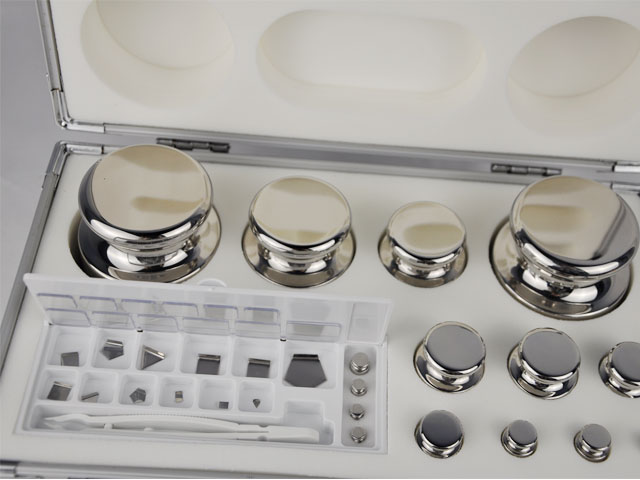
The superior performance of stainless steel corrosion proof calibration weights originates from the unique material composition and specialized processing techniques applied in production. These calibration weights are primarily fabricated from high-purity stainless steel alloys with optimized proportions of chromium, nickel, and other trace elements. The inclusion of chromium enables the formation of a dense, adherent passive oxide film on the material surface, which acts as a protective barrier to isolate the internal metal matrix from oxygen, moisture, acidic and alkaline substances in the surrounding environment. This natural passivation effect effectively inhibits electrochemical corrosion and surface oxidation, the two main factors that cause mass deviation and structural damage to traditional carbon steel weights. Meanwhile, the balanced ratio of alloy elements endows the material with uniform internal structure, low porosity, and stable density, laying a solid foundation for consistent mass performance.
Beyond basic corrosion resistance, the stainless steel materials selected for these calibration weights feature low magnetic susceptibility and minimal residual magnetism, a critical attribute for precision weighing scenarios. In high-precision measurement environments, magnetic interference can cause subtle adsorption effects between weights and weighing equipment, leading to unstable reading data and cumulative measurement errors. The refined alloy formula of corrosion proof stainless steel avoids excessive magnetic particle precipitation during processing and use, maintaining non-magnetic or weakly magnetic characteristics permanently. This property ensures that each weighing operation remains free from magnetic interference, preserving the accuracy of calibration results whether used in static laboratory environments or dynamic industrial production lines.
The manufacturing process of stainless steel corrosion proof calibration weights involves multiple refined processing steps to enhance both surface quality and overall structural stability. After integral forging and precision cutting to form the basic outline, each weight undergoes fine grinding, polishing, and surface passivation treatment. The high-precision polishing process eliminates surface burrs, pits, and microscopic gaps, creating a smooth and compact surface texture. A smooth surface greatly reduces the adhesion of dust, moisture, chemical residues, and other contaminants, preventing the formation of corrosive micro-zones on the weight surface. The subsequent professional passivation treatment further optimizes the surface protective film, improving its toughness and wear resistance, so the protective layer will not easily fall off or fail during daily handling, cleaning, and long-term storage.
Structural design details also contribute significantly to the practical performance of corrosion proof stainless steel calibration weights. Most products adopt integrated molding technology, avoiding splicing gaps and structural defects that exist in assembled weights. The integral structure eliminates hidden corners where moisture and corrosive substances may accumulate, reducing the risk of local corrosion and mass change. The overall shape is designed with ergonomic and practical considerations, featuring smooth edges and standardized dimensions that facilitate stable placement on weighing equipment and convenient manual handling with auxiliary tools. The uniform wall thickness and internal density distribution ensure that the center of gravity remains stable during use, preventing tilting and displacement that could affect calibration accuracy.
These calibration weights exhibit outstanding adaptability to diverse working environments, far exceeding the tolerance range of ordinary metal calibration tools. In humid environments such as chemical laboratories, pharmaceutical production workshops, and coastal industrial sites, high air humidity and salt mist can rapidly erode common carbon steel weights, causing surface rust and gradual mass loss. Stainless steel corrosion proof weights can stably resist humid and salt-fog conditions without surface oxidation or quality attenuation. In mildly acidic and alkaline working environments, such as food processing, electroplating workshops, and environmental monitoring laboratories, the passive film on the stainless steel surface can effectively buffer chemical erosion, maintaining complete surface structure and stable mass parameters for a long time.
Temperature adaptability is another notable advantage of stainless steel corrosion proof calibration weights. Metal materials naturally expand and contract with temperature changes, which may cause subtle mass deviation and structural deformation if the thermal expansion coefficient is unstable. The optimized stainless steel alloy used for these weights has a low and uniform thermal expansion coefficient, enabling it to maintain stable physical dimensions and mass performance within a wide temperature range. Whether in low-temperature storage environments or high-temperature industrial operation spaces, the material structure will not undergo obvious deformation or performance attenuation, ensuring consistent calibration accuracy in variable temperature conditions. This temperature stability makes the weights suitable for long-term use in multi-scenario and variable-environment working systems.
In laboratory measurement applications, stainless steel corrosion proof calibration weights are essential tools for daily instrument verification and experimental data calibration. Precision analytical balances, electronic scales, and micro-weighing instruments require regular calibration to eliminate systematic errors caused by long-term operation, component aging, and environmental changes. The stable mass and high surface cleanliness of these stainless steel weights ensure that each calibration operation can obtain accurate and repeatable reference data, providing reliable support for scientific experiments, ingredient proportioning, and sample detection. The corrosion resistant property also allows the weights to be stored in laboratory environments with various chemical reagents and volatile substances without performance degradation, reducing the frequency of tool replacement and improving experimental continuity.
Industrial production and quality control fields also rely heavily on the performance of stainless steel corrosion proof calibration weights. In manufacturing industries such as precision machinery, electronic components, and hardware processing, product quality inspection requires accurate weighing detection of raw materials, semi-finished products, and finished products. Regular calibration of production weighing equipment with corrosion proof stainless steel weights ensures the consistency of product weight standards, effectively avoiding product quality fluctuations caused by inaccurate weighing data. In batch production processes, the long-term stability of the weights reduces the need for frequent accuracy checks and replacements, improving production efficiency and reducing operational costs for enterprises.
The food and beverage industry has particularly strict requirements for weighing tool hygiene and stability, making stainless steel corrosion proof calibration weights highly applicable in this field. The smooth and non-porous surface of the weights does not retain food residues, grease, or microbial contaminants, enabling thorough cleaning and disinfection. The corrosion resistant material will not react with food ingredients, cleaning agents, or disinfectants, avoiding surface deterioration, discoloration, or mass change caused by chemical reactions. This characteristic meets the hygiene and safety standards of food production environments, ensuring accurate weighing of raw material proportioning and finished product detection while maintaining clean and pollution-free working conditions.
Daily maintenance and storage methods directly affect the service life and performance stability of stainless steel corrosion proof calibration weights, although the material itself has strong anti-corrosion capability. In routine use, it is advisable to avoid direct contact with hands, as sweat, oil, and salt substances on the skin may leave traces on the weight surface and cause slow chemical corrosion over time. Professional auxiliary tools such as tweezers and gloves are recommended for handling to keep the weight surface clean and intact. After each use, the weights should be wiped gently with a clean, soft, dry cloth to remove surface dust and residual contaminants; for slight stains, a neutral cleaning solution can be used for cleaning, followed by thorough drying to avoid long-term moisture retention.
For long-term storage, stainless steel corrosion proof calibration weights need to be placed in a dry, clean, and well-ventilated storage space, away from corrosive gases, liquid reagents, and high-humidity environments. It is necessary to avoid stacking heavy objects on the weights to prevent surface extrusion deformation and structural damage. Regular inspection during storage is also essential, including checking the surface integrity, cleaning residual dirt, and verifying mass stability at regular intervals. Standardized maintenance habits can further extend the service life of the weights and maintain their long-term calibration accuracy, giving full play to the material’s inherent corrosion resistance and stability advantages.
Compared with traditional cast iron, ordinary carbon steel, and coated calibration weights, stainless steel corrosion proof products show comprehensive advantages in durability and stability. Cast iron weights are prone to brittle fracture and rapid rusting in humid environments, while coated weights may experience peeling and failure of the protective layer after long-term use or frequent friction, leading to sudden mass deviation. In contrast, the anti-corrosion performance of stainless steel corrosion proof weights is integrated into the material itself, not dependent on external coating protection. Even with long-term friction and regular cleaning, the internal alloy structure and surface passive film can maintain stable performance, avoiding sudden performance failure and ensuring long-term measurement reliability.
In addition to physical stability and corrosion resistance, the dimensional uniformity and surface finish of these calibration weights also optimize the calibration operation experience. The precisely polished surface reduces the adsorption of air dust and water vapor, minimizing the micro-mass error caused by surface adsorption. The standardized dimensional tolerance ensures that each weight can fit stably with various types of weighing equipment, avoiding calibration errors caused by placement deviation. The uniform material hardness also prevents surface scratches and wear during daily use, maintaining the integrity of the surface protective layer and ensuring continuous and stable anti-corrosion ability.
With the continuous improvement of industrial measurement accuracy standards and the increasing complexity of application environments, the demand for high-stability and long-life calibration tools is constantly rising. Stainless steel corrosion proof calibration weights have become a mainstream choice in the precision measurement industry by virtue of their reliable corrosion resistance, stable mass performance, wide environmental adaptability, and low maintenance cost. They provide solid technical support for standardized production, accurate experimental research, and strict quality inspection in various industries. As material processing technology continues to advance, the performance of stainless steel corrosion proof calibration weights will be further optimized, adapting to higher-precision measurement scenarios and more complex industrial environments, and continuously supporting the stable operation of various precision weighing systems.
Stainless Steel Corrosion Proof Calibration Weight
https://www.veidtweighing.com/ssweight/StainlessSteelWeight
Post Date: May 28, 2026

![Precision Standard Weight]()
Precision Standard Weight
In every corner of modern production, scientific research, commercial circulation, and daily quality supervision, the consistency and credibility of numerical measurement …![Industrial Test Weight]()
Industrial Test Weight
In the complex and interconnected landscape of modern industrial production, material circulation, and mechanical operation, accurate weight measurement stands as one of t…![Stainless Steel Calibration Weight]()
Stainless Steel Calibration Weight
In every field that relies on consistent and trustworthy mass measurement, the role of stainless steel calibration weights remains irreplaceable, serving as the fundamenta…![Class F Calibration Weight]()
Class F Calibration Weight
In the intricate and interconnected framework of modern industrial production, scientific research exploration, and daily commercial transaction operations, accurate mass …![Calibration Masses]()
Calibration Masses
In every corner of modern industrial production, scientific research experimentation, daily commodity circulation, and technological innovation research and development, t…