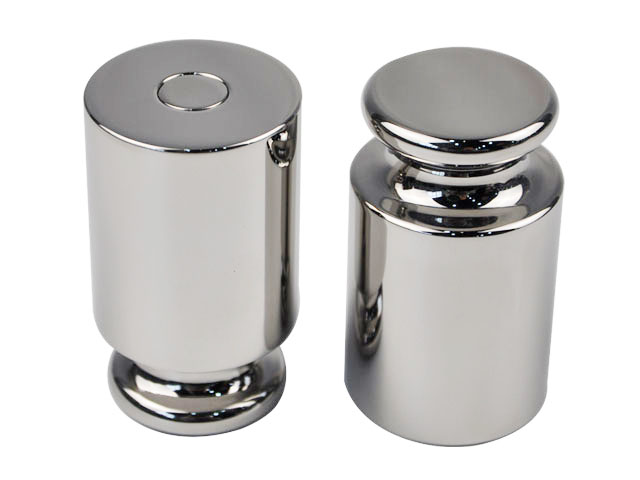
Stainless Steel Calibration Weight For Pharmacy Laboratory
In pharmaceutical laboratory operations, accurate weight measurement serves as the fundamental foundation for every experimental procedure, drug formulation test, quality inspection, and research and development activity. Minor deviations in weighing data can lead to inconsistent drug component ratios, unreliable experimental results, and even potential risks to drug safety and batch stability. Among all auxiliary tools for weighing instrument verification, stainless steel calibration weights stand out as essential laboratory accessories, providing stable and reliable reference standards for the daily calibration and routine verification of various analytical balances and precision weighing equipment in pharmaceutical environments. Their unique material properties, stable physical performance, and strong adaptability to laboratory conditions make them highly suitable for the strict operational requirements of pharmaceutical laboratories, where precision, cleanliness, and long-term consistency are always prioritized.
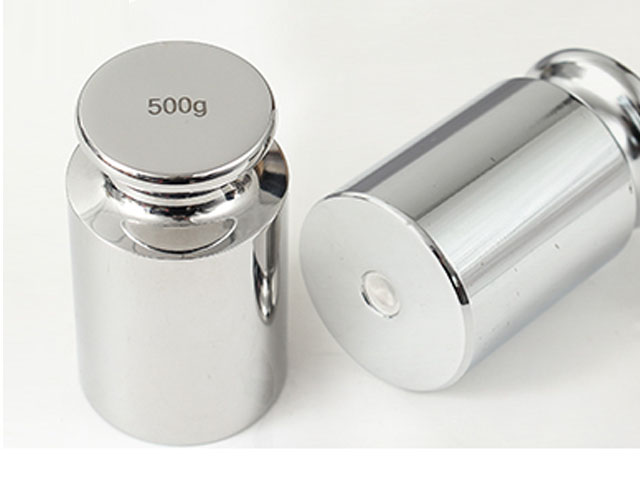
The material characteristics of stainless steel lay a solid foundation for the reliable performance of calibration weights used in pharmaceutical laboratories. Unlike traditional metal materials that are prone to oxidation, corrosion, and surface wear, high-quality stainless steel used for calibration weights features uniform density, stable physical properties, and low magnetic susceptibility, all of which are critical for precision weighing reference. The density of professional-grade stainless steel for calibration use remains within a stable range, effectively reducing measurement errors caused by uneven material density during long-term use. In pharmaceutical laboratories, the working environment often involves contact with trace chemical reagents, humid air, and frequent manual handling, and stainless steel’s natural resistance to corrosion and oxidation prevents surface rust, peeling, or material deterioration that could alter the actual mass of the weights. This stability ensures that each calibration operation can deliver consistent reference data, avoiding systematic errors that may compromise the accuracy of pharmaceutical testing and formulation work.
Cleanliness is another vital advantage of stainless steel calibration weights that aligns perfectly with pharmaceutical laboratory standards. Pharmaceutical laboratories maintain strict hygiene requirements to avoid cross-contamination affecting drug purity and experimental accuracy. Stainless steel surfaces are smooth and compact, with no obvious pores or gaps that can accumulate dust, fine particles, or residual contaminants. Daily cleaning and disinfection procedures, which are routinely implemented in pharmaceutical laboratory management, can be safely applied to these weights without causing surface damage or mass changes. Simple wiping with neutral cleaning solutions and dry dust removal can keep the weights in a clean state, effectively preventing foreign attachments from interfering with weighing calibration results. This easy-to-maintain cleanliness ensures that the calibration process complies with the sterile and dust-free operational norms of pharmaceutical testing, which is indispensable for laboratories engaged in pharmaceutical ingredient analysis, dosage form development, and finished product quality testing.
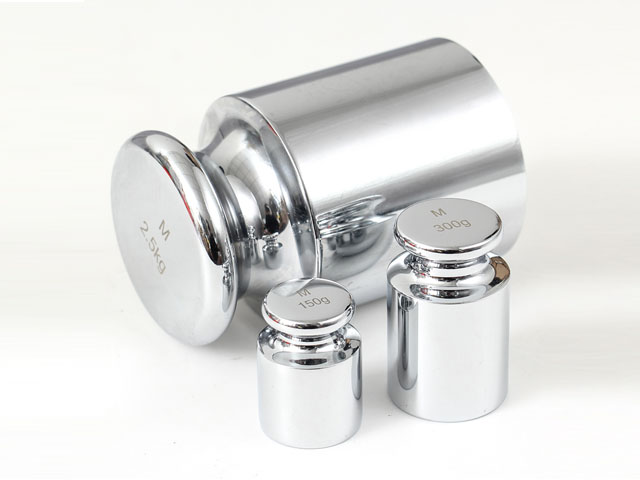
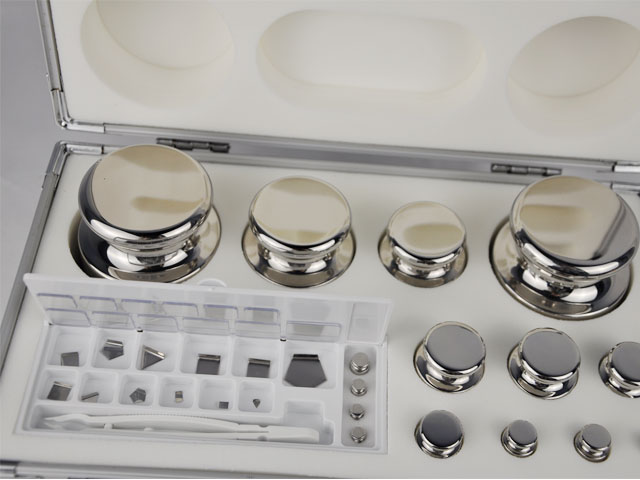
The structural design and processing technology of stainless steel calibration weights are tailored to meet the refined operational needs of pharmaceutical laboratories. These weights adopt regular geometric structures with smooth and polished surfaces, eliminating burrs, depressions, or raised areas that may affect weighing stability. The standardized structural design ensures stable placement on weighing pans during calibration, avoiding tilting or unstable contact that could cause data fluctuations. Meanwhile, the overall processing precision controls surface roughness within a reasonable range, minimizing the adhesion of tiny air particles and reducing the impact of air buoyancy and environmental airflow on calibration accuracy. For pharmaceutical laboratories that require frequent calibration of micro-analytical balances and high-precision analytical balances, this refined processing effectively improves the consistency and repeatability of calibration results, ensuring that the weighing instruments used for precise drug ratio calculation and trace component detection maintain stable working performance for a long time.
In daily laboratory management, the application of stainless steel calibration weights runs through the entire life cycle of weighing instrument use. Newly installed weighing equipment in pharmaceutical laboratories needs to undergo comprehensive calibration before formal use to confirm that its measurement accuracy meets experimental and testing standards. During routine operation, regular calibration with standard weights is required to eliminate gradual measurement deviations caused by long-term equipment operation, vibration, and environmental changes. In addition, after equipment maintenance, position movement, or exposure to extreme environmental conditions, re-calibration using stainless steel calibration weights is necessary to verify the recovery of instrument performance. These daily calibration and verification works rely on the stable mass output of stainless steel weights, which provide unified reference benchmarks for all weighing operations in the laboratory, ensuring the comparability and credibility of experimental data across different time periods and operational batches.
The long-term service stability of stainless steel calibration weights reduces operational risks and management costs for pharmaceutical laboratories. In continuous laboratory use, many metal calibration tools are prone to mass drift due to environmental erosion, surface wear from frequent handling, and material aging, which requires regular replacement and repeated verification. In contrast, stainless steel materials have excellent mechanical stability and wear resistance, resisting subtle mass changes caused by daily friction, long-term placement, and conventional environmental changes. This long-term stability enables the weights to maintain consistent measurement reference performance for an extended period, reducing the frequency of tool replacement and avoiding experimental errors and work delays caused by invalid calibration tools. For pharmaceutical laboratories that pursue standardized and continuous quality control, this durable and stable performance helps maintain the continuity of experimental data and the stability of drug quality control systems.
Environmental adaptability is a key factor that makes stainless steel calibration weights universally applicable in diverse pharmaceutical laboratory scenarios. Pharmaceutical laboratories include multiple functional areas such as conventional testing rooms, constant temperature and humidity laboratories, and drug stability testing laboratories, with varying temperature and humidity conditions. Stainless steel materials can adapt to conventional laboratory temperature and humidity fluctuations, without obvious mass expansion or contraction under normal environmental changes, ensuring that calibration accuracy will not be affected by daily environmental adjustments. In low-humidity environments, the material does not generate static electricity easily, avoiding the adsorption of fine dust particles that may affect weighing precision; in relatively humid environments, it effectively resists moisture corrosion and maintains surface integrity and mass stability. This wide environmental adaptability allows the weights to perform reliable calibration tasks in all functional areas of the pharmaceutical laboratory, covering various experimental and testing scenarios from raw material inspection to finished product verification.
Standardized operation and scientific maintenance can further maximize the service life and calibration accuracy of stainless steel calibration weights in pharmaceutical laboratory applications. During use, operators need to follow standardized operating specifications, avoiding direct hand contact with the weight surface to prevent sweat, grease, and skin residues from causing surface contamination and subtle mass changes. Professional clamping tools are recommended for handling to reduce surface friction and wear. After each use, the weights should be cleaned gently and placed in a dry, dust-free storage space with a stable placement environment to avoid collision, extrusion, and long-term exposure to flowing air or direct sunlight. Regular manual inspection is also essential, including checking for surface scratches, contamination, or abnormal changes in appearance, to ensure that the weights are always in a qualified working state. These simple and standardized maintenance measures are highly compatible with the refined management system of pharmaceutical laboratories, helping to maintain the long-term accuracy and stability of calibration tools.
The role of stainless steel calibration weights in pharmaceutical quality control systems cannot be overlooked. Pharmaceutical product quality is closely related to people’s health, and every link from raw material procurement, ingredient proportioning, experimental research to finished product testing requires accurate weighing data as support. Any error in weighing calibration may lead to inaccurate drug content, unqualified product quality, or failure of experimental research data. Stainless steel calibration weights provide a reliable measurement foundation for the entire weighing link, ensuring that all precision weighing instruments in the laboratory can maintain accurate measurement status, thereby guaranteeing the scientificity of experimental research, the rationality of drug formula design, and the compliance of product quality testing. In the standardized operation of modern pharmaceutical laboratories, these calibration weights have become an indispensable basic tool for realizing precise measurement and strict quality control.
Compared with calibration weights made of other materials, stainless steel products show more comprehensive advantages in meeting pharmaceutical laboratory requirements. Some traditional calibration materials are limited by poor corrosion resistance, prone to rust and mass loss in humid and multi-reagent laboratory environments, while others have unstable density and obvious mass changes with environmental fluctuations. Stainless steel integrates corrosion resistance, wear resistance, stable density, low magnetism, and easy cleaning, perfectly matching the high-standard requirements of pharmaceutical laboratories for tool precision, cleanliness, and stability. It avoids the frequent calibration corrections and tool replacements caused by material defects, improves the efficiency of laboratory measurement work, and reduces the uncertainty factor in pharmaceutical experimental data.
In the continuous development of modern pharmaceutical laboratory technology, the precision requirements for measurement work are constantly improving, and the importance of high-stability calibration tools is becoming increasingly prominent. Stainless steel calibration weights, with their superior material performance and reliable working stability, provide solid technical support for the standardized operation, data accuracy, and quality control optimization of pharmaceutical laboratories. Whether in daily routine calibration, special experimental verification, or long-term laboratory quality system maintenance, these weights maintain stable and consistent working performance, helping pharmaceutical laboratories establish a rigorous and accurate measurement system, and laying a reliable foundation for drug research and development, production quality control, and pharmaceutical safety guarantee.
Stainless Steel Calibration Weight For Pharmacy Laboratory
https://www.veidtweighing.com/ssweight/StainlessSteelWeight
Post Date: May 28, 2026

![Standard Weights]()
Standard Weights
Body weight is one of the most intuitive and fundamental indicators that reflect the physical condition of the human body, and the concept of standard weight has long been…![Cast Iron Weight For Industrial Use]()
Cast Iron Weight For Industrial Use
Within the extensive framework of modern industrial production and mechanical operation, auxiliary functional components that maintain equipment stability, balance mechani…![F Class Laboratory Calibration Standard Weight]()
F Class Laboratory Calibration Standard Weight
Precision measurement forms the foundational backbone of modern laboratory research, industrial production, and quality control operations, where even minor deviations in …![Cast Iron Weight For Floor Scales]()
Cast Iron Weight For Floor Scales
Floor scales serve as foundational weighing equipment across a vast range of industrial, commercial, and logistics operations, tasked with measuring heavy loads reliably a…![Laboratory Weight Manufacturer]()
Laboratory Weight Manufacturer
Laboratory weights serve as fundamental physical tools for mass measurement, laying a solid foundation for accurate data acquisition in scientific research, industrial pro…