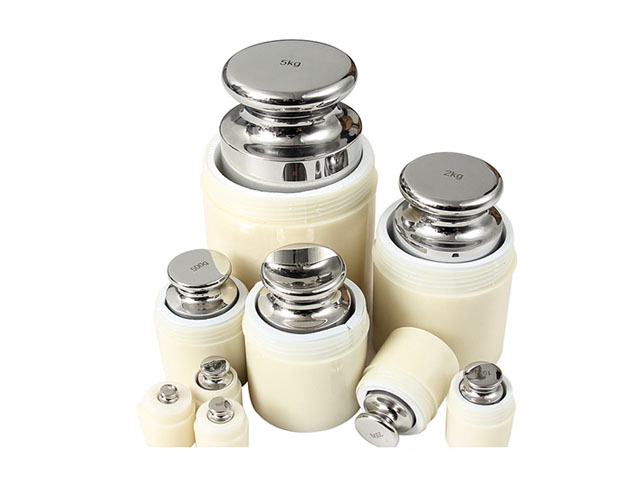
Stainless Steel Standard Weight For Chemical Lab Use
In modern chemical laboratory operations, accurate mass measurement serves as the fundamental foundation for all quantitative experimental research, formula configuration, sample analysis, and data verification. Every chemical reaction ratio, reagent concentration calculation, and experimental result validation relies on stable and precise mass reference benchmarks. Stainless steel standard weights have become indispensable basic metrological tools in chemical laboratories due to their stable physical properties, excellent environmental adaptability, and consistent mass repeatability. These standard mass artifacts provide unified reference criteria for calibrating various weighing equipment, eliminating systematic errors in mass detection, and ensuring the authenticity, repeatability, and traceability of all experimental data generated in chemical testing and research work.
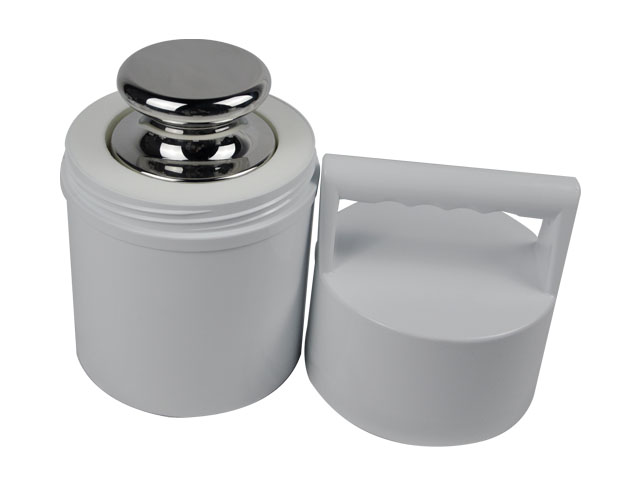
The material selection of standard weights determines their overall performance and service applicability in chemical laboratory environments. Unlike ordinary metal materials that are prone to chemical reactions and physical deformation, the stainless steel used for laboratory standard weights is specially formulated and processed to adapt to the complex atmospheric conditions inside chemical labs. Chemical laboratories often contain volatile acid, alkali, and organic solvent vapors, which pose corrosive risks to conventional metal tools. Stainless steel materials used for standard weights feature stable chemical inertness, effectively resisting oxidation, rusting, and chemical erosion caused by common laboratory volatile substances. This characteristic prevents mass deviation and surface damage induced by chemical corrosion, maintaining long-term mass stability in humid and chemically active laboratory environments. In addition, the selected stainless steel exhibits low magnetic susceptibility and uniform density, avoiding mass fluctuations caused by magnetic field interference and uneven material structure, which is crucial for maintaining consistent measurement reference performance in long-term laboratory use.
The core value of stainless steel standard weights in chemical laboratories lies in providing reliable mass references for daily calibration and verification of weighing instruments. Chemical experiments involve diverse types of samples and reagents, ranging from trace micro samples for precision analytical experiments to large-dose reagent preparation for synthetic reaction tests. Corresponding weighing equipment such as analytical balances, precision electronic scales, and mechanical weighing instruments require regular calibration to eliminate drift errors generated by long-term operation, temperature changes, and mechanical wear. Stainless steel standard weights with stable fixed mass values can be used for regular instrument debugging, linearity verification, and accuracy correction of weighing equipment. By comparing the measured value of the standard weight with its nominal mass value, laboratory operators can judge the operating state of the weighing instrument, adjust parameter deviations, and ensure that the mass data of weighed reagents, samples, and experimental products are accurate and effective. This standardized calibration process runs through all links of chemical experimental operation, providing basic data guarantee for qualitative and quantitative analysis in chemical research.
The structural design and surface treatment of stainless steel standard weights are tailored to the refined operation requirements of chemical laboratories. After precision machining, the weight body presents a smooth and dense surface without pores, cracks, or burr structures. The smooth surface effectively prevents the adhesion of fine dust, reagent residues, and experimental pollutants, avoiding extra mass increase caused by foreign matter attachment. In chemical experimental environments, tiny reagent droplets and powder impurities are ubiquitous, and the compact surface structure of stainless steel standard weights makes daily cleaning and maintenance more convenient, ensuring that the actual mass of the weight remains consistent with the standard value for a long time. Meanwhile, the overall structural design of the weights follows ergonomic and laboratory operation norms, with reasonable weight distribution and appearance size, which is convenient for operators to take and place stably with special tools, avoiding accidental collision and abrasion caused by improper operation, and further protecting the integrity of the weight structure and mass stability.
Different from standard weights used in ordinary industrial scenarios, stainless steel standard weights for chemical laboratories have stricter requirements for environmental adaptability and mass stability. Laboratory temperature and humidity often change with experimental projects and seasonal adjustments, and frequent environmental fluctuations may cause slight thermal expansion and contraction of metal materials. The stainless steel materials adopted for laboratory standard weights have low thermal expansion coefficients, which can minimize mass and volume changes caused by temperature differences, ensuring stable reference performance under conventional laboratory temperature fluctuation ranges. Moreover, the material has good pressure resistance and wear resistance, and long-term repeated use and normal contact friction will not cause obvious surface wear and mass loss. This durable performance enables the standard weights to maintain stable metrological performance during long-term and high-frequency use in daily laboratory testing, experimental teaching, and scientific research projects, reducing the frequency of performance correction and replacement.
In the whole process of chemical experimental research and laboratory quality control, stainless steel standard weights undertake the important task of data traceability and experimental repeatability verification. Chemical experimental data needs to have high reproducibility, and the same experimental operation should obtain consistent results in different time periods and experimental environments. Accurate mass measurement is the primary prerequisite for experimental repeatability. The unified mass reference provided by stainless steel standard weights ensures that different operators, different experimental batches, and different equipment in the same laboratory can follow consistent mass measurement standards. For comparative experiments, variable control experiments, and experimental result verification in chemical research, standard weights eliminate measurement errors caused by equipment differences and operational deviations, making experimental data more credible and comparable. In laboratory internal quality control and daily inspection work, regular calibration of weighing equipment with standard weights is also an important part of maintaining the standardization of laboratory detection systems.
Standardized use and scientific maintenance are key factors to maintain the long-term performance of stainless steel standard weights in chemical laboratories. In daily operation, direct manual contact with the weight surface should be avoided, as sweat, grease, and skin secretions on human hands will adhere to the surface, causing subtle pollution and potential corrosion, which may affect the accuracy of the standard mass. Operators need to use special tweezers or non-metallic handling tools to take and place weights, ensuring clean and stress-free operation. During use, standard weights should be placed on a stable, dry, and clean operating platform, avoiding contact with corrosive reagents, volatile solvents, and sharp hard objects, so as to prevent surface scratches, chemical contamination, and accidental impact deformation.
After completing daily calibration and experimental verification work, stainless steel standard weights need to be cleaned and stored in a standardized manner. Surface dust and residual fine pollutants can be wiped gently with clean soft cotton cloth or professional non-corrosive cleaning solution, and placed in a dry, dust-proof, and constant-temperature storage container after natural drying. Long-term exposure to humid air and chemical volatile environments will accelerate surface aging and potential contamination of the weights, so centralized sealed storage is required when not in use. In addition, laboratory management personnel need to formulate regular inspection plans for standard weights, regularly check the surface integrity, mass stability, and structural state of the weights, and conduct systematic performance verification regularly to ensure that the weights always meet the basic requirements of laboratory mass reference work.
The application scope of stainless steel standard weights in chemical laboratories covers multiple professional fields and experimental links. In basic chemical teaching experiments, they are used for the calibration of student experimental weighing equipment, helping students form standardized experimental operation habits and master accurate mass measurement methods. In applied chemical research, they provide accurate mass benchmarks for reagent proportioning, catalyst dosage control, and product yield calculation in organic synthesis, inorganic preparation, and material synthesis experiments. In chemical detection and analysis work, they support the calibration of analytical instruments in environmental water quality detection, chemical product component analysis, and material purity testing, ensuring the accuracy of trace analysis data and conventional detection results. Whether it is conventional daily experimental operation or special precision scientific research projects, stainless steel standard weights can provide stable and reliable mass reference support, adapting to the diversified measurement needs of chemical laboratories.
With the continuous improvement of modern chemical laboratory standardization construction, the requirements for metrological accuracy and equipment stability are constantly increasing. As the basic metrological standard equipment, stainless steel standard weights play an increasingly important role in laboratory quality system construction. Their excellent material stability, environmental adaptability, and operational practicability make them the preferred mass reference tool for chemical laboratories. Through standardized use, scientific maintenance, and regular performance verification, stainless steel standard weights can maintain long-term stable working performance, provide continuous and accurate mass reference guarantees for various experimental researches and detection work in chemical laboratories, and lay a solid foundation for the standardization, precision, and scientification of chemical experimental data.
In conclusion, stainless steel standard weights are essential basic equipment that cannot be replaced in chemical laboratory mass measurement work. Their unique material properties and professional structural design adapt to the complex and diverse operating environment and precision measurement requirements of chemical laboratories. Standardized application and refined maintenance can maximize their metrological value, effectively avoid measurement errors caused by equipment and environmental factors, ensure the authenticity and reliability of chemical experimental data, and provide strong support for the smooth development of chemical scientific research, experimental teaching, and detection analysis work. For every chemical laboratory, attaching importance to the standardized management and correct use of stainless steel standard weights is an important link to improve the overall experimental level and data credibility of the laboratory.
Stainless Steel Standard Weight For Chemical Lab Use
https://www.veidtweighing.com/ssweight/StainlessSteelWeight
Post Date: May 28, 2026

![Astm Standard Calibration Weight]()
Astm Standard Calibration Weight
Precision mass measurement serves as a foundational pillar across scientific research, industrial production, pharmaceutical manufacturing, and material testing industries…![1000kg Large Calibration Weight Port Weighbridge Use]()
1000kg Large Calibration Weight Port Weighbridge Use
In modern port logistics and cargo management, accurate weight measurement serves as the fundamental foundation for efficient cargo circulation, safe shipping operation, a…![Types of Standard Weight]()
Types of Standard Weight
Standard weights serve as the foundational physical reference tools for all mass measurement activities across industrial production, laboratory research, commercial trade…![Hooked Standard Weight]()
Hooked Standard Weight
Hooked standard weights are essential foundational tools widely utilized in experimental research, teaching demonstrations, and routine mechanical calibration scenarios. D…![10g Standard Weight]()
10g Standard Weight
In the quiet and intricate world of measurement, every small unit of mass carries profound significance that connects human daily life, professional production, and scient…