Standard Weight For Floor Scales
Floor scales serve as the foundational weighing equipment in industrial, logistics, manufacturing, and warehousing environments, delivering reliable weight measurement for heavy loads ranging from small pallet goods to large bulk materials. To ensure the long-term accuracy, stability, and compliance of these weighing devices, standard weights stand as the most critical reference tool, acting as the benchmark for scale calibration, error verification, and performance validation. A comprehensive understanding of standard weights for floor scales, including their classification, technical specifications, application principles, and usage protocols, is essential for maintaining consistent weighing results, meeting industry regulatory requirements, and avoiding operational losses caused by measurement inaccuracies. Unlike ordinary auxiliary weights, standard weights for floor scales are strictly manufactured, tested, and certified in accordance with international and national metrological standards, with fixed precision grades, material requirements, and tolerance ranges tailored to the heavy-duty working characteristics of floor scales.
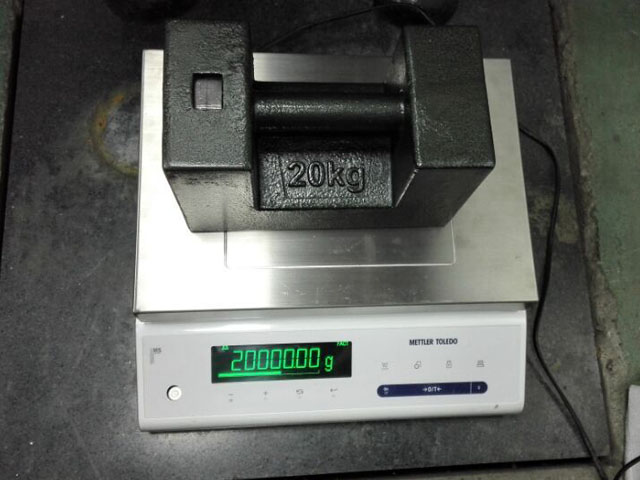
The core value of standard weights for floor scales lies in their role as a metrological reference standard. Floor scales operate on the principle of converting mechanical pressure generated by load weight into electrical signals through load cells, and these electrical signals are further calculated and displayed as specific weight values. During long-term operation, floor scales are inevitably affected by mechanical vibration, frequent heavy-load impact, environmental temperature and humidity changes, and minor structural wear, all of which can cause gradual deviation in weighing accuracy. Without regular calibration with qualified standard weights, such deviations will continue to accumulate, leading to inaccurate measurement data. In industrial production and commodity circulation, even tiny weight errors per weighing can evolve into substantial economic losses over massive transaction volumes, and in severe cases, may lead to non-compliant product quality, inaccurate inventory statistics, and even regulatory penalties. Standard weights eliminate these risks by providing a fixed, traceable, and accurate weight reference, enabling operators to detect and correct scale errors in a timely manner.
International metrological organizations have established unified classification standards for standard weights applicable to floor scales, forming a complete precision grade system that covers different weighing scenarios and accuracy requirements. According to the widely recognized OIML (International Organization of Legal Metrology) standards, standard weights are divided into multiple grades from E0, E1, E2, F1, F2 to M1, M2, M3, with precision decreasing sequentially from E0 to M3. Each grade corresponds to strict maximum permissible error (MPE) values, material density requirements, surface treatment standards, and environmental adaptability indicators. For high-precision floor scales used in precision manufacturing, pharmaceutical production, and high-value material detection, E2 and F1 grade standard weights are predominantly adopted, as their ultra-small tolerance errors can meet the stringent accuracy verification needs of high-sensitivity weighing equipment. For ordinary industrial floor scales used in logistics pallet weighing, bulk material counting, and conventional warehouse inventory weighing, F2 and M1 grade standard weights are the most widely used, balancing calibration accuracy and practical applicability. M2 and M3 grade standard weights are usually applied in low-precision weighing scenarios or daily rough error detection of heavy-duty floor scales with large load ranges, ensuring basic weighing validity in general industrial environments.
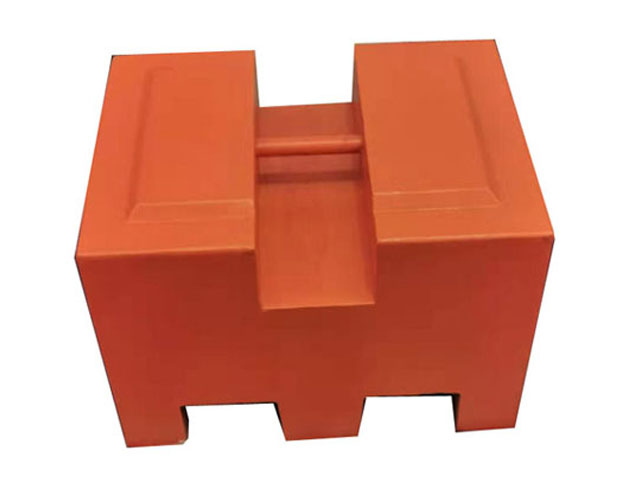
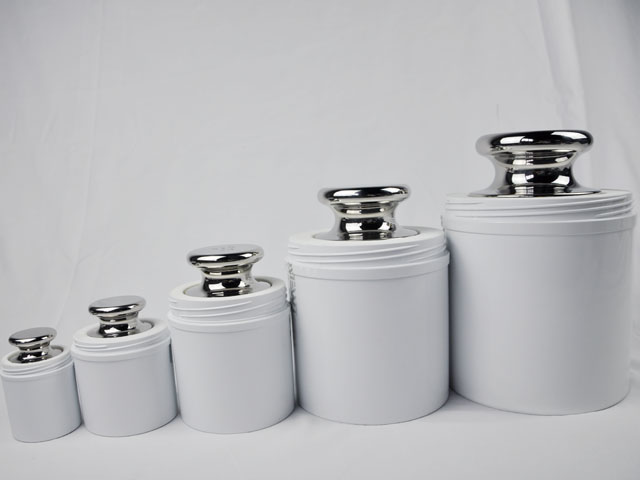
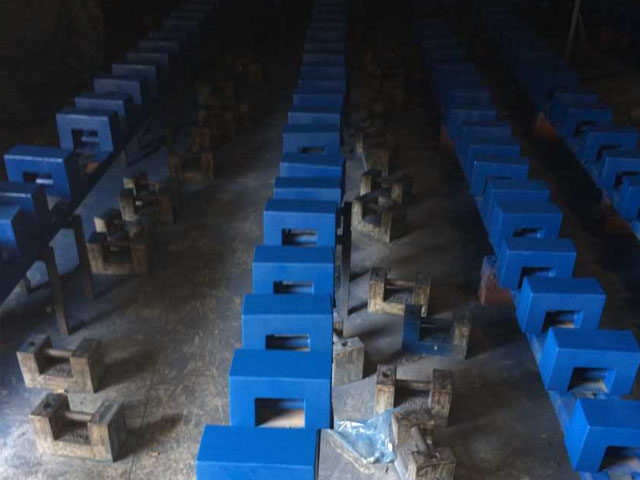
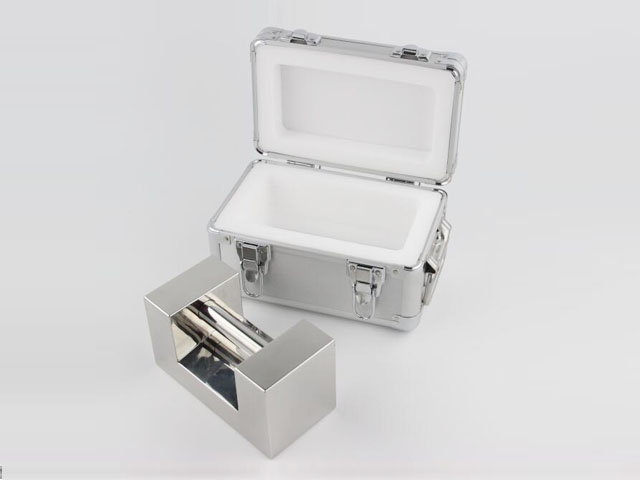
The material selection of standard weights directly determines their stability, durability, and measurement accuracy, and different grades of standard weights adopt differentiated manufacturing materials to adapt to the working conditions of floor scales. High-precision E-grade and F1-grade standard weights are mostly made of high-density stainless steel with excellent anti-corrosion, anti-oxidation, and wear-resistant properties. This material features stable density, low thermal expansion coefficient, and is not easily affected by humidity, dust, and temperature changes in the industrial environment, ensuring that the weight value remains unchanged for a long time and maintaining traceable measurement accuracy. F2 and M1 grade standard weights, which are commonly used for routine calibration of industrial floor scales, usually adopt high-quality cast iron with surface anti-rust coating treatment. Cast iron materials have high hardness, strong impact resistance, and low production cost, making them suitable for frequent handling, stacking, and heavy-load calibration operations in industrial sites. All qualified standard weights for floor scales must undergo strict surface processing to avoid pits, cracks, burrs, and corrosion defects, as surface damage will change the actual weight of the standard weight and lead to calibration failure. In addition, the density of each batch of standard weights is strictly tested to eliminate the influence of buoyancy changes caused by air density differences on weighing results, further improving the scientificity of calibration work.
The matching specifications between standard weights and floor scales follow strict metrological principles, and the weight range and quantity of standard weights used in calibration must comply with standardized operational norms to ensure effective verification. According to metrological verification specifications, the calibration of floor scales needs to cover three key load stages: minimum load, medium load, and maximum rated load, so as to comprehensively detect the weighing accuracy of the scale in the full range. The minimum calibration load is usually determined based on the scale division value of the floor scale, ensuring that the standard weight used can accurately identify the minimum measurement sensitivity of the equipment. Medium load calibration adopts standard weights with about 50% of the full-scale range, which is used to verify the linearity of the floor scale’s weighing response, avoiding inaccurate intermediate value measurement caused by unbalanced sensor signal conversion. The maximum load calibration uses combined standard weights close to the rated maximum load of the floor scale to detect the bearing capacity and accuracy stability of the equipment under heavy-load working conditions, preventing measurement deviation caused by sensor fatigue or structural deformation under extreme loads.
In actual calibration operations, the combination mode of standard weights also follows fixed rules. For large-range floor scales used for ton-level heavy object weighing, multiple standard weights of the same specification are usually stacked and combined to form a complete calibration load, rather than using a single overweight standard weight. This combination method can uniformly distribute the load on the scale platform, simulate the actual stress state of goods weighing, and avoid local pressure concentration causing temporary structural deformation of the scale platform and affecting calibration results. At the same time, during the calibration process, operators need to place standard weights evenly in different areas of the floor scale platform, including the center, four corners, and edge positions, to detect the platform’s levelness and uniform stress performance. Many floor scale weighing errors are not caused by sensor deviation but by uneven platform stress, and multi-position calibration with standard weights can effectively identify such hidden problems, ensuring that the scale maintains accurate measurement results no matter where the goods are placed.
Environmental adaptability is a key attribute that cannot be ignored for standard weights used for floor scale calibration, as industrial on-site environments are far more complex than laboratory environments. Factory workshops, warehouses, and logistics yards often have variable temperature and humidity, floating dust, and even slight vibration and wind interference, all of which may affect the accuracy of standard weights and calibration results. High-grade standard weights are designed with strict environmental tolerance, capable of maintaining stable weight values within a wide temperature range and resisting the influence of humid and dusty environments. For on-site calibration in harsh environments, operators need to select matching grades of standard weights and conduct pre-calibration treatment, such as wiping the surface of standard weights to remove dust and moisture, and placing the weights in the working environment for a period of temperature adaptation to eliminate measurement errors caused by temperature differences between the weights and the scale equipment.
Regular verification and maintenance of standard weights are crucial to ensure their long-term effectiveness and guarantee the reliability of floor scale calibration results. As precision metrological instruments, standard weights will experience minor wear, surface oxidation, and slight deformation after long-term handling, stacking, and use, which will cause subtle changes in their weight values. Therefore, all standard weights used for floor scale calibration must undergo periodic metrological verification by professional metrological institutions in accordance with national and international standards. During verification, professional equipment is used to detect the actual weight value, tolerance error, surface condition, and structural stability of each standard weight. Weights that meet the grade tolerance range are issued a valid verification certificate, while those exceeding the error range are corrected or eliminated in a timely manner to prevent unqualified standard weights from being used for calibration and causing large-scale weighing errors of floor scales.
Daily maintenance habits also directly affect the service life and accuracy stability of standard weights. After each use, standard weights need to be cleaned of surface dust, oil stains, and sundries, and placed in a dry, flat, and shock-proof storage area to avoid random throwing, collision, and stacking of heavy objects. Stainless steel standard weights need regular anti-oxidation maintenance to prevent surface rust and corrosion, while cast iron standard weights need to check the integrity of the anti-rust coating regularly and repair damaged coatings in a timely manner. In addition, standard weights of different grades must be stored separately to avoid confusion in use, and each standard weight should be marked with a unique identification number, grade specification, and valid verification period to achieve traceable management of the entire use process.
The standardized application of standard weights is also an important part of industrial quality management and regulatory compliance. In many industries such as commodity trading, industrial manufacturing, and logistics transportation, floor scale weighing data is used as the basis for commodity settlement, product quality inspection, and cargo handover, and the accuracy of weighing results is supervised by market supervision departments. Regular calibration of floor scales with qualified standard weights and retention of complete calibration records are mandatory requirements for industry compliance management. Complete calibration data and valid standard weight verification certificates can effectively prove the accuracy and legality of enterprise weighing data, avoid regulatory rectification and punishment caused by unqualified measuring equipment, and also provide effective data support for enterprise quality control and asset inventory management.
In addition to conventional calibration and error detection, standard weights also play an important role in the daily performance evaluation and fault diagnosis of floor scales. When floor scales experience abnormal fluctuations in weighing data, inconsistent repeated weighing results, or obvious deviation from manual estimation values, professional operators can use standard weights for rapid fault screening. By testing the accuracy of fixed load values with standard weights, it can quickly determine whether the error comes from sensor aging, platform deformation, line failure, or external environmental interference, providing an accurate basis for equipment maintenance and repair. This fault diagnosis method based on standard weight reference is efficient and accurate, greatly reducing the maintenance time and cost of floor scales, and ensuring the continuous and stable operation of industrial weighing work.
With the continuous upgrading of industrial intelligent weighing technology, the performance requirements for floor scales are constantly improving, and the technical standards for supporting standard weights are also constantly optimized and updated. Modern industrial floor scales are developing towards high precision, large load, intelligent sensing, and environmental adaptability, which puts forward higher requirements for the precision stability, structural firmness, and environmental resistance of standard weights. New high-precision standard weight products adopt more advanced manufacturing processes and composite anti-corrosion materials, with smaller tolerance errors, longer service life, and stronger environmental adaptability, which can meet the calibration needs of new intelligent floor scales. At the same time, the digital management system of standard weights is gradually popularized, realizing the full-life cycle tracking of standard weight verification, use, maintenance, and storage, further improving the standardization and accuracy of floor scale calibration work.
In conclusion, standard weights are indispensable core reference equipment for the normal and accurate operation of floor scales, running through the whole process of scale factory inspection, daily calibration, fault diagnosis, and compliance supervision. The correct selection of standard weight grades and specifications, standardized implementation of calibration operations, and strict implementation of daily maintenance and periodic verification systems are key measures to ensure the long-term accuracy and stability of floor scale weighing results. For industrial enterprises and weighing operators, mastering the professional knowledge and application specifications of standard weights is not only a basic requirement for equipment operation and maintenance, but also an important guarantee for standardized production, accurate transaction settlement, and compliant operation of enterprises. In the future, with the continuous improvement of metrological standards and the progress of manufacturing technology, standard weights for floor scales will develop towards higher precision, better stability, and more intelligent management, providing more reliable technical support for industrial weighing measurement work.
Standard Weight For Floor Scales
https://www.veidtweighing.com/standard-weights.html
Post Date: Jul 25, 2026
https://www.supplier-manufacturer.com/standard-weight/standard-weight-for-floor-scales.html

![25kg Test Weight]()
25kg Test Weight
In the complex and interconnected system of modern social production, commercial circulation, public infrastructure operation and daily life management, the accuracy and s…![M3 Class Test Weight]()
M3 Class Test Weight
In the entire system of industrial measurement, commercial weighing and daily metering verification work, test weights stand as one of the most fundamental and indispensab…![Stainless Steel Standard Weight]()
Stainless Steel Standard Weight
Stainless steel standard weight represents one of the most fundamental and essential physical attribute benchmarks that define the practical usability and structural perfo…![Test Weight Sets]()
Test Weight Sets
Test weight sets stand as foundational reference tools in every field that relies on reliable mass measurement, forming the essential bridge between theoretical mass stand…![Standard Calibration Weight]()
Standard Calibration Weight
In every corner of modern production, scientific research, experimental analysis, and daily industrial operation, the reliability of weighing data stands as an invisible f…