2kg Test Weight
In every corner of industrial production, laboratory research, commercial trading, and daily quality inspection work, accurate weighing data stands as one of the most basic and critical prerequisites for maintaining orderly operational processes and credible experimental results. All kinds of weighing devices, whether compact desktop electronic balances used in fine laboratories, medium-sized platform scales for daily commodity weighing in retail spaces, or large-scale weighing equipment deployed in production workshops for batch material proportioning, rely on regular and standardized testing and debugging to maintain stable working performance during long-term use. Among all the practical and necessary auxiliary tools for this core debugging and testing work, the 2kg test weight occupies an irreplaceable and fundamental position, becoming a commonly used and highly practical measuring auxiliary tool that connects standard mass values with the actual working state of various weighing instruments. Its simple and straightforward appearance hides profound professionalism and strong practical applicability, and every detail from material selection, structural design to daily use and maintenance is closely linked to the stability of weighing work and the accuracy of final data, quietly supporting the normal operation of various links that depend on precise mass measurement.
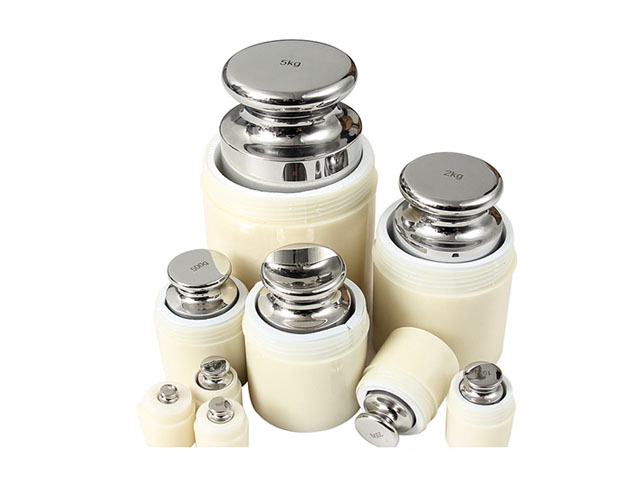
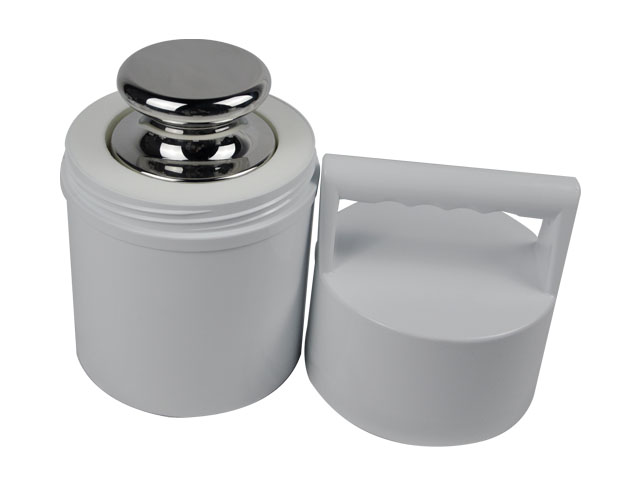
The overall design and material selection of a 2kg test weight are formulated around the core demands of long-term stable use, convenient manual operation, and consistent mass stability in different working environments. Most of these test weights are made of dense, wear-resistant, and corrosion-resistant metal materials that can adapt to complex indoor and outdoor working conditions, effectively avoiding mass deviation caused by external environmental erosion or daily friction and collision in the process of repeated use. The surface of the test weight is treated with a fine and protective finishing process, which not only makes the overall appearance smooth and uniform but also effectively isolates the influence of air moisture, dust adhesion, and minor chemical contact in the working space, preventing surface oxidation, rust, or wear that may gradually change the inherent mass of the weight over time. The overall structural design follows the principle of humanized operation and stable placement, with a regular and compact overall shape that can be stably placed on the weighing surface of all conventional weighing devices without tilting or shaking during the testing process. Many styles are designed with a reasonable gripping structure integrated into the body, which allows operators to pick up, move, and place the test weight stably and conveniently without slipping during operation, avoiding accidental dropping caused by unstable grasping that may damage the weight itself or the weighing equipment under test. This integrated forming and humanized structural design also ensures that the internal mass distribution of the 2kg test weight is uniform and balanced, with no offset in the center of gravity, so that every placement on the weighing equipment can act on the weighing sensing area in a standard state, ensuring that the test data obtained each time is true and effective and will not be affected by structural deviations of the weight itself.
The core functional value of the 2kg test weight is reflected in the daily testing, regular debugging, and routine verification of various weighing instruments, helping operators confirm whether the weighing data displayed by the equipment is consistent with the actual standard mass and whether the equipment maintains a normal and sensitive working state after long-term operation. All weighing devices will experience subtle changes in internal sensing components, mechanical structures, or electronic sensing systems after being used for a long time, frequent vibration, frequent switching on and off, or placement changes in different environments. These subtle changes are difficult to be directly observed by the naked eye and will not immediately cause obvious failure of the weighing equipment, but they will slowly lead to small deviations in weighing results. If these small deviations are not detected and corrected in a timely manner, they will gradually accumulate over time, evolving into large data errors, which will affect the accuracy of experimental research results, the fairness of commercial transaction settlement, and the stability of industrial production material proportioning. The 2kg test weight provides a fixed and unified standard mass reference for solving this potential problem. Operators only need to place the test weight stably on the weighing surface of the equipment to be tested, observe the weighing value fed back by the equipment, and compare it with the standard fixed mass of the test weight, so as to quickly and intuitively judge whether the current working state of the weighing equipment is normal and whether there is data deviation that needs subsequent adjustment and calibration. This simple and efficient testing operation does not require complex professional operation steps or tedious auxiliary equipment, and can be completed quickly on site by relevant staff with basic operational proficiency, realizing rapid daily inspection of weighing equipment and effectively avoiding various work risks caused by inaccurate weighing data.
The application scenarios of the 2kg test weight cover a wide range of fields, penetrating every link that requires regular weighing accuracy maintenance, showing strong universal applicability and practical value. In professional laboratory environments, various precision electronic balances are often used for sample weighing, experimental reagent proportioning, and data recording of scientific research projects. The accuracy of these balances is directly related to the success or failure of experimental research and the authenticity and credibility of experimental data. Laboratory staff will use the 2kg test weight to conduct regular testing and calibration of precision balances before each batch of experimental operations and after the daily work is completed every day. This regular testing work can ensure that the balance maintains high sensitivity and accurate data output during the whole experimental process, avoiding experimental failure or data distortion caused by slight deviation of the weighing equipment. In industrial production and processing workshops, many production links need to rely on weighing equipment to proportion raw materials, count semi-finished products, and check the quality of finished products. Whether it is the proportioning of various raw materials in food processing, the batching operation in chemical production, or the weight inspection of hardware parts and plastic products in mechanical processing factories, stable and accurate weighing is an important guarantee for consistent product quality and standardized production processes. Production workshop operators will use the 2kg test weight to test the platform scales and industrial electronic scales used on the production line every shift, timely discover and adjust small deviations in equipment weighing, ensure that the weight of each batch of raw materials and finished products meets the production process requirements, and maintain the consistency and stability of product quality in mass production.
In commercial sales and market trading scenarios, fair and accurate weighing is the basic premise for maintaining the order of commodity transactions and protecting the legitimate rights and interests of both merchants and consumers. Retail stores, fresh food markets, supermarkets, and various physical sales outlets all use various electronic weighing devices to settle commodity transactions. These weighing devices are used frequently every day, with long continuous working hours and easy vibration and collision during use, so they are more prone to subtle weighing deviations. Relevant market management personnel and store operators will regularly use the 2kg test weight to inspect and test the transaction weighing equipment, ensuring that the weighing data of the equipment used for commodity settlement is accurate and reliable, avoiding transaction disputes caused by inaccurate weighing, and maintaining a good and fair market consumption environment. In addition, in quality inspection institutions and third-party testing agencies, staff need to conduct sampling testing and quality evaluation of various products and commodities, and all testing work based on weighing data must be carried out on the basis of accurate weighing equipment. The 2kg test weight has become a conventional testing tool for these institutions to regularly verify the performance of weighing equipment, ensuring that all testing and inspection results are true, effective, and in line with relevant work norms, and providing reliable data support for product quality evaluation and market supervision work.
Correct daily use and standardized scientific maintenance are crucial to maintaining the long-term mass stability and service life of the 2kg test weight itself, and also directly affect the accuracy of each weighing test result. Although the overall structure of the test weight is solid and durable, its inherent standard mass is very precise, and external improper operation and bad storage environment will still cause subtle changes in its mass and surface state, affecting the subsequent testing effect. In the process of daily use, operators should avoid directly touching the surface of the test weight with bare hands as much as possible. The grease, sweat, and fine dust on human hands will adhere to the surface of the weight after contact, which will not only cause surface contamination but also gradually form a thin attached layer, leading to small changes in the actual mass of the test weight and reducing the accuracy of the test reference. It is better to use clean and soft auxiliary gloves or special gripping tools to take and place the test weight, ensuring that the surface of the weight is always kept clean and tidy. During the placement and handling process, violent collision, falling, and severe friction with hard objects should be avoided. Although the metal material is wear-resistant, strong impact and friction will cause surface damage, material loss, or structural deformation, resulting in mass deviation and affecting the stability of subsequent testing work. After each use, the 2kg test weight should be placed in a dry, clean, and stable storage position, avoiding long-term placement in humid, dusty, or corrosive gas environments, preventing surface oxidation, rust, and dust accumulation, and maintaining the original surface state and mass stability of the weight for a long time.
Regular inspection and reasonable maintenance of the 2kg test weight itself are also important links to ensure its long-term reliable use. During the long-term repeated use cycle, even if the daily operation and storage are standardized, subtle changes may still occur due to the influence of environmental temperature changes and long-term placement. Therefore, it is necessary to regularly check the surface integrity of the test weight, observe whether there is obvious wear, corrosion, deformation, or damage, and clean the surface with a soft and dry cleaning tool to remove surface floating dust and slight stains. For long-term used test weights, regular professional mass detection and verification can be carried out according to the frequency of use and working environment, ensuring that its actual mass is always kept within the standard range and will not produce cumulative deviations due to long-term use. Only by doing a good job in every detail of use and maintenance can the 2kg test weight always maintain stable and reliable reference performance, continuously provide accurate standard mass support for various weighing testing work, and ensure that all work links relying on weighing data can be carried out in an orderly and standardized manner.
In the entire system of mass measurement and weighing work, small and conventional tools like the 2kg test weight do not have gorgeous appearance and complex functional structure, but they undertake the important basic work of maintaining weighing accuracy and standardizing measurement order. All high-precision experimental research, standardized industrial production, fair commercial transactions, and rigorous quality inspection work cannot be separated from the basic guarantee provided by such simple and practical test weights. It is precisely because of the widespread application and stable performance of these test weights that various weighing devices in different fields can always maintain accurate working conditions, various work data based on weighing can be true and reliable, and the orderly development of all links related to mass measurement can be effectively guaranteed. With the continuous improvement of production technology, experimental research standards, and market supervision requirements, the importance of standardized weighing and accurate measurement is becoming more and more prominent, and the 2kg test weight, as a basic and indispensable measuring auxiliary tool, will continue to play a stable and important role in various fields, providing solid and reliable basic support for the stable operation of all work related to weighing measurement.
2kg Test Weight
https://www.veidtweighing.com/test-weight.html
Post Date: May 4, 2026
https://www.supplier-manufacturer.com/test-weight/2kg-test-weight.html

![Calibration Weight For Electric Forklift Weighing Calibration Use]()
Calibration Weight For Electric Forklift Weighing Calibration Use
In modern industrial material handling scenarios, electric forklifts have become indispensable equipment for warehouse storage, cargo handling, and logistics distribution …![200kg Cast Iron Lock Calibration Weight Truck Scale Test]()
200kg Cast Iron Lock Calibration Weight Truck Scale Test
Truck scales serve as fundamental weighing equipment for industrial logistics, material settlement, and cargo measurement, providing core data support for daily operationa…![Kilogram Range Laboratory Weight Set]()
Kilogram Range Laboratory Weight Set
In every professional laboratory environment where mass measurement serves as the foundational basis for experimental research, quality inspection, and routine operational…![Square Standard Weight]()
Square Standard Weight
Square standard weight serves as a fundamental measuring and balancing component widely adopted in industrial production, physical training, experimental testing, and dail…![Industrial Standard Weight]()
Industrial Standard Weight
In every corner of modern industrial production and commercial operation, accurate mass measurement stands as an indispensable foundational condition for maintaining order…