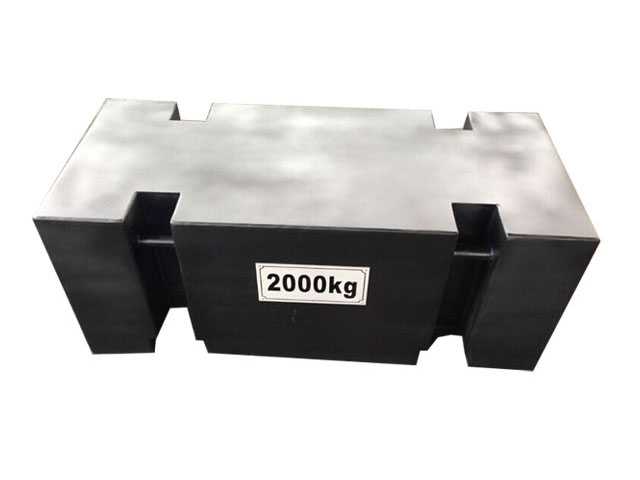
Stainless Steel Test Weight Sets
Stainless steel test weight sets are essential precision measuring tools widely adopted in laboratory analysis, industrial production, and daily weighing equipment calibration. Crafted from premium stainless steel materials, these weight sets stand out for their outstanding physical stability and environmental adaptability, serving as a reliable benchmark for verifying the accuracy and consistency of various weighing instruments. Different from traditional cast iron weights, stainless steel test weights feature superior corrosion resistance, smooth surface finish, and minimal mass variation over long-term use, effectively avoiding measurement errors caused by rust, oxidation, or surface wear. Each complete set covers diversified weight specifications to meet the calibration and testing demands of micro-precision electronic balances and large-scale industrial weighing devices. With exquisite craftsmanship and stable performance, they have become indispensable tools for ensuring measurement accuracy in multiple industries, supporting standardized and reliable weighing operations across scenarios.
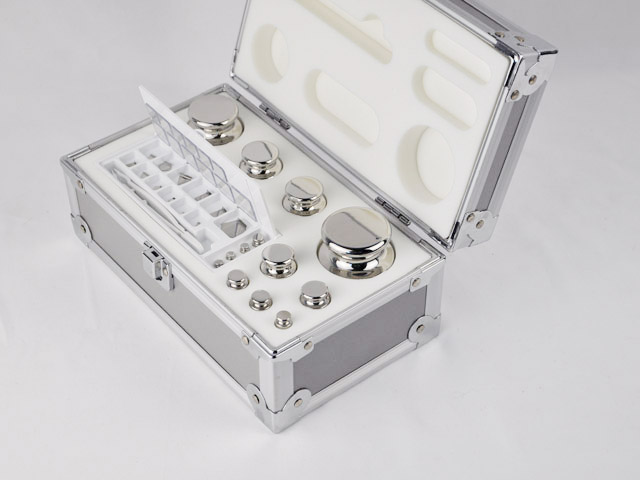
The core superiority of stainless steel test weight sets originates from the unique physical and chemical properties of high-quality stainless steel materials selected for production. This specialized alloy material undergoes refined smelting and processing, featuring uniform internal density and stable structural performance, which lays a solid foundation for long-term accurate mass retention. Unlike ordinary metal materials that are prone to oxidation and rust when exposed to air, moisture, or mild chemical environments, stainless steel can effectively resist corrosion, surface oxidation, and dust adhesion, maintaining a complete and smooth surface state for years. The low magnetic susceptibility of the material also eliminates interference with electromagnetic weighing equipment, a critical advantage for high-precision electronic balance calibration. In addition, the material boasts excellent hardness and wear resistance, resisting deformation and abrasion caused by frequent handling, stacking, and use. Even in frequent daily testing and calibration work, the weight mass remains highly consistent, avoiding frequent replacement and repeated correction caused by material aging, greatly improving the stability and continuity of weighing detection work.
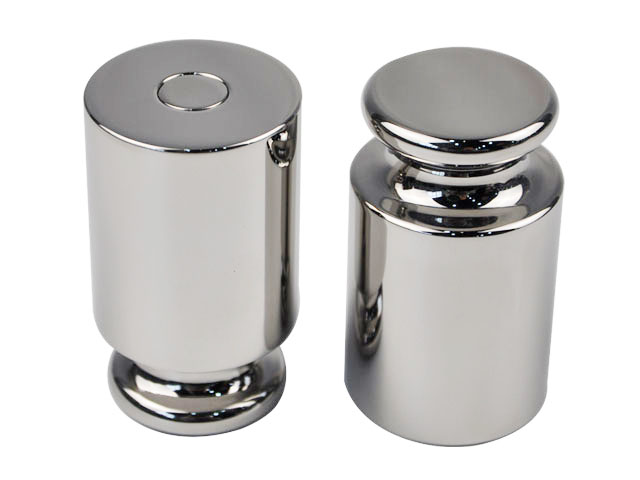
The structural design of stainless steel test weight sets focuses on practicality, safety and standardized use, adapting to diverse operating scenarios and user habits. A complete weight set includes multiple independent single weights with different nominal masses, forming a systematic combination that can flexibly match various weighing range requirements. Most weights adopt streamlined cylindrical or regular block structures with smooth and burr-free surfaces, preventing scratch damage during handling and avoiding residue accumulation that may affect measurement accuracy. Some integrated handle designs optimize manual carrying and stacking operations, with reserved spacing for stable grasping and neat stacking, preventing sliding and falling during overlapping placement. Each weight is clearly marked with accurate nominal mass values for quick identification and convenient grouping use. Meanwhile, the reserved adjustment structure on individual weights allows fine mass correction in long-term use, ensuring continuous precision. The overall structural design balances portability and stability, enabling flexible use in laboratory desktop operations and fixed calibration work in industrial production lines.
Stainless steel test weight sets cover extremely versatile application scenarios, penetrating all fields that rely on accurate weighing detection. In scientific research laboratories, they are used for daily calibration of analytical balances and precision weighing instruments, ensuring the accuracy of experimental data in chemical analysis, material testing and biological research, and providing reliable data support for scientific research conclusions. In the pharmaceutical and food processing industries, where environmental hygiene and data precision are strictly required, the corrosion-resistant and easy-to-clean characteristics of stainless steel weights adapt to frequent washing and sterile working environments, meeting the precise weighing calibration needs of drug dispensing and food ingredient testing. In industrial manufacturing, they are applied to the regular verification of production line weighing equipment, detecting the accuracy of material weighing and product counting equipment to control production quality. Additionally, they are widely used in agricultural detection, environmental monitoring and commodity inspection fields, providing unified and accurate measurement benchmarks for various professional testing work.
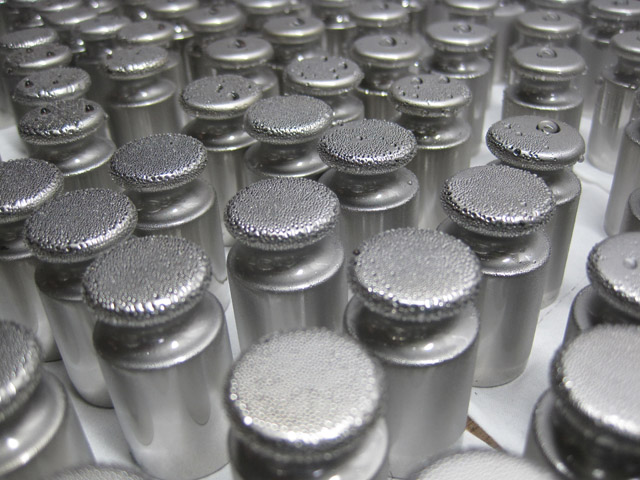
Standardized manufacturing processes endow stainless steel test weight sets with consistent quality and reliable comprehensive performance. The production process starts with strict material screening, where raw stainless steel materials are inspected for density uniformity, hardness and corrosion resistance to eliminate unqualified raw materials. The forming process adopts precision cutting and integral molding technology to ensure regular weight shape, uniform thickness and symmetrical structure, avoiding mass deviation caused by structural asymmetry. After preliminary forming, each weight undergoes fine polishing and surface treatment to remove surface blemishes, reduce surface roughness, and weaken the adhesion of dust, water stains and chemical residues. Subsequent precise mass detection and fine adjustment ensure that the actual mass of each weight is highly consistent with the nominal value. Finished products also undergo stability testing in different temperature and humidity environments to verify their adaptability to complex working conditions. The standardized and rigorous production flow ensures that every batch of weight sets has stable quality, consistent precision and reliable service performance.
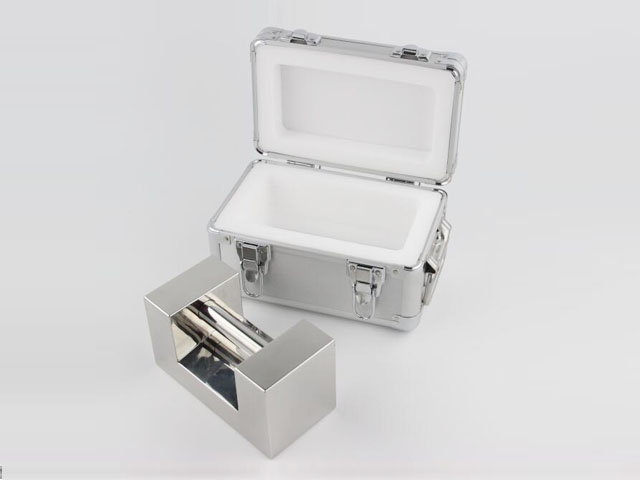
Scientific maintenance and storage methods can effectively extend the service life of stainless steel test weight sets and maintain long-term measurement precision. Daily use requires standardized operation; it is recommended to wear clean gloves to handle weights, avoiding direct contact with hands to prevent sweat and oil stains from corroding the surface and affecting mass accuracy. Weights should be placed gently during use to prevent collision, drop and friction, avoiding structural deformation and surface wear caused by external force. After each use, residual dust and stains on the weight surface should be wiped with a clean soft cloth, and harsh chemical cleaning agents are prohibited to prevent surface damage. For storage, professional matching packaging boxes with shockproof and moisture-proof functions are essential to isolate humid air, dust and corrosive substances in the external environment. Meanwhile, weights of different specifications should be classified and stored to avoid mixing and collision. Regular regular inspection and precision verification can timely discover minor mass changes and surface problems, ensuring that the weight sets always maintain optimal working performance.
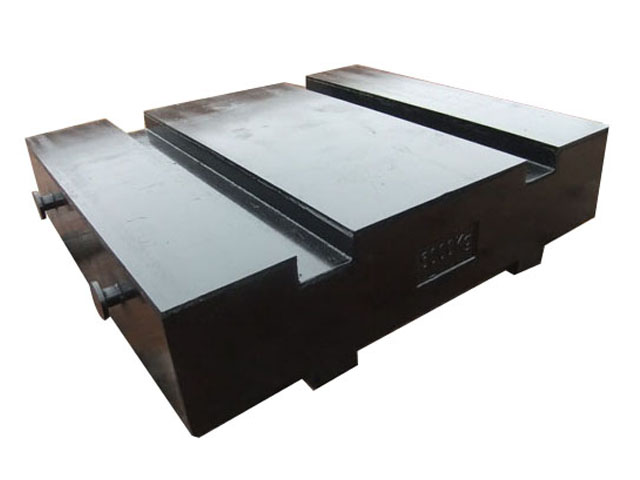
Compared with traditional cast iron and aluminum alloy test weight sets, stainless steel products have obvious comprehensive performance advantages. Cast iron weights are low in cost but prone to rust and deformation, with poor stability in humid and corrosive environments, requiring frequent maintenance and replacement. Aluminum alloy weights are lightweight but low in hardness, easy to wear and deform after long-term use, with limited applicable scenarios. In contrast, stainless steel test weight sets integrate corrosion resistance, wear resistance, structural stability and hygienic performance, adapting to harsh working environments and high-precision testing requirements. Their stable mass retention capability greatly reduces the frequency of equipment calibration and weight replacement, improving overall work efficiency in long-term use. Although the manufacturing threshold is higher, their long service life and stable precision make them more cost-effective in professional and high-precision application scenarios, gradually becoming the mainstream choice for modern weighing calibration tools.
With the continuous improvement of modern measurement precision requirements and the upgrading of industrial detection standards, stainless steel test weight sets are constantly optimized and innovated to adapt to evolving market demands. Modern optimized products adopt more refined material proportioning technology to further improve material stability and anti-interference performance, meeting the ultra-high precision calibration needs of emerging precision manufacturing and micro-analysis fields. The structural design is more humanized, with optimized weight proportion and handle structure to reduce operating fatigue and improve detection efficiency. Meanwhile, the lightweight and portable design of partial small-specification weight sets facilitates mobile detection and on-site calibration work. As core basic measuring tools, stainless steel test weight sets will continue to play a key role in ensuring measurement accuracy, standardizing detection processes and guaranteeing product quality, providing solid basic support for the standardized development of various industries.
Stainless Steel Test Weight Sets
https://www.veidtweighing.com/test-weight.html
Post Date: Aug 14, 2026
https://www.supplier-manufacturer.com/test-weight/stainless-steel-test-weight-sets.html

![Test Weight Production]()
Test Weight Production
Test weight production stands as a foundational industrial manufacturing activity that underpins the reliability and consistency of weighing operations across countless in…![Attribute of Calibration Weight]()
Attribute of Calibration Weight
Calibration weights serve as foundational physical references for all weighing and metering operations across industrial production, laboratory research, commercial transa…![Calibration Weight Price]()
Calibration Weight Price
The pricing of calibration weights is never determined by a single superficial factor or random market fluctuation, but by a complex and interconnected system of industria…![Cast Iron Weight For Calibration]()
Cast Iron Weight For Calibration
In the intricate and interconnected landscape of modern industrial production, commercial trade, and scientific measurement, the reliability of weighing data stands as an …![2000kg Test Weight]()
2000kg Test Weight
In the complex and interconnected ecosystem of modern industrial production, logistics transportation, engineering construction, and mechanical equipment operation, the st…