Coffee Scales
For anyone who has delved into the craft of homemade coffee brewing, the subtle gap between an ordinary cup and a satisfying, well-balanced brew often lies not in expensive brewing tools or rare coffee beans, but in a simple precision instrument: the coffee scale. Many casual coffee lovers rely on visual estimation or habitual experience to measure coffee grounds and water during brewing, unaware that minor deviations in proportion can completely alter the flavor profile of coffee. Slight excess of coffee grounds leads to over-extraction, bringing bitter and astringent tastes that overpower the delicate aroma of beans, while insufficient grounds result in under-extraction, leaving the coffee thin, watery, and lacking in layered flavors. A coffee scale eliminates the uncertainty of subjective judgment, turning empirical brewing into a standardized, repeatable process, making stable and flavorful homemade coffee accessible to every brewing enthusiast.
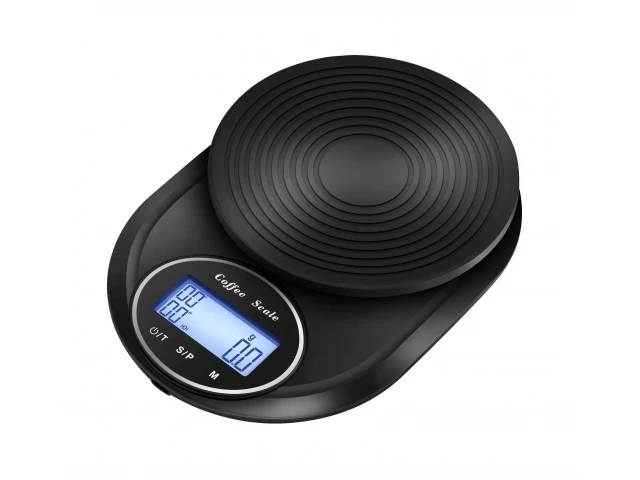
The core value of a coffee scale lies in its ability to quantify the two most fundamental elements of coffee brewing: coffee dosage and brewing water. Coffee brewing is a precise chemical extraction process, where the ratio between coffee grounds and water directly dictates the concentration, sweetness, acidity, and body of the final cup. Different brewing methods require distinct solid-to-liquid ratios to bring out the best characteristics of coffee beans. For hand drip brewing, a moderate ratio maintains a balanced flavor, allowing the fruity, floral, or nutty notes of specialty beans to unfold gently. For immersion brewing methods like French press, a slightly concentrated ratio helps retain the rich mouthfeel of coffee without rough bitterness. Without accurate weighing, even using high-quality freshly roasted beans cannot guarantee a stable brewing effect, as daily visual judgment errors accumulate gradually, leading to inconsistent taste in every cup of coffee.
Modern coffee scales are designed to adapt to diverse household and light commercial brewing scenarios, with practical functional features tailored to the rhythm of coffee making. The tare function stands as one of the most essential and commonly used designs, simplifying the entire weighing process greatly. When starting to brew, users can place empty brewing vessels, filter cups, or portafilters on the scale surface and activate the tare function to reset the display to zero. This removes the weight of containers completely, enabling accurate measurement of pure coffee bean or water weight. This simple operation avoids tedious manual calculation of container weight, reduces operational errors, and makes the brewing process smoother and more efficient, especially suitable for beginners who are still familiarizing themselves with brewing steps.
Built-in timing functions are another practical feature integrated into most coffee scales, perfectly matching the time-sensitive nature of coffee extraction. Coffee extraction is highly dependent on time; different brewing stages require accurate time control to coordinate with water pouring speed and water volume. In hand drip brewing, the pre-infusion stage needs a fixed duration to allow dry coffee grounds to fully absorb water, expand, and release trapped carbon dioxide, which paves the way for uniform subsequent extraction. The overall brewing time also needs to stay within a reasonable range to avoid prolonged extraction that causes bitterness or hasty extraction that leads to weak flavor. The combination of weighing and timing on a single device saves users from preparing separate timers, allowing them to focus on observing water flow and coffee state during brewing, and realizing precise dual control of proportion and time.
The sensitivity and response speed of a coffee scale directly affect the accuracy of real-time brewing adjustment. High-sensitivity sensors can capture subtle weight changes instantly when water is poured slowly, providing real-time data feedback for brewing adjustment. In fine hand drip techniques, uniform and slow water pouring is key to balanced extraction, and real-time weight data helps users stabilize their pouring rhythm, avoid sudden increases in water flow that cause local over-extraction, and ensure every gram of water acts evenly on coffee grounds. For espresso brewing, the scale’s quick response capability is more prominent. Espresso extraction happens in a short time, and tiny changes in liquid output weight can affect the concentration and flavor thickness of the shot. Real-time weight monitoring helps users grasp the extraction progress and stop brewing at the appropriate stage to obtain a mellow and balanced espresso.
Using a coffee scale scientifically can help coffee lovers complete personalized flavor debugging and form exclusive brewing recipes. Every type of coffee bean has unique characteristics: light-roasted beans feature bright acidity and rich floral and fruity flavors, requiring a relatively dilute solid-to-liquid ratio and moderate extraction time to highlight their fresh and vivid taste. Medium-roasted beans have balanced sweetness and aroma, suitable for a conventional ratio to coordinate all flavor layers. Dark-roasted beans carry rich roasted aroma and thick mouthfeel, needing proper concentration to avoid thin taste while preventing excessive bitterness. With the help of scale data, users can record the bean dosage, water volume, and brewing time corresponding to their favorite flavor, summarize stable brewing rules through repeated verification, and adjust parameters pertinently according to bean freshness and roasting degree.
Freshness of coffee beans gradually declines after roasting, and the optimal brewing ratio also needs fine adjustment over time. Freshly roasted beans contain abundant carbon dioxide, which accelerates water penetration and extraction speed, requiring slightly reduced dosage or shorter extraction time. Beans stored for more than two weeks lose partial gas and aroma, with slower extraction speed, thus needing minor adjustment of solid-to-liquid ratio to ensure sufficient flavor extraction. These subtle adjustments cannot be accurately judged by subjective experience alone, but can be clearly summarized through repeated weighing and brewing records, allowing users to always extract the best flavor from beans in different storage states.
In daily brewing practice, coffee scales effectively reduce raw material waste and stabilize brewing quality. Many beginners tend to add excessive coffee beans out of worry about weak coffee taste, resulting in frequent over-extraction and bitter coffee that has to be discarded, causing unnecessary waste of high-quality beans. Some people also casually reduce bean dosage, leading to bland coffee that fails to reflect the charm of specialty beans. Fixed and accurate weighing standards avoid these random operations, making every brewing effective and every bean give full play to its flavor value. For families that brew coffee daily, stable proportion standards also ensure consistent taste of daily coffee, avoiding large flavor fluctuations caused by accidental operational differences and making homemade coffee a stable daily pleasure.
The exterior and structural design of coffee scales also fully considers the practical needs of coffee brewing scenarios. The smooth and flat weighing surface is convenient for placing various brewing tools, from small portafilters and filter cups to large-capacity brewing pots, with stable placement and uniform stress. Good waterproof and stain-resistant properties adapt to the humid environment of coffee production; occasional water splashes or coffee residue contamination during water pouring can be easily wiped clean, preventing liquid from affecting internal components and extending service life. The compact and lightweight body design makes it easy to store and carry, occupying little kitchen space, and can be easily used in home kitchens, study rooms, or temporary brewing scenes during travel and outings.
The low power consumption design of coffee scales also meets the needs of long-term daily use. Most devices can maintain long standby and continuous use with conventional power supply modes, avoiding frequent battery replacement or repeated charging troubles. The clear display screen can present data clearly in various light environments, whether in bright kitchen light or soft indoor ambient light, users can quickly read weight and time data without visual obstruction, ensuring smooth brewing operation. Simple and intuitive key operation logic is friendly to users of all experience levels, with no complex functional switching, allowing beginners to get started quickly and skilled brewing enthusiasts to operate efficiently.
Mastering standardized use steps maximizes the performance of a coffee scale and optimizes brewing results. Before each brewing, it is necessary to place the scale on a flat and stable desktop to avoid data deviation caused by inclined placement or unstable shaking. After turning on the device, wait for the data to stabilize before placing containers for tare zeroing. When adding coffee beans, slowly increase the dosage and observe real-time data to reach the target weight accurately, then carry out grinding and pre-infusion work. In the water pouring stage, always refer to the real-time weight change of the scale, control the total water volume within the target range matching the bean dosage, and cooperate with the built-in timer to grasp the overall extraction cycle. After brewing, clean the scale surface in time to remove residual coffee powder and water stains, keeping the device clean and sensitive for long-term stable use.
For different brewing methods, coffee scales provide targeted data support to optimize flavor presentation. Hand drip brewing, which focuses on layered flavor expression, relies on precise proportion control to balance acidity, sweetness, and aroma. By adjusting the solid-to-liquid ratio, users can weaken overly sharp acidity or enhance insufficient sweetness, making the flavor more rounded and delicate. Immersion brewing methods such as cold brew coffee require long-time low-temperature extraction, and accurate weighing ensures stable coffee concentration, avoiding too strong or too light taste that affects the drinking experience. Espresso brewing, which pursues high-concentration flavor and rich crema, needs accurate bean dosage and liquid output weight control to form thick and smooth coffee liquid with distinct flavor layers.
In the process of continuous brewing practice, the coffee scale acts as a reliable data reference tool for skill improvement. Every successful or failed brewing can be corresponding to clear proportion and time data. Users can summarize the reasons for flavor defects through data review: excessive bitterness may come from overly high concentration or prolonged extraction time, thin taste may be caused by insufficient bean dosage or incomplete extraction, and uneven flavor may be related to unstable water pouring speed and mismatched real-time water volume. Through continuous data accumulation and parameter optimization, users can gradually improve their brewing skills, form systematic brewing cognition, and freely adjust styles according to personal taste preferences, from blindly following fixed recipes to independently controlling flavor.
For coffee enthusiasts who love exploring diverse bean flavors, coffee scales are indispensable exploration tools. Different origins, processing methods, and roasting degrees of coffee beans have unique flavor potentials, and only with accurate proportion matching can their characteristics be fully displayed. African beans with bright fruity flavors, Central and South American beans with mellow nutty and chocolate notes, and Asian beans with rich earthy and herbal textures all need corresponding brewing parameters to release their best taste. The stable data standards provided by coffee scales ensure that when tasting different beans, the flavor difference caused by brewing errors is excluded, enabling users to truly perceive the unique charm of each bean and enrich their coffee tasting experience.
In daily life, the coffee scale is not merely a measuring tool, but a medium for refining the ritual sense of coffee brewing. The process of precise weighing and timed brewing makes casual coffee making become a delicate and focused craft activity. Every gram of dosage and every second of extraction embodies attention to taste and love for coffee. It turns the trivial daily brewing process into a controllable, adjustable, and exploratory process, allowing people to calm down in fast-paced life, feel the subtle changes of coffee flavor through precise operation, and gain a sense of accomplishment and relaxation from handmade brewing. With simple and practical functions, stable performance, and scene-adaptive design, coffee scales have become essential auxiliary equipment for modern homemade coffee brewing, helping every coffee lover brew stable, delicate, and personalized high-quality coffee easily.
https://www.veidtweighing.com/HouseholdScale/CoffeeScale
Post Date: Jun 7, 2026
https://www.supplier-manufacturer.com/weight-balance-scale/coffee-scales.html

![Standard Weight For Laboratory Balances]()
Standard Weight For Laboratory Balances
In modern laboratory scientific research, industrial detection, and analytical testing, the accuracy and reliability of weighing data serve as the fundamental guarantee fo…![Forklift Scale Calibration Standard Weight]()
Forklift Scale Calibration Standard Weight
Forklift scale calibration with standard weights serves as a core operational practice in industrial logistics, manufacturing, and warehouse management, ensuring that onbo…![500g Calibration Weight For Balance Scale]()
500g Calibration Weight For Balance Scale
In every industry and research field that relies on accurate mass measurement, maintaining the reliability of balance scales is a fundamental prerequisite for consistent a…![100kg Stainless Steel Calibration Weight Logistics Scale]()
100kg Stainless Steel Calibration Weight Logistics Scale
In modern logistics and industrial operation systems, accurate weight measurement serves as a fundamental foundation for standardized operation, cost accounting, inventory…![Standard Weight For Sale]()
Standard Weight For Sale
In every sector that relies on accurate mass measurement to maintain operational consistency and reliable operational outcomes, standard weights stand as foundational tool…