Digital Viscometers
Viscosity stands as one of the most fundamental physical properties of fluid substances, reflecting the internal friction and flow resistance that occurs when a fluid undergoes relative motion. This property exerts a profound influence on the processing performance, finished product quality, and service stability of various liquid materials across industrial production, scientific research experiments, and daily manufacturing scenarios. Traditional viscosity testing tools rely heavily on manual observation and manual calculation, which are susceptible to subjective operational errors, environmental interference, and limited data recording capabilities, making them unable to meet the standardized and precise testing needs of modern industries. As a modern intelligent testing instrument, the digital viscometer has gradually replaced traditional mechanical testing equipment by virtue of digital signal processing technology, automated operation logic, and intuitive data output functions, becoming a core testing device for fluid viscosity parameter acquisition in multiple fields.
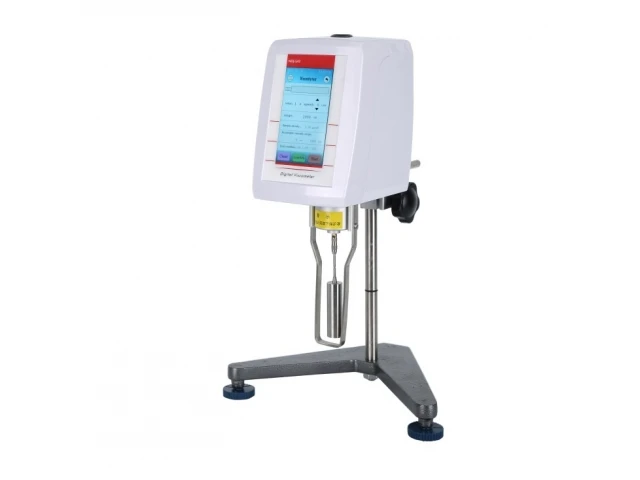
The working logic of digital viscometer is derived from the basic physical principle of fluid flow resistance, with core structural components including a precision drive system, sensing detection module, digital signal processing unit, and real-time data display component. Different from mechanical viscometers that rely on dial pointer reading and manual data conversion, digital viscometers convert physical resistance signals generated by fluid contact into electrical signals through high-sensitivity sensors. During operation, the drive system maintains a stable and uniform motion state of the detection component immersed in the fluid sample. When the detection component moves relative to the fluid, the internal friction of the fluid will generate a certain resistance torque or damping effect on the component. The built-in sensing module captures these subtle physical changes in real time and transmits the collected original signal to the digital processing unit. After filtering, amplification, algorithm correction, and data calibration by the microprocessor, the system converts the physical signal into accurate viscosity numerical values, which are directly presented on the display interface, realizing integrated testing and output of viscosity parameters.
There are multiple structural and functional classifications of digital viscometers, among which rotational and vibration types are the two most widely applied forms in current market applications. Rotational digital viscometers occupy a dominant position in conventional testing scenarios and adapt to the viscosity detection of most Newtonian and non-Newtonian fluids. This type of instrument is equipped with multiple detection spindles of different specifications and geometric structures, and can match different spindle combinations and rotation speeds according to the viscosity range of test samples. For low-viscosity fluids with weak flow resistance, small-sized spindles and relatively fast rotation speeds are adopted to capture effective resistance signals; for high-viscosity fluids with strong internal friction, large-sized spindles and low-speed stable rotation modes are used to avoid signal distortion caused by excessive resistance. This flexible matching mode enables rotational digital viscometers to cover a wide viscosity testing range, achieving effective detection from low-viscosity solutions to high-viscosity colloids and paste materials.
Vibrating digital viscometers adopt a different testing mechanism, relying on the natural vibration characteristics of precision vibrating components to complete viscosity measurement. The built-in vibration probe maintains a fixed natural vibration frequency under electromagnetic excitation. When the probe is immersed in a fluid sample, the viscosity of the fluid will produce a damping effect on the vibration amplitude and vibration cycle of the probe. The higher the fluid viscosity, the more obvious the vibration attenuation and the longer the damping recovery time. The internal microprocessor calculates the real-time viscosity value of the fluid by monitoring the vibration attenuation degree and combining with built-in physical algorithms. This structural design eliminates the need for rotating moving parts, reducing mechanical friction interference during testing, and showing better adaptability for low-viscosity fluid testing and continuous online monitoring scenarios.
Compared with traditional mechanical viscometers, digital viscometers have obvious technical and operational advantages in actual use. First of all, they effectively reduce human operation errors. Traditional testing methods require operators to manually control timing, observe pointer scales, and record data for conversion calculation, and the test results are easily affected by personal operational habits and visual judgment differences. Digital viscometers realize automated whole-process testing after parameter setting, with signal acquisition and data calculation completed by the system program, ensuring the consistency and repeatability of test data. Secondly, most digital viscometers are equipped with real-time temperature monitoring components. Fluid viscosity is highly sensitive to temperature changes, and subtle temperature fluctuations will cause obvious deviations in viscosity parameters. The built-in temperature sensing module can synchronously monitor the sample temperature during viscosity testing, and some systems can also perform temperature compensation correction on test data according to preset algorithms, further improving the accuracy of test results.
In addition to accurate data output, digital viscometers have intelligent data management functions that traditional equipment does not possess. The instrument system can automatically store test data, including real-time viscosity values, test time, matching spindle parameters, rotation speed settings, and corresponding sample temperature data. The stored data can be called and viewed at any time, and can also be exported through external data interfaces to facilitate subsequent data sorting, comparative analysis, and experimental result archiving. This function is particularly suitable for batch testing scenarios in industrial production and long-term experimental research in scientific research laboratories, avoiding data loss and recording errors caused by manual paper recording, and improving the overall efficiency of testing work.
The application scenarios of digital viscometers cover almost all industrial fields involving fluid material processing and quality inspection. In the coating and chemical industry, the viscosity of paint, ink, adhesive, and resin materials directly affects the coating uniformity, bonding performance, and curing effect of products. Excessively high viscosity will lead to poor fluidity of the material, resulting in uneven coating and easy sedimentation; excessively low viscosity will cause material sagging, thin coating thickness, and reduced bonding strength. Enterprises use digital viscometers to conduct real-time sampling testing of production materials, adjust production formulas and process parameters according to viscosity changes, and maintain stable product quality in batch production.
In the food processing industry, viscosity parameters are key indicators that determine the taste, texture, and product stability of food products. Liquid and semi-solid food materials such as sauces, dairy products, beverages, honey, and cream have strict viscosity standards. Moderate viscosity can ensure the uniform taste of food, avoid layered precipitation during storage, and also facilitate the progress of production processes such as stirring, filling, and packaging. Digital viscometers can accurately detect the viscosity changes of food materials in different processing stages, provide data support for process optimization, and ensure the consistency of taste and quality of finished food products.
The petroleum and lubricant industry is also an important application field of digital viscometers. The viscosity of crude oil, refined oil, lubricating grease, and hydraulic oil directly determines their lubricating performance, fluidity, and service adaptability under different temperature environments. Lubricating oil with stable viscosity can form a uniform protective oil film on mechanical friction surfaces, reduce equipment wear and improve the operational stability of mechanical equipment. In petroleum processing and lubricant production, digital viscometers are used for continuous testing of raw materials and finished products to screen unqualified materials and ensure that product performance meets production and use requirements.
In the daily chemical and cosmetic industry, the viscosity of cosmetics and daily chemical products such as facial cleanser, lotion, shampoo, and shower gel is closely related to product appearance, user experience, and product stability. Reasonable viscosity design can make the product have good ductility and ease of use, while avoiding thinning and leakage or excessive thickening and difficult extrusion during use. Production personnel use digital viscometers to monitor product viscosity in real time in the batching and stirring links, adjust the proportion of raw materials, and ensure the stable texture and use effect of daily chemical products.
In pharmaceutical and new material research laboratories, digital viscometers provide accurate basic data for material research and development. Many pharmaceutical liquids, biological reagents, and new polymer materials have strict viscosity parameter requirements. The flow characteristics and structural stability of materials under different viscosity states directly affect the efficacy of pharmaceutical products and the application performance of new materials. Researchers rely on the high-precision testing ability of digital viscometers to record the viscosity change rules of samples under different temperatures, concentrations, and stirring conditions, summarize the optimal material ratio and process parameters, and provide reliable experimental basis for the development and performance optimization of new products.
Although digital viscometers have excellent testing performance and wide applicability, standardized operation and reasonable sample preparation are still key factors to ensure accurate test results in actual use. Before testing, it is necessary to check the operating state of the instrument, ensure the stability of the placement level of the equipment, and clean the detection spindle or probe to avoid residual impurities from interfering with the test results. For different fluid samples, it is required to select appropriate testing accessories and operating parameters according to the viscosity characteristics of the samples. For non-Newtonian fluids with shear thinning or shear thickening characteristics, it is necessary to set multi-stage rotation speeds or vibration parameters to test the apparent viscosity changes under different shear conditions, so as to comprehensively grasp the fluid flow performance.
At the same time, the influence of external environmental factors on the test process should not be ignored. In addition to temperature, environmental vibration, air flow, and sample standing time will all affect the accuracy of viscosity testing. During the test, the instrument should be placed in a stable and closed testing environment to avoid vibration interference and rapid air flow. For samples that are easy to stratify and precipitate, uniform stirring should be carried out before testing to ensure the uniformity of the sample state and make the test data truly reflect the actual viscosity characteristics of the material.
With the continuous progress of industrial intelligence and detection technology, digital viscometers are developing towards higher precision, stronger integration, and more convenient operation. The continuous optimization of sensor sensing technology and digital algorithm enables the instrument to capture more subtle fluid resistance changes, improving the resolution and accuracy of low-range viscosity testing. The integrated design of temperature control and viscosity testing realizes synchronous adjustment and monitoring of temperature and viscosity, making the test environment more stable. In addition, the continuous upgrading of data interconnection functions enables the instrument to realize real-time data transmission and remote monitoring, which is convenient for enterprises to integrate testing data into the production management system, realize intelligent monitoring of the whole production process, and provide stronger technical support for standardized production and refined quality control in various industries.
As an indispensable precision testing instrument in modern industrial production and scientific research, digital viscometers solve the pain points of large error, low efficiency, and difficult data management of traditional viscosity testing methods. Its automated testing process, accurate data output, and intelligent data management functions make viscosity detection work more standardized and efficient. With the continuous improvement of industrial production precision requirements and the continuous expansion of new material research fields, the application value and application scope of digital viscometers will be further improved, playing a more important role in promoting technological progress and quality upgrading of various industries.
https://www.veidtweighing.com/Balance/DigitalViscometer
Post Date: Jun 7, 2026
https://www.supplier-manufacturer.com/weight-balance-scale/digital-viscometers.html

![200g Stainless Steel Weight]()
200g Stainless Steel Weight
In the vast landscape of mass measurement and balance adjustment tools, the 200g stainless steel weight stands out as a foundational and versatile component that seamlessl…![2kg Stainless Steel Corrosion Resistant Test Weight]()
2kg Stainless Steel Corrosion Resistant Test Weight
In modern industrial production, laboratory testing, and daily precision measurement work, standard test weights serve as fundamental auxiliary tools to ensure the accurac…![Industrial Stainless Steel Weight For Weighing Scale]()
Industrial Stainless Steel Weight For Weighing Scale
In modern industrial production and material management processes, accurate weight measurement serves as one of the fundamental foundations for maintaining stable producti…![Stainless Steel Lock Type Calibration Weight For Crane Scale]()
Stainless Steel Lock Type Calibration Weight For Crane Scale
Crane scales serve as essential weighing equipment in modern industrial operations, widely deployed in heavy-load weighing, cargo measurement, and weight verification acro…![Slotted Test Weight]()
Slotted Test Weight
Slotted test weight stands as a foundational and indispensable component within the broader landscape of physical measurement, mechanical testing, and educational experime…