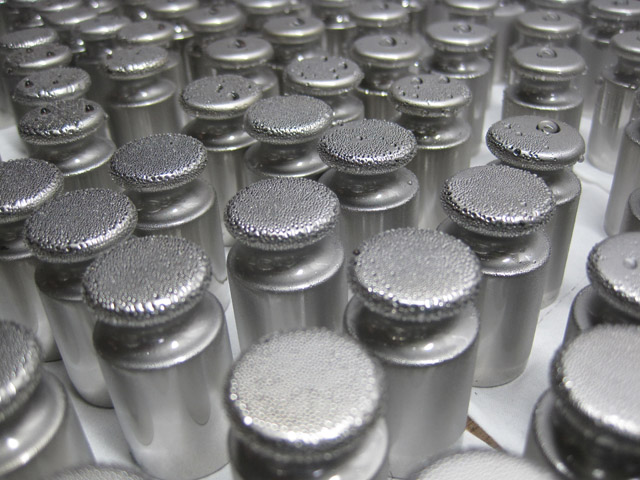
Stainless Steel Lock Type Calibration Weight For Crane Scale
Crane scales serve as essential weighing equipment in modern industrial operations, widely deployed in heavy-load weighing, cargo measurement, and weight verification across manufacturing plants, logistics terminals, construction sites, and port operations. To maintain consistent weighing precision and stable operational performance of crane scales in long-term use, regular calibration with professional standard weights becomes an indispensable part of daily equipment maintenance and metrological management. Among various calibration tools available for crane scale testing, stainless steel lock type calibration weights stand out for their reliable structural design, stable physical properties, and strong environmental adaptability, becoming a mainstream choice for industrial crane scale calibration work. These specialized weights are tailor-made to match the structural characteristics and working scenarios of crane scales, effectively solving the calibration difficulties caused by frequent hoisting, outdoor operation, and complex working conditions of large-scale hanging weighing equipment.
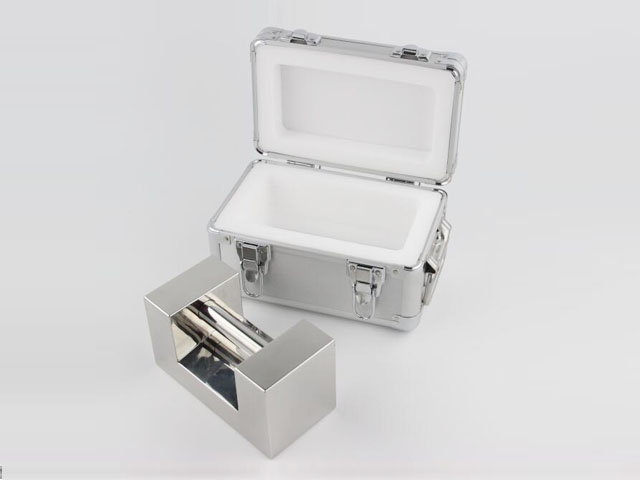
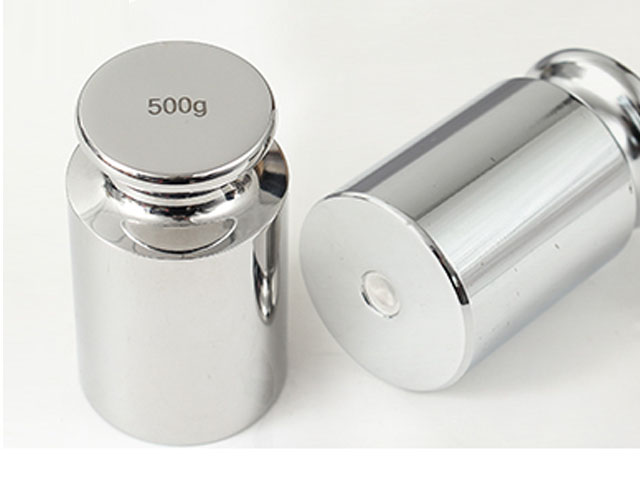
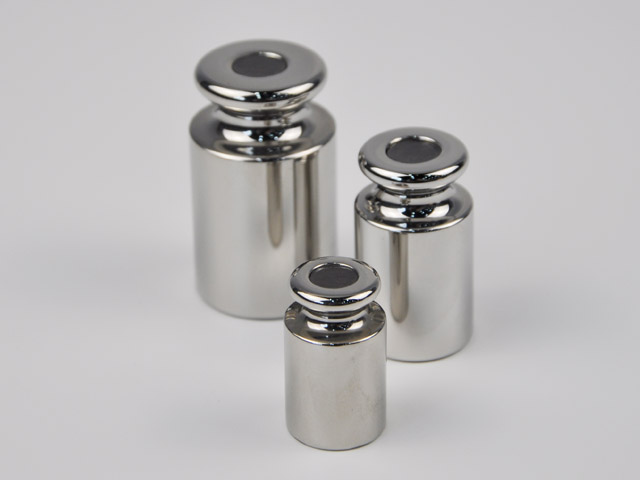
The core material of lock type calibration weights for crane scale is high-quality stainless steel, a material selected for its comprehensive physical and chemical advantages that fit industrial calibration demands perfectly. Unlike ordinary carbon steel materials that are prone to oxidation and surface deterioration, stainless steel features dense internal structure and excellent chemical inertness, which can effectively resist oxidation, rust, and corrosion in conventional industrial environments. In outdoor working scenarios with variable temperature and humidity, as well as factory environments with trace oil stains, dust, and mild chemical vapors, the stainless steel body can maintain stable surface condition and constant mass for a long time. The material undergoes fine forging and integral forming processing, with uniform internal density and no internal pores or impurity defects, which avoids mass deviation caused by material structural changes during long-term use. Meanwhile, the surface of the weight is treated with fine polishing and smoothing processes, reducing surface roughness and minimizing the adsorption of dust, moisture, and other tiny impurities in the air. This low-adsorption surface characteristic greatly reduces the mass change of the weight caused by environmental adhesion, ensuring that the basic mass reference state remains stable during each calibration operation.
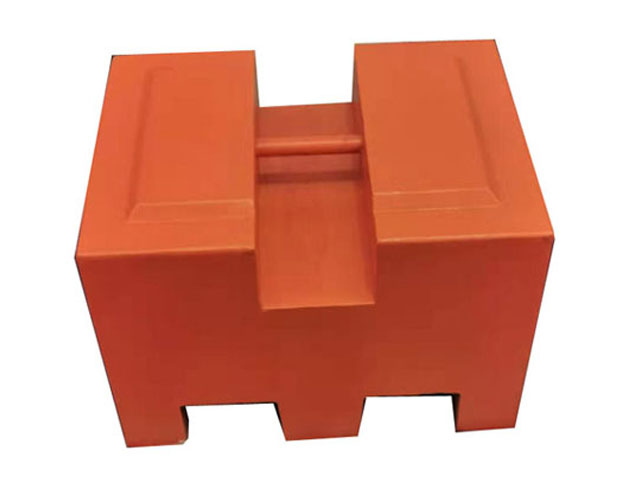
The unique lock type structural design is the key feature that distinguishes this calibration weight from ordinary flat or cylindrical standard weights, and it is also the core reason for its high adaptability to crane scale calibration. Different from fixed integrated weights, the lock type structure adopts a combined locking design, which allows flexible assembly and disassembly according to actual calibration capacity requirements. The weight body is equipped with a matching locking groove and clamping structure, enabling multiple single weights to be stably locked into a whole through embedded clamping connection. This structural design effectively avoids relative displacement, sliding, or falling off of multiple weights during the hoisting and hanging calibration process of crane scales. In the calibration work of large-tonnage crane scales, it is often necessary to combine multiple standard weights to reach the calibrated load range. Ordinary combined weights are prone to loose stacking during hanging hoisting, which affects the uniformity of load bearing and further interferes with the accuracy of calibration results. The lock type connection structure can tightly fix each weight unit into an integrated load-bearing whole, ensuring uniform stress on each part of the combined weight and stable overall center of gravity, so that the load applied on the crane scale is consistent with the standard mass value in the calibration process.
In terms of operational adaptability, the lock type calibration weight is optimized for the hanging working mode of crane scales. Crane scales complete weighing through hanging load-bearing, and the calibration process requires the test weight to maintain a stable hanging state for a certain period to detect the weighing deviation, repeatability, and stability of the scale. The overall structure of the stainless steel lock type weight is compact and regular, with a reasonable center of gravity design, which can effectively reduce shaking and swinging during hanging hoisting. Compared with irregular cast iron weights, its stable hanging state can avoid dynamic weighing errors caused by weight swing, making the calibration data more accurate and reliable. In addition, the structural size of the lock type weight is standardized, with reserved handling and hoisting positions on the body. Workers can use conventional lifting tools to transport, stack, and hang the weight conveniently, which improves the efficiency of on-site calibration operations and reduces the labor cost of equipment maintenance.
The application scenarios of stainless steel lock type calibration weights cover almost all working environments where crane scales are put into use. In mechanical processing and manufacturing factories, crane scales are commonly used for weighing heavy mechanical parts, raw material blanks, and finished product components. Long-term frequent hoisting and vibration will cause subtle changes in the internal stress and sensor parameters of crane scales, leading to gradual weighing deviation. Regular calibration with lock type stainless steel weights can timely detect and correct such deviations, ensuring that the weighing data of production materials and finished products meets operational requirements, and providing accurate data support for production quality control and material accounting. In port and terminal logistics operations, crane scales undertake the weighing work of container cargo, bulk goods, and large freight. The on-site environment of ports is humid and windy, with frequent salt spray erosion, which puts forward high requirements on the corrosion resistance and structural stability of calibration weights. The stainless steel material and integrated locking structure can adapt to such harsh outdoor environments, maintaining stable calibration performance in long-term wind and sun exposure and humid working conditions.
Construction engineering sites also constitute a major application scenario for these calibration weights. Tower cranes and hanging weighing equipment on construction sites need to weigh building materials such as steel structures, concrete components, and prefabricated parts. The complex construction site environment, including dust, mud, and variable temperature changes, easily affects the precision of crane scales. The smooth and dense surface of stainless steel weights is not easy to accumulate dust and dirt, and can be cleaned quickly with conventional cleaning methods after use, which is convenient for daily maintenance. The reliable locking structure can still keep the weight combination stable in the bumpy and vibrating on-site hoisting process, avoiding calibration failure caused by loose weight combination. At the same time, for small and medium-sized crane scales used in workshops, warehouses, and freight stations, the flexible combination function of lock type weights can meet the calibration requirements of different load ranges from small load debugging to full-load detection, realizing multi-scene and multi-range universal calibration.
In terms of service performance and durability, stainless steel lock type calibration weights have obvious advantages over traditional cast iron calibration weights. Cast iron weights are easy to rust and peel in humid and open environments, and the falling surface rust will cause mass loss, resulting in inaccurate calibration reference values. Moreover, cast iron materials are relatively brittle, and collision and extrusion during handling and use are likely to cause edge damage or local deformation, affecting the structural integrity and mass stability of the weights. In contrast, stainless steel materials have high hardness and good toughness, with strong resistance to collision, extrusion and wear. Daily handling, stacking and hoisting collisions will not easily cause deformation or damage to the weight body. The stable physical and chemical properties enable the weight to maintain long-term mass consistency, effectively extending the service cycle and reducing the frequency of equipment replacement and maintenance.
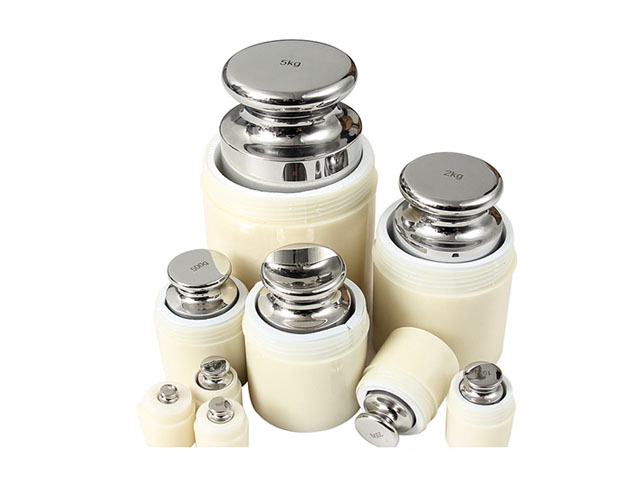
The standardized design of lock type calibration weights also provides great convenience for daily metrological management and regular equipment inspection. Each weight is produced with strict dimensional and mass tolerance control, with uniform specification standards and good interchangeability between weight units of the same specification. In the daily calibration work of enterprises, staff can freely combine weights of different specifications according to the detection range of different crane scales, without being restricted by single fixed specification. The integrated locking structure makes the combined weight form a whole with fixed specifications, which is convenient for unified counting, storage and management. After the calibration work is completed, the weights can be disassembled and stacked neatly, occupying less storage space, which is conducive to on-site equipment management and standardized storage of metrological tools.
Correct use and daily maintenance are crucial to maintaining the long-term precision and service life of stainless steel lock type calibration weights. In the calibration operation, staff should check the locking structure of the weights first to ensure that all clamping parts are tightly connected without looseness or dislocation, so as to avoid structural instability during hoisting. When hanging the weights on the crane scale, ensure that the load is vertical and evenly stressed, and avoid eccentric load caused by inclined hanging, so as to ensure the authenticity and accuracy of calibration data. During the handling process, moderate operation should be maintained to avoid violent collision with hard objects. Although stainless steel materials have strong wear resistance, excessive impact may still cause local structural changes and affect mass stability. For daily maintenance, the surface of the weights should be kept clean and dry. After use in humid or dusty environments, wipe the surface with a dry soft cloth to remove residual dust, water stains and sundries, and place them in a dry and ventilated environment for storage. Long-term exposure to humid air or stacked with corrosive articles should be avoided to maintain the surface state and structural performance of the weights.
In the field of industrial metrological calibration, the accuracy of reference tools directly determines the reliability of equipment detection data. As a special calibration tool for crane scales, stainless steel lock type calibration weights adapt to the special working mode and complex application environment of crane scale equipment through material optimization and structural innovation. Its stable mass performance, reliable structural safety, strong environmental adaptability and flexible use characteristics make it an important basic tool to ensure the normal operation of crane weighing equipment. With the continuous improvement of industrial production precision requirements and the gradual standardization of on-site metrological management, the demand for high-stability and high-adaptability calibration weights in various industries is increasing. The lock type stainless steel calibration weight will continue to play an important role in the daily calibration, regular detection and precision maintenance of crane scales in various industrial scenarios, providing solid guarantee for the accuracy and stability of industrial heavy-load weighing work.
Stainless Steel Lock Type Calibration Weight For Crane Scale
https://www.veidtweighing.com/ssweight/StainlessSteelWeight
Post Date: May 28, 2026

![Forklift Scale Calibration Standard Weight]()
Forklift Scale Calibration Standard Weight
Forklift scale calibration with standard weights serves as a core operational practice in industrial logistics, manufacturing, and warehouse management, ensuring that onbo…![500g Calibration Weight For Balance Scale]()
500g Calibration Weight For Balance Scale
In every industry and research field that relies on accurate mass measurement, maintaining the reliability of balance scales is a fundamental prerequisite for consistent a…![100kg Stainless Steel Calibration Weight Logistics Scale]()
100kg Stainless Steel Calibration Weight Logistics Scale
In modern logistics and industrial operation systems, accurate weight measurement serves as a fundamental foundation for standardized operation, cost accounting, inventory…![Standard Weight For Sale]()
Standard Weight For Sale
In every sector that relies on accurate mass measurement to maintain operational consistency and reliable operational outcomes, standard weights stand as foundational tool…![Heavy Duty Standard Weight]()
Heavy Duty Standard Weight
In industrial production, daily operational work, and various professional application scenarios, the definition and application of heavy duty standard weight have always …