Floor Scales
Floor scales have become indispensable foundational equipment in modern industrial production, commercial logistics, and daily operational management, serving as reliable tools for weight detection of heavy and bulky goods across diverse scenarios. Unlike desktop weighing devices designed for small and lightweight items, floor scales are engineered to adapt to large-volume, heavy-load weighing demands, featuring sturdy structural design and flexible application forms that fit seamlessly into factory floors, warehouse spaces, and processing workshops. Their core value lies in converting physical load pressure into accurate weight data, providing credible numerical support for production scheduling, inventory management, cargo settlement, and quality control, making them a vital part of standardized operational workflows in various industries.
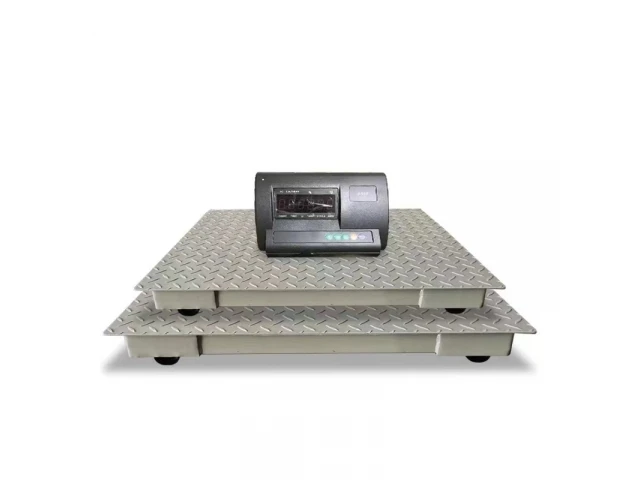
The structural design of floor scale focuses on practicality and environmental adaptability, with every detail optimized for complex operational scenarios. The main weighing platform adopts thickened metal materials with high rigidity and strong pressure resistance, which can bear long-term static load and occasional dynamic impact generated by cargo stacking and handling. The surface of the platform is usually treated with anti-slip and wear-resistant processes to prevent goods from sliding during the weighing process and avoid measurement errors caused by positional deviation. The overall low-profile structure allows the equipment to be closely attached to the ground, eliminating the height difference that affects cargo handling efficiency. This structural feature enables forklifts, pallet jacks, and other handling tools to directly transport goods to the weighing platform without auxiliary equipment, greatly simplifying the weighing operation process and improving overall work efficiency.
Beneath the platform, high-sensitivity sensing components are arranged in a balanced distribution, which is the core part that ensures stable and accurate weighing data. These sensing components can sensitively capture the pressure changes generated by loaded goods and convert mechanical signals into readable digital signals through internal circuit systems. During the design process, the equipment fully considers the interference factors in industrial environments, such as slight ground vibration, ambient temperature changes, and dust accumulation, and adds targeted anti-interference designs. This enables floor scales to maintain stable working performance in long-term continuous operation, avoiding data jitter and deviation caused by external environmental fluctuations. The supporting feet of the scale body are adjustable in height, which can adapt to slightly uneven ground conditions, ensuring the overall level of the weighing platform and further guaranteeing the consistency of weighing results.
In terms of functional design, modern floor scales break the single weighing function of traditional weighing equipment and integrate multiple practical functions that match industrial operational needs. The basic tare weight deduction function can automatically exclude the weight of pallets, packaging boxes, and container tools, directly presenting the net weight of materials and goods, reducing manual calculation steps and lowering the probability of human error. The data locking function can fix the final weighing data after the goods are stabilized, facilitating staff to record and check data, especially suitable for fast-paced cargo sorting and weighing scenarios. Most floor scales are equipped with intuitive digital display modules, with clear screen content that can be quickly read in different light environments. Meanwhile, the equipment supports real-time data transmission, which can be connected with on-site management systems to realize automatic data recording, statistical analysis, and data upload, helping enterprises realize digital management of weighing links.
The application scenarios of floor scales cover almost all industries that require heavy-load weighing measurement, showing extremely high versatility and compatibility. In the manufacturing industry, floor scales run through the entire production process from raw material incoming inspection to finished product delivery. In the material batching link of mechanical processing, chemical production, and building materials manufacturing, accurate weight data of raw materials is the key to ensuring product formula compliance and production stability. By relying on floor scales to control the dosage of various raw materials, enterprises can maintain consistent product quality and avoid performance fluctuations caused by uneven material ratios. In the finished product inspection link, floor scales are used to check the weight of single products or batch goods, screen out products with unqualified filling volume or insufficient loading capacity, and complete the basic work of production quality control.
In the logistics and warehousing industry, floor scales are core equipment for cargo measurement and inventory management. Warehouses use floor scales to weigh incoming and outgoing palletized goods, bulk materials, and packaged products, providing accurate weight basis for cargo counting, settlement, and transportation scheduling. For logistics distribution enterprises, the weight data of goods directly affects transportation plan formulation, load distribution, and freight statistics. The efficient and accurate weighing capability of floor scales ensures the rationality of transportation arrangements and avoids resource waste caused by inaccurate cargo weight assessment. In daily inventory sorting and cycle counting work, staff can quickly complete the weight statistics of bulk goods through floor scales, verify the consistency between actual inventory and system data, and improve the refinement level of warehouse inventory management.
The food processing and beverage industry puts forward higher requirements for the environmental adaptability and cleaning performance of weighing equipment, and floor scales can well meet the special needs of this industry. The stainless steel platform material is not only corrosion-resistant and rust-proof but also easy to clean and disinfect, which can effectively avoid residue accumulation of food raw materials, additives, and finished products, conforming to the hygienic operation standards of food production. In the ingredient preparation stage of food processing, floor scales are used for precise weighing of various raw materials and auxiliary materials to ensure the standardized production of food formulas. In the finished product packaging link, the equipment can detect the net weight of packaged products to prevent insufficient packaging weight or excessive material consumption, controlling production costs while ensuring product qualification rate.
In the chemical and new material industry, floor scales adapt to the weighing needs of special materials such as chemical raw materials, liquid preparations, and powdered materials. Some optimized floor scale structures are equipped with anti-leakage designs, which can effectively contain liquid materials that may spill during weighing, avoiding environmental pollution and equipment damage. For bulky chemical containers and intermediate tonnage packaging barrels, floor scales can complete stable weighing work, providing accurate data support for material batching, reaction proportioning, and finished product delivery. The stable anti-interference performance of the equipment also enables it to work normally in chemical production environments with slight corrosive gas and dust, maintaining long-term reliable operation.
The recycling and resource regeneration industry is also an important application field of floor scales. Waste metal recycling, plastic resource recovery, construction waste sorting, and other links all require accurate weighing of recycled materials. Floor scales can bear the weight of large batches of recycled materials and bulky waste equipment, providing objective weight data for material recycling statistics, resource accounting, and transaction settlement. By recording the weight of incoming and outgoing recycled materials, enterprises can effectively count resource recovery efficiency, optimize recycling process arrangements, and realize standardized management of resource regeneration operations.
Good daily maintenance and standardized use habits are key factors to extend the service life of floor scales and maintain stable weighing accuracy. In daily use, staff should keep the weighing platform clean and tidy, timely remove accumulated dust, debris, and residual materials on the surface, to prevent foreign matters from affecting the contact balance between the platform and goods and causing measurement errors. It is necessary to avoid violent impact and heavy pressure beyond the bearing range during use. Although the equipment has strong load-bearing capacity, long-term overload operation or violent collision will cause structural deformation of the platform and damage to internal sensing components, affecting long-term use accuracy.
Regular inspection and calibration are essential maintenance links for floor scales. In the daily operation process, affected by ground settlement, component aging, and environmental changes, the weighing data may have slight deviation. Regular professional calibration can correct data errors and ensure the long-term stability of weighing accuracy. At the same time, it is necessary to regularly check the connection of equipment lines and the flexibility of adjustable supporting feet, eliminate hidden dangers such as loose lines and unbalanced support, and ensure the normal operation of the equipment. For floor scales used in humid, dusty, or slightly corrosive environments, targeted protective maintenance should be done regularly to slow down component aging and structural wear.
When selecting and configuring floor scales, enterprises need to combine their own actual application scenarios and operational needs to make reasonable matching. First of all, the bearing range of the equipment should match the maximum weight of conventional weighing goods, leaving a reasonable margin on the basis of meeting daily use, to avoid long-term full-load operation accelerating equipment loss. Secondly, the platform size should adapt to the conventional cargo specification, ensuring that the goods can be stably placed on the platform without overhanging, so as to guarantee the accuracy of weighing data. In addition, the environmental characteristics of the use site need to be considered comprehensively, and equipment with corresponding structural materials and functional configurations should be selected according to the humidity, dust degree, and material characteristics of the working environment.
With the continuous upgrading of industrial intelligent management systems, floor scales are also evolving towards more intelligent and integrated development. Modern floor scales can realize seamless connection with warehouse management systems, production execution systems, and data statistical platforms. The weighing data generated on site can be automatically uploaded and stored, forming traceable data records, which facilitates enterprise staff to conduct data analysis, production optimization, and operation auditing. Some optimized models support multi-dimensional data statistics and automatic sorting judgment, which can assist enterprises in realizing automated screening of qualified and unqualified goods, further improving the intelligence level of on-site operations.
In the entire industrial and commercial operation system, floor scales are seemingly ordinary auxiliary equipment, but they undertake the important basic work of data measurement and standard control. All links including production batching, quality inspection, cargo settlement, and inventory management rely on the accurate data provided by floor scales to realize standardized and orderly operation. Its sturdy and durable structural design adapts to harsh industrial environments, flexible and diverse functional configurations meet the differentiated needs of multiple industries, and intelligent data output capabilities fit the development trend of modern enterprise digital management. In the future, with the continuous improvement of industrial operation refinement requirements, floor scales will continue to play an irreplaceable role in various fields, providing stable and accurate basic measurement support for the efficient operation and standardized development of enterprises.
https://www.veidtweighing.com/IndustrialScale/FloorScale
Post Date: Jun 7, 2026
https://www.supplier-manufacturer.com/weight-balance-scale/floor-scales.html

![Test Weight Production]()
Test Weight Production
Test weight production stands as a foundational industrial manufacturing activity that underpins the reliability and consistency of weighing operations across countless in…![Attribute of Calibration Weight]()
Attribute of Calibration Weight
Calibration weights serve as foundational physical references for all weighing and metering operations across industrial production, laboratory research, commercial transa…![Calibration Weight Price]()
Calibration Weight Price
The pricing of calibration weights is never determined by a single superficial factor or random market fluctuation, but by a complex and interconnected system of industria…![Cast Iron Weight For Calibration]()
Cast Iron Weight For Calibration
In the intricate and interconnected landscape of modern industrial production, commercial trade, and scientific measurement, the reliability of weighing data stands as an …![2000kg Test Weight]()
2000kg Test Weight
In the complex and interconnected ecosystem of modern industrial production, logistics transportation, engineering construction, and mechanical equipment operation, the st…