Truck Scales
In modern industrial production, logistics transportation, and resource management, accurate weight measurement of large vehicles and their loaded materials serves as a fundamental link for standardized operation and efficient management. A truck scale, widely recognized as a reliable weighing system for heavy-duty vehicles, has become an essential piece of infrastructure across numerous industrial and commercial sectors. It is specially designed to measure the gross weight, tare weight, and net load weight of various trucks and cargo vehicles, providing credible weight data support for material settlement, inventory statistics, transportation supervision, and production process control. As industrial scale continues to expand and logistics operation procedures become increasingly standardized, the role of truck scales in optimizing operational efficiency and regulating industrial behaviors has grown increasingly prominent, making them an indispensable part of modern industrial and logistics systems.
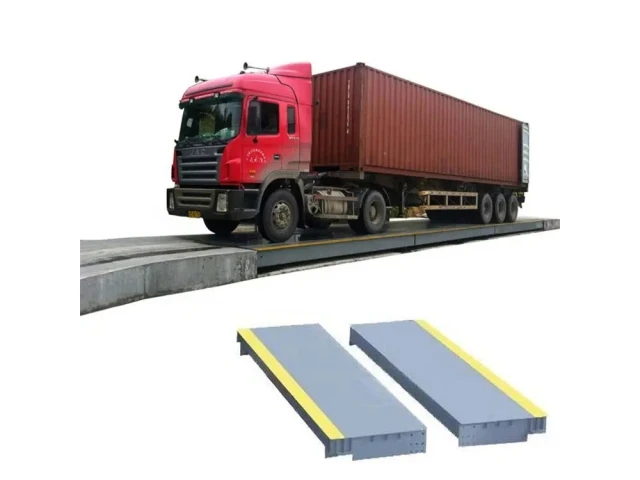
The basic composition of a truck scale follows mature mechanical and electronic integration design concepts, with each functional component cooperating closely to complete high-stability weighing work. The main body of the equipment is a high-strength weighing platform, usually constructed with thick structural steel or reinforced concrete materials. This platform needs to bear the long-term impact and pressure of heavy vehicles, so it adopts an integrated and stable structural design to avoid deformation or structural fatigue caused by frequent load changes. The flat and smooth surface of the platform ensures that vehicles can park stably during weighing, preventing measurement errors caused by vehicle tilting or unstable stress. Beneath the weighing platform, multiple sensing components are evenly arranged, which are the core units for converting mechanical pressure into measurable electronic signals. These sensing components can accurately capture the pressure changes generated by the vehicle and cargo on the platform, and convert the mechanical force into continuous and stable electrical signals according to fixed physical principles.
In addition to the mechanical platform and sensing units, a complete truck scale system also includes signal transmission lines, data processing modules, and data display and output terminals. The electrical signals collected by the sensing components will be transmitted to the processing module through specialized transmission lines, which effectively shield external electromagnetic interference and ensure the integrity and stability of signal transmission. The processing module is responsible for amplifying, filtering, and digitally converting the original electrical signals, eliminating interference data generated by external environmental factors such as ground vibration and air flow. After systematic algorithm calculation and data calibration, the analog signals are finally converted into intuitive digital weight values, which are displayed on the terminal equipment and can be stored and exported in real time. This integrated design of machinery and electronics enables the truck scale to maintain stable working performance in complex industrial environments and realize repeatable and consistent weighing results.
The working logic of a truck scale follows basic physical principles of force transmission and signal conversion, and the entire weighing process presents high scientific rigor and operational simplicity. When a vehicle drives slowly onto the weighing platform and comes to a complete stop, the overall gravity of the vehicle and its cargo acts evenly on the platform structure. The platform transmits the vertical pressure to the underlying sensing components, and the internal elastic structure of the sensors produces tiny elastic deformation under uniform force. The deformation degree is positively correlated with the pressure applied, that is, the total weight of the vehicle and the cargo. The internal strain structure of the sensors converts this mechanical deformation into weak electrical signal changes. The greater the pressure, the more obvious the signal change, forming a stable corresponding relationship between load weight and electrical signal parameters.
After the signal is transmitted to the data processing unit, the system will perform automatic correction and calculation based on pre-set parameter programs. It can effectively eliminate the influence of platform self-weight, environmental temperature changes, and minor ground changes on measurement results. Through intelligent algorithm processing, the system can quickly calculate the gross weight of the fully loaded vehicle. Combined with the pre-recorded empty vehicle tare weight data, it can automatically deduce the net weight of the loaded materials, realizing one-stop data acquisition of vehicle load. The whole weighing process does not require complex manual operation, and only needs to ensure that the vehicle is parked stably on the effective weighing area of the platform. The system can complete data collection and calculation in a short time, realizing efficient and accurate weighing operation.
According to different usage scenarios and operational demands, truck scales can be divided into two common application forms in actual industrial use: static weighing mode and segmented axle weighing mode. Static full-platform weighing is the most widely used mode, which requires the entire vehicle to stay on the weighing platform for overall weight measurement. This mode features stable data and good consistency, and is suitable for scenarios with high accuracy requirements for material measurement and cargo settlement. Segmented axle weighing is designed for site environments with limited platform length or frequent rapid detection demands. It measures the weight of each axle of the vehicle in segments and calculates the total vehicle weight through cumulative calculation. This mode improves the flexibility of weighing work and can adapt to diversified detection demands in different scenarios.
Truck scales have extremely wide application coverage, penetrating into core operation links of multiple industries. In the field of bulk material trading and processing such as mines, quarries, and sand and gravel yards, truck scales are used for real-time weighing of mined ores, building materials, and bulk raw materials. Accurate weight data serves as the core basis for material transaction settlement, inventory counting, and output statistics, effectively avoiding measurement deviations in bulk material transactions and ensuring the fairness and standardization of trading behaviors. For agricultural production and grain circulation fields, truck scales undertake the weighing work of grain, feed, and agricultural and sideline product transportation, providing accurate data support for grain purchasing, storage warehousing, and agricultural material distribution, and helping agricultural circulation links achieve refined management.
In the logistics and freight industry, truck scales are key equipment for standardized transportation management. They assist relevant departments and enterprises in detecting vehicle load conditions, effectively avoiding road overload operation caused by excessive cargo loading. Overload transportation not only causes serious wear and damage to road infrastructure but also easily triggers traffic safety risks. By accurately measuring vehicle load weight, truck scales standardize freight loading behaviors, protect road facilities, and improve the safety of road transportation. At the same time, for logistics enterprises, vehicle load weighing data can help optimize vehicle loading plans, improve single-vehicle transportation efficiency, and reduce ineffective transportation costs, realizing dual improvements of operational standardization and economic benefits.
In industrial manufacturing and chemical production enterprises, truck scales are applied to the incoming inspection of raw materials and the outgoing statistics of finished products. Many manufacturing enterprises need to purchase large quantities of bulk raw materials such as coal, chemical raw materials, and metal materials. Accurate weighing through truck scales can verify the actual receiving quantity of raw materials, avoid material loss or quantity deviation in the procurement link, and control production costs effectively. For finished product delivery, weighing data can accurately record the outbound quantity of products, facilitate enterprise inventory reconciliation and sales data statistics, and realize full-process traceability of materials from incoming storage to outgoing delivery.
In environmental protection and waste disposal fields such as landfills and waste recycling stations, truck scales also play an irreplaceable role. They are used to weigh urban domestic waste, industrial waste, and recycled materials, providing accurate data for waste volume statistics, disposal fee settlement, and resource recycling accounting. These data can also provide effective reference for environmental protection department supervision and urban waste management policy formulation, helping realize standardized and quantified management of urban waste disposal.
Long-term stable operation of truck scales is inseparable from scientific daily maintenance and standardized operational management. As outdoor industrial equipment, truck scales are exposed to complex environmental conditions such as wind, rain, dust, and temperature changes for a long time, and daily maintenance directly affects measurement stability and service life. In daily use, it is necessary to keep the surface of the weighing platform clean and flat, and timely remove accumulated dust, sediment, and sundries on the platform to prevent foreign objects from affecting the stress uniformity of the platform and causing measurement errors. At the same time, the drainage structure around the equipment should be inspected regularly to avoid rainwater accumulation and long-term soaking of the foundation, which may lead to foundation settlement and affect the horizontal balance of the weighing platform.
Regular inspection and maintenance of core components are crucial to maintain equipment performance. The sensing components and signal transmission parts inside the equipment need regular inspection to check for loose wiring, aging lines, or sensor stress abnormalities. Long-term vehicle rolling and vibration may cause slight displacement of internal components, and regular inspection and adjustment can ensure the stable working state of the sensing system. In addition, regular calibration of the weighing system is required. Affected by long-term mechanical vibration and environmental changes, the system may have minor measurement deviation. Regular calibration can restore the measurement accuracy of the equipment and ensure the long-term consistency and reliability of weighing data.
Standardized operational specifications are also important prerequisites to avoid equipment failure and measurement errors. During the weighing process, vehicles need to drive slowly onto the platform to avoid sharp acceleration or braking on the platform, preventing instantaneous impact force from causing structural damage to the platform or abnormal signal fluctuation of sensors. It is forbidden to overload the equipment for weighing operation for a long time. Long-term overload work will cause irreversible fatigue deformation of the platform structure and sensing components, reduce equipment accuracy and service life. At the same time, non-weighing heavy objects are not allowed to be placed on the weighing platform for a long time to avoid long-term static pressure affecting the sensitivity of the sensing system.
With the continuous progress of industrial intelligent technology, truck scale technology is also constantly upgraded and optimized, moving towards intelligent, automated and integrated development directions. Traditional truck scales mainly complete single weighing and data display functions, while modern optimized truck scale systems can realize automatic data recording, remote data transmission, real-time data query and historical data statistical analysis. The system can automatically bind weighing data with vehicle information, time information and material information, forming complete weighing data records, which facilitates enterprise data management and traceability. The automatic data collection function reduces manual recording errors and improves the overall efficiency of weighing work.
In terms of environmental adaptability, upgraded truck scale systems have stronger anti-interference and adaptive capabilities. Optimized shielding structures can resist external electromagnetic interference, vibration interference and extreme temperature interference, maintaining stable measurement performance in harsh working environments such as high dust, high humidity and large temperature differences. The optimized structural design also enhances the equipment's compression resistance and impact resistance, adapting to long-term high-frequency weighing operation in industrial sites and reducing the failure rate of equipment in daily operation.
The application value of truck scales is reflected in multiple dimensions of industrial operation and social management. For enterprises, standardized weighing management helps realize refined control of material procurement, production and sales links, reduce operational risks caused by data deviation, and optimize enterprise cost control and operational management levels. For the industry, unified and accurate weighing standards standardize the trading and operation behaviors of the bulk material and logistics industries, maintain the orderly development of the industry. For social transportation management, effective vehicle load weighing supervision reduces the occurrence of overload transportation problems, protects public infrastructure, and improves the overall safety level of road transportation.
In the future, with the continuous improvement of industrial informatization and intelligent levels, truck scale systems will be further integrated with industrial Internet, data analysis and intelligent management technologies. More diversified data functions and remote management functions will be realized, providing more comprehensive and intelligent data support for industrial production, logistics transportation and social supervision. As a basic measuring equipment closely linked to industrial development and social operation, truck scales will always maintain important application value and continuously empower the standardized, efficient and intelligent development of various industries.
https://www.veidtweighing.com/IndustrialScale/TruckScale
Post Date: Jun 7, 2026
https://www.supplier-manufacturer.com/weight-balance-scale/truck-scales.html

![Cylindrical Test Weight]()
Cylindrical Test Weight
Cylindrical test weight stands as one of the most fundamental and widely adopted auxiliary tools in the entire field of weighing measurement and equipment calibration, ser…![Stainless Steel Weight Price]()
Stainless Steel Weight Price
Stainless steel stands as one of the most versatile and widely applied metal materials in modern industrial production, architectural construction, and daily manufacturing…![Structure of Test Weight]()
Structure of Test Weight
The structural design of test weights stands as a foundational discipline within the fields of metrology, industrial calibration, and mechanical load testing, focusing on …![Stainless Steel Weight For Sale]()
Stainless Steel Weight For Sale
Stainless steel weights have become essential components across a wide spectrum of industrial, commercial, and daily functional scenarios, favored for their stable physica…![Test Weight Vender In China]()
Test Weight Vender In China
The global industrial and commercial operation system relies heavily on accurate weighing measurement in every production, circulation, and quality control link, and test …