Stainless Steel Calibration Weight For School Laboratory Teaching
Stainless steel calibration weights are fundamental teaching tools tailored for school laboratory science courses, covering physics, chemistry, and general science experimental teaching at all educational stages. Designed to provide stable and accurate mass references, these specialized weights lay a solid foundation for students’ hands-on learning of mass measurement, experimental data verification, and basic physical principle exploration. Different from ordinary metal weights, stainless steel calibration weights stand out for their excellent material stability, wear resistance, and corrosion resistance, which can adapt to long-term repeated use in school laboratory environments. They serve two core teaching purposes: calibrating various laboratory weighing equipment to ensure measurement accuracy and helping teachers intuitively demonstrate abstract mass and force principles. As an indispensable basic laboratory accessory, they effectively bridge theoretical classroom knowledge and practical experimental operation, cultivating students' rigorous scientific measurement habits and improving their experimental operation abilities.
The material advantages of stainless steel constitute the core value of calibration weights for long-term school laboratory application, making them far more suitable for teaching scenarios than traditional iron or brass weights. Stainless steel features dense internal structure and stable physical properties, with no obvious mass deviation caused by ambient temperature and humidity changes in conventional laboratory environments. In daily school teaching, laboratories often face variable conditions such as occasional liquid splashes, humid air, and frequent hand contact by students. Ordinary metal weights are prone to oxidation, rust, and surface wear after long-term use, which will directly change their actual mass and affect experimental accuracy. In contrast, stainless steel materials have strong anti-corrosion and anti-oxidation capabilities, effectively resisting the erosion of chemical reagents, water vapor, and air oxidation in the laboratory. Meanwhile, the high hardness of stainless steel avoids easy scratches and abrasions caused by frequent handling and placement in student experiments, maintaining consistent mass stability throughout long-term teaching cycles. This durable material performance reduces the frequency of equipment replacement for school laboratories and ensures the stability and repeatability of daily teaching experiments.
In school laboratory teaching systems, stainless steel calibration weights undertake diversified experimental teaching tasks and adapt to multi-level curriculum teaching needs. In primary school science courses, they are used to help beginners establish basic mass cognition, allowing students to master the use of balances and understand the concept of mass equality through simple weighing comparison experiments. In middle school physics teaching, these weights become key tools for verifying core physical laws, including force balance, spring elasticity, gravity characteristics, and density measurement principles. Students can complete quantitative experiments by placing standard weights on experimental devices, converting abstract physical formulas into intuitive and verifiable experimental phenomena. In basic chemistry experiments, calibration weights assist students in accurately weighing experimental samples, ensuring the precise proportion of reagents in chemical reactions and cultivating students’ awareness of quantitative chemical analysis. Whether it is basic introductory experiments or standardized quantitative operation training, these weights can match the teaching difficulty, providing standardized mass references for different experimental projects and meeting the progressive teaching requirements from basic cognition to professional operation.
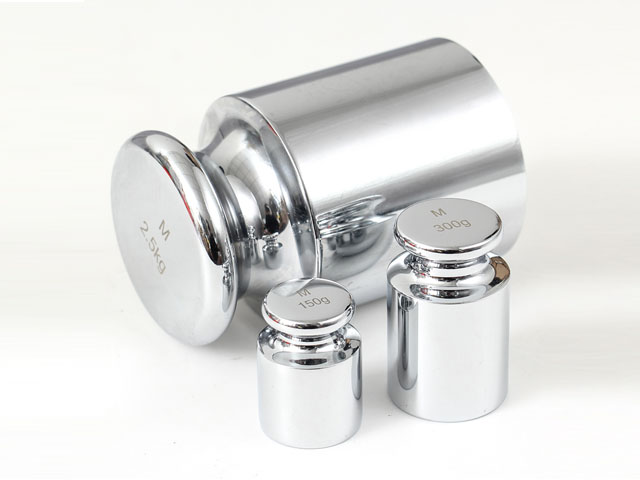
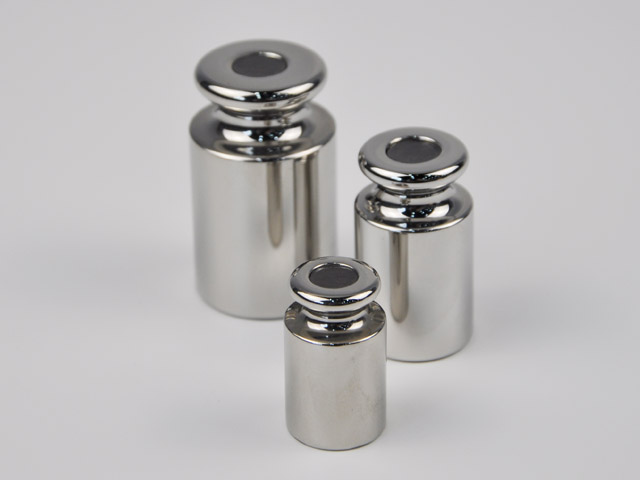
The structural and surface design of stainless steel calibration weights is fully optimized for school teaching scenarios, focusing on both operational safety and experimental standardization. The overall structure of the weights adopts a regular and compact shape, with smooth and burr-free edges and surfaces, which effectively avoids scratch injuries during student operation and improves the safety of laboratory teaching. The surface undergoes fine polishing treatment, forming a smooth and flat protective layer that prevents dust, reagent residues, and tiny impurities from adhering, making daily cleaning and maintenance more convenient for laboratory administrators. Each weight is designed with clear and durable mass marking, which will not fade or blur after long-term friction and cleaning, enabling students to quickly identify specifications and standardize experimental operation procedures. In addition, the weight specification gradient is reasonably configured, covering multiple mass ranges required for school conventional experiments. This complete specification combination allows teachers to flexibly select matching weights according to different experimental themes, realizing flexible deployment of teaching resources and improving the efficiency of classroom experimental teaching.
Standardized calibration operation with stainless steel weights is a key link in cultivating students’ scientific literacy in laboratory teaching. Weighing instruments such as analytical balances and platform balances commonly used in school laboratories will have slight measurement deviations after long-term use or frequent vibration. Regular calibration with standard stainless steel weights can correct instrument errors and ensure the accuracy of subsequent experimental data. In the teaching process, teachers can guide students to complete the whole calibration process independently, including pre-experiment weight inspection, instrument zero adjustment, comparative weighing, and error recording. This process enables students to understand the importance of measurement standardization, master basic instrument calibration methods, and form a rigorous and standardized experimental operation habit. Different from single experimental operation training, calibration teaching focuses on cultivating students’ error awareness and data verification ability, helping them realize that accurate measurement is the premise of reliable experimental conclusions, and laying a good foundation for their future scientific research and experimental learning.
Compared with other ordinary teaching weighing tools, stainless steel calibration weights have outstanding comprehensive applicability in long-term school laboratory teaching. Many basic teaching weights made of low-grade materials are prone to mass attenuation, surface deformation, and specification confusion after a short period of use, which will interfere with experimental results and even mislead students’ cognition of physical quantities. Stainless steel calibration weights avoid these problems completely with their stable physical and chemical properties. They can maintain accurate mass performance even after years of repeated use in high-frequency teaching scenarios, greatly reducing the operational cost of school laboratory equipment maintenance. Moreover, the unified and standardized design of the weights is conducive to the standardized management of laboratory teaching equipment. Schools can classify, store, and manage calibration weights according to unified specifications, which is convenient for daily teaching scheduling and equipment inventory sorting. This high stability and manageability make them the preferred standard weighing tools for modern school laboratory teaching.
The application of stainless steel calibration weights also plays an important role in improving the quality of school practical teaching and innovative experimental projects. With the continuous upgrading of school laboratory teaching requirements, more interdisciplinary innovative experimental projects and comprehensive practical courses have been carried out, which put forward higher requirements for the accuracy and stability of experimental tools. Stainless steel calibration weights can adapt to the experimental needs of comprehensive teaching projects such as physical property detection and conventional quantitative analysis, providing reliable data support for innovative student experiments. In addition, in teaching evaluation and experimental skill assessment, standardized calibration weights provide unified measurement standards for assessing students’ experimental operation ability, ensuring the fairness and standardization of teaching assessment. By applying these professional and standardized teaching tools, schools can create a more rigorous experimental teaching atmosphere, guide students to focus on experimental details and data accuracy, and comprehensively improve students’ scientific exploration ability and practical operation level.
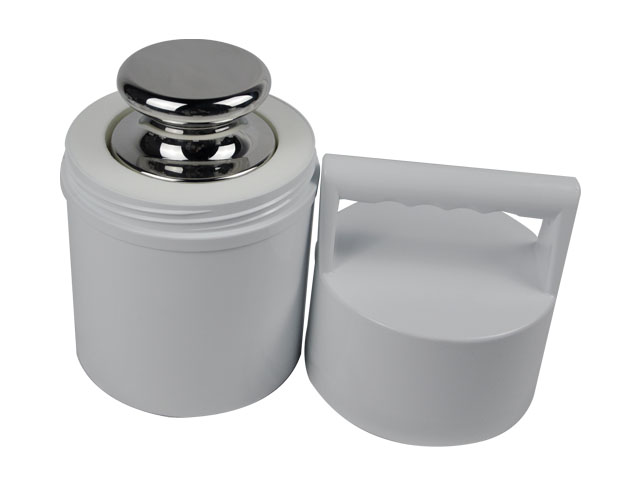
Daily maintenance and standardized use management of stainless steel calibration weights are essential to maintain their long-term teaching value in school laboratories. Although stainless steel materials have excellent durability, scientific daily maintenance can further extend their service life and ensure continuous measurement accuracy. In daily teaching, students and teachers should avoid violent collision, falling, and random placement of weights, so as to prevent structural deformation caused by external force impact. After each experiment, the weights need to be cleaned with a soft dry cloth to remove surface dust and residual impurities, and then placed in a dry and dust-proof storage environment to avoid long-term exposure to humid air and corrosive gas. Laboratory managers should formulate unified use specifications, standardize the taking, using, and storing procedures of weights, and conduct regular inspection of weight status. Standardized use and maintenance not only protect the performance of calibration weights, but also further cultivate students’ awareness of experimental equipment protection and standardized operation, realizing the dual improvement of equipment management level and practical teaching effect.
Stainless Steel Calibration Weight For School Laboratory Teaching
https://www.veidtweighing.com/ssweight/StainlessSteelWeight
Post Date: Aug 14, 2026

![Stainless Steel Flat Test Weight For Platform Scale Calibration]()
Stainless Steel Flat Test Weight For Platform Scale Calibration
Stainless steel flat test weights serve as essential precision tools for the routine calibration and accuracy verification of platform scales across diverse industrial and…![Standard Weight For Platform Scales]()
Standard Weight For Platform Scales
In industrial production, commercial trading, logistics warehousing, and quality inspection industries, platform scales serve as one of the most fundamental and indispensa…![Calibration Weight For Laboratory Instrument Factory Calibration Use]()
Calibration Weight For Laboratory Instrument Factory Calibration Use
In the rigorous operational system of modern laboratory instrument manufacturing and daily calibration practices, calibration weights stand as one of the most fundamental …![Calibration Weight For Mechanical Balance Scale]()
Calibration Weight For Mechanical Balance Scale
Mechanical balance scales remain a foundational tool in precision weighing operations across laboratories, industrial workshops, educational institutions, and quality insp…![200g F2 Precision Calibration Weight Quality Control Lab]()
200g F2 Precision Calibration Weight Quality Control Lab
In modern quality control laboratory operations, accurate and repeatable mass measurement serves as the foundational pillar of reliable experimental data, product testing,…