Laboratory Balance Calibration Weight Stainless Steel
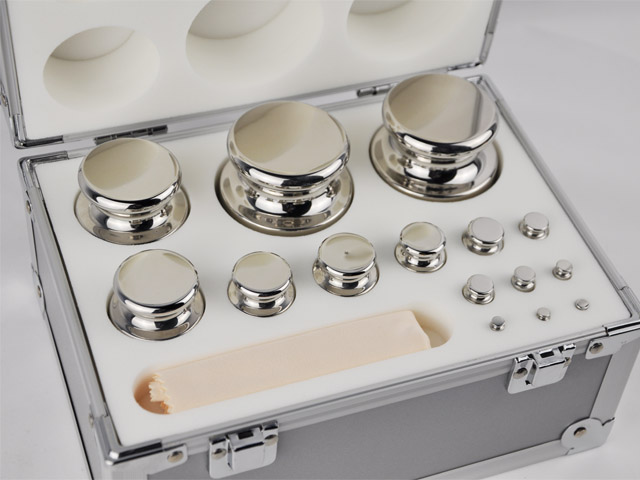
In modern laboratory operations, accurate mass measurement serves as the fundamental foundation for scientific research, experimental analysis, and quality inspection. Every quantitative experiment involving chemical reagents, biological samples, and industrial raw materials relies on stable and precise weighing data to ensure the authenticity and repeatability of experimental results. Laboratory balance calibration weights made of stainless steel stand out as essential standard tools in weighing systems, functioning as reliable mass references to correct and verify the operating status of various laboratory balances. These professional mass standards are widely adopted in scientific research laboratories, industrial quality control departments, pharmaceutical testing institutions, and environmental monitoring stations, providing consistent and credible mass benchmark support for all precision weighing work.
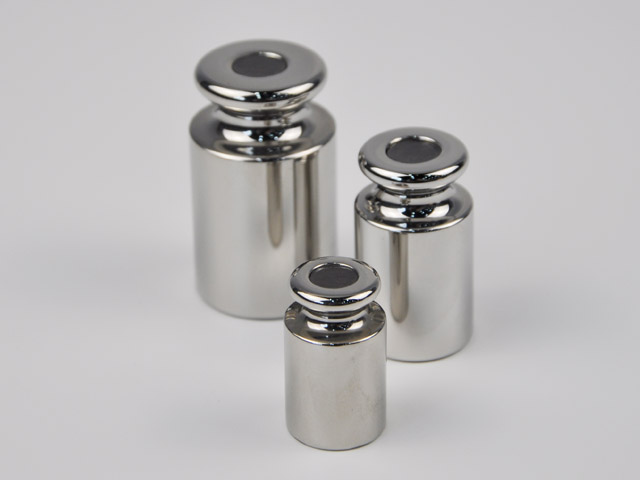
The inherent material advantages of stainless steel lay a solid foundation for the stable performance of calibration weights. Unlike ordinary metal materials that are prone to oxidation, rust, and chemical corrosion, stainless steel selected for laboratory calibration weights features excellent chemical inertness. This property enables the weights to resist erosion from common laboratory chemical vapors, humid air, and trace acidic or alkaline substances, effectively avoiding mass deviation caused by surface corrosion and material loss during long-term use. In conventional laboratory environments with fluctuating temperature and humidity, stainless steel maintains a stable physical state, preventing the surface degradation and structural changes that plague carbon steel and other common metal materials. Such durability ensures that the mass state of calibration weights remains consistent over extended service cycles, reducing the frequency of performance changes caused by material aging.
In addition to superior corrosion resistance, the stainless steel used for precision calibration weights possesses ideal density uniformity and low magnetic susceptibility. Uniform material density allows the weights to maintain stable volume and mass distribution, avoiding local mass differences that may affect calibration accuracy. Low magnetic properties prevent the weights from being interfered by stray magnetic fields in laboratory spaces, which is crucial for high-precision balance calibration. Many advanced analytical balances and microbalances are highly sensitive to magnetic interference, and ferromagnetic materials can cause subtle weighing deviations that affect experimental data accuracy. Stainless steel materials optimized for calibration weight production effectively eliminate magnetic interference risks, ensuring that each weighing and calibration process proceeds in a stable physical state.
The manufacturing process of stainless steel calibration weights strictly follows precision processing principles to meet the rigorous requirements of laboratory weighing scenarios. The production starts with precise material cutting and forging, which eliminates internal material pores and structural defects that may cause mass instability. After forming, each weight undergoes fine grinding and polishing treatment to create a smooth and flat surface. The polished surface not only gives the product a neat and uniform appearance but also reduces surface adhesion effectively. A smooth surface resists the adhesion of dust, fine particles, and experimental residues, preventing foreign attachments from changing the actual mass of the weight. Meanwhile, refined surface treatment reduces surface wear during long-term handling and use, further maintaining the long-term stability of mass parameters.
Subsequent fine calibration and trimming processes are core steps to ensure the accuracy of stainless steel calibration weights. Professional processing equipment is used for micro-adjustment of the weight mass, with repeated detection and correction to control mass errors within a tiny reasonable range. The overall structure of the weights is designed with scientific rationality, featuring regular shapes and stable center of gravity, which ensures stable placement on the balance weighing pan without tilting or shaking during calibration. The surface marking of nominal mass values adopts durable engraving technology, with clear and wear-resistant fonts that do not fade or blur with long-term use, facilitating rapid identification and standardized use by laboratory operators.
The core value of stainless steel calibration weights lies in their application in daily calibration and verification of laboratory balances. All mechanical and electronic balances will produce subtle measurement deviations after long-term operation, frequent use, or environmental changes. Vibration in laboratory spaces, temperature differences, humidity changes, and aging of balance internal components can all lead to inaccurate weighing data. Regular calibration with standard stainless steel weights can effectively detect such deviations, providing a reliable basis for balance adjustment and error correction. In daily laboratory management, operators can conduct routine verification of balance accuracy before daily experiments by using matching stainless steel calibration weights, ensuring that each weighing operation meets precision requirements.
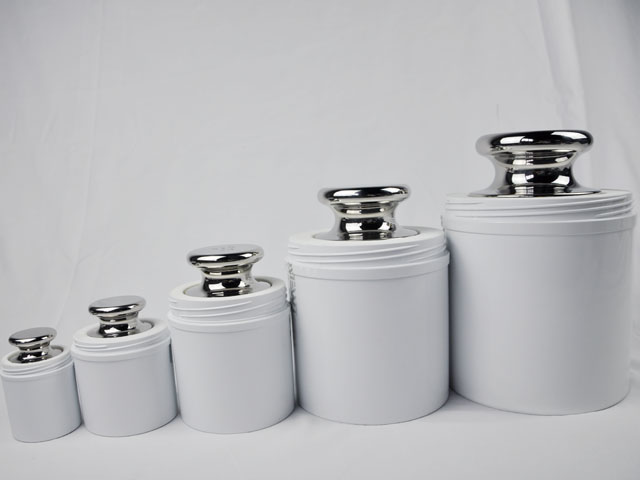
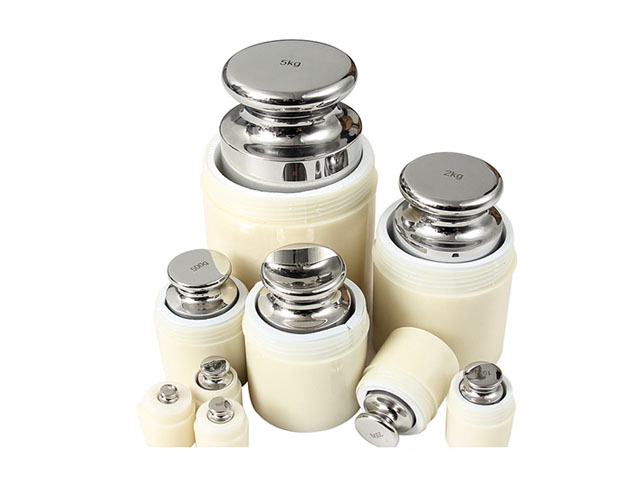
These calibration weights adapt to diverse types of laboratory weighing equipment, including microbalances, analytical balances, precision top-loading balances, and general laboratory weighing scales. Different nominal mass specifications of stainless steel weights can meet the calibration needs of weighing equipment with different ranges and accuracy levels. Small-mass weights are suitable for calibrating high-precision micro and analytical balances used in trace sample detection and fine chemical experiments, while medium and large-mass weights adapt to conventional precision balances for routine sample weighing and bulk material detection. The complete specification coverage enables stainless steel calibration weights to form a systematic calibration solution for laboratory weighing equipment.
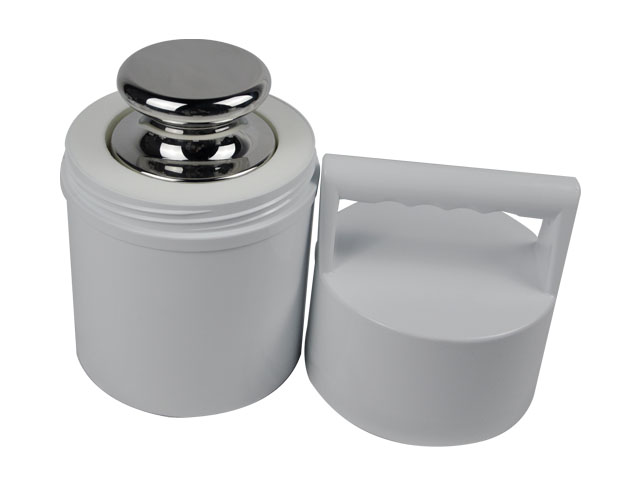
Standardized use and scientific maintenance are key to maintaining the long-term performance stability of stainless steel calibration weights. In daily operation, direct contact between hands and the weight surface should be avoided. Sweat, oil stains, and fine impurities on human hands will adhere to the weight surface, causing subtle mass changes and even local corrosion over time. Professional non-scratching tweezers or soft grip tools are recommended for handling and moving weights to protect the surface finish and mass accuracy. During the calibration process, weights should be placed gently on the center of the balance weighing pan to prevent collision and friction, which may cause surface wear and mass deviation.
For daily maintenance, stainless steel calibration weights need to be placed in a dry, clean, and stable storage environment, away from corrosive gases, high humidity, and strong magnetic field sources. Long-term exposure to humid air or chemical vapors will affect the surface state of the weights, even with excellent corrosion resistance. Regular surface cleaning is necessary; soft, dry, lint-free cloths can be used to wipe off surface dust and impurities. For slight stains, professional neutral cleaning agents can be applied with gentle wiping, followed by thorough drying to avoid residual moisture. It is important to avoid using corrosive cleaning solvents or rough cleaning tools that may scratch the polished surface and damage the structural stability of the weights.
Regular performance recheck is also an essential part of the maintenance system for stainless steel calibration weights. After a certain period of use or after accidental collision and vibration, the mass state of the weights may change imperceptibly. Regular professional testing and calibration can confirm the accuracy of the weight mass, eliminate potential error risks, and ensure that the weights always maintain standard mass performance during subsequent use. This standardized maintenance mechanism extends the service life of stainless steel calibration weights and ensures the continuity and reliability of laboratory weighing work.
In practical laboratory application scenarios, stainless steel calibration weights provide crucial guarantee for the credibility of experimental data. In chemical analysis experiments, accurate weighing of reagents directly affects the reaction progress and final experimental results. Sufficiently precise balance calibration can ensure the accurate proportioning of various reagents, making chemical reaction data repeatable and comparable. In biological and medical research, the weighing of biological samples, culture media, and experimental drugs requires high-precision weighing equipment, and stainless steel calibration weights provide stable mass standards to support the accuracy of related experimental data.
In industrial production and quality inspection laboratories, stainless steel calibration weights play an indispensable role in product quality control. Raw material incoming inspection, semi-finished product testing, and finished product quality verification all rely on accurate weighing data. Regular calibration of weighing equipment with standard weights ensures that product component detection, content analysis, and quality index evaluation are carried out on the basis of accurate data, helping enterprises control product quality stability and maintain standardized production processes. In environmental monitoring and food testing fields, the precision of weighing data is related to the accuracy of pollutant detection and food safety index testing, and stainless steel calibration weights provide solid basic support for these public welfare testing work.
Compared with calibration weights made of other materials, stainless steel products show comprehensive advantages in adaptability and stability. Alloy materials with low corrosion resistance are prone to surface deterioration in complex laboratory environments, resulting in shortened service life and unstable accuracy. Coated weights may experience coating peeling after long-term use, which directly affects mass stability and surface finish. In contrast, stainless steel calibration weights rely on their integrated material performance and fine processing technology to maintain stable accuracy and appearance state in long-term and high-frequency use. Their moderate density enables reasonable volume design under the same mass conditions, making them convenient for storage, carrying, and operation, while avoiding the excessive volume of low-density material weights and the easy oxidation defect of high-density metal materials.
With the continuous improvement of laboratory precision requirements in various industries, the application value of stainless steel laboratory balance calibration weights is constantly highlighted. Modern scientific research and industrial testing are increasingly demanding on data accuracy and traceability, and stable and reliable mass standard tools have become an indispensable part of laboratory standardization construction. Stainless steel calibration weights, with their stable material performance, precise manufacturing accuracy, and wide environmental adaptability, have become the mainstream choice for laboratory weighing calibration work. They not only complete the daily calibration and verification of weighing equipment but also lay a solid foundation for the standardization, accuracy, and traceability of all laboratory quantitative experimental data.
In future laboratory management and precision testing work, standardized application and refined maintenance of stainless steel calibration weights will further optimize the accuracy level of laboratory weighing systems. Scientific use and regular performance inspection can maximize the stable performance of the weights, reduce experimental data errors caused by weighing equipment deviation, and provide more reliable technical support for scientific research innovation, industrial quality improvement, and public testing services. As basic standard laboratory tools, stainless steel balance calibration weights will continue to undertake the important task of maintaining weighing accuracy and ensuring experimental credibility in various precision laboratory scenarios.
Laboratory Balance Calibration Weight Stainless Steel
https://www.veidtweighing.com/laboratory-weights.html
Post Date: Jun 7, 2026

![Laboratory Traceable Calibration Weight For Analytical Lab]()
Laboratory Traceable Calibration Weight For Analytical Lab
In modern analytical laboratories, the accuracy and reliability of quantitative experimental data serve as the fundamental foundation for all scientific research, material…![Standard Weight For Precision Scales]()
Standard Weight For Precision Scales
In the realm of precision measurement, standard weights stand as the foundational benchmark that upholds the accuracy, reliability, and traceability of all precision scale…![Precision Calibration Weight For Weighing Scale]()
Precision Calibration Weight For Weighing Scale
In every industry and laboratory setting that relies on accurate mass measurement, precision calibration weights serve as foundational tools to sustain the functional reli…![Calibration Weight For Electric Forklift Weighing Calibration Use]()
Calibration Weight For Electric Forklift Weighing Calibration Use
In modern industrial material handling scenarios, electric forklifts have become indispensable equipment for warehouse storage, cargo handling, and logistics distribution …![200kg Cast Iron Lock Calibration Weight Truck Scale Test]()
200kg Cast Iron Lock Calibration Weight Truck Scale Test
Truck scales serve as fundamental weighing equipment for industrial logistics, material settlement, and cargo measurement, providing core data support for daily operationa…