Chemistry Laboratory Precision Weighing Weight Set
In the daily operation of chemistry laboratories, accurate mass measurement serves as the fundamental foundation for all quantitative experimental research, data recording, and chemical formula verification. A precision weighing weight set is an essential auxiliary tool for balancing instruments, supporting the calibration, debugging, and daily verification of various analytical balances and precision weighing devices used in chemical experiments. Unlike ordinary weighing tools used for rough measurement in industrial or daily scenarios, the weight set designed for chemical laboratory use is manufactured with strict dimensional accuracy, stable physical properties, and consistent mass uniformity, which can fully meet the high-precision measurement demands of qualitative and quantitative analysis, solution preparation, reagent proportioning, and chemical reaction yield calculation in chemical research and teaching experiments.
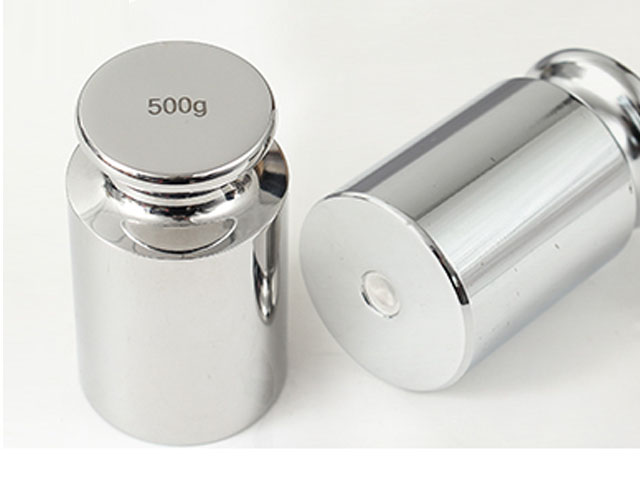
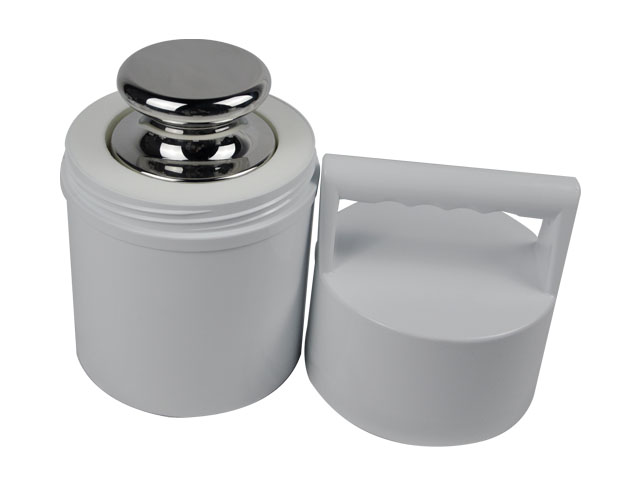
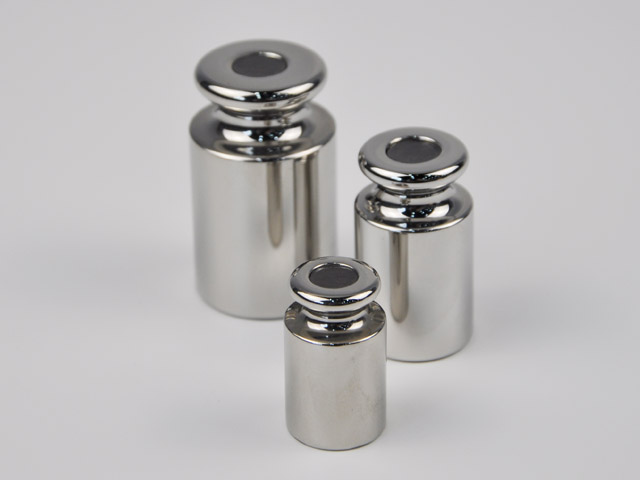
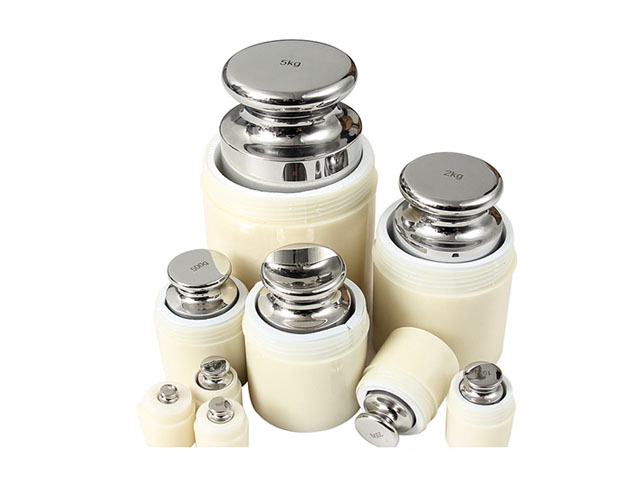
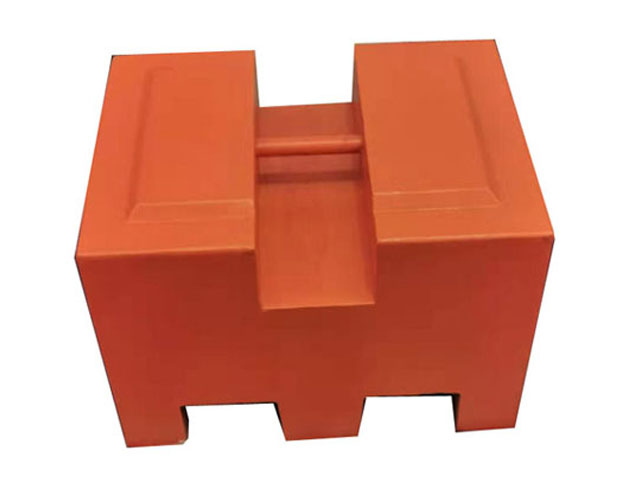
The overall design and production of a laboratory precision weighing weight set focus on long-term stability and experimental applicability. The complete set usually includes multiple weights of different mass specifications, covering a reasonable range from small milligram units to large gram units, which can be freely combined according to different experimental weighing requirements to achieve precise mass matching. Each single weight in the set is processed through fine polishing and surface treatment, with smooth and flat surfaces, regular geometric shapes, and uniform thickness, effectively avoiding mass deviation caused by surface unevenness, burrs, or structural defects. The standard cylindrical or block structure of the weights also ensures stable placement on the weighing pan of analytical balances, preventing tilting or sliding during the weighing process that may affect measurement accuracy.
Material selection is the core factor that determines the service performance and measurement stability of precision weighing weight sets for chemical laboratories. Most high-quality laboratory weight sets adopt high-density metal materials with low thermal expansion coefficients and strong chemical inertness. Such materials can resist the influence of conventional ambient temperature changes in the laboratory, avoiding obvious mass fluctuation caused by thermal expansion and contraction. In addition, the selected materials have excellent anti-oxidation and anti-corrosion properties, which can effectively cope with the slight erosion caused by volatile chemical reagents, humid air, and other laboratory environmental factors in daily use. This characteristic is particularly important in chemical laboratories, where various acidic, alkaline, and organic volatile substances are frequently used. It prevents the weight surface from rusting, peeling, or qualitative change, ensuring that the mass of each weight remains consistent for a long time and reducing systematic errors in experimental measurement.
The surface protection treatment of precision weights further optimizes their environmental adaptability. Through fine grinding and passive film formation treatment, the weight surface forms a dense protective layer that isolates air and harmful substances. This treatment does not change the original mass accuracy of the weights but greatly improves their durability in complex laboratory environments. Compared with ordinary untreated metal weights, these processed weights are less prone to surface wear and quality attenuation after long-term repeated use, maintaining stable measurement performance throughout multiple experimental cycles and long-term storage.
In chemical experimental work, the application scenarios of precision weighing weight sets are extremely extensive and run through the whole process of quantitative chemical analysis. In the preparation of standard solutions, researchers need to accurately weigh solid solutes of specific mass to configure solutions with accurate molar concentration, and the precision of weighing directly affects the accuracy of subsequent titration experiments, spectral analysis, and content detection of chemical components. When carrying out chemical reaction quantitative experiments, the accurate weighing of reactants helps researchers calculate the theoretical yield of products and analyze the actual reaction conversion rate, providing reliable data support for the study of reaction mechanism and optimal reaction conditions. In teaching laboratory experiments, the weight set also helps students master the correct operation methods of precision weighing instruments, cultivate rigorous experimental thinking, and form standardized experimental operation habits.
Calibration and daily verification of weighing instruments are also key application scenarios of precision weighing weight sets. Analytical balances and semi-micro balances, which are commonly used in chemical laboratories, will produce slight measurement deviations after long-term use, frequent vibration, and changes in placement environment. Regular calibration with standard precision weights can correct the instrument’s measurement errors, ensure that the weighing data of the instrument is within the allowable error range, and guarantee the authenticity and validity of all experimental data based on the instrument. For newly purchased or newly moved weighing equipment, the use of a complete weight set for debugging and verification is also a necessary step to ensure the normal operation of the instrument before formal experimental use.
The standardized use of precision weighing weight sets is crucial to maintain measurement accuracy and extend service life. Before each use, it is necessary to check the surface of the weights to remove floating dust, residual fine particles, and other attachments on the surface. Dust and tiny impurities will cause subtle changes in the mass of the weights, which will bring measurable errors to high-precision weighing experiments. The cleaning process needs to be carried out with soft, clean tools to avoid scratching or damaging the surface protective layer of the weights. In the process of taking and placing weights, direct contact with hands should be avoided. The sweat, grease, and fine impurities on human hands will adhere to the weight surface, causing slow oxidation and mass change over time. It is standard operation to use special tweezers or non-slip clamping tools to take weights to ensure the cleanliness and integrity of each weight.
During the weighing operation, weights should be placed gently on the center of the balance weighing pan to avoid collision, friction, and falling. Violent collision will not only cause surface wear of the weights but also lead to internal structural subtle changes, resulting in irreversible mass deviation. When combining multiple weights for weighing, the placement order should follow the standard operation specifications, and the combination should be reasonably matched according to the measured mass to reduce the number of weight replacement operations and improve weighing efficiency while ensuring accuracy. After the weighing operation is completed, all weights need to be promptly put back into the matched storage box in order, avoiding random placement that may cause loss, pollution, or extrusion deformation.
Scientific daily maintenance and storage conditions are important guarantees for the long-term stable performance of precision weighing weight sets. The matched special storage box is designed with independent fixed grooves for each weight, which can fix the weights in a single independent space, avoiding mutual friction, collision, and extrusion between weights during storage and handling. The storage box has good sealing performance, which can isolate external dust, humid air, and corrosive gases, creating a dry, clean, and stable storage environment for the weights. The laboratory storage area should be kept away from strong corrosive reagents, high-temperature heat sources, and places with severe vibration. Long-term high temperature will accelerate the aging of the weight surface protective layer, and severe vibration may cause subtle structural changes of the weights, both of which will affect the weighing accuracy.
Regular manual inspection and sorting are also essential maintenance work. Laboratory staff should regularly check the surface condition and mass stability of the weights, screen out individual weights with surface damage, obvious wear, or suspected mass deviation, and carry out targeted detection and correction. For weights that have been used for a long time or exposed to harsh experimental environments accidentally, regular professional error detection can effectively judge their working performance, ensure that the whole weight set maintains consistent precision, and avoid the use of faulty weights leading to large-scale experimental data errors.
The error control design of precision weighing weight sets fully adapts to the tolerance requirements of chemical high-precision experiments. Each weight in the set is controlled within a tiny error range during production and processing, and the error value is far lower than the measurement error limit required by conventional chemical quantitative experiments. This high-precision error control enables the weight set to meet the weighing needs of trace analysis, constant analysis, and semi-micro analysis in chemistry. In trace chemical experiments where the solute content is extremely low and the data sensitivity is high, the stable and accurate mass performance of the weight set can effectively reduce systematic experimental errors and improve the repeatability and credibility of experimental data.
In scientific research laboratories engaged in fine chemical research, pharmaceutical chemical analysis, and environmental chemical detection, the requirements for weighing precision are more stringent, and the application value of high-stability precision weight sets is more prominent. Fine chemical experiments often involve the preparation of trace additive reagents and the detection of micro-component content, and slight weighing errors will lead to deviations in experimental results and even affect the conclusion of scientific research. The stable performance of the precision weighing weight set provides accurate benchmark standards for these high-precision research experiments, ensuring that each group of experimental data has comparability and reproducibility, which is of great significance for experimental result verification, data collation, and research conclusion demonstration.
It is also necessary to pay attention to the matching between the weight set and the weighing instrument in actual use. Different types of analytical balances have different precision levels and weighing ranges, and it is necessary to select a weight set with a suitable specification range for matching use. Using weights that do not match the instrument precision will not only fail to achieve accurate calibration and weighing effects but also may cause unnecessary wear to the instrument and weights. At the same time, the weighing environment should be kept stable during operation, avoiding air convection, strong light irradiation, and electromagnetic field interference, so as to cooperate with the high precision of the weight set and jointly ensure the accuracy of the weighing results.
In summary, the precision weighing weight set is a basic and core auxiliary tool in chemical laboratory work. Its stable material performance, accurate mass specification, reasonable structural design, and wide application range lay a solid foundation for the standardization and accuracy of chemical experimental data. Standardized use, scientific maintenance, and reasonable storage can effectively maintain the long-term precision performance of the weight set, reduce experimental errors caused by tool factors, and provide reliable technical support for chemical teaching experiments, scientific research innovation, and various quantitative chemical analysis work. In all chemical experimental work that relies on accurate mass measurement, the standardized application of precision weighing weight sets is an indispensable link to ensure the rigor and authenticity of experimental results, and it plays an irreplaceable role in promoting the standardized development of laboratory experimental work.
Chemistry Laboratory Precision Weighing Weight Set
https://www.veidtweighing.com/laboratory-weights.html
Post Date: Jun 7, 2026

![Stainless Steel Calibration Weight For School Laboratory Teaching]()
Stainless Steel Calibration Weight For School Laboratory Teaching
Stainless steel calibration weights are fundamental teaching tools tailored for school laboratory science courses, covering physics, chemistry, and general science experim…![Standard Weight For Counting Scales]()
Standard Weight For Counting Scales
In modern industrial production, inventory management, and precision manufacturing, counting scales have become indispensable tools for quantifying bulk small parts, compo…![Standard Weight For Laboratory Balances]()
Standard Weight For Laboratory Balances
In modern laboratory scientific research, industrial detection, and analytical testing, the accuracy and reliability of weighing data serve as the fundamental guarantee fo…![Forklift Scale Calibration Standard Weight]()
Forklift Scale Calibration Standard Weight
Forklift scale calibration with standard weights serves as a core operational practice in industrial logistics, manufacturing, and warehouse management, ensuring that onbo…![500g Calibration Weight For Balance Scale]()
500g Calibration Weight For Balance Scale
In every industry and research field that relies on accurate mass measurement, maintaining the reliability of balance scales is a fundamental prerequisite for consistent a…