E2 Calibration Weight
Mass measurement stands as one of the most fundamental and essential elements in all forms of scientific experimentation, industrial production, material research, and quality management work across every sector of modern society. Every numerical data point related to weight and mass that people rely on for decision-making, product development, quality inspection, and academic research cannot be separated from accurate and traceable mass measurement standards. In the entire systematic chain of mass value transmission and measurement accuracy maintenance, E2 calibration weight occupies an irreplaceable and pivotal intermediate position, acting as a vital bridge connecting top-level basic mass reference benchmarks and various on-site testing and measuring instruments used in daily production and experimental scenarios. Unlike ordinary common weights used for simple weighing and rough material proportioning, this type of calibration weight is specially designed and manufactured for high-precision measurement calibration, instrument verification, and mass value comparison work, with extremely strict control over physical performance, surface processing quality, dimensional stability, and environmental adaptability throughout the entire production and subsequent use cycle. It is not merely a simple metal component with a fixed nominal mass, but a professional metrological tool that integrates sophisticated material selection, precise mechanical processing, rigorous surface treatment, and standardized later-stage management, bearing the important responsibility of maintaining the uniformity, stability, and reliability of mass measurement data in various professional fields.
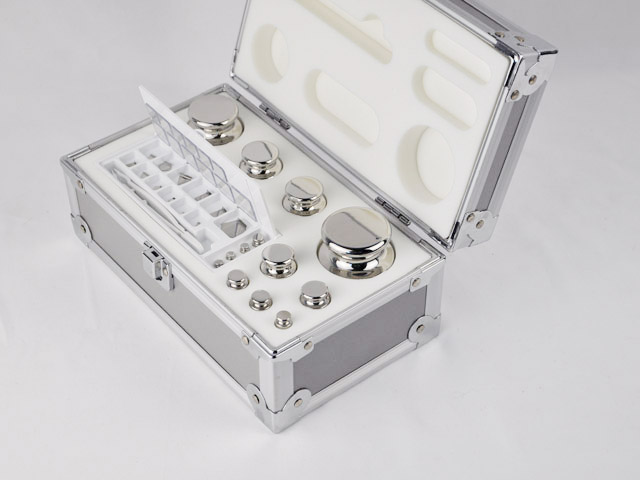
The inherent core attributes of E2 calibration weight determine its applicable scenarios and functional positioning in the entire metrological system. It is tailored to match the working needs of high-resolution weighing equipment and precision analytical measuring instruments, adapting to measurement environments and experimental conditions that require low error tolerance and high data repeatability. In practical metrological work, all weighing instruments and measuring devices will inevitably produce subtle measurement deviations after long-term operation, frequent use, changes in placement environment, and natural mechanical wear and tear over time. These deviations, if not corrected and adjusted in a timely and standardized manner, will gradually accumulate and expand, leading to inaccurate final measurement data. In scientific research laboratories, inaccurate mass data will directly affect the authenticity and reproducibility of experimental conclusions, causing subsequent experimental verification failure and research result deviation; in industrial production and product quality control links, unstable weighing data will lead to inconsistent product raw material proportioning, unqualified finished product quality indicators, and even batch production losses and potential safety hazards; in material development and precision component processing fields, tiny mass measurement errors will affect the matching degree of precision parts and the performance stability of new material formulations, restricting technological upgrading and product iteration progress. The fundamental purpose of applying E2 calibration weight is to regularly check, calibrate, and correct these subtle deviations of weighing equipment, ensuring that all mass measurement data obtained by various weighing instruments in different use scenarios remain within a reasonable and controllable error range, and maintaining the long-term stability and accuracy of the entire mass measurement system.
Material selection is the primary core link that determines the comprehensive performance and long-term service life of E2 calibration weight, and it is also the basic prerequisite for ensuring that the weight maintains stable mass attributes in complex and changing use environments. The raw materials selected for producing this type of calibration weight need to meet multiple key performance requirements at the same time, including stable physical density, extremely low magnetic susceptibility, strong oxidation and corrosion resistance, good internal structural compactness, and excellent long-term dimensional and mass stability. Any imperfection in material performance will directly affect the metrological performance of the weight and reduce its calibration accuracy and service cycle. The mainstream raw materials used for making E2 calibration weight are high-grade austenitic stainless steel materials with optimized component ratios, which have been specially smelted and purified to remove internal impurities, harmful trace elements, and structural defects that may affect measurement stability. This type of stainless steel material has a uniform internal organizational structure, no internal pores or cracks, and will not produce subtle mass changes due to internal structural differentiation or material aging during long-term use. In terms of density control, the material is precisely proportioned and processed to maintain a stable density value, which can effectively reduce the additional measurement errors caused by buoyancy changes in different atmospheric environments during the weighing and calibration process. At the same time, the material has extremely low magnetic properties, avoiding the subtle adsorption of tiny metal particles and magnetic impurities caused by magnetic induction in the use environment, preventing the gradual change of the weight’s actual mass due to long-term adsorption of impurities, and ensuring that the mass state of the weight itself remains stable for a long time.
In addition to the core metal raw materials of the weight body itself, the surface treatment process of E2 calibration weight is also a key process that cannot be ignored, which directly affects the surface finish, corrosion resistance, and anti-fouling ability of the weight. After the overall mechanical processing and precise mass adjustment of the weight are completed, multiple fine polishing and passivation treatments will be carried out on the surface. The fine polishing process can make the weight surface reach a high smoothness state, reducing the surface gap area that is easy to adhere to dust, moisture, and tiny pollutants. The passivation treatment forms a dense and stable protective film on the metal surface, which can effectively isolate the contact between the weight metal matrix and the external air, moisture, acidic and alkaline trace substances, and corrosive media in the working environment. This series of surface treatments can prevent the weight from oxidation, rust, corrosion, and surface peeling during long-term storage and repeated use, avoid mass changes caused by surface material loss or additional attachment of pollutants, and further consolidate the long-term mass stability of E2 calibration weight. Different from ordinary industrial weights that only pursue basic molding and rough use effects, every processing detail of E2 calibration weight is focused on reducing all possible factors that may cause mass fluctuation, from internal material smelting to external surface polishing, from overall dimensional processing to local detail trimming, all implemented with high-precision processing standards to lay a solid foundation for subsequent calibration work.
The manufacturing and mass adjustment process of E2 calibration weight follows rigorous process procedures and precise processing logic, and every production link is carried out in a standardized constant temperature and dust-free processing workshop to avoid the impact of external environmental changes on the precision processing effect. The initial processing stage mainly carries out overall forging, cutting, and preliminary shaping of the selected high-quality metal raw materials to make the weight preliminarily meet the required shape, size, and preliminary mass range. After preliminary shaping, the core precise mass adjustment work is carried out, which is the most critical step in the entire production process. Professional processing personnel use precision processing equipment and auxiliary comparison measuring devices to carry out fine grinding, trimming, and micro-processing on the weight according to the preset nominal mass value, gradually approaching the standard mass state required by the design. In the whole adjustment process, repeated mass comparison and fine correction are required many times, and each adjustment range is controlled at a very subtle level to ensure that the final actual mass of each E2 calibration weight is within the allowable deviation range suitable for its metrological positioning. After the completion of precise mass adjustment, the weight will go through a natural stabilization cycle for a certain period of time, so that the internal stress generated during mechanical processing can be fully released, and the internal organizational structure of the material can reach a stable equilibrium state, preventing subtle mass rebound and deviation caused by internal stress release after the weight is put into use. Only after passing the stabilization observation and repeated mass recheck can the subsequent surface finishing and packaging work be carried out.
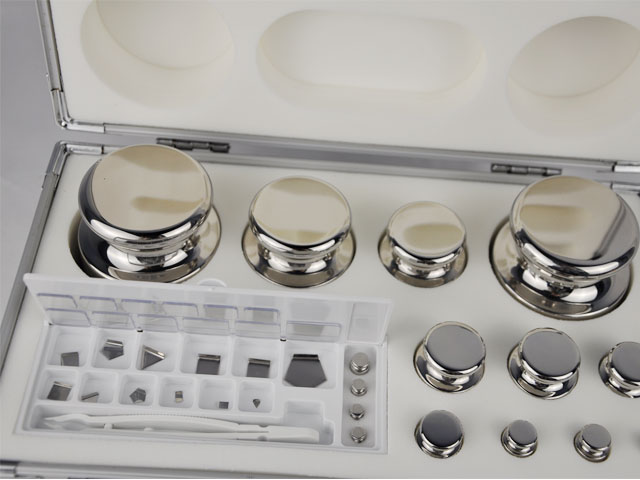
E2 calibration weight has a wide range of applicable nominal mass specifications, covering ultra-small milligram-level micro weights commonly used in microanalysis experiments to large kilogram-level weights required for precision industrial weighing calibration, which can meet the calibration and verification needs of various high-precision weighing equipment with different measuring ranges and different resolution levels. Milligram-level small-specification E2 calibration weight is mostly made into compact sheet or block structures with small volume, which is specially matched with ultra-high-precision micro balances and analytical balances used in chemical analysis, pharmaceutical research, trace material testing, and scientific research laboratories. These tiny weights require extremely high processing precision and surface protection, because even extremely subtle dust attachment or slight surface wear will have a significant impact on their actual mass and subsequent calibration effect. Gram and kilogram-level medium and large-specification E2 calibration weight adopt integrated solid structure design as a whole, with firm and stable structure, not easy to deform under normal use and handling conditions, suitable for calibration of precision weighing instruments used in industrial quality control, material batching testing, and institutional inspection and testing work. Whether it is micro-specification small weights or large-specification heavy weights, all specifications of E2 calibration weight maintain consistent high-precision manufacturing standards and quality control requirements, only adapting to different use scenarios and weighing equipment in terms of volume, shape, and structural design.
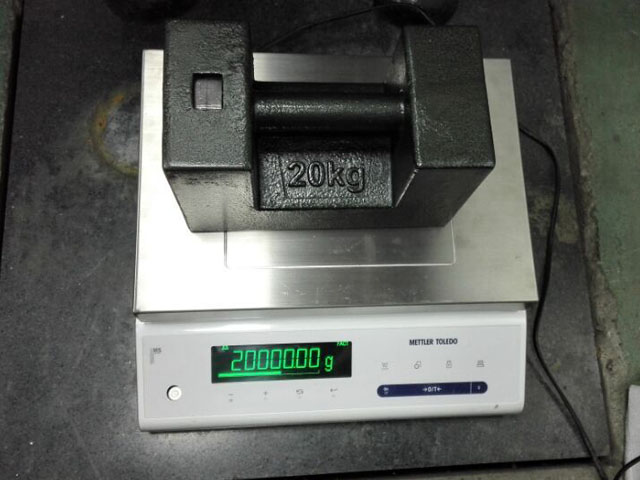
In actual work scenarios, the application value of E2 calibration weight runs through the whole process of daily use, periodic maintenance, and regular performance verification of precision weighing instruments. All high-precision analytical balances, precision electronic scales, mass comparators, and professional weighing testing equipment used in laboratories, testing institutions, and precision production workshops need to be calibrated with E2 calibration weight on a regular basis. The basic operation logic of calibration work is relatively clear and standardized. Before formal calibration, the weighing instrument to be tested needs to be preheated and stabilized according to the operating specifications, placed in a horizontal and stable working position, and adjusted to a horizontal state to avoid measurement errors caused by instrument tilt and unstable placement. At the same time, the working environment needs to be kept in a stable state with suitable temperature, moderate humidity, and low dust concentration, avoiding measurement interference caused by drastic temperature changes, excessive humidity, strong air convection, and excessive dust. After the weighing instrument is ready and the environment is stable, the staff uses professional special clamping tools and protective gloves to take E2 calibration weight out of the professional storage container, and place it gently and stably on the weighing platform of the weighing instrument in sequence according to the calibration steps. Direct contact between hands and the weight surface must be avoided in the whole process, because the sweat, oil stains, and fine impurities on human hands will adhere to the weight surface, causing subtle mass changes and affecting the accuracy of calibration results.
In the calibration process, by reading the display data of the weighing instrument after placing different nominal mass E2 calibration weights, and comparing it with the standard mass value of the calibration weight itself, the staff can accurately judge the current measurement deviation of the weighing instrument. If the deviation is within the normal allowable range, it means that the weighing instrument is in good working condition and can continue to be used for subsequent precise measurement work; if the deviation exceeds the reasonable range, professional debugging and correction of the weighing instrument parameters are required immediately, and repeated calibration and verification with E2 calibration weight are carried out until the measurement deviation of the instrument returns to the standard range. This regular calibration and correction work can ensure that every weighing operation carried out by the instrument can obtain accurate and reliable data, avoiding experimental failure, product quality problems, and data distortion risks caused by inaccurate weighing. In addition to the direct calibration of weighing instruments, E2 calibration weight can also be used for mass comparison and value transfer work of lower-level working weights, providing accurate mass reference basis for daily working weights used in general production and testing links, ensuring that the whole mass measurement system forms a complete and accurate value transmission chain from top to bottom.
The standardized storage and daily maintenance management of E2 calibration weight are crucial to maintaining its long-term metrological performance and extending its service life, and scientific and standardized maintenance habits can effectively avoid unnecessary mass fluctuation and performance attenuation of the weight. After each use, all E2 calibration weights need to be gently wiped and cleaned with professional soft cleaning tools and neutral cleaning supplies to remove tiny dust, trace moisture, and subtle pollutants attached to the surface during use. The cleaning process needs to be gentle and careful, avoiding scratching and damaging the polished protective layer on the weight surface, and preventing surface corrosion and structural damage caused by improper cleaning operations. After cleaning and natural drying, the weights need to be placed back into the matched special sealed storage containers in order. The storage containers are usually made of shock-absorbing, dust-proof, and moisture-proof materials, which can isolate the weights from the external complex environment, avoid the impact of air moisture, corrosive gases, and dust in the air on the weight for a long time, and prevent accidental collision, extrusion, and drop damage during storage and handling.
The storage environment of E2 calibration weight also needs to be kept stable and suitable all the time, with constant temperature and moderate humidity as the basic requirement, avoiding long-term placement in high temperature, low temperature, high humidity, dry, or corrosive gas-containing environments. Drastic temperature changes will cause subtle thermal expansion and contraction of the weight metal material, and long-term extreme humidity conditions will easily cause surface moisture accumulation and potential corrosion risks. At the same time, the storage location should be kept away from strong magnetic field equipment, vibration sources, and heavy pressure objects, preventing the weight from being affected by magnetic induction, structural deformation caused by long-term vibration and extrusion, which affects mass stability and calibration accuracy. In addition to daily cleaning and storage, E2 calibration weight also needs regular periodic performance inspection and recheck according to the frequency of use. For weights used intermittently in low-frequency experimental scenarios, regular recheck and performance confirmation can be carried out once a year; for weights used frequently every day in high-intensity calibration work scenarios, the cycle of performance recheck and maintenance needs to be appropriately shortened to ensure that any subtle mass changes and potential performance problems of the weight can be found and processed in a timely manner.
In scientific research and laboratory application scenarios, the role of E2 calibration weight is particularly prominent, becoming an indispensable basic guarantee for the accuracy of experimental data in chemical analysis, biological research, new material development, and environmental monitoring experiments. In chemical quantitative analysis experiments, the accurate preparation of various standard solutions and the precise weighing of experimental samples directly determine the accuracy of experimental reaction results and component content detection data. Slight errors in sample weighing will lead to deviations in solution concentration proportioning, further affecting the accuracy of subsequent chemical reaction experiments and final detection conclusions, and even leading to wrong experimental research directions. In new material research and development work, researchers need to accurately weigh various raw material components according to fixed formulas to prepare new material samples, and the mass ratio of different raw materials directly determines the physical properties, chemical stability, and functional characteristics of the final new material. Only by relying on E2 calibration weight to calibrate the experimental weighing equipment can the accurate weighing of raw materials be ensured, the consistency of sample preparation in each experimental batch be maintained, and reliable and repeatable experimental data be obtained, providing accurate data support for material performance improvement and formula optimization.
In pharmaceutical research and pharmaceutical production testing fields, the application of E2 calibration weight is related to the stability of drug formula proportion and the safety and effectiveness of finished pharmaceutical products. The production and research of various pharmaceutical preparations require precise weighing of various pharmaceutical raw materials and auxiliary materials, and the dosage ratio of each component directly affects the efficacy, safety, and stability of drugs. Accurate mass measurement can ensure that the drug components of each production batch are consistent, avoiding the problem of unstable drug efficacy and unqualified quality caused by inaccurate raw material weighing. At the same time, in the finished drug quality inspection and drug component content testing links, the precision weighing equipment used for testing also needs regular calibration with E2 calibration weight to ensure the accuracy of detection data, strictly control the quality of finished drugs, and ensure that all listed drugs meet relevant quality and safety requirements. In biological experiments and life science research, the precise weighing of biological samples, reagents, and experimental materials is also the basis for ensuring the validity of experimental results, and E2 calibration weight provides reliable measurement foundation for all these high-precision experimental weighing work.
In industrial production and industrial quality control fields, E2 calibration weight provides solid guarantee for product quality stability and production process standardization. Many precision manufacturing industries, including electronic component processing, precision parts production, food deep processing, and daily chemical product manufacturing, need accurate raw material batching and product quality testing links. In the production process of precision electronic components, the tiny mass of internal parts and components has a direct impact on the performance and service life of electronic products. Only by calibrating the production batching weighing equipment and finished product testing weighing instruments through E2 calibration weight can the consistency of product processing quality be ensured and the defective rate of production be reduced. In food and daily chemical production industries, the accurate proportioning of raw materials and additives is not only related to the taste and performance stability of products, but also related to whether the product quality meets relevant production specifications. Regular calibration of production weighing equipment with E2 calibration weight can avoid product quality fluctuations caused by inaccurate batching, ensure that each batch of products maintains stable quality indicators, and improve the overall production quality level and market competitiveness of enterprises.
In professional metrological testing institutions and third-party inspection and testing organizations, E2 calibration weight undertakes the core work of mass value transmission and measuring instrument verification, and is an important basic tool to ensure the fairness and accuracy of various testing and inspection data. These professional institutions need to provide calibration and testing services for various enterprises, laboratories, and scientific research units, and the accuracy of their testing results directly affects the production and research work of many downstream units. All professional weighing testing equipment and mass comparison devices used by testing institutions need to be calibrated and verified with E2 calibration weight for a long time to ensure that all testing and calibration work carried out by the institution is based on accurate mass standards. At the same time, these institutions also rely on E2 calibration weight to carry out regular performance verification and quality assessment for various working weights and common weighing instruments used by external enterprises, helping all walks of life standardize measurement management, unify measurement standards, and avoid production and quality disputes caused by inconsistent measurement data.
In the long-term use and management process of E2 calibration weight, it is also necessary to pay attention to avoiding various improper use behaviors that may cause damage to the weight and affect metrological performance. It is forbidden to use E2 calibration weight for any rough weighing, material pressing, and other non-calibration work purposes, and it cannot be placed randomly, collided, dropped, or rubbed with hard objects at will, so as to prevent surface damage, structural deformation, and mass change of the weight. It is also not allowed to place the weight in high-corrosion, high-pollution, and harsh working environments for a long time, and avoid contact with acidic, alkaline, and other corrosive substances to prevent surface protective layer damage and metal corrosion. The staff engaged in the use and management of E2 calibration weight need to receive professional operation training, master standardized use, cleaning, storage, and maintenance methods, establish perfect use management records, record each use time, use scenario, cleaning situation, and periodic recheck results, so as to track the performance state of the weight in real time and find and solve potential problems in the first time.
With the continuous progress of modern science and technology and the continuous improvement of industrial production precision requirements, the demand for high-precision mass measurement in various fields is constantly increasing, and the importance of E2 calibration weight in the entire metrological measurement system is becoming more and more prominent. All scientific research innovation, industrial upgrading, quality supervision, and experimental research work are inseparable from accurate and reliable mass measurement basic support, and E2 calibration weight is the core basic tool to maintain the accuracy and consistency of mass measurement. Its excellent material performance, precise manufacturing technology, stable metrological characteristics, and wide application adaptability make it play an irreplaceable role in connecting top-level measurement benchmarks and grassroots measurement application links. Through standardized production, scientific use, standardized maintenance, and regular performance management, E2 calibration weight can maintain long-term stable working performance, continuously provide accurate mass calibration services for various high-precision weighing scenarios, lay a solid and reliable measurement foundation for scientific and technological research and development, industrial production, quality inspection, and various professional testing work, and promote the standardized development and high-quality improvement of all industries related to mass measurement.
E2 Calibration Weight
https://www.veidtweighing.com/calibration-weights.html
Post Date: Apr 28, 2026
https://www.supplier-manufacturer.com/calibration-weight/e2-calibration-weight.html

![20kg Cast Iron Calibration Weight For Truck Scale]()
20kg Cast Iron Calibration Weight For Truck Scale
Truck scales serve as essential measuring equipment in logistics, transportation, industrial production, and commercial trading sectors, undertaking the critical task of a…![M2 Class Standard Weight]()
M2 Class Standard Weight
Mass measurement forms the invisible backbone of all modern social and economic activities, serving as a fundamental foundation for fair transactions, orderly industrial p…![Platform Scales]()
Platform Scales
The modern business landscape has undergone a fundamental transformation over the past two decades, shifting from linear operational frameworks to interconnected ecosystem…![Cast Iron Weight For Analytical Scales]()
Cast Iron Weight For Analytical Scales
In every laboratory and industrial testing environment where precise mass measurement forms the foundation of reliable experimental results and production quality control,…![Price Computing Scales]()
Price Computing Scales
In modern commercial circulation and daily retail transactions, efficient and accurate weighing and pricing tools form the basic support for smooth business operations. Th…