Purposes of Calibration Weight
In every field that relies on weighing and mass measurement as a core operational foundation, calibration weights stand as indispensable foundational tools that quietly underpin the reliability and credibility of all numerical data generated by weighing instruments and measurement systems. Far beyond simple metal or solid mass objects placed on scales for routine checks, calibration weights serve as fundamental reference mediums that bridge theoretical mass definitions and practical on-site measurement practices, ensuring that every weighing action carried out in laboratories, manufacturing workshops, agricultural sites, food processing facilities, and research institutions stays aligned with unified and consistent measurement norms. All weighing equipment, whether high-precision analytical balances used for delicate scientific research or general industrial scales deployed for daily bulk material weighing, will gradually develop subtle deviations in reading performance over extended use, affected by long-term mechanical wear, continuous environmental changes including temperature fluctuations, humidity variations, air pressure shifts, and even minor structural vibrations in working spaces. Without regular and standardized calibration supported by professional calibration weights, these gradual deviations will slowly accumulate and expand, leading to inconsistent measurement results, unreliable experimental data, unstable product quality control, and even unnecessary disputes in material trading and resource distribution activities. The core purposes of calibration weights therefore extend far beyond the basic function of adjusting scale readings, covering multi-dimensional aspects such as maintaining measurement consistency, standardizing operational workflows, supporting scientific research progress, stabilizing industrial production quality, ensuring fair commercial transactions, and prolonging the stable service life of various weighing and measurement devices.
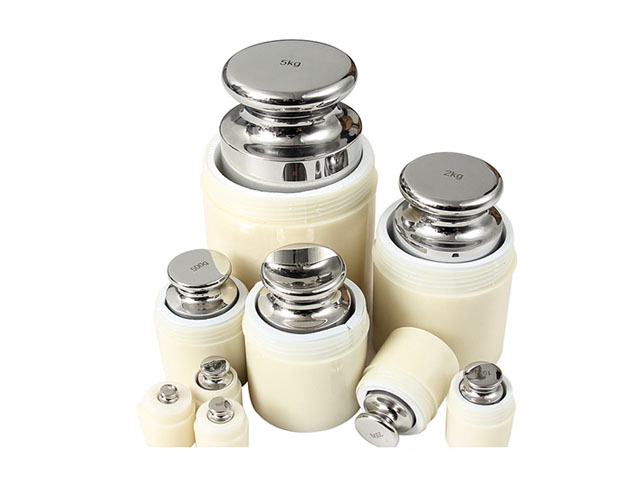
The most fundamental and primary purpose of calibration weights is to act as stable and reliable mass references for the routine verification and regular adjustment of all types of weighing instruments. Every weighing device, regardless of its structural design, working principle, or application scenario, is designed to convert the physical mass of an object into readable digital or mechanical pointer values, and this conversion process depends entirely on the internal sensing components and structural calibration parameters set during the initial production of the equipment. As time passes and usage frequency increases, the internal sensing parts of weighing instruments will experience natural aging, mechanical components will suffer slight wear and deformation, and external environmental factors will also interfere with the sensitivity and response accuracy of the equipment, causing the actual displayed readings to gradually diverge from the true mass value of the measured object. Calibration weights are produced and processed with extremely strict dimensional and mass control during manufacturing, maintaining stable and fixed mass attributes that do not change easily under conventional working conditions, making them ideal reference standards for judging whether a weighing instrument is operating within a normal and accurate range. When conducting daily equipment inspection, operators place calibration weights of known stable mass on the weighing platform of the instrument, observe the displayed measurement data of the equipment, and compare the displayed value with the standard mass of the calibration weight itself. If there is a noticeable gap between the two values, it indicates that the weighing instrument has deviated from the normal working state and needs targeted fine-tuning and parameter correction to restore its accurate measurement performance. This basic verification and adjustment work supported by calibration weights ensures that each weighing instrument can maintain basic measurement accuracy in daily use, preventing initial measurement errors from forming at the source of all subsequent weighing work and laying a solid foundation for all follow-up work that depends on mass measurement data.
Another key purpose of calibration weights is to effectively monitor and correct measurement drift, a common and unavoidable phenomenon in all long-term used measurement equipment. Measurement drift refers to the slow and gradual change in the measurement indication of weighing instruments over time, which does not appear as sudden obvious failures but accumulates slowly and is difficult to detect through ordinary daily visual observation and random weighing. This subtle drift is often caused by multiple cumulative factors, including long-term stress fatigue of internal mechanical structures, slow attenuation of electronic sensor sensitivity, slight adhesion of dust and impurities on weighing platforms, and repeated impact and vibration during daily loading and unloading of measured objects. In many professional working scenarios, even tiny long-term measurement drift can bring non-negligible negative impacts. For example, in laboratory scientific experiments that require repeated comparative weighing of samples, slight cumulative drift will lead to inconsistent mass data of experimental samples obtained in different experimental stages, making it impossible for researchers to obtain accurate and repeatable experimental conclusions and affecting the validity and credibility of the entire experimental research work. In industrial production processes that require precise batching of raw materials, long-term uncorrected measurement drift will cause continuous deviations in the proportion of various raw materials added, resulting in fluctuations in product composition, unstable product performance, and increased unqualified product rates in mass production. Calibration weights provide a reliable means for regular drift detection and correction, allowing maintenance personnel and operators to regularly check the working state of weighing instruments at fixed cycles, identify subtle drift trends in a timely manner, and make targeted adjustments before small errors evolve into large-scale measurement deviations. Through regular calibration and correction with calibration weights, the measurement performance of weighing instruments can always be maintained in a stable working range, avoiding measurement inaccuracy caused by long-term equipment aging and ensuring the long-term stability and reliability of continuous measurement work.
Calibration weights also play a vital purpose in maintaining consistent and unified measurement standards across different working links, different production workshops, different experimental stages, and different regional working sites. In large-scale industrial production enterprises, the production process often involves multiple consecutive production links, each equipped with independent weighing instruments for raw material incoming inspection, production batching processing, semi-finished product quality testing, and finished product packaging and weighing. If each weighing instrument is not calibrated with unified standard calibration weights independently, the measurement reference benchmarks of different equipment will be inconsistent, leading to normal measured values in a single link but large cumulative deviations in the entire production chain. For instance, the raw material weighing link may show a slightly higher reading, while the finished product packaging weighing link shows a slightly lower reading, resulting in unbalanced material consumption data and inaccurate production cost accounting for the entire enterprise. In scientific research and academic experimental work, many research projects require long-term multi-stage experimental tests, and different experimental stages may use different weighing balances placed in different laboratory areas. Only by using the same series of calibration weights to calibrate all experimental weighing equipment can the mass measurement data obtained in different experimental stages be comparable and consistent, ensuring that experimental variable control is accurate and experimental research results have repeatability and reference value. In public trading and resource allocation scenarios involving multiple parties, unified calibration of various weighing devices used for transaction settlement through standard calibration weights can ensure that both sides of the transaction follow the same measurement benchmarks, avoid measurement disputes caused by inconsistent equipment accuracy, and maintain the basic order and fairness of transaction activities.
In professional quality management and internal work standardized management systems, calibration weights serve as core tools for supporting daily quality control work and meeting standardized operational management requirements. All industries related to product manufacturing, food processing, pharmaceutical preparation, and scientific research testing have strict internal quality management requirements, which clearly stipulate that all measurement and testing equipment used in production and testing must maintain stable and accurate measurement performance to ensure that product quality and testing results meet basic operational norms. Quality control personnel need to regularly verify the performance of various weighing equipment within the enterprise, record the working state of the equipment, and form complete equipment management and measurement records. Calibration weights provide a standardized and operable way for this regular equipment inspection work, enabling quality management personnel to complete accuracy verification of weighing instruments efficiently and professionally, record the calibration results truthfully, and form complete equipment maintenance and calibration files. When conducting internal work self-inspection or external routine work assessment, complete calibration records supported by calibration weight verification can prove that the enterprise’s measurement work is carried out in accordance with standardized procedures, all measurement data is true and reliable, and product quality control and experimental testing work are based on accurate measurement foundations. Without the support of calibration weights, daily quality inspection work will lack objective and standardized verification basis, equipment management will fall into a random and disorderly state, and quality control work will be difficult to implement effectively, leading to unstable product quality and unguaranteed testing work quality.
Calibration weights also have an important practical purpose in reducing measurement errors and lowering unnecessary operational risks and economic losses caused by inaccurate weighing. Any inaccurate weighing result will directly or indirectly bring various adverse effects and potential losses to enterprises, research institutions, and individual users. In industrial production and processing, inaccurate raw material weighing will lead to unreasonable raw material ratio configuration, resulting in unqualified product performance, increased product scrap rate, wasted raw material resources, and increased production costs. In food processing and packaging production, unstable weighing accuracy will cause inconsistent net content of packaged products, affecting product market circulation and user experience, and triggering unnecessary market supervision-related problems. In agricultural production and grain trading, inaccurate weighing of grain, seeds, and fertilizers will lead to unfair trading distribution and unreasonable agricultural input allocation, affecting the normal production and operation order of agricultural practitioners. In chemical and pharmaceutical experimental preparation work, inaccurate sample weighing will lead to failed experimental formula preparation, wasted experimental materials, delayed experimental progress, and even potential safety hazards caused by unreasonable chemical ratio matching. Through regular calibration of weighing instruments with calibration weights, various systematic errors and accidental errors in the measurement process can be effectively controlled within a reasonable range, the probability of inaccurate weighing can be reduced, various operational risks caused by measurement deviations can be avoided, and the economic benefits and work safety of enterprises and institutions can be effectively protected. Every regular calibration work with calibration weights is a key link in risk prevention and control, which can eliminate potential hidden dangers caused by inaccurate measurement at an early stage and ensure the smooth progress of all production, experimental, and trading work.
For educational and scientific research and teaching scenarios, calibration weights undertake the important purpose of helping learners and researchers understand the basic principles of mass measurement and master correct weighing operation standard specifications. In school physics teaching and experimental training courses related to measurement, students need to learn the basic use methods of various weighing instruments and understand the importance of measurement accuracy for experimental results. Teachers use calibration weights to demonstrate the calibration process of weighing equipment, let students intuitively understand the impact of equipment deviation on measurement results, and help students establish correct measurement awareness and rigorous experimental operation habits. In university laboratories and scientific research institutions, researchers need to carry out a large number of precise weighing operations for sample preparation and experimental data collection. Long-term stable calibration of weighing balances with calibration weights can ensure that all experimental data obtained in the research process is accurate and effective, experimental data has high research reference value, and subsequent academic research papers and research conclusion sorting work are based on real and reliable basic data. Scientific research work requires rigorous and accurate basic measurement support, and calibration weights provide the most basic guarantee for the rigor and scientific nature of research work, helping scientific researchers avoid experimental research deviations caused by measurement problems and ensuring that research work can proceed smoothly in the expected experimental direction.
In addition to the above core purposes, calibration weights also help extend the overall service life of weighing and measuring instruments and reduce the long-term equipment maintenance and replacement costs for enterprises and institutions. Long-term operation of weighing instruments under uncalibrated and deviated working conditions will lead to long-term overload operation of internal sensing components and mechanical structures, aggravating equipment wear and aging, and easily causing permanent damage to internal precision parts, which not only affects measurement accuracy but also shortens the normal service life of the equipment. Regular calibration and adjustment with calibration weights can keep the internal working parameters of weighing instruments in the best matching state, reduce the abnormal loss of equipment parts caused by long-term deviation operation, slow down the aging speed of equipment, make the equipment maintain stable working performance for a longer time, reduce the frequency of equipment failure maintenance and premature equipment replacement, and effectively save the long-term operational cost investment of enterprises and institutions in measurement equipment maintenance and renewal. Reasonable use of calibration weights for regular equipment calibration is not only a necessary measure to ensure measurement accuracy but also an effective equipment maintenance and management method, which can bring long-term stable economic and operational benefits to users.
Overall, calibration weights are not auxiliary tools that can be ignored in measurement work, but basic guarantee tools related to measurement accuracy, work quality, production efficiency, and operational fairness in all walks of life. All work involving mass measurement and weighing operation cannot be carried out stably and reliably without the support of calibration weights. From basic daily equipment accuracy verification and measurement drift correction, to maintaining unified measurement standards, supporting quality management and standardized operation, reducing measurement errors and operational risks, and assisting scientific research and teaching and equipment maintenance management, calibration weights play an irreplaceable role in every link related to weighing measurement. Adhering to the regular use of calibration weights for standardized calibration of weighing instruments is an essential basic work for every enterprise, institution, and practitioner who relies on measurement work, ensuring that all measurement data is true and effective, all production and experimental work is carried out in an orderly manner in accordance with standard norms, and all work results and transaction behaviors are based on accurate and fair measurement foundations. With the continuous improvement of industrial production refinement and scientific research precision requirements, the importance of calibration weights in various working scenarios will become more prominent, and their basic supporting role in maintaining the stability and reliability of the entire measurement work system will always be indispensable and crucial.
Purposes of Calibration Weight
https://www.veidtweighing.com/calibration-weights.html
Post Date: May 3, 2026
https://www.supplier-manufacturer.com/calibration-weight/purposes-of-calibration-weight.html

![20kg Calibration Weight]()
20kg Calibration Weight
In every sector that relies on consistent and dependable mass measurement, the 20kg calibration weight stands as a foundational and indispensable tool that quietly underpi…![Heavy Duty Stainless Steel Large Industrial Test Weight]()
Heavy Duty Stainless Steel Large Industrial Test Weight
Heavy duty stainless steel large industrial test weights are essential precision components tailored for heavy-load industrial calibration and load testing scenarios, serv…![Standard Weight For Bench Scales]()
Standard Weight For Bench Scales
Bench scales serve as fundamental weighing instruments across industrial production, laboratory testing, commercial transactions, and quality inspection fields, delivering…![Stackable Cast Iron Weight]()
Stackable Cast Iron Weight
Stackable cast iron weights stand as a foundational and versatile tool across industrial, commercial, and residential functional scenarios, earning long-standing popularit…![F1 Class Calibration Weight]()
F1 Class Calibration Weight
Precision mass measurement forms the foundational pillar of modern scientific research, industrial manufacturing, quality control, and material testing, where even minor d…