Stackable Cast Iron Weight
Stackable cast iron weights stand as a foundational and versatile tool across industrial, commercial, and residential functional scenarios, earning long-standing popularity for their exceptional durability, stable physical properties, and flexible modular design. Crafted from high-purity cast iron through precision casting and rigorous finishing processes, these weighted components are engineered to deliver consistent, reliable mass performance that adapts to diverse weighting, balancing, and stabilization needs. Unlike disposable or lightweight synthetic weights, cast iron-based stackable variants boast inherent structural solidity, resisting deformation, wear, and environmental erosion over long-term use, making them a cost-effective and dependable choice for both daily practical applications and professional operational requirements.
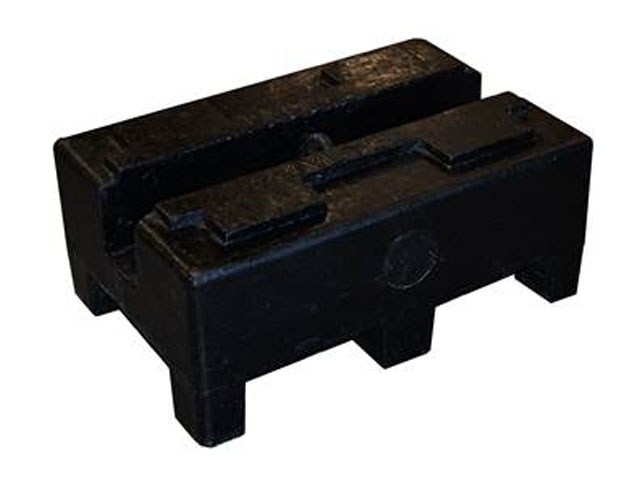
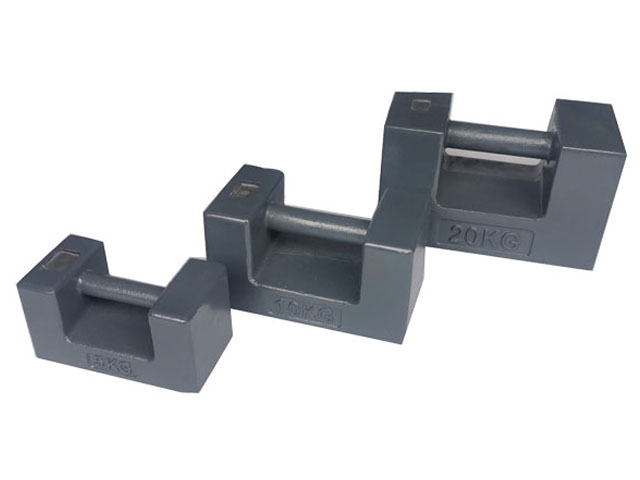
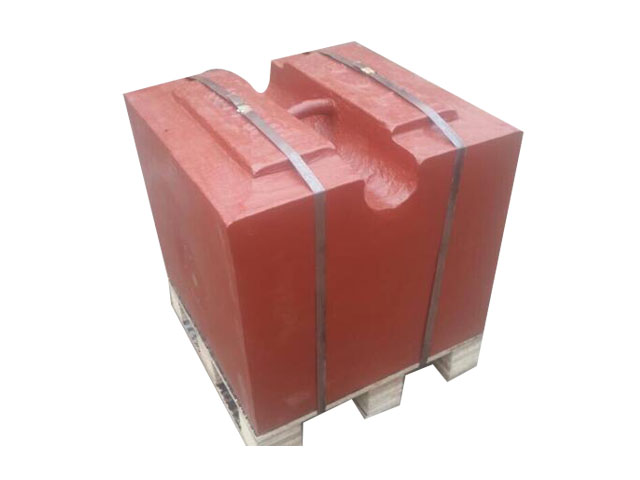
The core advantage of stackable cast iron weights lies in their modular stackable structure, a thoughtful design that breaks the limitations of fixed-specification weighted tools. Each individual weight piece is manufactured with standardized dimensional accuracy, featuring smooth matching surfaces and stable stacking grooves or anti-slip structures that ensure tight, secure lamination when multiple units are combined. This structural precision eliminates loose shaking, offsetting, or sliding during stacking and usage, even under continuous vibration or external force interference. Users can freely combine and superimpose a different number of single weights according to actual operational demands, achieving flexible adjustment of total mass without the need for multiple sets of weights with fixed specifications. This highly adaptable design greatly simplifies equipment configuration, reduces the occupancy of storage space, and improves the efficiency of weight adjustment in various working scenarios.
Material superiority is the fundamental support for the excellent performance of stackable cast iron weights. High-quality cast iron used in production features uniform internal density, no internal pores, trachoma, or structural defects, ensuring that each weight unit maintains accurate and consistent mass. Compared with steel weights, cast iron has better vibration damping performance and lower thermal expansion coefficient, which means its mass and structural stability are less affected by temperature changes, mechanical vibration, and minor external impact. In outdoor open environments, humid workshops, and other harsh working conditions, cast iron exhibits strong oxidation resistance and corrosion resistance after surface treatment, effectively avoiding rust, peeling, and performance degradation caused by long-term exposure to air, moisture, or slight chemical erosion. Even after years of repeated stacking, handling, and use, the surface flatness and overall structural integrity of the weights can be well maintained, avoiding mass deviation caused by material loss or structural deformation.
The application scenarios of stackable cast iron weights cover a wide range of fields, realizing value penetration in multiple industries and daily life. In the field of mechanical equipment debugging and calibration, these weights are commonly used for precision calibration of weighing instruments, tension testing equipment, and mechanical balance systems. The stable and accurate mass of cast iron provides a reliable reference standard for equipment parameter debugging, ensuring the measurement accuracy and operational stability of various mechanical devices. In industrial production and processing, they are applied to the pressure fixing of processing materials, auxiliary compression in cutting and bending processes, and stable counterweight of automated mechanical arms and transmission equipment, effectively avoiding material displacement or equipment jitter that affects processing precision.
In the construction and engineering industry, stackable cast iron weights play an irreplaceable role in temporary stabilization and pressure fixing. They are widely used for pressing and fixing building formwork, stabilizing temporary support structures, balancing outdoor scaffolding systems, and compacting loose filling materials on construction sites. Their stackable feature allows construction personnel to flexibly adjust the counterweight according to the wind force, structural height, and construction load requirements of different construction environments, ensuring the safety and stability of temporary construction facilities. At the same time, their sturdy and drop-resistant characteristics adapt to the rough operation environment of construction sites, avoiding damage and failure caused by accidental collision and falling.
The fitness and sports equipment industry is also an important application field of stackable cast iron weights. Many strength training devices, including weightlifting benches, dumbbell frames, and comprehensive training equipment, adopt stackable cast iron counterweight structures. Different from ordinary plastic-coated weights, pure cast iron fitness weights have more stable gravity center and better pressure resistance, which can provide stable load support for muscle strength training and avoid weight offset caused by body movement during exercise. The modular stacking design enables fitness enthusiasts and professional trainers to adjust the training load step by step according to physical conditions and training plans, realizing scientific gradient training. In addition, the high-density characteristics of cast iron make the weights smaller in volume under the same mass, saving the placement space of fitness equipment and improving the tidiness of the training environment.
In daily life and small-scale commercial scenarios, stackable cast iron weights also show strong practicality. They can be used for pressing textiles and leather products in the manual processing industry to ensure flat shaping of materials; for stabilizing outdoor tents, sunshade awnings, and advertising display stands to prevent overturning caused by wind blowing; for balancing small household mechanical equipment and experimental devices to maintain the horizontal stability of equipment operation. Whether it is short-term temporary use or long-term fixed configuration, these weights can adapt flexibly, with strong compatibility and low use threshold, suitable for professional operators and ordinary users alike.
The surface treatment process of stackable cast iron weights further optimizes their usability and service life. Most qualified products undergo strict polishing, deburring, and anti-rust treatment processes. The smooth and flat surface not only ensures the fitting tightness during stacking but also avoids scratch damage to hands, equipment, and materials during handling and use. The professional anti-rust coating can effectively isolate air and moisture, slow down the oxidation and rust rate of cast iron, and maintain the appearance integrity and mass accuracy of the weights for a long time. Different from inferior weights with rough surfaces and easy peeling coatings, high-quality stackable cast iron weights have firm coating adhesion, not easy to fall off after long-term friction and stacking, and can maintain stable performance in various complex environments.
In terms of use safety, stackable cast iron weights have obvious advantages over other types of weights. The overall integrated casting structure makes each weight unit have high structural strength, no cracking, fragmentation, or local collapse under normal use pressure and impact, avoiding safety hazards caused by weight damage and mass scattering. The standardized edge chamfer design prevents sharp edges and corners from causing accidental scratches and collisions, improving the safety of daily handling and stacking operations. The anti-slip limit structure between stacked units can effectively prevent sudden sliding and falling of weights during use and movement, ensuring the safety of equipment operation and personnel activities in the working environment.
Storage and portability are also important highlights of stackable cast iron weights. Thanks to the unified standardized size and regular geometric shape, multiple weight units can be closely stacked together, minimizing the occupied storage space and facilitating centralized storage and management. Compared with irregular counterweight blocks and fixed large-scale weights, stackable cast iron weights are more convenient for handling and transportation. Users can disassemble and stack them in layers according to transportation and placement needs, reducing handling difficulty and improving space utilization in transportation tools. For enterprises and institutions that need frequent mobile operation and multi-scene switching use, this portable and stackable design greatly improves work efficiency and reduces storage and transportation costs.
Long-term use economy makes stackable cast iron weights a high-cost-performance choice for long-term investment. Although the initial manufacturing process of cast iron weights is precise and the material quality is high, their super-long service life greatly reduces the frequency of replacement and maintenance. Ordinary synthetic weights and thin steel weights are prone to deformation, aging, and damage after a period of use, requiring regular replacement and increasing long-term use costs. In contrast, stackable cast iron weights can maintain stable performance for more than ten years under normal use and maintenance conditions, with almost no mass attenuation and structural failure. The simple maintenance requirements also save a lot of manual maintenance costs, only needing regular surface cleaning and dry storage to maintain good use condition.
In terms of precision control, stackable cast iron weights have excellent mass uniformity. In the production process, each weight will undergo strict manual screening and instrument detection to ensure that the mass error is controlled within a very small standard range. This high-precision manufacturing standard enables them to meet the basic counterweight needs of ordinary scenarios and adapt to medium and high-precision calibration and balancing work. In experimental testing, instrument calibration, and precision mechanical debugging fields, the accurate and stable mass of stackable cast iron weights can provide reliable data support, ensuring the accuracy and consistency of test results and equipment operation parameters.
It is worth mentioning that the adaptability of stackable cast iron weights to temperature and pressure environments is extremely outstanding. In low-temperature environments, cast iron materials will not become brittle and cracked like some plastic and alloy materials, maintaining stable structural toughness and mass performance. In high-temperature working environments within a certain range, they will not deform and expand significantly, avoiding counterweight failure caused by structural changes. Under high-pressure load conditions, the high-density solid structure of cast iron can bear continuous pressure without sinking or deforming, ensuring the long-term stability of counterweight effects.
With the continuous development of industrial technology and the upgrading of market demand, the production process and structural design of stackable cast iron weights are also constantly optimized and innovated. Modern production adopts automated precision casting technology, which further improves the internal density uniformity and dimensional accuracy of products. The optimized stacking groove structure is more stable and firm, the anti-slip effect is significantly improved, and the compatibility between weight units is stronger, realizing seamless matching of different batches of products. At the same time, more humanized designs have been added to the product details, such as reserved handling grooves and portable stress points, making the handling, stacking, and disassembly process more labor-saving and convenient, further improving the user experience in actual operation.
In practical application management, stackable cast iron weights also have strong manageability. The unified specification and modular design facilitate users to classify, count, and manage weights. Enterprises and institutions can configure the number of weights according to business scale and usage frequency, realizing flexible resource allocation. The durable and wear-resistant features make the weights have low loss rate in the process of repeated use and turnover, which is convenient for long-term asset management and inventory statistics. Whether it is small-scale individual use or large-scale industrial batch configuration, it can form a scientific and reasonable counterweight system to meet the diversified use needs of different scenarios.
In conclusion, stackable cast iron weights integrate excellent material performance, flexible modular design, wide scene adaptability, high safety and long service life, becoming an indispensable basic auxiliary tool in modern industry, construction, fitness, experimental testing and daily life. Its stable and accurate mass output, sturdy and durable structural performance, and convenient stacking and storage mode solve many pain points in the use of traditional counterweight tools, such as single function, poor stability, short service life and large space occupation. With the continuous improvement of industrial production standards and the diversification of social use needs, stackable cast iron weights will rely on their unique performance advantages to maintain broad application prospects and continuously provide reliable basic support for all walks of life. The perfect combination of classic cast iron materials and modern modular design makes this kind of weight product always maintain strong practical value and market vitality in the changing market demand, and become a trusted stable counterweight solution for users.
Stackable Cast Iron Weight
https://www.veidtweighing.com/cast-iron-weights.html
Post Date: Jul 25, 2026
https://www.supplier-manufacturer.com/cast-iron-weight/stackable-cast-iron-weight.html

![Cast Iron Weight Production]()
Cast Iron Weight Production
Cast iron weights serve as essential foundational components across a wide spectrum of industrial and commercial operational scenarios, fulfilling core functional needs fo…![Coffee Scales]()
Coffee Scales
For anyone who has delved into the craft of homemade coffee brewing, the subtle gap between an ordinary cup and a satisfying, well-balanced brew often lies not in expensiv…![Low Tolerance Cast Iron Weight]()
Low Tolerance Cast Iron Weight
Low tolerance cast iron weight stands as a fundamental and reliable component across modern industrial production, mechanical operation, and precision measurement fields, …![Digital Viscometers]()
Digital Viscometers
Viscosity stands as one of the most fundamental physical properties of fluid substances, reflecting the internal friction and flow resistance that occurs when a fluid unde…![Cast Iron Weight Factory]()
Cast Iron Weight Factory
A cast iron weight factory operates as a vital industrial cornerstone, focused on the meticulous creation of durable, dimensionally stable, and functionally reliable cast …