Specifications of Laboratory Weight
Laboratory weights are fundamental mass reference objects widely applied in experimental testing, instrument verification, and quantitative analysis across scientific research, chemical analysis, biological experimentation, and industrial inspection fields. Serving as physical carriers for mass value transmission, these objects maintain stable and consistent mass attributes under standard environmental conditions, providing reliable reference benchmarks for the calibration and debugging of various weighing instruments. The comprehensive specifications of laboratory weights cover material composition, structural design, physical performance, metrological attributes, environmental adaptability, and usage compatibility, all of which collectively determine their working stability and application scope in laboratory scenarios. Standardized parameter design and manufacturing specifications ensure that laboratory weights can meet the precise measurement demands of different experimental environments and testing procedures, avoiding systematic errors caused by inconsistent reference standards in quantitative experiments.

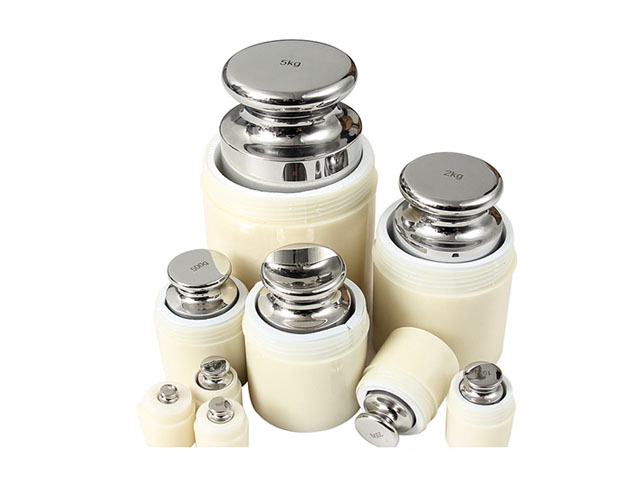
Material composition constitutes the core basic specification of laboratory weights, directly affecting mass stability, surface durability, and environmental resistance during long-term use. Common manufacturing materials for laboratory weights include high-grade stainless steel, alloy steel, and non-ferrous composite materials, each with unique physical and chemical properties adapted to different precision scenarios. Stainless steel materials used for high-precision laboratory weights feature compact internal molecular structure, low porosity, and excellent oxidation resistance, which effectively reduce the mass change caused by surface oxidation and corrosion in long-term atmospheric exposure. This type of material maintains stable surface status in conventional laboratory environments with normal temperature and humidity, and is less prone to rust, peeling, or structural aging. Alloy steel materials are mostly applied in medium-precision laboratory weights, with good hardness and structural rigidity, capable of resisting slight friction and collision wear in daily use. Non-ferrous composite materials are usually used for low-mass auxiliary weights, featuring light weight and stable chemical properties, suitable for routine rough weighing calibration scenarios. In addition, all qualified laboratory weight materials undergo uniform density treatment in the manufacturing process, which reduces the mass deviation caused by uneven internal material distribution and ensures the overall uniformity of weight quality.
Structural design specifications of laboratory weights focus on overall integrity, surface finish, and dimensional uniformity to guarantee the consistency of mass performance and operational convenience. Most standard laboratory weights adopt integrated one-piece molding structures, eliminating structural gaps and loose parts that may exist in assembled structures. This integrated design avoids mass changes caused by part loosening, falling off, or gap dust accumulation during long-term use, and improves the overall structural stability of the weights. The surface of laboratory weights is processed through fine polishing and grinding procedures, forming a smooth and dense surface layer with low surface roughness. The smooth surface effectively reduces the adhesion of dust, moisture, and experimental residues, minimizing the mass error caused by surface attachment. For weights of different mass specifications, the overall dimensional proportion is standardized, with regular and symmetrical shapes, which ensures uniform stress distribution during placement and avoids mass deviation caused by uneven contact deformation. Conventional laboratory weights are designed with flat bottom surfaces to ensure stable placement on horizontal weighing platforms, while the upper surface is designed with a smooth curved or flat structure to facilitate manual handling and cleaning without leaving handling traces that affect surface flatness.
Metrological specifications are the core functional indicators of laboratory weights, defining the mass deviation range and measurement stability of weights in standard use environments. Each laboratory weight corresponds to a fixed nominal mass value, covering multiple gradient specifications from microgram level to kilogram level, which can meet the calibration and verification needs of weighing instruments with different ranges and precision levels. In the manufacturing process, the actual mass of each weight is controlled within a reasonable deviation range relative to the nominal value, and the deviation amplitude matches the application precision level of the weight. High-precision laboratory weights have a smaller allowable mass deviation, suitable for fine calibration of high-sensitivity analytical weighing equipment, while medium and low-precision weights have a relatively moderate deviation range, adapting to conventional laboratory weighing verification work. In addition, laboratory weights have stable mass repeatability, which means the mass state can remain consistent after multiple placement, handling, and use cycles, without obvious fluctuation of numerical values due to repeated use. This stable repeatability ensures the continuity and comparability of experimental data in long-term laboratory testing work.
Physical performance specifications of laboratory weights include density uniformity, thermal stability, and mechanical resistance, which support stable use in variable laboratory environments. The material density of qualified laboratory weights maintains uniform distribution inside the structure, without local density differences caused by casting or processing defects. Uniform density ensures that the weight will not produce unbalanced gravity deviation due to internal structural differences during weighing reference, improving the accuracy of mass reference. Thermal stability reflects the mass change resistance of weights under temperature fluctuation conditions. Laboratory weights are manufactured to adapt to conventional laboratory temperature change ranges, and their structural volume and mass will not produce obvious changes with normal temperature fluctuation, avoiding measurement errors caused by thermal expansion and cold contraction. Mechanical resistance indicators include surface hardness and impact resistance. Standard laboratory weights can resist slight friction, extrusion, and accidental light impact in daily use, without surface depression, scratch, or structural deformation, thus maintaining long-term mass stability and structural integrity.
Environmental adaptability specifications define the applicable environmental conditions and storage requirements for laboratory weights, standardizing their use and maintenance scenarios. Conventional laboratory weights are adapted to indoor laboratory environments with stable temperature and dry air, and can maintain stable performance under normal atmospheric pressure and conventional humidity conditions. In environments with excessive humidity, severe temperature mutation, or corrosive gas concentration, the surface and internal structure of weights may be affected, so the environmental adaptability specifications clearly limit the extreme working conditions of weights. High-precision laboratory weights have stricter environmental adaptation requirements, needing to be used and stored in constant temperature and dry environments to avoid mass drift caused by environmental changes. In addition, laboratory weights have good dust resistance through surface finishing treatment, which prevents tiny dust particles from penetrating into the interior structure and ensures that the surface cleaning state is easy to maintain in daily management. Reasonable environmental adaptability specifications extend the service life of weights and ensure the long-term reliability of mass reference performance.
Usage and matching specifications of laboratory weights standardize their matching applicability with weighing equipment and operational norms. Different precision levels of laboratory weights correspond to matching types of weighing instruments, with high-precision weights matching high-sensitivity analytical balances and precision weighing instruments, and conventional weights matching ordinary electronic scales and mechanical weighing equipment. This matching design ensures that the precision level of the reference weight is compatible with the resolution of the weighing instrument, avoiding the problem of insufficient reference accuracy or performance redundancy. In terms of use operation, the surface structural design of laboratory weights adapts to standard manual handling tools, which can avoid direct finger contact with the weight surface during use, preventing sweat, oil, and stains from adhering to the surface and affecting mass accuracy. The dimensional specifications of weights also meet the placement requirements of standard weighing platforms, ensuring stable placement without inclination or shaking during calibration and verification. Meanwhile, laboratory weight sets are designed with gradient mass matching, and weights of different specifications can be combined and used according to experimental and calibration needs, improving the flexibility and comprehensiveness of weighing verification work.
Durability and maintenance specifications are important auxiliary indicators of laboratory weight performance, covering long-term use stability and daily maintenance adaptability. Qualified laboratory weights have excellent aging resistance, and their material properties and structural state will not undergo obvious deterioration after long-term placement and repeated use. The surface anti-oxidation and anti-corrosion properties enable the weights to maintain a smooth and complete surface state for a long time, reducing the frequency of mass correction caused by surface aging. In terms of maintenance adaptability, the smooth surface and integrated structure of laboratory weights facilitate daily cleaning and maintenance work. Users can remove surface dust and residual stains through conventional dust removal and wiping methods without damaging the surface structure and precision of the weights. In addition, the structural stability of the weights ensures that frequent calibration is not required in the daily use cycle, maintaining stable mass performance for a long time under standardized storage and use conditions. Scientific durability specifications reduce the use cost of laboratory equipment and ensure the continuous and stable development of laboratory testing work.
In practical laboratory application scenarios, the standardized specifications of laboratory weights lay a solid foundation for the accuracy and consistency of experimental data. In chemical reagent configuration, component content detection, physical property testing, and instrument daily debugging, laboratory weights provide unified mass reference standards, effectively avoiding experimental data errors caused by inconsistent reference benchmarks. The systematic and standardized design of material, structure, metrology, and environmental adaptation specifications enables laboratory weights to adapt to diversified laboratory application scenarios, meeting the precision requirements of different experimental levels. With the continuous improvement of laboratory testing technology, the specification design of laboratory weights is also constantly optimized, moving towards higher structural stability, better environmental adaptability, and more accurate metrological performance, providing more reliable basic support for scientific research experimentation and industrial detection work.
Specifications of Laboratory Weight
https://www.veidtweighing.com/laboratory-weights.html
Post Date: Jun 7, 2026
https://www.supplier-manufacturer.com/laboratory-weight/specifications-of-laboratory-weight.html

![Calibration Weight Production]()
Calibration Weight Production
Calibration weights stand as the foundational backbone of all precise mass measurement activities across industrial production, laboratory research, commercial trade, and …![25kg Test Weight]()
25kg Test Weight
In the complex and interconnected system of modern social production, commercial circulation, public infrastructure operation and daily life management, the accuracy and s…![M3 Class Test Weight]()
M3 Class Test Weight
In the entire system of industrial measurement, commercial weighing and daily metering verification work, test weights stand as one of the most fundamental and indispensab…![Stainless Steel Standard Weight]()
Stainless Steel Standard Weight
Stainless steel standard weight represents one of the most fundamental and essential physical attribute benchmarks that define the practical usability and structural perfo…![Test Weight Sets]()
Test Weight Sets
Test weight sets stand as foundational reference tools in every field that relies on reliable mass measurement, forming the essential bridge between theoretical mass stand…