Industrial Laboratory Standard Weight Calibration Set
In modern industrial production and scientific laboratory operations, consistent and accurate mass measurement serves as the foundational support for reliable experimental data, standardized production processes, and qualified product quality control. Industrial laboratory standard weight calibration sets stand as essential reference tools in this field, functioning as fixed mass benchmarks to correct, verify, and stabilize the measurement performance of various weighing equipment. Unlike ordinary weighing tools used for daily rough measurement, these calibration sets undergo rigorous precision manufacturing and surface treatment, with stable mass attributes and uniform structural specifications that enable them to provide credible reference bases for all types of precision weighing scenarios across diverse industries. Their widespread application effectively reduces systematic measurement errors and maintains the uniformity and traceability of mass measurement results in industrial and laboratory environments.
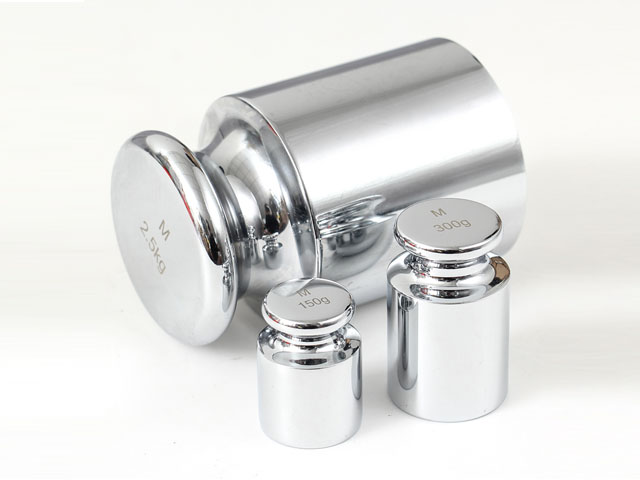
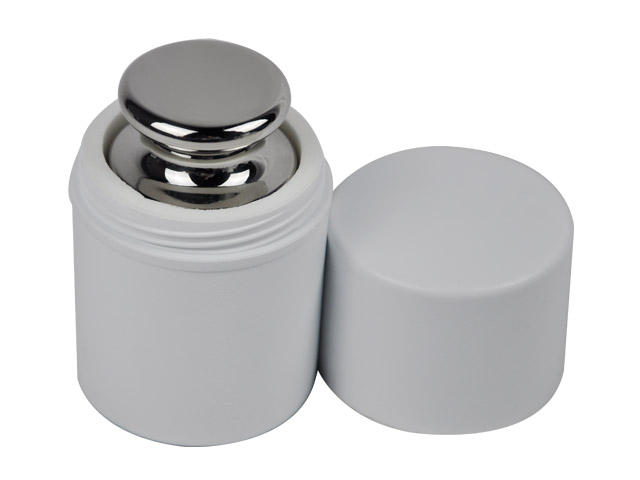
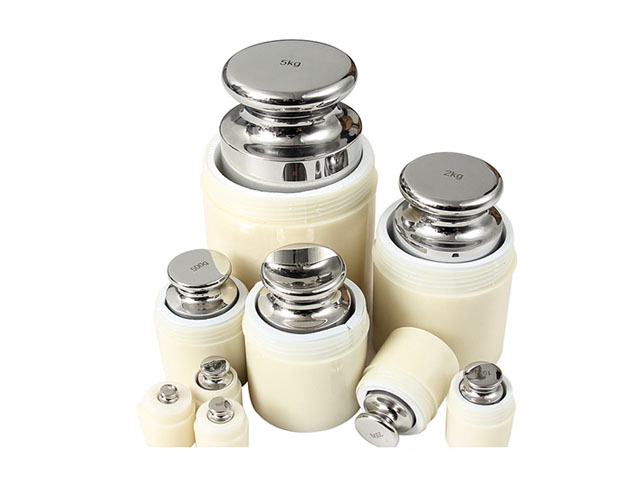
The structural composition of a standard weight calibration set is designed to meet hierarchical and multi-range calibration demands. A complete set usually includes multiple individual weights of different mass specifications and matching auxiliary accessories, forming a systematic calibration solution that covers micro, small, medium and conventional mass ranges. The collocation of mass specifications follows progressive numerical rules, allowing users to combine different weights freely according to the measuring range and accuracy requirements of the weighing instrument. This flexible combination mode adapts to the calibration needs of analytical balances, precision electronic scales, mechanical weighing instruments and other equipment with different parameters, avoiding the limitation of single-specification weights that can only meet narrow calibration ranges. Auxiliary accessories commonly include specialized storage boxes, tweezers, and protective cleaning tools, which are configured to protect the precision weights from external damage and ensure standardized operation during use.
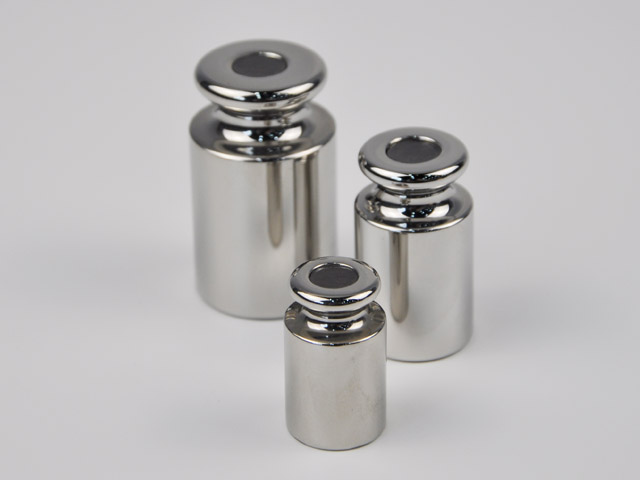
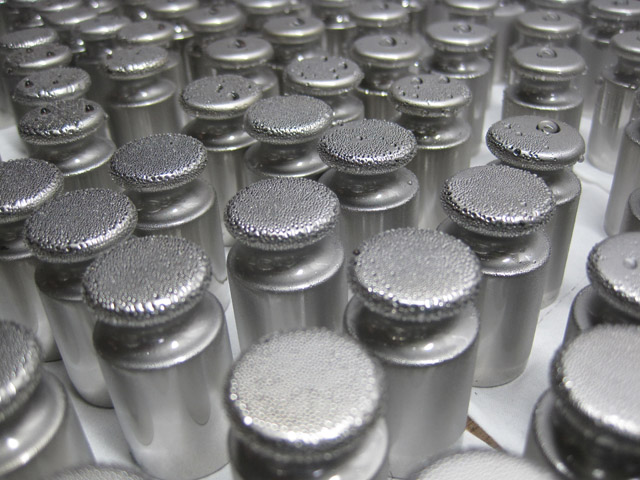
Material selection determines the core performance and service stability of standard calibration weights, and industrial and laboratory scenarios impose strict requirements on material density, surface stability, oxidation resistance and wear resistance. Most precision calibration weights adopt high-quality metal materials with compact internal structures and low porosity, which can effectively avoid internal structural changes and mass deviation caused by long-term use. Common manufacturing materials include optimized stainless steel alloys, brass with anti-corrosion treatment, and high-stability cast iron for large-mass weights. High-precision models often use refined metal materials with uniform molecular distribution, which can maintain stable mass status in variable temperature and humidity environments. The surface of all weights is processed with fine polishing and anti-corrosion treatment to reduce surface roughness, prevent dust adhesion, oxidation discoloration and chemical corrosion, and minimize mass changes caused by external environmental factors. Materials with good magnetic insulation properties are also preferred to avoid mass measurement interference caused by magnetic field induction in complex laboratory and industrial production environments.
The working logic of standard weight calibration sets is based on the basic principle of mass comparison and mechanical balance. All weights in the set have fixed and known mass values, which serve as standardized reference quantities with stable attributes. In the calibration process, users place the standard weights with determined mass on the weighing platform of the instrument to be tested, and compare the feedback reading of the weighing instrument with the inherent standard mass value of the weights. When the instrument reading deviates from the standard mass value, it indicates that the weighing equipment has systematic errors caused by long-term operation, environmental interference or mechanical wear. Through this comparison method, operators can accurately identify the error range of the instrument and complete parameter adjustment and error correction of the weighing equipment. For mechanical balance equipment, calibration is completed by balancing the torque of standard weights and the measured object; for electronic weighing equipment, standard weights provide accurate signal reference points for the instrument’s sensor system, helping the system correct signal conversion parameters and restore measurement accuracy.
The application scenarios of industrial laboratory standard weight calibration sets cover almost all links that require precise mass measurement verification. In scientific research laboratories, they are used for daily calibration and regular inspection of analytical balances and precision weighing instruments, ensuring the accuracy of experimental data in chemical component analysis, material performance testing, pharmaceutical research and other projects. Slight measurement deviations in laboratory experiments may lead to distorted experimental results and affect the validity of research conclusions, so regular calibration with standard weight sets is a necessary guarantee for standardized laboratory research. In industrial manufacturing fields such as food processing, daily chemical production and pharmaceutical manufacturing, the sets are applied to calibrate production line weighing equipment, ensuring the consistency of product ingredient proportioning, packaging weight and batch production standards, which helps maintain stable product quality and avoid batch inconsistencies caused by inaccurate weighing.
In precision manufacturing industries including hardware processing, electronic component production and aerospace part manufacturing, standard weight calibration sets undertake the calibration work of high-precision detection scales, providing accurate measurement benchmarks for product size matching and quality screening. In material testing and quality inspection institutions, these calibration tools are used to verify the accuracy of testing equipment, ensuring the objectivity and credibility of inspection data and providing technical support for product quality evaluation and standard implementation. In addition, they also play an important role in educational laboratory teaching, helping students understand the basic principles of mass measurement and instrument calibration, and cultivating standardized experimental operation habits.
Environmental adaptability is a key indicator for evaluating the practical performance of standard weight calibration sets. Industrial and laboratory environments often have variable temperature and humidity conditions, and some production workshops have slight dust and gas interference. Qualified calibration weights are designed with environmental adaptability in mind, with stable physical properties that resist mass fluctuation caused by temperature difference changes and humid air erosion. The sealed and smooth surface structure can effectively isolate dust, moisture and corrosive gases in the air, preventing surface adsorption and chemical reaction that may cause mass changes. Meanwhile, the structural hardness of the weights is optimized to resist slight friction and collision wear during daily handling and use, maintaining long-term mass stability. Such environmental adaptability enables the calibration sets to maintain reliable working performance in conventional industrial and laboratory environments, reducing the frequency of replacement and repeated calibration caused by environmental impact.
Standardized use and scientific maintenance are crucial to maintaining the long-term accuracy and service life of standard weight calibration sets. In daily operation, direct hand contact with the weight surface should be avoided, as sweat, grease and fine impurities on human hands will adhere to the surface, causing subtle mass changes and affecting calibration accuracy. Special tweezers or clamping tools should be used to take and place weights to ensure clean and stress-free operation. During the calibration process, weights should be placed gently on the center of the weighing platform to prevent impact force from damaging the internal structure of the weighing instrument and avoid surface abrasion of the weights caused by sliding friction. After each use, the weights need to be cleaned with professional cleaning tools to remove surface dust and tiny attachments, and then placed in a dry, sealed and dust-proof storage box for preservation.
Long-term storage environments should maintain constant temperature and dry conditions, avoiding placement in high temperature, humid or corrosive gas environments to prevent material aging and surface oxidation. Regular manual inspection is also essential in daily maintenance, including checking whether the weight surface has scratches, depressions, corrosion spots or other defects, and confirming whether the auxiliary accessories are complete and intact. Once surface damage or abnormal mass deviation is found, the corresponding weights should be suspended from use in time to avoid affecting the calibration accuracy of the instrument. In addition, regular professional recalibration of the weight set itself is required. After long-term use, subtle mass changes may occur due to cumulative environmental influence and slight wear, and professional recalibration can correct the deviation and restore the reference accuracy of the weights.
The value of industrial laboratory standard weight calibration sets lies in their ability to build a stable and unified mass measurement benchmark for industrial production and laboratory research. All precise measurement work relies on reliable reference standards, and the stability of standard weight sets directly determines the accuracy of subsequent measurement data, experimental results and product quality control. In the process of industrial upgrading and laboratory standardization construction, the demand for high-precision and high-stability calibration tools is constantly improving. Standard weight calibration sets, as basic measuring reference equipment, provide solid technical support for the standardization, precision and institutionalization of measurement work. They effectively reduce measurement errors in production and experiments, avoid quality risks and resource waste caused by inaccurate weighing, and promote the standardized development of various industrial and scientific research fields.
With the continuous improvement of industrial production precision and laboratory testing standards, the manufacturing process and performance design of standard weight calibration sets are also constantly optimized. Modern production processes further improve the uniformity of weight material structure and surface finish, enhance the anti-interference ability and long-term stability of products, and adapt to higher-precision measurement and calibration scenarios. The hierarchical specification design of calibration sets is more refined, covering wider mass ranges and meeting the diversified calibration needs of miniature precision instruments and large-scale industrial weighing equipment. While maintaining basic calibration functions, the optimized structural design improves the convenience of storage, carrying and operation, making the calibration work more efficient and standardized. As an indispensable basic supporting equipment in the measurement field, industrial laboratory standard weight calibration sets will continue to play a core role in ensuring measurement accuracy, standardizing production and experimental processes, and promoting the steady improvement of industrial and scientific research quality.
Industrial Laboratory Standard Weight Calibration Set
https://www.veidtweighing.com/laboratory-weights.html
Post Date: Jun 7, 2026

![Precision Calibration Weight]()
Precision Calibration Weight
Precision calibration weight stands as an essential foundational element within the entire framework of modern mass measurement and industrial metrology, serving as a tang…![Calibration Weight For Digital Scales]()
Calibration Weight For Digital Scales
Digital scales have become an indispensable part of daily life, commercial operations, industrial production, and scientific research work, serving as a fundamental tool f…![Balance Calibration Weight]()
Balance Calibration Weight
In every field that relies on precise mass determination, from basic laboratory scientific research to industrial production processing, pharmaceutical ingredient preparat…![1kg Calibration Weight]()
1kg Calibration Weight
In the intricate and interconnected world of modern measurement science and industrial production, the pursuit of consistent and reliable mass measurement forms the invisi…![Rust Proof Standard Weight]()
Rust Proof Standard Weight
Rust proof standard weight represents a specialized material configuration that balances consistent structural weight distribution and reliable anti-corrosion performance,…