F1 Class Stainless Steel Weight
In the intricate and foundational field of modern metrology, the consistency and reliability of mass measurement lay the groundwork for countless industrial production processes, scientific research experiments, and daily quality control operations across all sectors of the global economy. Every precise weighing result that enterprises rely on for production adjustments, laboratories depend on for data analysis, and inspection institutions use for routine verification traces back to a set of stable and well-crafted mass reference carriers, among which F1 class stainless steel weight stands out as an essential and widely applied core measuring tool. Unlike ordinary common weights used for rough weighing and simple daily weighing scenarios, this type of weight is meticulously engineered and processed to maintain steady mass performance over long-term use, adapting to complex working environments and frequent calibration operations, and providing a solid and credible mass benchmark for all links that require accurate mass value transmission and instrument verification. Its existence bridges the gap between basic mass reference standards and practical on-site weighing applications, ensuring that every weighing instrument in use can maintain consistent and reliable measurement status, avoiding mass deviation caused by long-term operation, external environmental interference, or frequent use, and supporting the orderly and standardized development of all industries closely related to mass measurement.
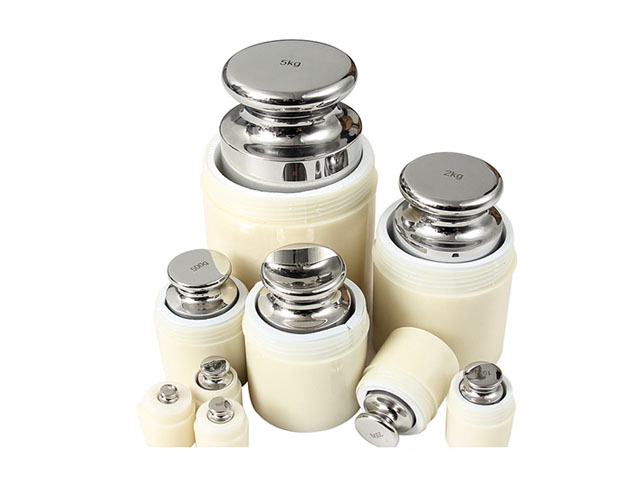
The core foundation that endows F1 class stainless steel weight with excellent working performance lies in the carefully selected stainless steel material and the unique physical and chemical properties inherent in the material itself. The stainless steel used for manufacturing these weights is specially refined and processed, with a balanced composition ratio that endows the material with ideal structural density, uniform internal texture, and excellent anti-interference capabilities against external environmental factors. This material features strong corrosion resistance, effectively resisting the erosion caused by common moisture, trace chemical vapors, and minor dust pollution that may be encountered in laboratory environments, industrial production workshops, and conventional storage spaces. In the long-term use cycle, it will not undergo surface oxidation, rusting, or internal structural changes due to changes in ambient humidity and temperature, which could otherwise lead to subtle fluctuations in mass and affect the accuracy of subsequent weighing and calibration work. In addition, the selected stainless steel has low magnetic susceptibility and stable physical properties, avoiding mass value changes caused by magnetic field interference or material aging, and ensuring that the basic mass state of each weight remains in a stable state for a long time. The surface of the weight is processed through fine polishing and precise finishing, forming a smooth and compact surface texture that not only prevents external impurities from adhering easily but also simplifies daily cleaning and maintenance work, reducing the impact of surface dirt accumulation on mass accuracy during long-term repeated use and handling.
The production and manufacturing process of F1 class stainless steel weight follows rigorous processing procedures and precise dimensional control standards, with every production link refined and inspected layer by layer to meet the basic requirements of precision mass reference tools. The whole manufacturing process starts from raw material cutting and rough forging, followed by precision shaping processing, surface fine grinding, internal structure stress relief treatment, and final fine tuning of mass value, with each step completed under stable and controlled production environmental conditions. During the processing stage, professional processing equipment is used to ensure that the overall shape, surface flatness, and structural symmetry of each weight meet unified specifications, avoiding any structural irregularities that may cause unbalanced stress or inconsistent handling effects during use. After the initial forming of the weight, special stress relief treatment is carried out to eliminate internal structural stress generated during the forging and processing process, preventing subtle structural deformation and mass changes caused by stress release during subsequent long-term placement and use. The final mass fine tuning link is carried out through a gradual and accurate material matching and micro-adjustment method, slowly approaching the set nominal mass value, ensuring that the deviation between the actual mass of each finished weight and the standard nominal value is controlled within a reasonable and narrow range, fully adapting to the precision requirements of daily calibration and conventional metrological verification work.
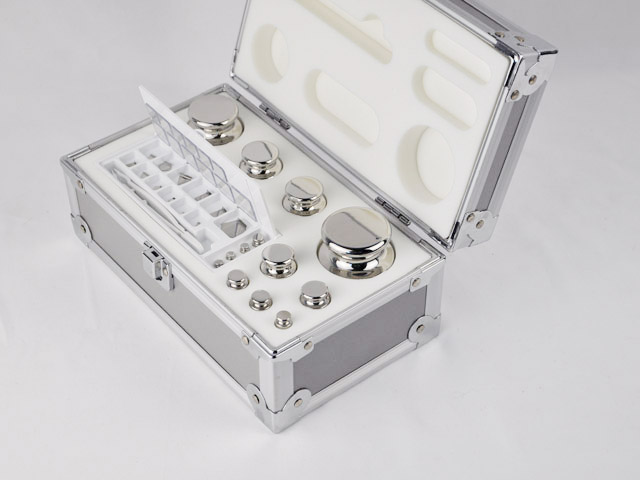
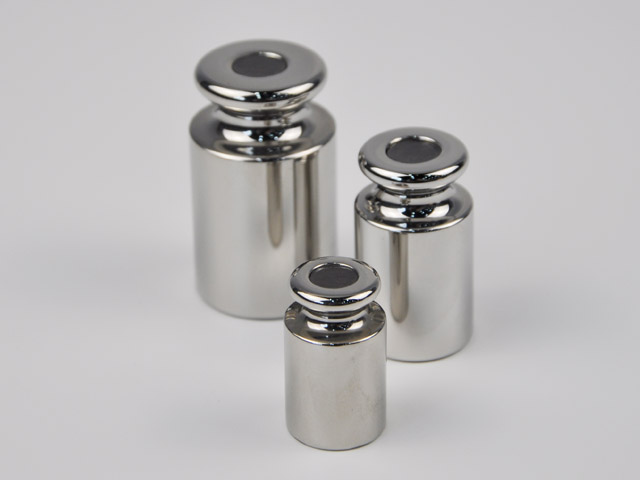
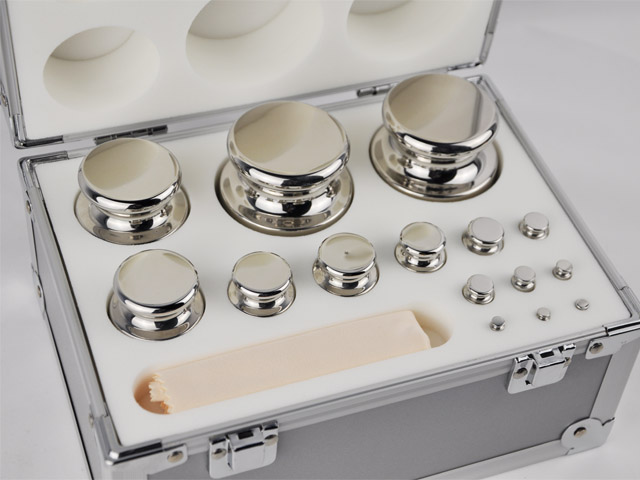
In terms of structural design, F1 class stainless steel weight adopts a scientific and practical shape configuration, taking into account both the convenience of manual handling and the stability of placement and use. Most conventional specifications adopt a compact cylindrical structure with smooth and rounded edge designs, which not only ensures stable placement on the weighing platform of various balances and scales without tilting or shaking but also avoids surface wear and structural damage caused by collision and friction during frequent handling and transfer. Some medium and large-specification weights are designed with reasonable recessed grip positions, which makes the handling process more labor-saving and stable, effectively reducing the risk of accidental dropping and surface damage caused by unstable grasping during use. For small-specification weights in the milligram and low gram range, a fine wire or sheet structure is adopted, which is convenient for accurate placement and use in high-precision analytical weighing scenarios, and can also avoid excessive contact area leading to easy adhesion of dust and moisture. All structural designs avoid complex protruding structures and dead corners, ensuring that the surface of the weight can be thoroughly cleaned and maintained, and reducing the hidden dangers of mass changes caused by dirt accumulation in dead corners. The overall structural coordination enables the weight to maintain good stability in various use and storage states, whether placed flat for long-term storage or frequently moved for calibration operations, and will not produce unnecessary mass fluctuations due to structural problems.
The main application scenarios of F1 class stainless steel weight cover core links such as daily calibration of weighing instruments, routine metrological performance verification, and mass value transmission in industrial production and scientific research fields. In industrial production enterprises of machinery manufacturing, chemical processing, food production, and pharmaceutical preparation, various electronic balances, platform scales, and precision weighing instruments need regular calibration and inspection to ensure accurate weighing data of raw material batching, finished product testing, and production process monitoring. F1 class stainless steel weight can be used as a reliable reference standard to complete the regular calibration of these commonly used weighing equipment, ensuring that the weighing data involved in production and processing is consistent and effective, avoiding production quality problems and product batch differences caused by inaccurate weighing. In scientific research laboratories and experimental testing institutions, a large number of precision analytical balances and experimental special weighing equipment are used for material component testing, sample mass analysis, and experimental data recording. The accuracy of these experimental weighing devices directly affects the authenticity and credibility of experimental results, and the use of F1 class stainless steel weight for regular calibration can maintain the long-term stable working state of laboratory weighing equipment and provide accurate mass data support for scientific research experiments and academic research work.
In addition to industrial production and scientific research laboratories, F1 class stainless steel weight also plays an important role in daily quality inspection and metrological management work of various institutions. Many professional inspection and testing departments need to conduct regular performance testing and accuracy verification of weighing instruments used in various industries to ensure that all weighing links related to commodity transactions, product quality supervision, and public measurement management are carried out within a standardized and accurate range. These weights can be used as a reliable intermediate reference standard to connect higher-level mass reference standards with on-site working weighing instruments, realizing the stable transmission of mass values from top to bottom, and ensuring the unity and accuracy of mass measurement results in different regions and different industry scenarios. At the same time, in the production and processing links of small and medium-sized enterprises and daily measurement management of commercial places, F1 class stainless steel weight can also meet the conventional precision calibration needs, helping enterprises and merchants maintain the normal and standardized use of weighing equipment and avoid measurement disputes and quality management problems caused by inaccurate weighing.
Correct daily use and standardized maintenance management are crucial to maintaining the long-term performance stability and service life of F1 class stainless steel weight. Although the stainless steel material itself has good corrosion resistance and structural stability, improper use and long-term neglect of maintenance will still cause subtle changes in the surface and mass of the weight, affecting its subsequent use effect. In the daily handling process, it is recommended to use auxiliary handling tools such as special gloves and tweezers instead of direct hand contact, because the sweat, oil stains, and fine impurities on the human hand surface will adhere to the surface of the weight, forming a thin attached layer that is not easy to detect, which will gradually cause slight mass changes over time and affect the calibration accuracy. During placement and use, the weight should be prevented from violent collision, falling, and friction with hard objects, so as to avoid surface scratches, structural deformation, and local material wear, which may lead to changes in the actual mass of the weight. After each use, the surface of the weight should be gently wiped with a clean, soft and dry cloth to remove surface dust and tiny attachments, and then placed in a dry, dust-proof and stable special storage space for sealed storage, avoiding long-term exposure to humid air, dusty environments, or places with volatile chemical substances.
Regular routine inspection and periodic performance recheck are also important parts of the maintenance work of F1 class stainless steel weight. Relevant managers can regularly check the surface condition of each weight, observe whether there are scratches, oxidation traces, deformation and other abnormal conditions on the surface, and timely clean and properly handle the weights with slight dirt and surface attachments. For the weights that have been used for a long time or frequently, regular mass performance recheck should be arranged according to the actual use frequency and working environment, to confirm whether the mass value of the weights remains within the normal stable range. Once subtle mass deviation or abnormal surface condition is found, the weights should be suspended from use in time and placed in a stable environment for standing and maintenance, and professional fine tuning and repair should be carried out if necessary, to ensure that the weights can always meet the requirements of normal calibration and metrological work. Good use habits and perfect maintenance management can not only extend the service life of F1 class stainless steel weight but also maintain its stable metrological performance for a long time, reducing the frequency of replacement and fine tuning, and saving the overall operation and management cost of enterprise and institutional metrological work.
Compared with weights made of other common materials and lower precision grades, F1 class stainless steel weight has obvious comprehensive advantages in terms of material stability, environmental adaptability and long-term use cost. Weights made of ordinary carbon steel are prone to rust and corrosion in humid and complex environments, requiring frequent anti-rust maintenance and replacement, with poor long-term mass stability and easy to cause frequent calibration deviations. Some low-precision alloy weights have uneven material texture and poor structural stability, and are prone to mass fluctuation under temperature changes and long-term placement, unable to meet the needs of medium and high-precision calibration work. In contrast, F1 class stainless steel weight, with its optimized material ratio and refined processing technology, can adapt to a variety of conventional use and storage environments, with low daily maintenance difficulty and long stable use cycle. It does not need frequent complex maintenance and repeated replacement, and can maintain consistent metrological performance in long-term continuous use, providing stable and reliable mass reference support for various precision weighing and calibration work. Whether it is for industrial production links that require continuous and stable measurement standards or scientific research and testing links that require high data accuracy, this type of weight can well match the actual use needs and provide solid basic guarantee for the smooth development of metrological work.
With the continuous progress of modern industrial technology and the continuous improvement of scientific research precision requirements, the importance of precise mass measurement in various fields is becoming more and more prominent, and the application demand for F1 class stainless steel weight in various industries is also constantly expanding and upgrading. All walks of life have higher and higher requirements for the accuracy consistency and long-term stability of weighing links, which also puts forward higher standardized requirements for the production, use and maintenance of such precision weights. In the future, with the continuous optimization of material processing technology and continuous improvement of metrological management systems, the comprehensive performance of F1 class stainless steel weight will be further improved, and the application scope will be more extensive. It will continue to serve as an indispensable basic metrological tool, support the standardized development of mass measurement work in various industries, ensure the accuracy and unity of various weighing data, and lay a solid foundation for the stable operation of industrial production, in-depth development of scientific research and standardized management of public measurement. Every seemingly ordinary F1 class stainless steel weight bears the important responsibility of mass value transmission and measurement accuracy guarantee, and its stable performance and reliable quality are the invisible cornerstone of the orderly operation of modern social production and life.
F1 Class Stainless Steel Weight
https://www.veidtweighing.com/ssweight/StainlessSteelWeight
Post Date: May 4, 2026
https://www.supplier-manufacturer.com/stainless-steel-weight/f1-class-stainless-steel-weight.html

![Heavy Duty Stainless Steel Large Industrial Test Weight]()
Heavy Duty Stainless Steel Large Industrial Test Weight
Heavy duty stainless steel large industrial test weights are essential precision components tailored for heavy-load industrial calibration and load testing scenarios, serv…![Standard Weight For Bench Scales]()
Standard Weight For Bench Scales
Bench scales serve as fundamental weighing instruments across industrial production, laboratory testing, commercial transactions, and quality inspection fields, delivering…![Stackable Cast Iron Weight]()
Stackable Cast Iron Weight
Stackable cast iron weights stand as a foundational and versatile tool across industrial, commercial, and residential functional scenarios, earning long-standing popularit…![F1 Class Calibration Weight]()
F1 Class Calibration Weight
Precision mass measurement forms the foundational pillar of modern scientific research, industrial manufacturing, quality control, and material testing, where even minor d…![25kg Oiml Standard Calibration Weight Crane Scale Test]()
25kg Oiml Standard Calibration Weight Crane Scale Test
Industrial weighing operations rely heavily on the stable and consistent performance of crane scales, which undertake weight measurement tasks for suspended loads in manuf…