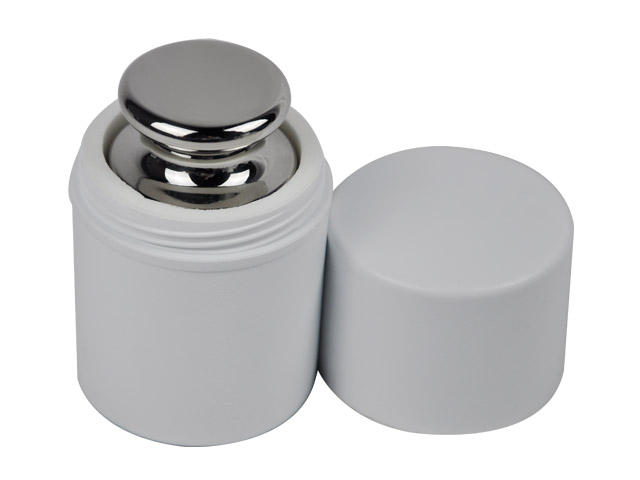
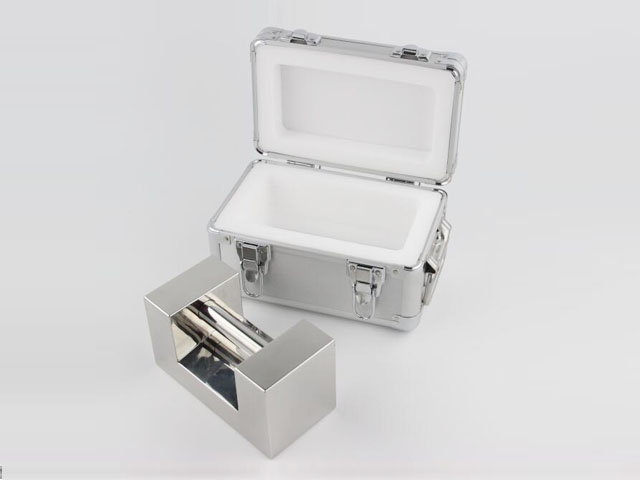
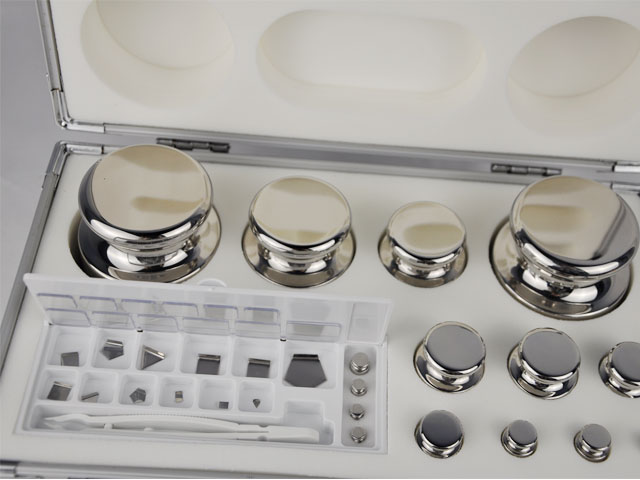
1kg Standard Weight
In the intricate and interconnected world of modern measurement science, industrial production, daily commercial transactions, and scientific research exploration, the consistent and reliable perception of mass stands as an irreplaceable foundational pillar that maintains the order of all material-related activities. Every aspect of human life, from the food we purchase in daily markets and the raw materials processed in large manufacturing plants to the precise experimental data obtained in advanced scientific laboratories and the quality inspection links of high-precision industrial components, relies on the ability to measure mass with steady and uniform reference criteria. Among all the basic measuring tools used to calibrate and verify mass measuring equipment, the 1kg standard weight occupies a uniquely important and irreplaceable position, serving as a core intermediate carrier that connects the basic definition of mass units and the practical application of various weighing devices in all walks of life. This simple and compact measuring artifact is far more than just a metal block with a fixed mass value in the physical sense; it is a vital link that maintains measurement consistency across different regions, different industries, and different time periods, ensuring that every mass measurement result obtained anywhere in daily work and scientific research can be traced back to unified and standardized basic measurement benchmarks, and laying a solid and reliable foundation for the fairness of commercial activities, the stability of industrial production quality, and the accuracy of scientific research experimental data.
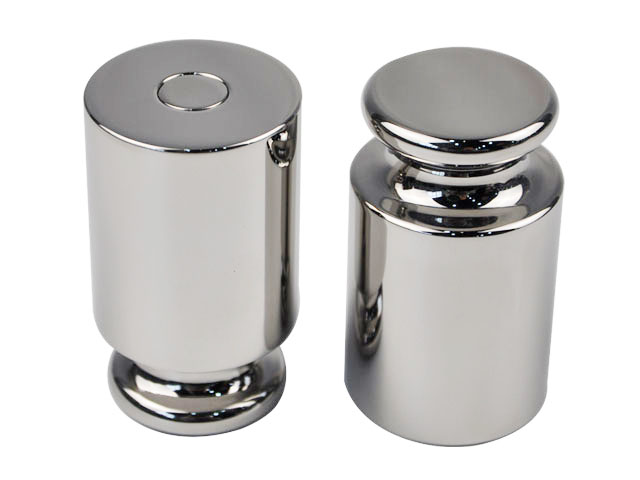
To truly understand the profound value and practical significance of the 1kg standard weight, it is necessary to first recognize the essential difference between mass and the simple feeling of weight in daily life, as well as the core role that standard weights play in unifying measurement standards throughout the entire process. Mass is an inherent physical property of all matter, representing the amount of material contained in an object, and this property will not change due to differences in geographical location, environmental altitude, or changes in external gravitational conditions. In contrast, the weight that people usually perceive in daily life is affected by gravitational acceleration and environmental factors, showing subtle differences in different regions and environments. It is based on this core physical principle that various mass measuring instruments such as electronic balances, mechanical scales, and industrial weighing platforms need a fixed and stable reference object for regular calibration and daily verification, so as to eliminate measurement deviations caused by long-term use, environmental changes, or mechanical wear and tear. The 1kg standard weight is precisely designed and manufactured for this core demand. Its core design concept is to maintain an extremely stable mass attribute for a long time, resist the interference of various external environmental factors to the greatest extent, and provide a stable and reliable reference basis for all kinds of weighing equipment that need to ensure accurate measurement data. Unlike ordinary daily heavy objects, this standard weight undergoes rigorous processing and precise adjustment in the production process, with extremely strict control over surface finish, overall density uniformity, structural stability, and anti-interference performance, ensuring that its inherent mass value remains stable for a long time in conventional use and storage environments, and will not produce obvious fluctuations due to slight changes in temperature, humidity, or minor external contact and friction.
The production and manufacturing process of a 1kg standard weight follows mature and rigorous processing logic and precision processing norms, focusing on every detail that may affect mass stability and measurement accuracy throughout the entire production chain. The selection of production materials is the primary core link in determining the comprehensive performance of the standard weight, and suitable materials need to have multiple excellent characteristics at the same time, including high density uniformity, strong oxidation resistance, good corrosion resistance, low thermal expansion coefficient, and stable internal molecular structure. Materials with these properties can effectively avoid mass changes caused by surface oxidation rust, chemical corrosion, thermal expansion and contraction deformation, and internal structural loosening during long-term use and placement. In the processing stage, the raw materials are processed into a regular and smooth overall structure through fine cutting, grinding, polishing and other multiple precision processes, and the surface is treated with special processes to make it smooth and flat without obvious pores, cracks or uneven areas. This fine surface treatment not only prevents dust, moisture and other impurities from adhering to the surface to affect the actual mass of the standard weight, but also reduces the mass loss caused by friction and wear during daily handling and use. After the preliminary processing of the overall structure is completed, the standard weight will go through multiple rounds of fine mass adjustment procedures, and the tiny mass deviation generated during processing is corrected through precise grinding and fine trimming, so that the final mass of the finished product is infinitely close to the set reference value. Every processing and adjustment step is carried out in a stable indoor environment with constant temperature and humidity, avoiding the impact of drastic changes in external environmental conditions on the precision of processing and adjustment, ensuring that each finished 1kg standard weight can maintain high consistency in mass performance and structural stability.
In daily practical application scenarios, the application scope of the 1kg standard weight covers almost all fields that require accurate mass measurement, showing extremely high versatility and practical adaptability, and playing an indispensable basic supporting role in different production and work links. In industrial production and manufacturing enterprises, especially in the processing and production of precision parts, electronic components, chemical raw materials, and food processing products, accurate mass measurement is the key to ensuring product quality consistency and production process standardization. Various weighing instruments used in production workshops, including small electronic analytical balances for ingredient batching, medium-sized platform scales for semi-finished product weighing, and detection scales for finished product quality sampling, all need regular calibration and daily inspection with the 1kg standard weight. By placing the standard weight on the weighing equipment and checking whether the displayed measurement data is consistent with the standard reference value, production staff can timely find subtle measurement deviations of the weighing equipment, adjust and correct the equipment in time, avoid unqualified product quality or inaccurate raw material batching caused by inaccurate weighing data, and ensure that every link in the production process is carried out within a stable and standardized measurement range. For industrial mass production, stable and accurate weighing data can not only effectively reduce the rate of defective products and control production costs, but also maintain the unified quality standard of batch products and enhance the overall stability of enterprise production and operation.
In commercial circulation and market trading scenarios, the 1kg standard weight is an important guarantee for maintaining fair and equitable trading order and protecting the legitimate rights and interests of both buyers and sellers. All physical markets, retail stores, bulk commodity trading markets and other trading places that rely on mass measurement for settlement need to ensure that the weighing instruments used for commodity weighing are accurate and reliable. Whether it is the weighing equipment used in daily grocery shopping, fruit and vegetable sales, bulk grain and oil trading, or the weighing tools used for the settlement of industrial raw materials and bulk building materials, regular verification and calibration with the 1kg standard weight are required. This standardized detection and calibration work can effectively avoid the occurrence of inaccurate weighing data caused by aging, failure or artificial modification of weighing equipment, prevent unfair trading behaviors that affect the legitimate interests of both parties, and maintain the basic fairness and credibility of the entire commercial trading environment. For market management personnel, the 1kg standard weight is a simple and efficient detection tool. It can quickly complete the daily inspection of various weighing equipment in the market without complex operation steps, timely discover and rectify unqualified weighing tools, and ensure that every commercial transaction based on mass measurement can be carried out on a fair and transparent basis, maintaining the stable operation of the market trading order.
In scientific research laboratories, teaching and experimental institutions, and professional metrological testing institutions, the 1kg standard weight undertakes more refined and professional measurement work, and is an important basic tool for carrying out scientific experiments, teaching demonstrations and professional metrological verification work. In various physics, chemistry, material science and other professional scientific research experiments, many experimental data and research conclusions are closely related to accurate mass measurement. Slight deviations in mass measurement may lead to changes in experimental data, thus affecting the accuracy and credibility of the final experimental research results. Laboratory precision analytical balances and special experimental weighing equipment need to be calibrated with the 1kg standard weight before each important experiment to ensure that the mass data obtained in the experiment is accurate and reliable, providing solid data support for scientific research exploration and experimental research. In school physics teaching and experimental courses, the 1kg standard weight is also a common teaching auxiliary tool. It helps students intuitively understand the basic concept of mass, master the correct use method of weighing equipment, and understand the basic principles of measurement standardization, laying a solid foundation for students to establish correct measurement cognition and scientific thinking. Professional metrological testing institutions rely more on a variety of standard weights including the 1kg specification to carry out professional calibration and testing work for various enterprise and institutional weighing equipment, ensuring that all measuring instruments in the whole society meet the basic measurement standard requirements and maintaining the unified and consistent development of the entire metrological measurement system.
Although the structure and use method of the 1kg standard weight are relatively simple and intuitive, long-term stable use and maintenance are essential to maintain its accurate mass performance and extend its service life, and standardized daily management and correct operation and maintenance methods cannot be ignored. In the daily use process, staff should avoid direct hand contact with the surface of the standard weight as much as possible, because the sweat, oil and dirt on the human hand will adhere to the surface of the standard weight, causing subtle changes in its mass, and long-term contact will also cause surface corrosion and oxidation, affecting its structural stability and measurement accuracy. It is usually recommended to use special matching clamping tools or gloves to take and place the standard weight to ensure the cleanliness and integrity of its surface. After each use, the standard weight needs to be gently wiped with a clean, soft and dry cleaning tool to remove the tiny dust and impurities attached to the surface, and then placed in a special dry and sealed storage box for storage. The storage environment should be kept dry, ventilated, constant in temperature and humidity, avoiding placement in humid, high temperature, corrosive gas or strong vibration environment, so as to prevent the standard weight from being affected by moisture corrosion, thermal expansion and contraction deformation or structural loosening caused by vibration. In addition, even if the standard weight is not used frequently, it needs to be regularly inspected and maintained regularly, and its mass state should be checked regularly to ensure that no mass deviation or structural damage occurs during long-term storage. Good maintenance habits can not only keep the measurement accuracy of the 1kg standard weight stable for a long time, but also effectively extend its service life, reduce the frequency of replacement and procurement, and save the overall use cost for enterprises, laboratories and management departments.
With the continuous progress of metrological science and technology and the continuous development of industrialization and commercialization in various countries and regions around the world, the importance of unified mass measurement standards has become more prominent, and the basic role of the 1kg standard weight in the entire measurement system has become increasingly important. In the context of increasingly frequent cross-regional commodity trade, transnational scientific research cooperation and cross-regional industrial production cooperation, only by relying on unified and consistent measurement reference standards can the measurement data of different regions and different institutions be mutually recognized and effectively connected. The 1kg standard weight, as the most widely used and highly adaptable basic standard weight specification, builds a stable measurement connection bridge for all links from basic metrological research to practical application and implementation. It connects the top-level measurement benchmark with the grassroots actual measurement work, enabling accurate mass measurement to be effectively implemented in every production, transaction and scientific research link. Whether in developed industrial areas or remote grassroots market environments, the 1kg standard weight can exert stable measurement effectiveness, adapt to different use environments and work requirements, and provide basic measurement support for the orderly development of various social and economic activities.
Many people tend to ignore the importance of the 1kg standard weight because of its simple appearance and single function, thinking that it is just an ordinary metal weight with no complex technical content and important value. But in fact, the simplicity of its appearance hides extremely rigorous scientific principles, sophisticated production technology and far-reaching social and economic significance. All accurate mass measurement results that people rely on in life, production and scientific research are inseparable from the calibration and guarantee of this small standard weight. It is not exaggerated to say that the stability of product quality in industrial production, the fairness of market commercial transactions, the accuracy of scientific research experimental data, and the standardized development of the entire metrological measurement system are all based on the stable performance and standardized application of various standard weights represented by the 1kg specification. In the future, with the continuous upgrading of manufacturing technology and the continuous improvement of metrological standards, the production process and performance parameters of the 1kg standard weight will continue to be optimized and improved, but its core positioning as the basic backbone of mass measurement will never change. It will continue to silently assume the important responsibility of maintaining measurement consistency and accuracy, escorting the stable operation of social economy, the progress of scientific research and the orderly development of daily life for a long time to come.
1kg Standard Weight
https://www.veidtweighing.com/standard-weights.html
Post Date: May 4, 2026
https://www.supplier-manufacturer.com/standard-weight/1kg-standard-weight.html

![Rust Proof Standard Weight]()
Rust Proof Standard Weight
Rust proof standard weight represents a specialized material configuration that balances consistent structural weight distribution and reliable anti-corrosion performance,…![Stainless Steel Weight For Digital Scale Regular Calibration]()
Stainless Steel Weight For Digital Scale Regular Calibration
In the modern era of precision measurement, digital scales have become indispensable tools across countless industries and daily applications, ranging from laboratory scie…![Standard Weight For Industrial Scales]()
Standard Weight For Industrial Scales
In modern industrial production, commercial trade, and quality inspection systems, the accuracy and stability of weighing measurements serve as the fundamental guarantee f…![Oiml Calibration Weight Set]()
Oiml Calibration Weight Set
In the field of precision measurement and industrial metrology, accurate mass reference serves as the fundamental foundation for all quantitative weighing operations, and …![Calibration Weight For Laboratory Balance]()
Calibration Weight For Laboratory Balance
In every modern laboratory that relies on quantitative measurement, consistent and reliable weighing data forms the foundation of credible experimental results, industrial…