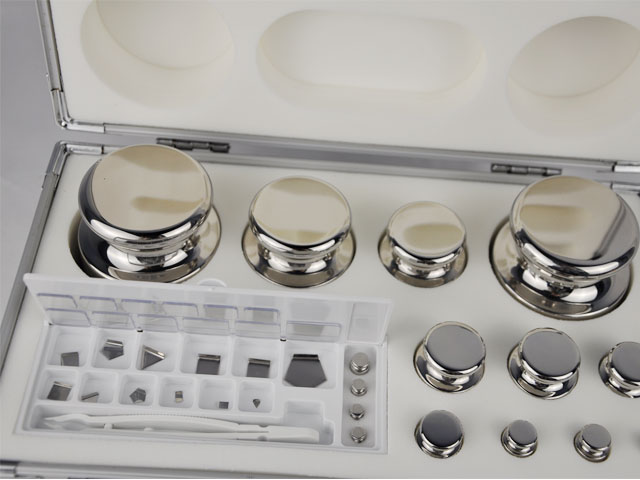
M1 Class Standard Weight
Mass measurement forms the foundational backbone of all industrial production, laboratory testing, commercial transaction, and quality control activities across every sector of modern society. Every reliable weighing result people obtain from various weighing instruments relies on stable and accurate mass reference carriers, and M1 class standard weight stands out as one of the most widely applied and practically essential mass measurement benchmarks in the entire metrology field. Serving as a critical bridge connecting high-precision laboratory mass standards with on-site daily weighing work, this type of standard weight balances practical usability and steady accuracy perfectly, adapting to complex working environments and frequent operational demands while maintaining consistent mass stability for long-term use. Unlike higher-level mass reference tools that focus solely on extreme precision and require strict laboratory protection conditions, M1 class standard weight is designed to meet the routine calibration, regular verification, and daily testing needs of most medium-accuracy weighing equipment, covering diverse usage scenarios from industrial production workshops and commodity circulation warehouses to school teaching laboratories and enterprise quality inspection departments. Its core design concept centers on stable physical performance, reasonable structural configuration, convenient operation and management, as well as strong environmental adaptability, ensuring that every mass comparison and instrument correction work can be carried out smoothly and every weighing data obtained has credible traceability and practical reference significance in actual production and life.

The overall performance and inherent quality of M1 class standard weight start with the careful selection of raw materials, as material characteristics directly determine the long-term mass stability, surface durability, and environmental resistance of each standard weight. Most M1 class standard weights are crafted from high-quality stainless steel or fine-cast iron materials, both of which are selected after strict screening for their stable physical and chemical properties, low magnetism, and strong resistance to external environmental interference. The materials used feature compact internal structure, uniform density distribution, and stable physical state under conventional temperature and humidity changes, effectively avoiding mass deviation caused by internal material shrinkage, deformation, or chemical corrosion during long-term placement and repeated use. The density of the selected materials is kept within a fixed and reasonable range at standard ambient temperature, which ensures that the impact of air buoyancy on mass measurement can be effectively calculated and controlled during the weighing comparison process, reducing additional measurement errors caused by environmental changes. Meanwhile, these materials have excellent anti-rust and anti-corrosion capabilities, resisting oxidation, moisture erosion, and slight chemical contact damage that may occur in daily use, preventing surface rust, peeling, or structural deterioration that would affect the actual mass of the standard weight. For small-specification M1 class standard weights used for micro mass measurement, lighter and more stable auxiliary metal materials are adopted to match the tiny nominal mass requirements, while large-specification products focus on overall structural firmness and pressure resistance, ensuring no deformation or mass change under normal handling, placement, and stacking conditions. All material selection processes follow unified metrology-related design principles, prioritizing the long-term consistency of mass performance rather than temporary surface appearance, laying a solid foundation for the reliable and durable use of M1 class standard weight in various scenarios.
The structural design of M1 class standard weight follows ergonomic operation norms and professional metrology measurement requirements, with scientific and reasonable shape configuration and internal structure arrangement suitable for long-term repeated carrying, placement, and mass calibration work. Different nominal mass specifications correspond to targeted shape designs, covering multiple forms such as cylindrical main body with integrated knob structure, flat sheet type for micro mass, and integral block type for large mass, meeting the handling and placement needs of various weighing instruments and working environments. Most medium and large-specification M1 class standard weights are equipped with independent adjustment cavities inside the main body structure, a practical and functional design reserved for fine mass trimming in later routine maintenance and regular metrology correction. The adjustment cavities are processed with precise internal dimensions and sealed structural design, allowing professional staff to carry out tiny mass fine-tuning through filling or removing matching auxiliary filling materials according to regular detection data, so that the actual mass of the standard weight can always be kept within the allowable error range of the M1 accuracy level. The outer surface of each standard weight undergoes fine polishing and smooth processing, without sharp edges and corners, not only facilitating staff to take and place the weight stably and safely during operation but also reducing surface dirt accumulation and wear and tear in the process of repeated use and contact. The overall structure is compact and integrated, with no loose parts or easy-to-fall components, ensuring that the structural state remains stable during long-term transportation, storage, and use, and no mass deviation occurs due to structural loosening or parts loss. Each specification of M1 class standard weight has a standardized overall size and proportional design, matching the placement requirements of various weighing pans and calibration equipment, ensuring stable placement without tilting or shaking during mass comparison and calibration work, and further guaranteeing the accuracy and stability of the entire measurement process.
In terms of accuracy setting and error control, M1 class standard weight is positioned in the middle tier of the overall standard weight accuracy grading system, forming a reasonable accuracy gradient with higher-level precision standard weights and lower-level ordinary weighing auxiliary weights, and undertaking the core task of accuracy transmission and data traceability in the metrology system. Its allowable error range is scientifically formulated according to actual application needs, suitable for calibrating and testing various medium-accuracy electronic balances, mechanical scales, platform weighing equipment, and commercial weighing devices widely used in various industries. The error limit of each nominal mass specification has clear and unified setting standards, with tiny allowable deviation between the actual mass and the nominal mass, fully meeting the accuracy requirements of daily industrial production weighing, commercial settlement measurement, and laboratory conventional testing. In the actual accuracy transmission link, higher-level standard weights are used to calibrate M1 class standard weights regularly, and then M1 class standard weights are used to complete the daily calibration and verification of on-site weighing equipment, realizing the step-by-step transmission of mass accuracy from high-precision laboratory benchmarks to actual production and application terminals. This reasonable accuracy positioning makes M1 class standard weight neither cause accuracy waste due to excessive precision and harsh use conditions nor fail to meet actual measurement needs due to insufficient accuracy, achieving a perfect balance between use cost, application conditions, and work effectiveness. In the long-term use process, as long as regular maintenance and periodic metrology inspection are carried out, the accuracy state of M1 class standard weight can be kept stable for a long time, avoiding frequent replacement and repeated procurement, and bringing stable and reliable mass measurement support for various work.
The application scope of M1 class standard weight covers almost all fields that require conventional accurate mass measurement and instrument calibration, showing extremely high practical value and industry universality. In industrial production and manufacturing sectors, various processing enterprises need to regularly calibrate production line weighing equipment, raw material proportioning weighing instruments, and finished product quality detection balances to ensure that raw material feeding proportioning is accurate, product quality inspection data is reliable, and production batch quality is stable and consistent. M1 class standard weight becomes the most commonly used calibration tool in these links, adapting to the continuous operation rhythm of industrial sites and complex on-site environmental conditions, and efficiently completing daily instrument debugging and accuracy verification work. In commodity circulation and market trading links, weighing instruments used for commercial settlement need regular testing and calibration to ensure fair transaction measurement and avoid measurement deviation affecting the legitimate rights and interests of merchants and consumers. Relevant market metrology management departments and enterprise management institutions widely use M1 class standard weight to carry out regular inspection and calibration of commercial weighing equipment, maintaining the standardized and orderly operation of the market measurement environment. In scientific research and teaching laboratories, schools and scientific research institutions need to carry out basic physics experiment teaching, conventional scientific research data measurement, and experimental equipment debugging work, requiring stable and reliable mass reference tools. M1 class standard weight is suitable for laboratory conventional teaching and general scientific research measurement needs due to its moderate accuracy and convenient use, helping students master basic weighing operation skills and ensuring the accuracy and repeatability of conventional experimental data.
In addition to professional industrial and laboratory scenarios, M1 class standard weight also plays an important role in enterprise quality management, metrology department supervision and inspection, and equipment daily maintenance and management work. Every enterprise with quality control requirements needs to establish a complete weighing instrument management system, and regular calibration of all weighing and measuring equipment with M1 class standard weight is an indispensable part of quality system operation, ensuring that all detection data in the production and quality inspection process is traceable, standardized, and meets relevant production and quality management requirements. Metrology supervision and management institutions at all levels rely on M1 class standard weight to carry out daily spot checks and regular supervision and inspection of weighing equipment in various industries, standardizing the use of measuring instruments in various industries and ensuring the uniformity and accuracy of regional mass measurement work. At the same time, for third-party calibration and testing institutions, M1 class standard weight is one of the basic supporting tools for daily calibration business, capable of meeting the calibration needs of most small and medium-sized enterprises and conventional institutions, with flexible and convenient use and wide coverage of applicable equipment, effectively improving the overall efficiency of calibration work and meeting the basic measurement guarantee needs of all walks of life.
Daily maintenance and scientific management are crucial to maintaining the long-term accuracy and service life of M1 class standard weight, and standardized use and storage habits can effectively avoid unnecessary mass deviation and equipment damage. In terms of daily use, operators need to adopt standardized handling methods, avoiding direct hand contact with the surface of the standard weight as much as possible, because sweat, oil stains, and dust on the hand surface will adhere to the surface of the weight, affecting its actual mass and even causing long-term surface corrosion. It is necessary to use special matching tweezers or handling tools to take and place the standard weight gently, avoiding collision, dropping, and violent friction with hard objects, so as to prevent surface wear, structural deformation, and mass change caused by external force impact. After each use, the surface of the standard weight should be cleaned in time to remove surface dust, stains, and residual impurities, keeping the surface clean and dry. In terms of storage, M1 class standard weight needs to be placed in a special sealed protective container, stored in a dry, ventilated, and constant-temperature storage environment, avoiding long-term exposure to humid, high-temperature, corrosive gas, and strong magnetic field environments. Humid environment will cause surface oxidation and rust of the weight, while strong magnetic field interference will affect the internal magnetic performance and mass measurement stability of the standard weight. In addition, classified storage should be carried out according to different nominal specifications, avoiding mixed placement and mutual collision and friction between standard weights of different specifications, and regular inventory and inspection should be done to check whether there is surface damage, structural looseness, and obvious mass change.
Regular periodic detection and professional calibration maintenance are essential links to ensure the continuous effectiveness of the accuracy performance of M1 class standard weight. After a period of use and placement, affected by subtle environmental changes and slight wear and tear in use, the actual mass of the standard weight will have tiny changes more or less. Regular professional metrology detection and calibration can timely grasp the actual mass deviation of each standard weight, and carry out fine mass adjustment through the internal adjustment cavity according to the detection results, so that the mass state can return to the standard allowable error range. The cycle of periodic detection can be reasonably formulated according to the frequency of use and the use environment; standard weights used frequently in industrial sites need shorter detection cycles, while those used occasionally in laboratories can appropriately extend the detection interval. In the process of professional calibration, higher-level standard mass reference tools are used for comparison and measurement, ensuring that the calibration data is accurate and traceable, and recording all detection and adjustment data in detail to form a complete use and maintenance file. Through standardized periodic calibration and maintenance work, the performance of M1 class standard weight can always meet the set accuracy requirements, avoiding measurement errors caused by long-term use attenuation, and ensuring the stability and reliability of all subsequent weighing calibration and measurement work.
With the continuous development of modern industrial upgrading, scientific and technological progress, and refined quality management requirements, the importance of M1 class standard weight in the field of mass metrology has become increasingly prominent, and its application fields and usage demands are also constantly expanding. All walks of life have higher and higher requirements for the accuracy consistency and data traceability of weighing measurement work, and the basic guarantee role played by M1 class standard weight in accuracy transmission and instrument calibration cannot be replaced by other measuring tools. Its excellent material performance, scientific structural design, reasonable accuracy positioning, and wide application adaptability make it a basic and essential measuring standard in both industrial production and daily social measurement activities. Whether it is ensuring the stability of industrial product quality, maintaining the fairness of commercial trading measurement, supporting the development of scientific research and teaching experiments, or doing a good job in metrology supervision and quality management, M1 class standard weight can provide solid and reliable mass reference support. In the future, with the continuous optimization of material processing technology and the continuous improvement of metrology management standards, the comprehensive performance of M1 class standard weight will continue to be improved, and it will continue to undertake the important task of basic mass measurement guarantee, escorting the standardized development of all walks of life and the accurate and orderly progress of various measurement work.
M1 Class Standard Weight
https://www.veidtweighing.com/standard-weights.html
Post Date: May 4, 2026
https://www.supplier-manufacturer.com/standard-weight/m1-class-standard-weight.html

![Rust Proof Standard Weight]()
Rust Proof Standard Weight
Rust proof standard weight represents a specialized material configuration that balances consistent structural weight distribution and reliable anti-corrosion performance,…![Stainless Steel Weight For Digital Scale Regular Calibration]()
Stainless Steel Weight For Digital Scale Regular Calibration
In the modern era of precision measurement, digital scales have become indispensable tools across countless industries and daily applications, ranging from laboratory scie…![Standard Weight For Industrial Scales]()
Standard Weight For Industrial Scales
In modern industrial production, commercial trade, and quality inspection systems, the accuracy and stability of weighing measurements serve as the fundamental guarantee f…![Oiml Calibration Weight Set]()
Oiml Calibration Weight Set
In the field of precision measurement and industrial metrology, accurate mass reference serves as the fundamental foundation for all quantitative weighing operations, and …![Calibration Weight For Laboratory Balance]()
Calibration Weight For Laboratory Balance
In every modern laboratory that relies on quantitative measurement, consistent and reliable weighing data forms the foundation of credible experimental results, industrial…