Mechanical Body Scales
In an era dominated by various electronic smart devices for daily health monitoring, mechanical body scales remain a steady and essential presence in households, fitness spaces, and daily health management scenarios. Rooted in classic physical principles and refined through decades of structural optimization, these weighing instruments deliver stable and reliable body weight measurement through pure mechanical operation, free from the constraints of modern electronic accessories and power supply systems. Their enduring popularity stems from a combination of simple structural design, convenient operation, stable performance, and low maintenance requirements, making them a practical choice for people of all age groups to track daily physical changes and maintain regular health awareness.
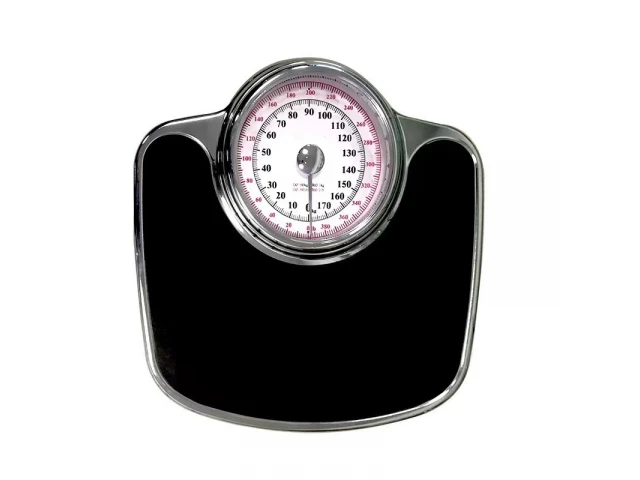
The core operation of a mechanical body scale relies on fundamental physical laws, mainly the elastic deformation principle of springs and the force transmission effect of lever structures. Unlike electronic devices that convert pressure into electrical signals through sensors, mechanical body scales complete the entire weight measurement process through pure physical movement. When a user steps on the flat bearing platform of the scale, the gravity generated by body weight acts evenly on the internal mechanical components. The built-in high-toughness spring undergoes controllable compression deformation under uniform pressure, and the degree of deformation maintains a stable proportional relationship with the applied weight. This physical correspondence forms the basic guarantee for accurate weight reading, following the inherent law of elastic force balance that stable substances exhibit under external force.
Matching with the spring elastic structure is a precise lever transmission system, which serves as the core bridge for converting pressure changes into visible data readings. The multi-group lever components inside the scale are arranged in a balanced and orderly manner, effectively transmitting and amplifying the tiny elastic deformation of the spring. This structural design ensures that even subtle changes in body weight can be stably converted into the rotational displacement of the pointer on the dial. Every part of the lever system is finely calibrated during production, with uniform force-bearing points and smooth transmission strokes, avoiding measurement deviations caused by unbalanced force or structural jitter. Through the coordinated operation of springs and levers, the abstract gravity data is transformed into intuitive pointer deflection, allowing users to obtain clear weight values from the calibrated dial scale.
The overall structural design of modern mechanical body scales focuses on both practicality and user experience, with every detail optimized for daily use scenarios. The external bearing platform is usually made of sturdy and durable materials, with a flat and smooth surface that ensures even force bearing during standing measurement. The platform size is designed to adapt to the standing posture of most adults, providing stable support and preventing shaking or tilting during the weighing process. The bottom of the scale is equipped with anti-slip structural designs to enhance friction with the ground, effectively avoiding sliding displacement when users step on or off the scale, which helps maintain the stability of the measuring state and further stabilize the accuracy of measurement results.
The dial and pointer part is the key display area of the mechanical body scale, designed for intuitive and labor-saving reading. The dial is printed with clear and uniform scale markings, with reasonable interval settings between scales to distinguish different weight units and small measurement increments. The pointer adopts a lightweight and rigid structure, which can respond sensitively to internal mechanical changes and stay stable quickly after the user stands still, without continuous jitter or inaccurate positioning. Some styles adopt enlarged dial layouts and bold scale lines, which improve reading convenience for users with weak vision or in environments with dim light, realizing inclusive and user-friendly design for daily family use.
One of the most prominent advantages of mechanical body scales is their independent operating mode that requires no external power supply. The entire measurement process depends entirely on the coordination of internal mechanical structures, eliminating the need for batteries, power adapters, or charging equipment. This characteristic greatly reduces the limitations of use scenarios and time. Users can place and use the scale in any flat indoor area without worrying about power exhaustion, circuit failure, or charging delays affecting use. Whether it is long-term placement in the bathroom, bedroom, or temporary use in gyms and activity rooms, the scale can maintain normal and stable operation, bringing great convenience to daily weight detection.
In terms of service life and durability, mechanical body scales show outstanding practical value compared with many electronic measuring devices. The internal spring and lever components are made of wear-resistant and fatigue-resistant materials, which can withstand long-term repeated compression and force transmission without easy structural aging or functional failure. After long-term use, there will be no performance attenuation caused by electronic component aging, circuit damage, or program failure. As long as the scale is placed flat and used in a standardized manner, its core measurement structure can maintain stable working performance for a long time. Daily use only needs to avoid severe impact and excessive overload, and the equipment can maintain a long service cycle, reducing the frequency of equipment replacement and daily use costs.
Measurement stability is another important feature of mechanical body scales. Electronic weighing devices are easily affected by external environmental factors such as temperature changes, electromagnetic interference, and voltage fluctuations, which may cause subtle deviations in measurement results. In contrast, the pure mechanical working mode of mechanical body scales is not disturbed by electromagnetic signals, temperature differences, or weak voltage changes. As long as the placement surface is flat and the internal structure is intact, each measurement can maintain stable and consistent data performance. This stable measurement state is very suitable for users who need to track weight changes for a long time, such as people adjusting their physical state, fitness enthusiasts, and family members conducting regular physical condition checks.
The operation logic of mechanical body scales is extremely simple and easy to master, suitable for users of all age groups. There is no complex startup process, functional switching, or parameter setting steps. Users only need to place the scale on a flat and hard ground, stand steadily on the center of the bearing platform with their body balanced, and wait for the pointer to stabilize to read the accurate weight data. The zero calibration design of the scale is also very user-friendly. When there is a slight pointer deviation caused by long-term placement, users can complete simple zero adjustment through the reserved calibration structure on the scale surface to restore the optimal measurement state. The whole operation process is intuitive and straightforward, without the threshold of learning intelligent operation, which is convenient for the elderly and children in the family to use independently.
Mechanical body scales are widely applicable in diverse scenarios, covering daily family life, public health spaces, and daily fitness management. In family scenarios, they can be used for daily weight monitoring of all family members, helping people intuitively perceive physical changes, develop healthy living habits, and assist in daily physical condition management. In fitness venues and sports activity spaces, they provide stable and convenient weight detection services for fitness practitioners, supporting users to formulate and adjust scientific exercise and diet plans according to physical changes. In public service places such as community health rooms and nursing spaces, their stable performance and simple operation can meet the daily physical measurement needs of different groups of people, realizing convenient and efficient daily health monitoring.
To maintain the long-term stable performance of a mechanical body scale, daily standardized use and simple maintenance are essential. During use, it is necessary to avoid placing the scale on soft ground such as carpets and cushions, as the deformed bearing surface will affect the force transmission balance of the internal mechanical structure and lead to inaccurate measurement data. It is also necessary to avoid excessive overweight use beyond the scale's bearing range, so as to prevent irreversible deformation of the internal spring and lever structure, which would damage the measurement accuracy. Daily cleaning only needs to wipe the surface with a soft dry cloth or slightly damp cloth to keep the scale clean and tidy; it is not suitable to rinse the scale with a large amount of water to prevent moisture from entering the internal mechanical gap and causing rust or structural jamming.
Regular simple calibration is helpful to keep the measurement accuracy of the mechanical body scale in a good state. After long-term placement or frequent use, the pointer may have a slight zero offset due to the natural fatigue of mechanical components. Users can check the zero position of the pointer when the scale is unloaded before daily use. If there is a deviation, fine adjustment can be carried out through the calibration device until the pointer points to the zero scale position. This simple maintenance operation can effectively ensure the stability of each measurement result and avoid data errors affecting users' judgment of physical changes.
In terms of appearance design, modern mechanical body scales have also broken the single traditional style, integrating practicality and aesthetic feeling. While retaining the classic stable structural layout, the appearance adopts simple and atmospheric design lines, with diverse and low-key color matching, which can be well integrated with various home decoration styles and public space environments. The streamlined platform design and rounded edge treatment not only improve the overall texture of the equipment but also avoid collision scratches during daily placement and use, improving the safety of use. The compact body structure does not occupy excessive space, making it convenient for daily placement and storage, and it can be placed in gaps of cabinets, corners of bathrooms and other spaces when not in use.
In the field of daily health monitoring, the value of mechanical body scales lies in their stable and persistent practical performance and uncomplicated use logic. They do not rely on complex intelligent functions, nor do they produce additional energy consumption and electronic waste. The pure physical working mode conforms to the simple and low-carbon daily life concept. For most people who only need regular and accurate body weight detection, mechanical body scales can fully meet daily use needs, avoiding the redundant functions and high failure rate of some electronic equipment. Their reliable performance, convenient operation, low maintenance cost and long service life make them a cost-effective and practical choice for long-term daily health management.
With the continuous progress of production technology, the structural precision and material quality of mechanical body scales have been continuously improved. The optimized spring materials have better elastic stability and fatigue resistance, ensuring that the deformation degree remains uniform under the same pressure for a long time. The upgraded lever transmission structure is more precise in force transmission, reducing mechanical friction loss and further improving the stability and accuracy of measurement. The optimized overall structure also enhances the impact resistance and compression resistance of the equipment, making it more adaptable to daily complex use environments and able to maintain stable working condition for a longer time.
In conclusion, mechanical body scales are classic and practical daily health measuring equipment forged by mature physical principles and exquisite mechanical technology. Their power-free operation, stable measurement performance, simple operation mode, durable structural quality and wide application scenarios make them maintain irreplaceable use value in the market for a long time. In the fast-paced modern life where electronic equipment is ubiquitous, this kind of mechanical measuring tool that focuses on basic functions, stable performance and practical experience provides people with a simple and reliable way of daily physical monitoring. Through daily accurate weight detection, it helps people pay attention to physical changes in real time, assist in developing healthy living rules, and bring convenient and stable support for daily family health management and personal physical state maintenance.
https://www.veidtweighing.com/HouseholdScale/MechanicalBodyScale
Post Date: Jun 7, 2026
https://www.supplier-manufacturer.com/weight-balance-scale/mechanical-body-scales.html

![M2 Class Test Weight]()
M2 Class Test Weight
In the complex and interconnected system of modern industrial production, commercial circulation and daily operational measurement management, standardized mass measuremen…![Precision Standard Weight]()
Precision Standard Weight
In every corner of modern production, scientific research, commercial circulation, and daily quality supervision, the consistency and credibility of numerical measurement …![Industrial Test Weight]()
Industrial Test Weight
In the complex and interconnected landscape of modern industrial production, material circulation, and mechanical operation, accurate weight measurement stands as one of t…![Stainless Steel Calibration Weight]()
Stainless Steel Calibration Weight
In every field that relies on consistent and trustworthy mass measurement, the role of stainless steel calibration weights remains irreplaceable, serving as the fundamenta…![Class F Calibration Weight]()
Class F Calibration Weight
In the intricate and interconnected framework of modern industrial production, scientific research exploration, and daily commercial transaction operations, accurate mass …